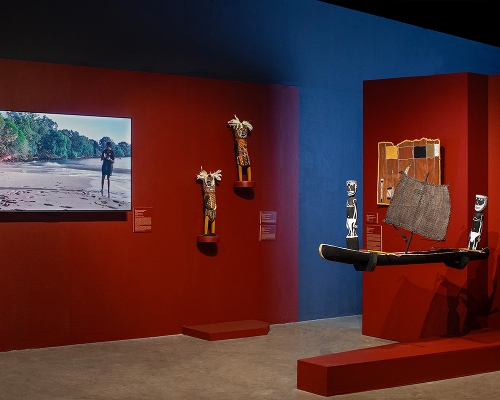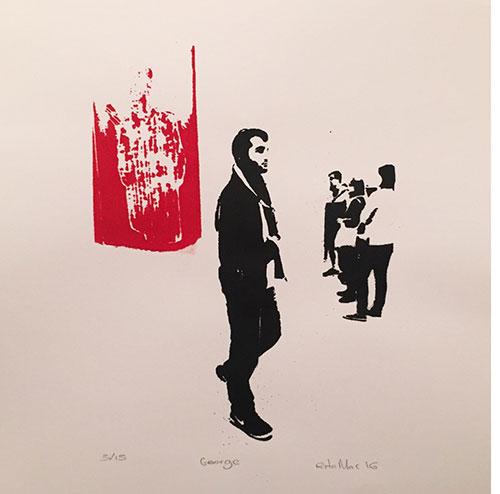
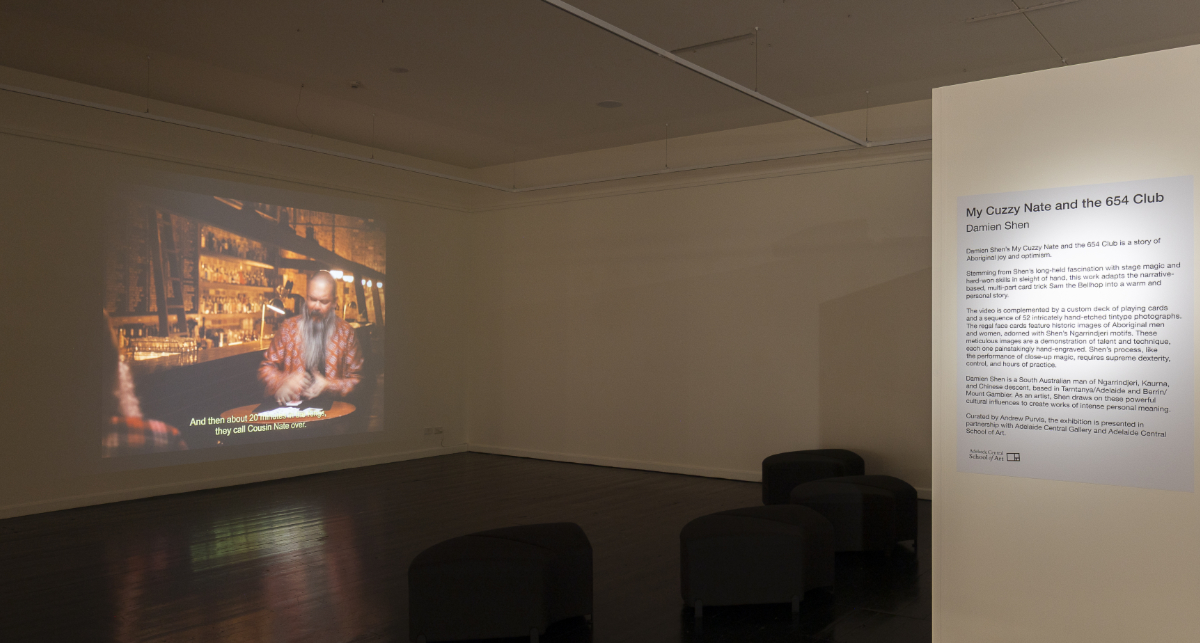
Damien Shen’s exhibition, My Cuzzy Nate and the 654 Club, at Riddoch Arts & Cultural Centre expands cultural perspectives of what First Nations arts can be, and provides regional audiences with alternative, expanded ways of art-making that move beyond the imagery of flora and fauna that typified my experience of living in regional and remote Australia in my youth. Curated by Andrew Purvis, Shen’s multi-artform installation consists of a new filmic work, 52 hand-etched tintype photographs, as well as a framed print. The titular video work is like a window and a warm welcome.
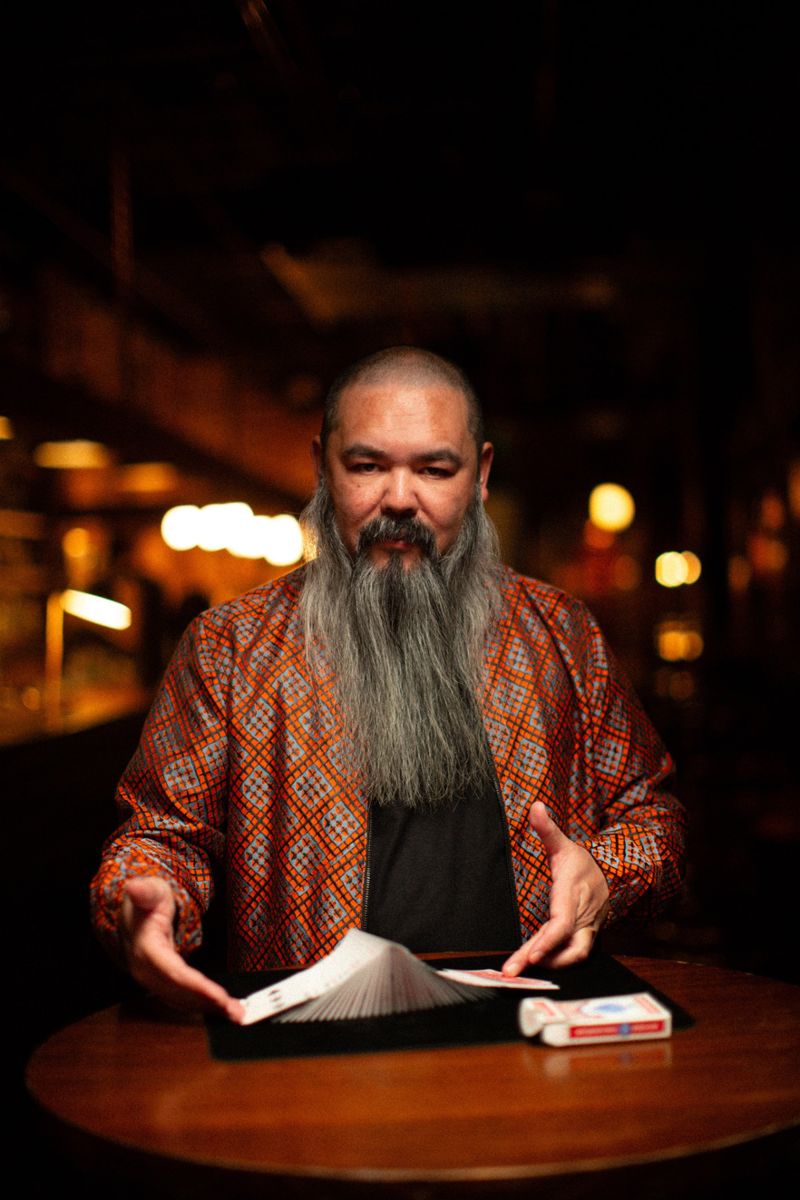
Straight outta vaudeville Chicago 1930s, via comedy-magician Bill Malone’s 1990s TV publications, the artist spent a year of intense focus learning Sam The Bellhop: a card magic trick that had brought him such enchantment and joy in his childhood. Shen’s rendition is produced with award-winning director and cinematographer Johanis Lyons-Reid who had worked with the artist for the 2016/2017 docuseries Ngarrindjeri Shorts. My Cuzzy Nate and the 654 Club, centres the artist as card magician performer and storyteller, yarning with members of his extended family. In the context of the exhibition the video in both its scale and its warm characterisations and genial relationships serves as a welcoming entrée to the space. There is a wholesomeness about it that enables audiences to feel safe, to connect, to feel part of the wonderment of the trick.
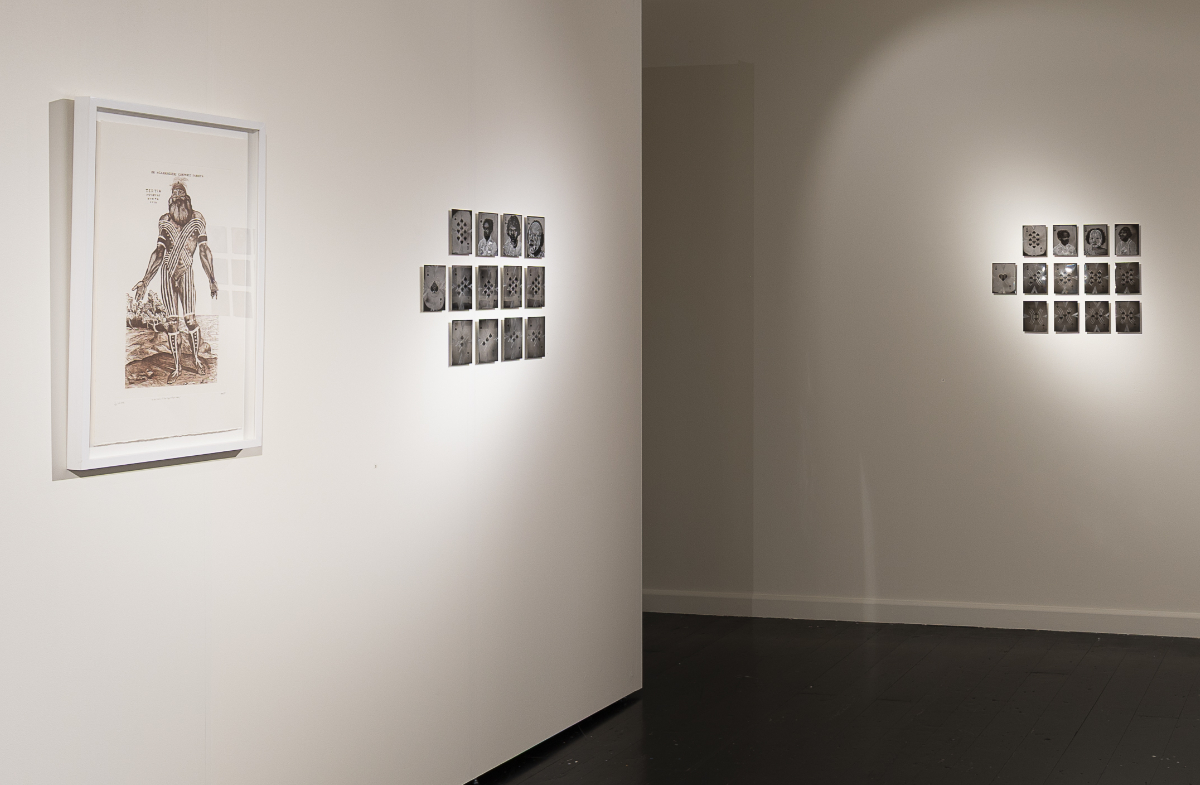
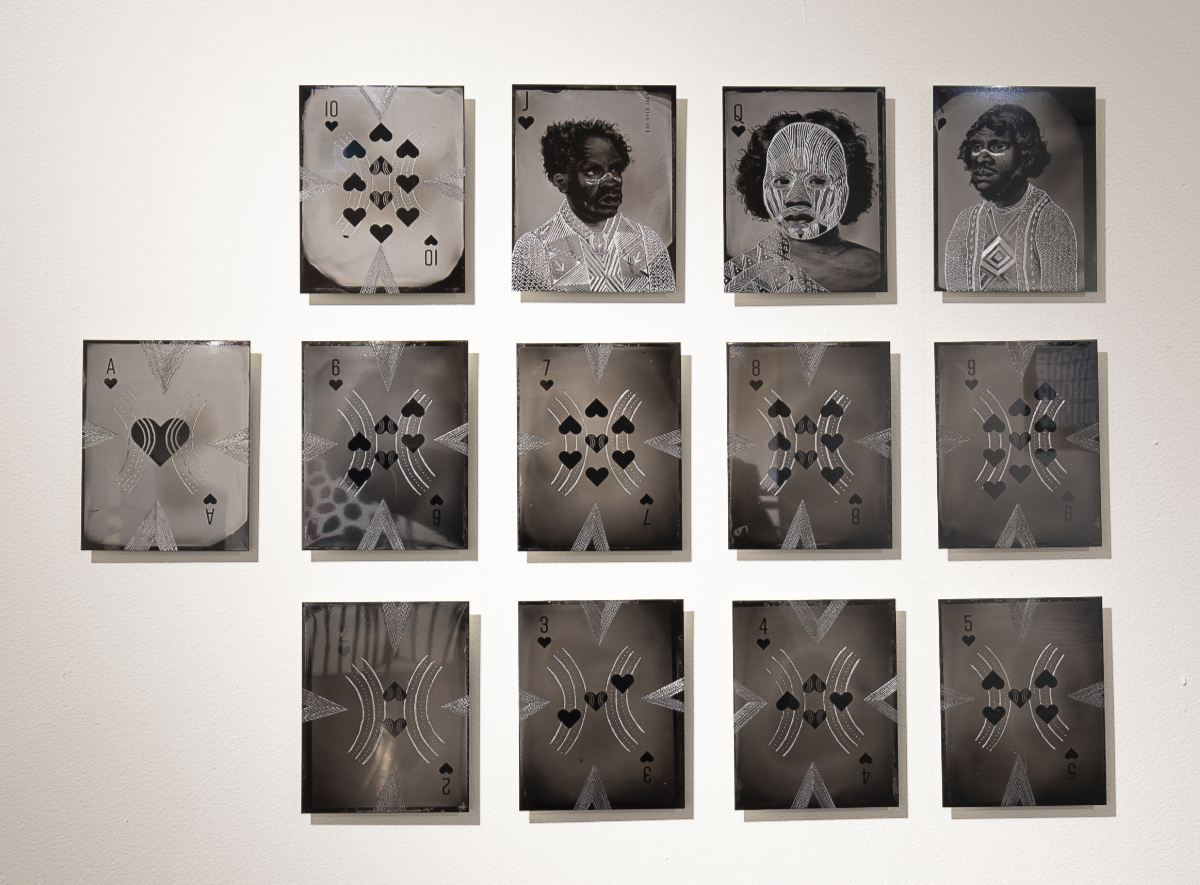
The 52 small tintype photographs, that suggest playing cards, are prints of 19th century photographs of Aboriginal people engraved with Shen’s Ngarrindjeri motifs. They are intimate, intricate, devotional and drawn from joy. They have an eerie quality to them, in part because of the technology of the time, but also because we know that in the main, Aboriginal people had limited agency. Perhaps for some of the subjects it was an opportunity to be seen, represented with more autonomy than history is telling us. Regardless, I appreciate the possibilities of the artist looking back into the archive. Representations are cultural inheritance. As tainted as history can be, representations are better than no representation at all. The work can sit in contemporary art history alongside the pioneering photography of Leah King-Smith and Brook Andrew and the celebrated ‘Aboriginalia’ reworkings of Tony Albert — all devised from uncomfortable representations of colonial images of Aboriginal people.
The applied markings lean into exotica in spades (and hearts, diamonds, and clubs) to adorn the subjects, to celebrate them. The facial lines have tribal mask qualities, and their costuming is akin to regalia and high dignity. Maybe the subjects depicted in the original photos had limited agency, looked ghostly and out of place, but isn’t that the politics of photography and also the technology of the time? I am thinking of Andy Warhol’s complex and totally vital screen-paintings of Marilyn Monroe, based upon a Hollywood studio photograph that Warhol did not make. The paintings adore, adorn, and canonise her, and create masks to reveal what is behind the mask of the person and her celebrity. Maybe Marilyn Monroe didn’t feel like being contemporary art either.
Just like the labour and devotion in learning a difficult, classic card magic trick, Shen has used his talent and much discipline to be an exceptional draftsperson. The artist could just as well have used these talents to produce work that is commercial and not particularly challenging. But to choose to make work that delves into such tricky and gritty terrain is what an artist does when they are inquisitive and in search of deeper understanding of our world.