
Protest is a creative act at the Museum of Australian Photography (MAPh), in Wheeler’s Hill, Melbourne is an informative, provocative and comprehensive survey of women’s photography in Australia from 1975–2025. The curatorial vision of guest curator Kelly Gellatly and MAPh’s Senior Curator Angela Connor presents a longitudinal tranche of women’s photography from second-wave feminism to postcolonialism. By locating the work in the sphere once reserved for the traditional vision of public gallery projects—high value investment art, Australian Impressionism, postwar male genius-heroes and interwar female modernists—half a century of feminist activism and political interventions come to light.
The exhibition is drawn from MAPh’s permanent collection of Australian photography (originally the Monash Gallery of Art Collection), unique at a national level in holding over 4000 Australian photographs — nearly half of which are now available online. Loans from public galleries, collectors and artists augment Protest is a creative act. Some artists such as Sue Ford, Carol Jerrems, Destiny Deacon, Rosemary Laing, Helen Grace, Ruth Maddison and Ponch Hawkes have been regarded as iconic and central over the past five decades. Others whose significant contributions to feminist contemporary art and photography are less firmly established are welcome inclusions: Wendy Rew, Virginia Fraser and Juno Gemes, although the profiles of Gemes particularly in Sydney, and to a lesser extent Fraser in Melbourne (sadly, mostly since her death in 2021), have consolidated in the last decade. Gemes is among number of Australian women who had direct engagement with global contemporary art in the 1960s and whose vanguard positions have not been fully acknowledged.
Artists active in the 21st century such as Laresa Kosloff, Elvis Richardson, Siri Hayes, Alex Martinis Roe and Salote Tawale emphasise the ongoing presence of feminist, political and activist art in the last fifteen years. Particularly valuable in terms of reconfiguring public and professional memory is the inclusion of senior artists who have continued to make solid contributions to Australian culture and art practice since the mid-1970s when feminism opened previously unparalleled opportunities for women. Among this generation are Bonita Ely, Virginia Coventry, Jill Orr, Brenda L. Croft and Maree Clarke.
Until recently, activist and documentary streams of Australian photography and art, as well as democratic and grass-roots practices, including those from Indigenous and culturally and linguistically diverse communities, collectives, and (small S) soviets as well as Trade Union-sponsored community arts projects had fallen out of mainstream art world fashion and institutional attention. Protest is a creative act revisits this not-so-recent past and makes these histories newly accessible. A consciously democratic, anti-elite, practical, everyday vision of artmaking overlapped substantially with the reformist and egalitarian streams of 1970s feminist art practice. The shared sense of flux and transformation in the latter 1970s was given further impetus by International Women’s Year in 1975 – the exhibition’s starting point. Alternative models of structuring the arts industry that also flourished in this period, such as collective actions and attempts to unionise art practice, form a solid core of the exhibition, parsed by synergies and dissonances with subsequent feminist and political practices.
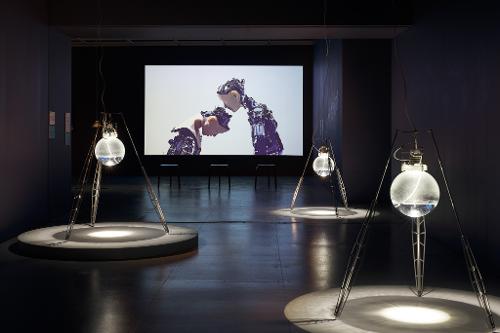
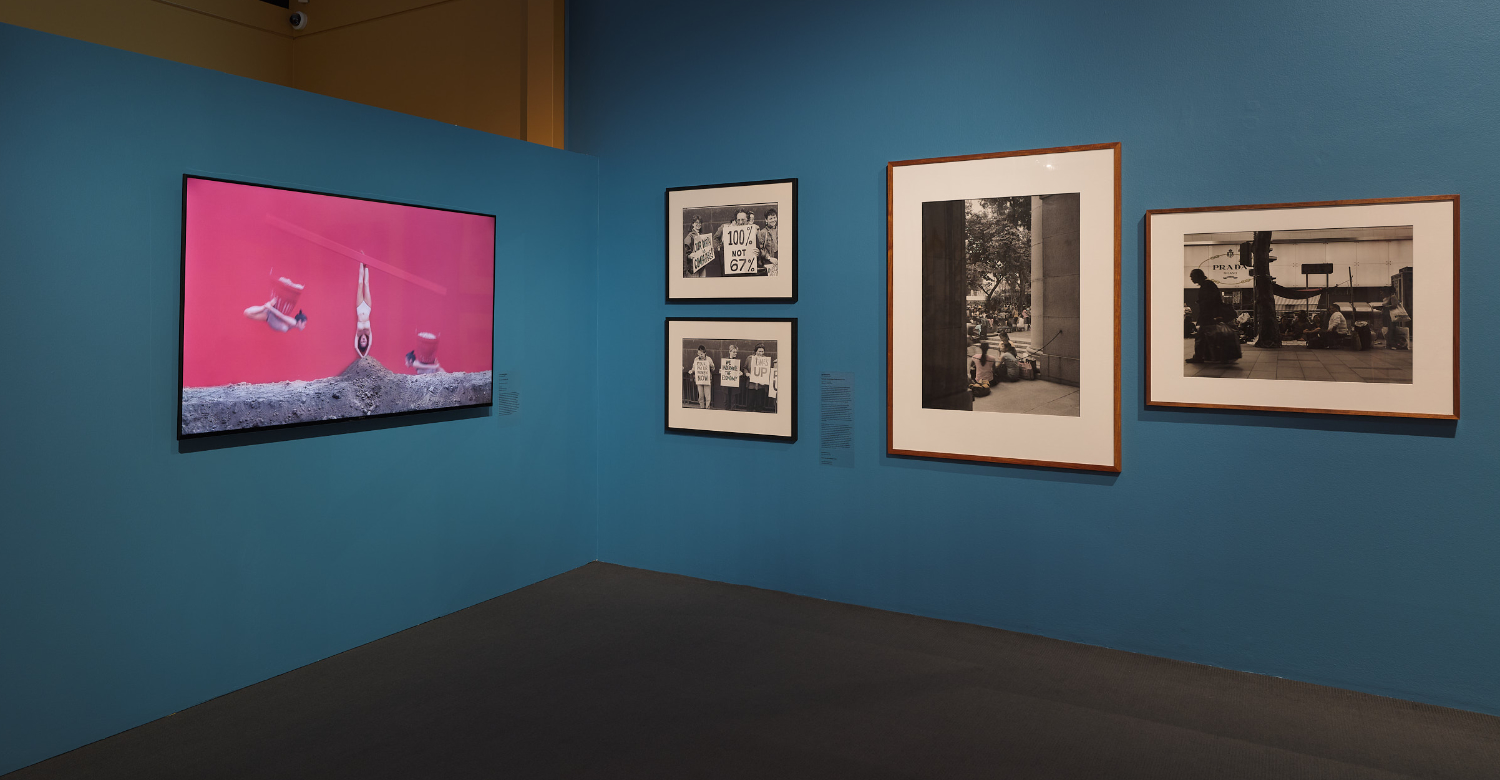
Protest is a creative act returns a number of key social and political causes to the public eye through the artists’ lenses, including the destructive flooding of Miriuwung and Gajerrong Country in the Ord River Scheme in the 1960s and early ‘70s in Alana Hunt’s film Surveying a Crime Scene (2023); the outlawing of protest marches in Brisbane during preparation for the 1982 Commonwealth Games to ensure a peaceful and sanitised streetscape in Juno Gemes’ Oodgeroo Noonuccal, Dennis Walker and family, activists, Aboriginal Boomerang Council Inc, at illegal march for Land Rights before Commonwealth Games, Brisbane, QLD 1982; and Helen Grace’s Justice for Violet and Bruce (1980) recalling public protests against the conviction of mother and son Violet and Bruce Roberts for killing Violet’s abusive husband in 1976.
Today’s working and personal lives have been shaped by the issues for which 1970s and 80s activists were fighting. Many are documented here, such as equal pay and women’s access to all jobs and professions. The urgency of anti-nuclear protests when the Cold War was a menacing backdrop to daily life also informed feminist photographers including Virginia Coventry and Ruth Maddison and in recent years, Jessie Boylan. The social histories captured in Protest is a creative act are of national importance for their own sake, and for proactively writing Australian women artists back into large-picture social and creative histories.
The exhibition’s displays and signage combine biography, classical art history, social history and postcolonial concerns to bring the gallery visitor up to speed. As noted by Gellatly during a symposium at MAPh, centring the political in Protest is a creative act rubs up against a lack of politics in Australian art archives, either as a matter of taste, or a as direct reluctance to acknowledge the overtly political in material culture and historical collections. This may be one reason that Australia has lagged in acknowledging the innovations that second wave feminism brought to the totality of contemporary art practices. The massive scholarly evaluation and affirmation by of the movement, Norma Broude, Mary Garrard and Judith Brodsky’s 1996 book The Power of Feminist Art: the American movement of the 1970s, history and impact, had no parallel in Australia until Anne Marsh’s anthology Doing Feminism: women’s art and feminist criticism in Australia, published in 2021.
If Protest is a creative act confronts essentially conservative Australian myths around the nature of art and aesthetics and the role that women play in both, it could also proffer alternative perspectives to current activist and postcolonial constructs and the sometimes-inflexible proscriptions of North American thinking on race relations. These rules have been globalised in the wake of the internet, a force that equally enables the worldwide spread of right-wing values. While the exhibition justly foregrounds Indigenous voices leading debate on Indigenous culture, in which multigenerational threads of successful creative women are central, it simultaneously, perhaps unconsciously, undercuts both North American scepticism of allyship in minorities’ political struggles and postcolonial flattening of the Australian cultural and political landscape. In many regards, the cultural industries in Australia tend to assume an a priori invisibility of any culture other than a white privileged class, still effectively policing exclusion and censorship.
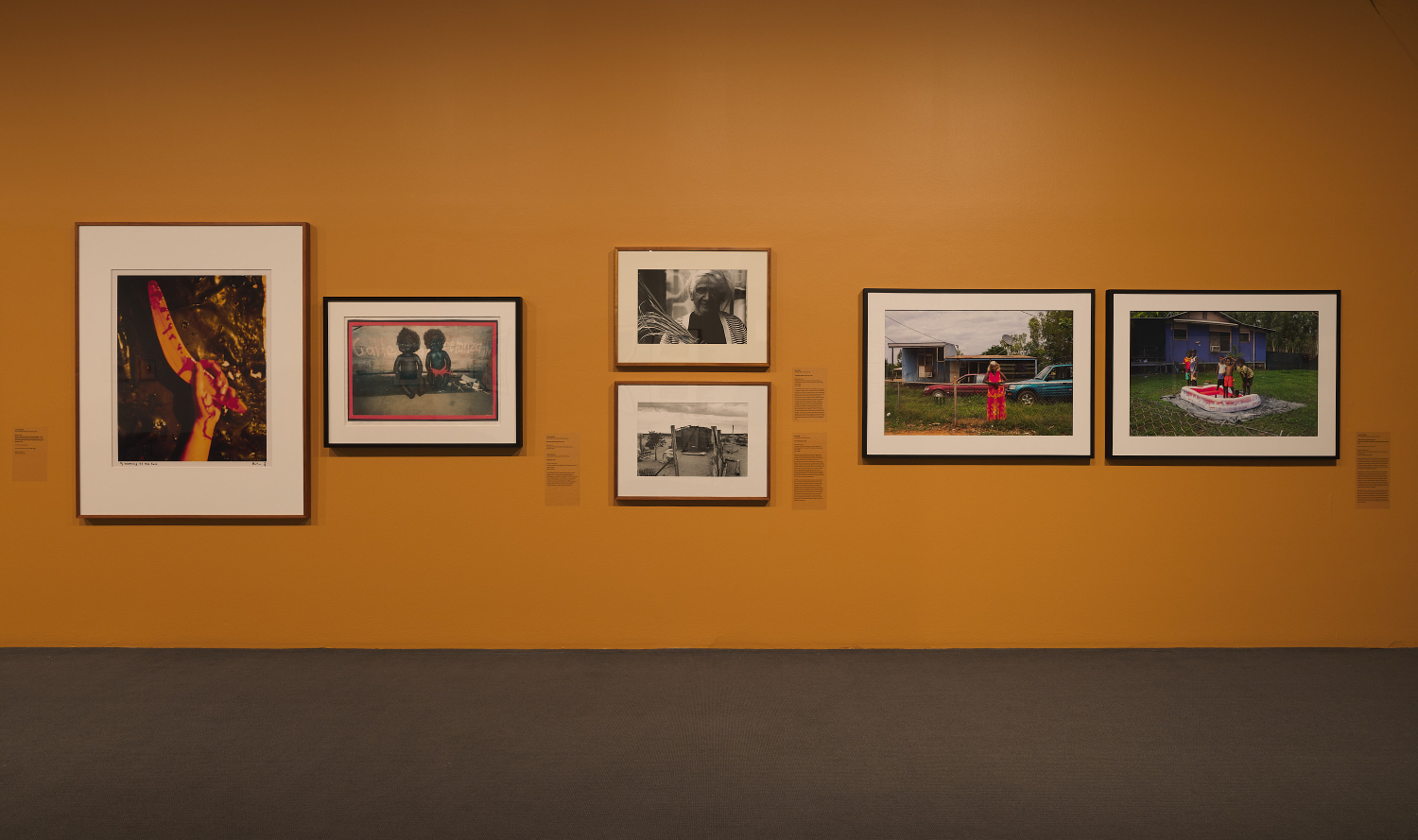
The exhibition also proves that Indigenous-led public protest about inequalities and inhumanities (often assumed to be a recent activist movement) has been well documented by Indigenous women photographers. In addition, half a century of energetic public involvement by Anglo-Australian communities in combatting the systemic injustices faced by Indigenous people is highlighted. Alongside white racism, a tenacious, alternative minority viewpoint vocally questioned white authority and complacency. If calls for radical interventions to diversify contemporary art have been raised by institutions in recent years, Protest is a creative act demonstrates feminist artists and photographers were challenging the status quo five decades ago. Diverse artists have been present all along, just not given their public dues.
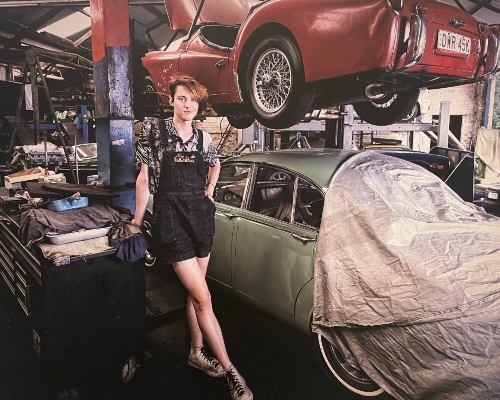
Images of overtly political and public protests deliver the most striking visual impressions, but the deep, finely grained concerns of personal lives are also offered context and credibility. Intimate histories of identities, sexualities, misogynist stereotyping, body image, disability, friendship, family, motherhood and women’s roles and workplaces all get attention. Unusually for a show that pitches at the centre, queer issues are not pathologised or passed over. In some cases, the lines between social and personal life are blurred when photographs operate as individual portraits while building a record of community. Miriam Charlie’s studies of friends, family and colleagues in Borroloola also double as an indictment of the lack of resources and inadequate provision of homes in the remote community, despite decades-long government promises. Likewise, images of people in their homes and living rooms by Viv Méhes gain a social dimension when the subjects extend the standard range of representations to interrogate accepted norms of who should be “the ideal citizen” to represent the Australian nation.
The exhibition’s historical timeline has witnessed significant shifts in photography as new technologies and means of production, presentation and distribution have emerged. In the 1970s and ‘80s analogue postcards, flyers, instant-printed, photocopied, samizdat, cut-and-paste texts were favoured means of sharing images and ideas among a diffused and diverse audience. As the years passed, photography embraced various moving image formats and digitally based works across different surfaces.
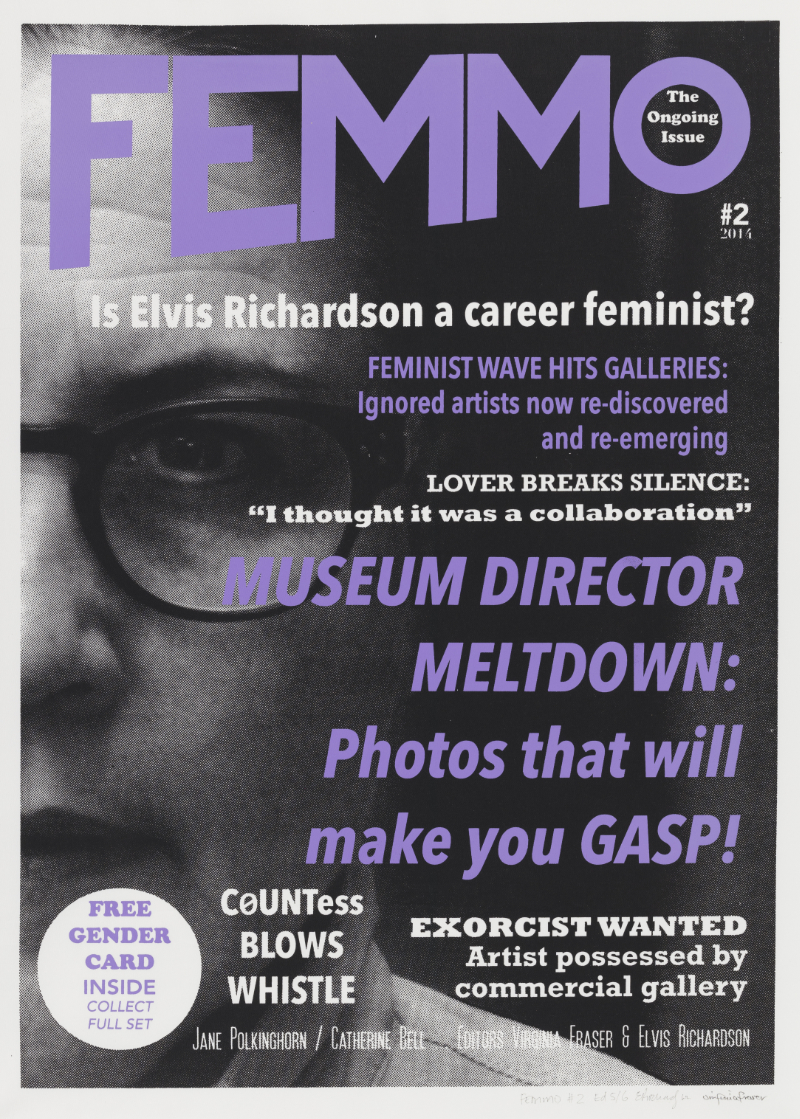
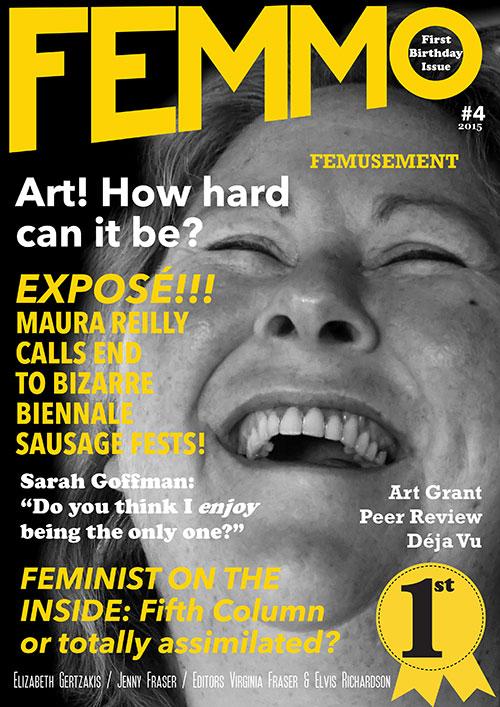
Despite stereotypes to the contrary, feminist art practices have not remained locked in the direct action of two generations ago. Postmodernism, cultural studies, media studies and third wave, theory-based feminism opened up popular culture, vernacular genre artefacts and the pleasures of consumer cultures during the 1980s. Commercial imagery such as mainstream cinema or advertising and product photography’s saturated lushness is both celebrated and subverted, opening up a space for ironic knowing and fantasy, often with lavish production values far removed from the gritty casualness of some earlier feminist work. For example, Virginia Fraser and Elvis Richardson’s series of covers for an imagined journal Femmo capture the familiar tropes and sensational urgency of popular journalism but reverses its target from hyperbolic moral panic to real-time systemic injustices in the Australian art market. Topics including violence against women and the policing of female sexualities are opened up as legitimate and ongoing sites of discussion, reflecting a greater scrutiny of heterosexual relationships within the full gamut of the mediatisation of the humanities.
A somewhat controversial exhibitor is Carol Jerrems, who was honoured with a retrospective at the National Portrait Gallery in 2024. Her libertarian notions and complex interactions with masculinity always granted her an audience from the late 1960s, but often sit uncomfortably now, amid anger about continued high rates of femicide, domestic violence, financial abuse and other power inequalities facing women, although her reputation is such that neither curators nor academics have challenged her oeuvre. Meanwhile, the sexual violence of rich, privileged and famous men who use their status to evade blame and retribution for their actions continues.
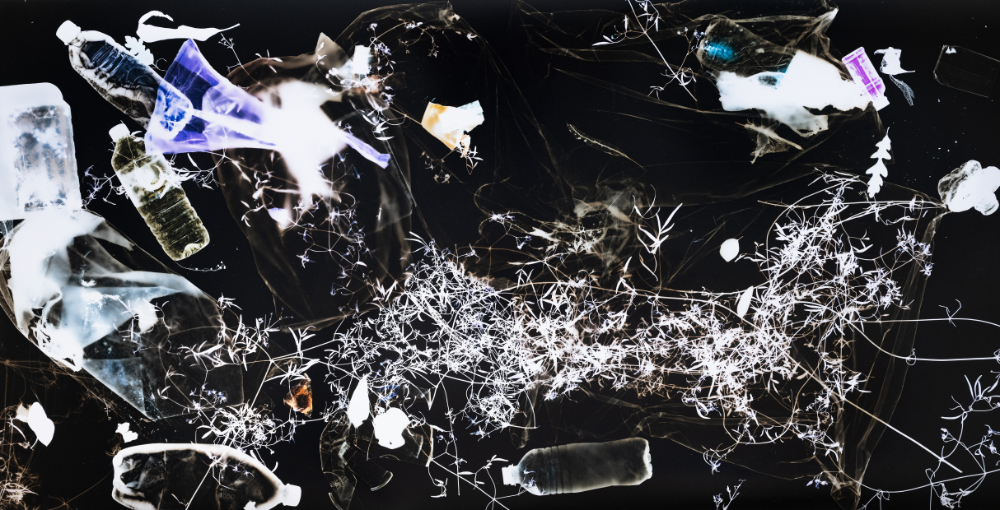
There is however a willingness to speak of taboo subjects beyond classical Marxist concerns of the economy and workers’ rights. The mass movement of people displaced by wars and economic uncertainties comes through in artworks protesting detention centres and Australia’s treatment of refugees. These focus attention on a shift from Anglo-pan-European identities to white Australia’s vexed relationship with its fellow citizens and Asian neighbours. Concerns about the environment and nuclear power form a constant theme, environmentalism offering another transgenerational live node of protest and an incisive provocation to the extractivist colonial project through postcolonialism and de-colonising.
If activism and interstitial and intercultural feminism help understand contemporary feminism in Australian art, then Protest is a creative act recasts the past half-century of feminist challenges to industry, to institutions and to social structures as alive and highly relevant today. It offers pathways around the performative/narcissistic narratives of white guilt and shame by amplifying parallel visions of socially responsible creativity. The exhibition also attempts to lift the burden of the uneven power of capital and the super elite that falls across our current worlds, expressed as direct military action or as legislation.
The belief that society could be changed for the better with enough hands at work – a special task devolved onto artists – is perhaps naïve in its surety, and yet surprisingly refreshing in the face of the global forces of power. The exhibition's vast ambit also serves as a reminder of how the past five decades coalesced a range of incipient feminist art practices that date back to the uncompromising practices of feminist artists such as Jude Adams, Barbara Hall, Viva Gibb and Frances Phoenix. Protest is a creative act persuasively pinpoints this important and revolutionary moment in Australian art making, and all that has come in its wake.
 Bisma (2023)_Card.jpg)