The Wildean claim that there’s no such thing as bad publicity glosses the pain and expense it causes, but creative resilience is being proven in Ngura Puḻka — Epic Country by artists from the Aṉangu Pitjantjatjara Yankunytjatjara (APY) Lands of South Australia. Finally on display at the National Gallery of Australia after a three-year postponement, the exhibition follows an excoriating trial by Murdoch’s News Corp Australia and scrutiny by government bureaucrats which included an independent review commissioned by the NGA into the authenticity of the works.[1] Missing in action has been any nuanced understanding or discussion of the cross-cultural studios these paintings are made in, or even how artists work, full-stop. Neither is there a real appreciation of the pragmatics of mostly elderly—and some frail—painters producing increasingly large-scale works to meet a strong market and institutional demand. What media and the state’s cultural leaders do understand is that Aboriginal art has implicit power to shape national narratives, (symbolically at least), and to be manipulated for effect by both ends of the political spectrum. To weigh in on the paintings—for, or against—implies factional alignment. It’s time the canvases spoke.
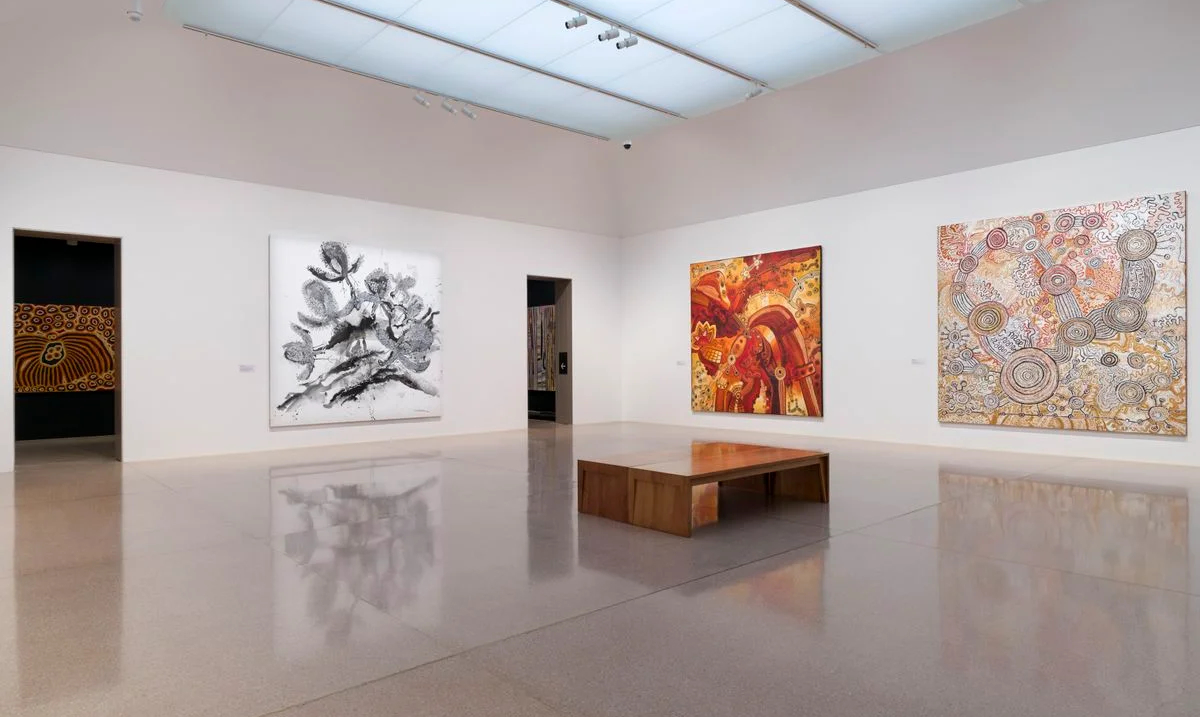
Ngura Puḻka contains 30 large scale paintings made by close to fifty artists working in seven art centres and filling the rooms normally dedicated to the NGA’s permanent collection of Aboriginal and Torres Strait Islander art. Two crimson and gold canvases by Tjungkara Ken and the Ken sisters in collaboration not far from Sidney Nolan’s Ned Kelly (1946–47) series signal the entrance to the show. Directly inside the vestibule, three paintings tightly triangulated include George Cooley’s burning palette of opal-rich rock that seems to cry out for air, but stepping into the exhibition-proper, space is generously apportioned.
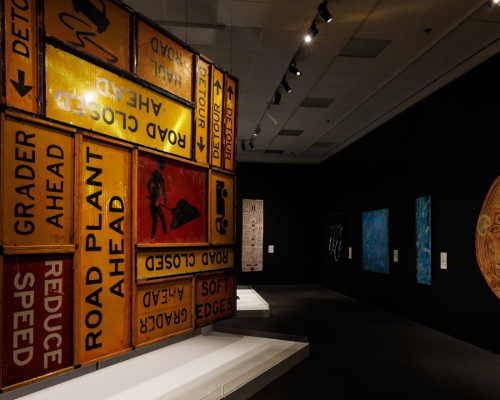
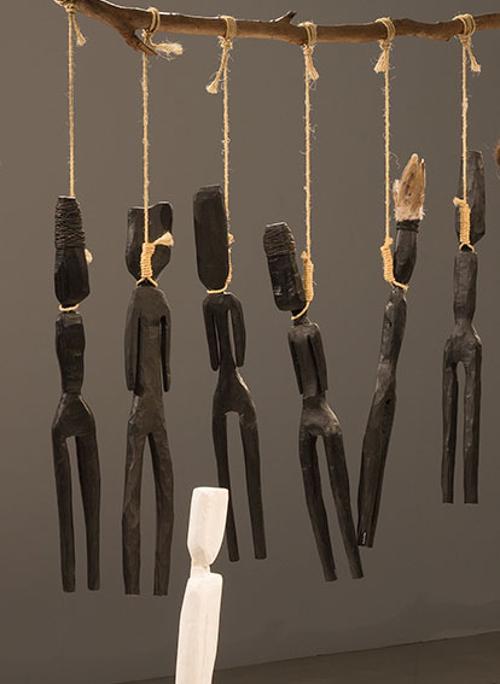
The epic, titular canvases hit like a series of billboards, sporting colours heralding different regional teams. These primary works (2021–23, with three from 2025) are given some historical context in smaller, adjacent spaces which separately display modestly sized women’s and men’s works (from 2007 onward), early indicators of organised collaborations. Notable here are the seeds of the APY men’s long-running spear making and cultural maintenance project realised in the grand ensemble piece, Kulata Tjuta: Tirkilpa (2013–23), purchased by the NGA in 2024. Disappointingly, this is not on display in relationship with Ngura Puḻka; until recently, the arresting installation ambushed visitors from the flank of Fernand Léger’s Les Trapézistes (1954) in the contemporary galleries.
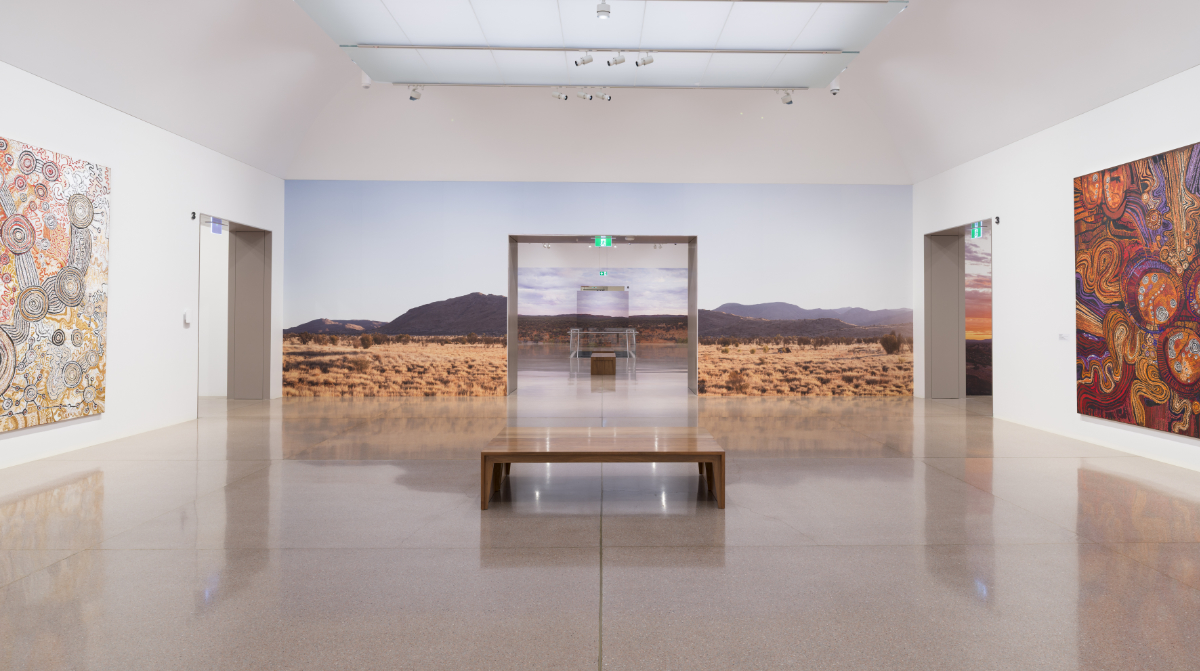
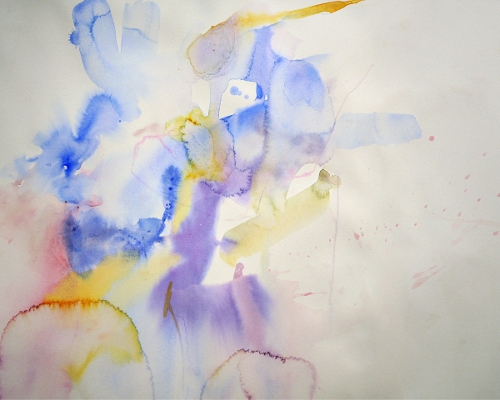
An earlier foundation story comes in a third darkened space abutting Ngura Puḻka containing superb watercolours by Albert Namatjira (and kin), the guy who got the whole thing going. His panoramic vistas and deft framing of landscape elements reinforce recent scholarship outing Namatjira as a photographer. They also demonstrate how immensity of space and distance can be condensed into intimate scale. It’s a strange piece of exhibition design that chose to echo the realism of Namatjira’s magisterial vision and the ambition of the epic canvases through locational photographs of desert country, wallpapered across dividing walls, explicitly describing the paintings’ origins but feeling like overt promotion for South Australian tourism. Another curatorial device is a short film featuring artist Nyunmiti Burton. To me, additions of this kind appear as institutional propaganda to authenticate the works—and by extension the artists—in an amplified version of the certificate of authenticity that buyers expect when purchasing Indigenous art. Pedagogical at best, such films seem aimed to challenge those who would deny the agency and integrity of the artists.
Ngura Puḻka is led by the APY Art Centre Collective (APYACC), formalised in 2017. Such partnership models have been a way of pooling resources for remote art centres, and the APYACC has been more financially successful and more visible than similar ventures. From the late 1990s and early 2000s when a rash of art centres were established in the tri-state border region (NT, WA and SA), a problem with carpetbaggers—independent dealers, non-government affiliated, with a reputation for unethical practice—contributed to isolated professional tensions across art centres in the region.
That said, collaboration is at the heart of the exhibition in method and form. This is old news across contemporary Aboriginal art and political movements — from the Yirrkala Church Panels (1962–63) to Papunya Tula’s dialysis fundraiser canvases initiated in 2000 and the magnificent Great Sandy Desert native title claim canvases such as Ngurrara II (1997), currently in the Biennale of Sydney, AGNSW, adjacent to on-and-off-the-canvas-murals by APY artist Yaritji Tingila Young. (Her honey ant/tjala Tjukurpa is in Canberra too, defiantly coiling in every colour.)
Historically, collaborative works have kicked up dust storms whenever a non-Indigenous artist has had any part in the work’s realisation — despite the fact that artists of all hues have long-engaged in creative intercultural exchanges and no remote art centre does away entirely with white staff, who sign up for a multitude of labours, privileges and responsibilities. They are the ointment, and the fly.
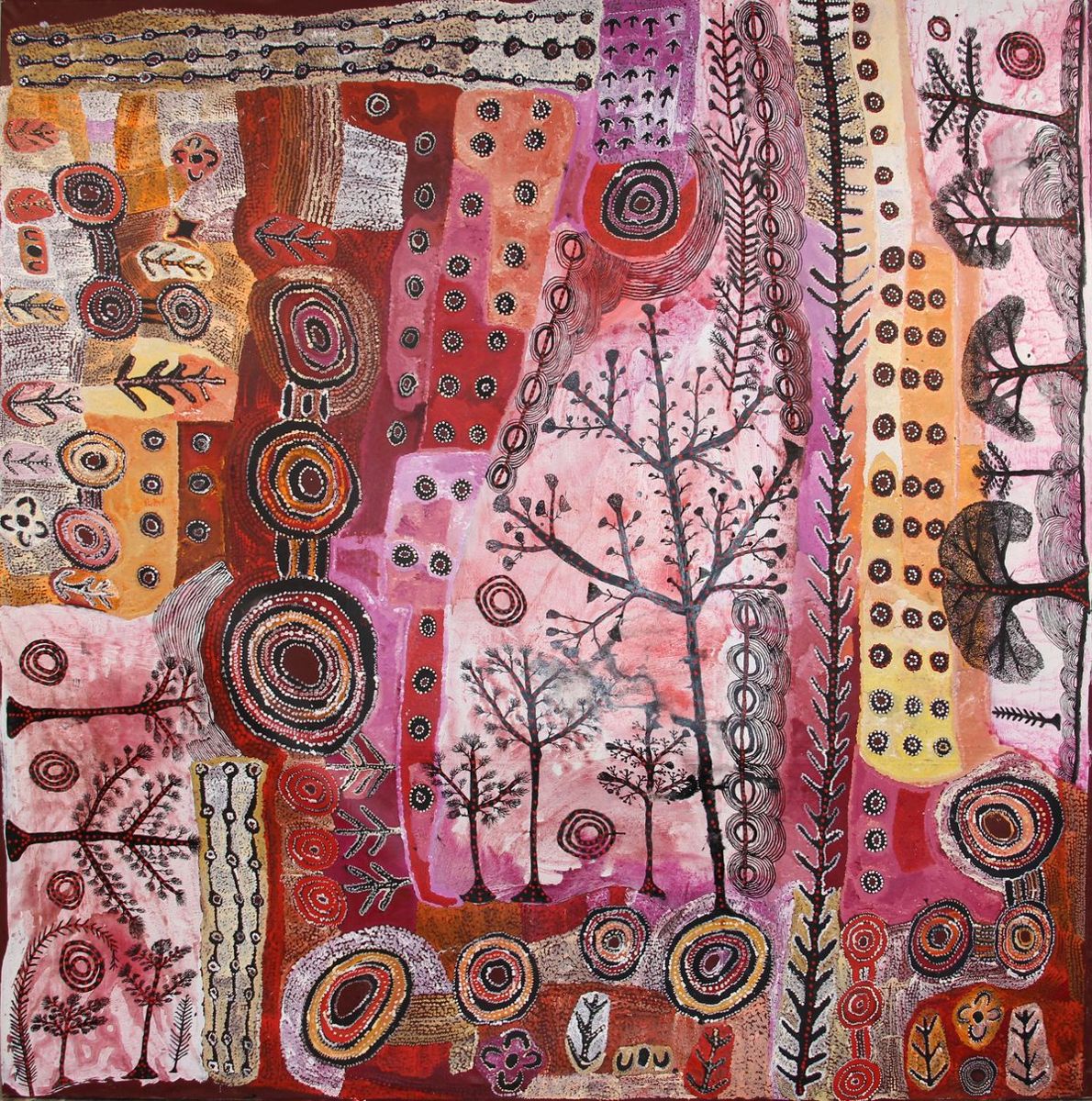
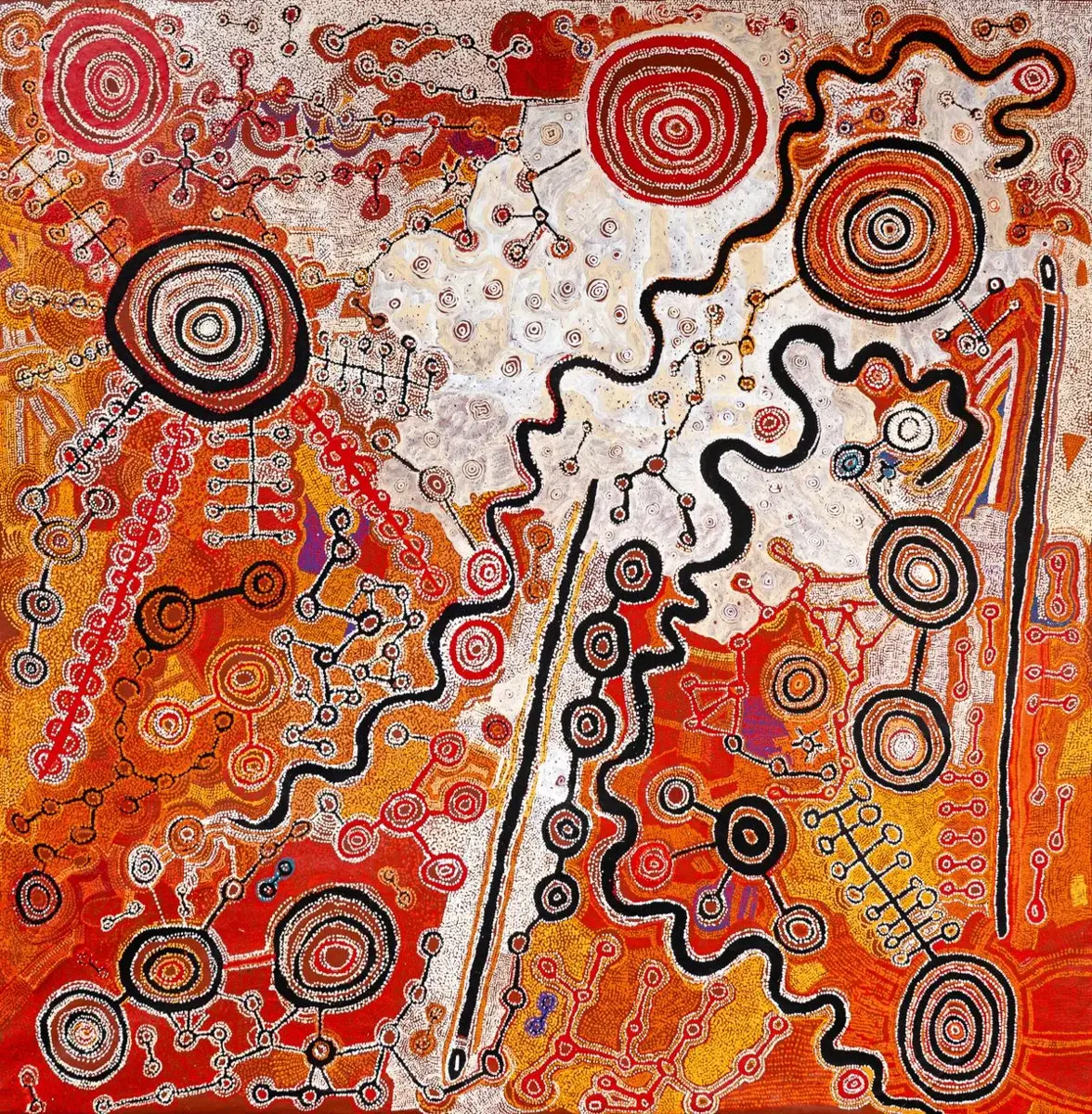
Across Ngura Puḻka, the collaborative canvases (approximately a third of the show) evoke dynamic, intersecting stories of custodianship and Country, in symbolic terms, mapped out in a logic best-known to the artists. Created by gendered kinship groups or pairs the motifs butt against each other, often more compelling in parts than in the sum of the whole; intergenerational, they also function as instructive, relational and therapeutic devices. Two collaborative canvases by men from Kaltjiti and Iwantja are most to my personal taste, the latter’s watery pink ground formally holding the elements of bush things, dramas and places together; the adjacent women’s canvas from the same art centre is more contrapuntal: a map of spatial competition, exuberantly chaotic — maybe because women joke, talk, and sing so much when they work.
There’s a corporate quality in these manifestations of Country, enhanced by the intent to scale-up the game in a one size fits all logic: at 290cm square (and the Mimili Women’s 2022 Regional Collaborative, Ngura Puḻka maxing out at 300 x 500cm), the paintings tower above audiences. These are unequivocally spectacular works, ambitious and branded in the house style, which in some cases fall apart, though such aesthetic judgements are subjective and culturally ordained. Eavesdropping on Saturday morning visitors—and there were a few on the second weekend of the exhibition’s opening—there’s every indication that these are crowd-pleasing paintings, loaded with colour and energy, trading on the narratives of Tjurkurpa and Country in perpetuity.
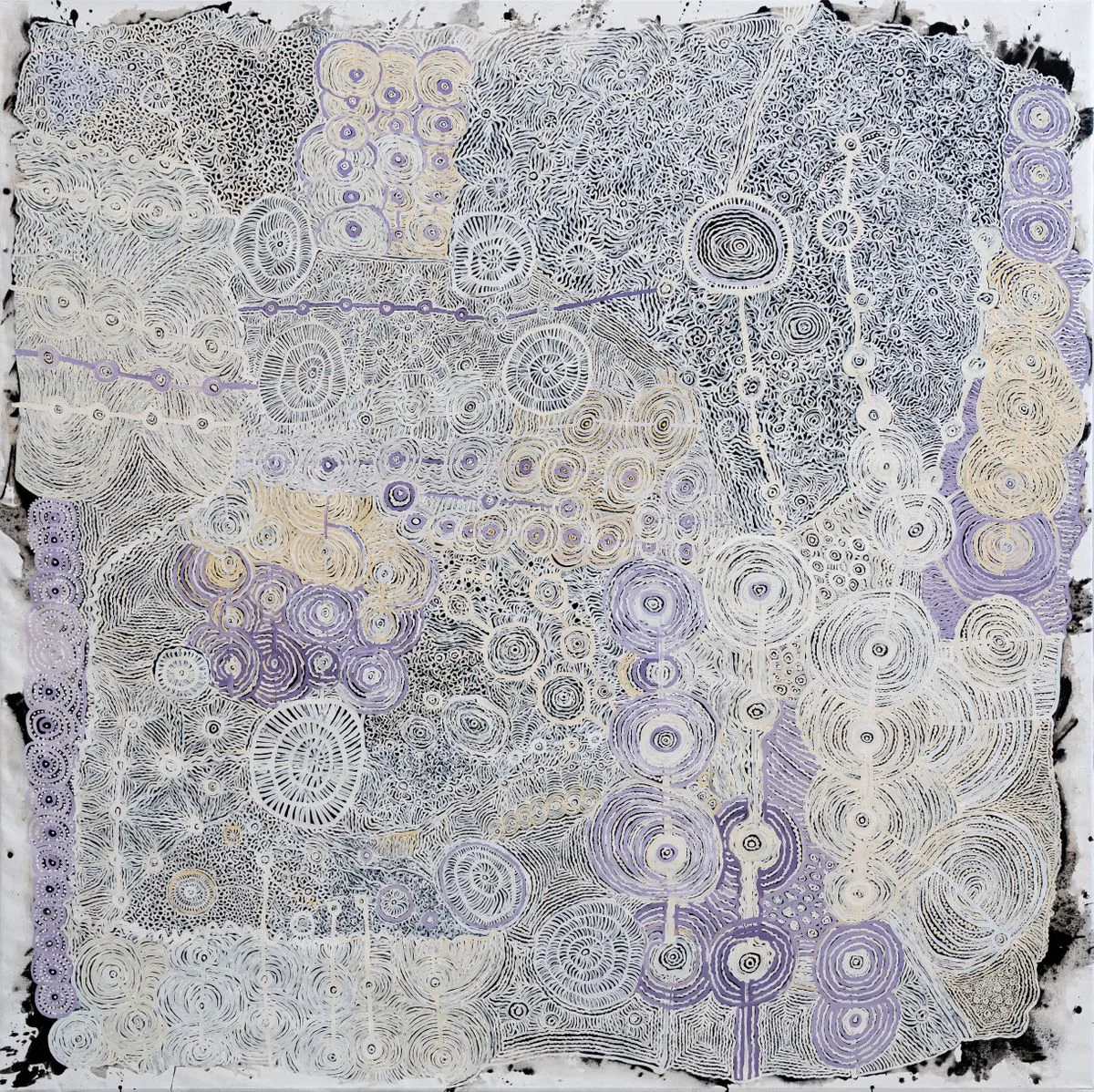
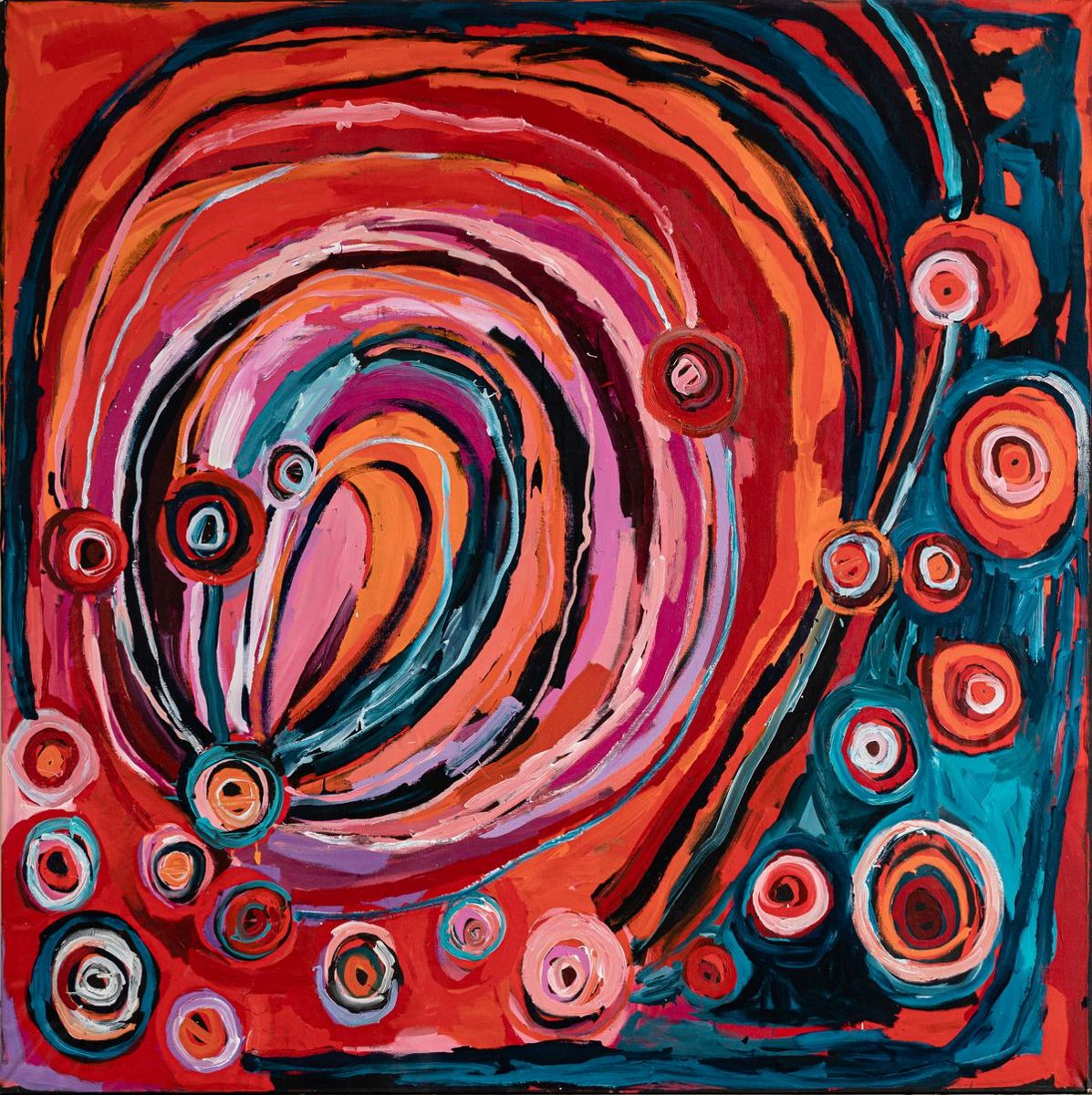
Which paintings hold attention, for who, how and why is a perennial unresolved question. Will Betty Muffler and Maringka Burton’s Ngangkari Ngura – Healing Country (2022) with its salty, mineral palette and systematically integrated roundels, a break in the overarching patterns of vivid colours, be everyone’s favourite? If the NGA was acquiring works (believed not to be the case), would this mesmerising work by two ngangkari/healers attending to Country once scorched by British nuclear tests, make the cut? What about Ngayuku Ngura (My Country), (2021) by Barbara Mbitjana Moore, a thick-brushed sweep of circular font, like some gigantic ancestral fingerprint?
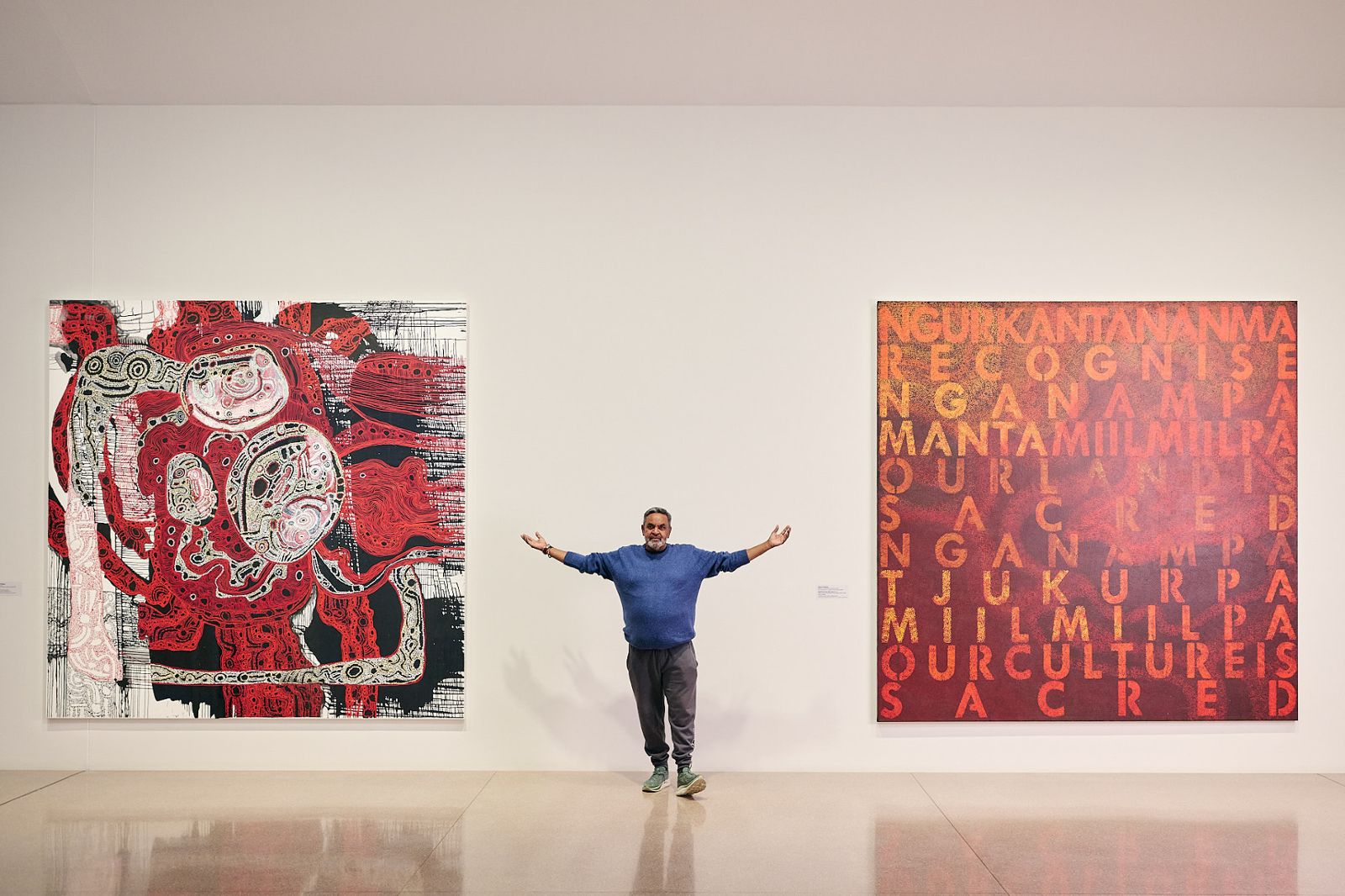
Several paintings have an animated, cartoon-like manner, from the spiky dot-laden structure in Theresa Baker’s Minyma Malilunya (2022) to Iluwanti Ken’s graphic/calligraphic black and white eagle stories, which never land for me but have been widely embraced by curators and collectors. Other stars attuned to the power of visual language in developing a distinctive style and the role of artists as cultural advocates—Zaachariaha Fielding, and his father Robert Fielding—are represented with signature works hanging abreast, Zaachariaha’s lace-like webs of viscous paint and Robert’s blocks of bilingual text declaring land, culture and Tjukurpa sacred. This is the underlying and overarching doctrine of Ngura Puḻka.
Like the APY Lands themselves, the paintings have their highs, lows, and repetitions: unevenness is the nature of just about every exhibition ever mounted. The artists have been through the crucible of public vilification and professional humiliation and have held their ground with temerity and grace. As a major assembly of visual documentation by two generations of senior Anangu artists, Ngura Puḻka – Epic Country will outlive us all.
Footnotes
- ^ For a journalist’s analysis of this saga and its aftermath, in which a white art coordinator at Tjala Arts was filmed hands-on assisting artist Yaritji Tingila Young, see Daniel Browning’s essay “Epic Story, epic country: the spectre of media tropes, cultural fraud and Aboriginal victimhood”, Ngura Puḻka – Epic Country, (Thebarton: APY Art Centre Collective Aboriginal Corporation, 2026), i-vii.
_Card.jpg)