How art may extend human connection to the natural environment is the thread that hums under Merinda Davies’ Cowgirls Are Forever. Davies is known for work that projects art-making performatively into potential, speculative futures in which nature is a force. And nature is at large in this rural setting. The summer afternoon I visited, the entry of The Condensery was barricaded. Signage, hastily rigged, warned of a snake in the front entrance and advised visitors to use the back door. (The reptile was a harmless green tree snake, but public safety and comfort was understandably prioritised).
Snakes aside, there is synergy in the presentation of Davies’ work at The Condensery, a regional gallery located in a historic milk factory building, beautifully refurbished, in the Brisbane Valley township of Toogoolawah 120 kms northwest of the capital. This gallery was breathed into life by local residents with council support. Among the community are those who came from large lives elsewhere to live quietly in a rural/residential area known for its cattle and agriculture. Those behind the founding of the gallery include Canadian/Australian artist Merton Chambers (1929–2025) and his widow, former MP Beryce Nelson. It is this drive and the calibre of its directors that has assisted The Condensery, since it launched in 2022, to consistently punch above its weight, maintaining high quality locally invested exhibitions in concert with conceptual contemporary practice.
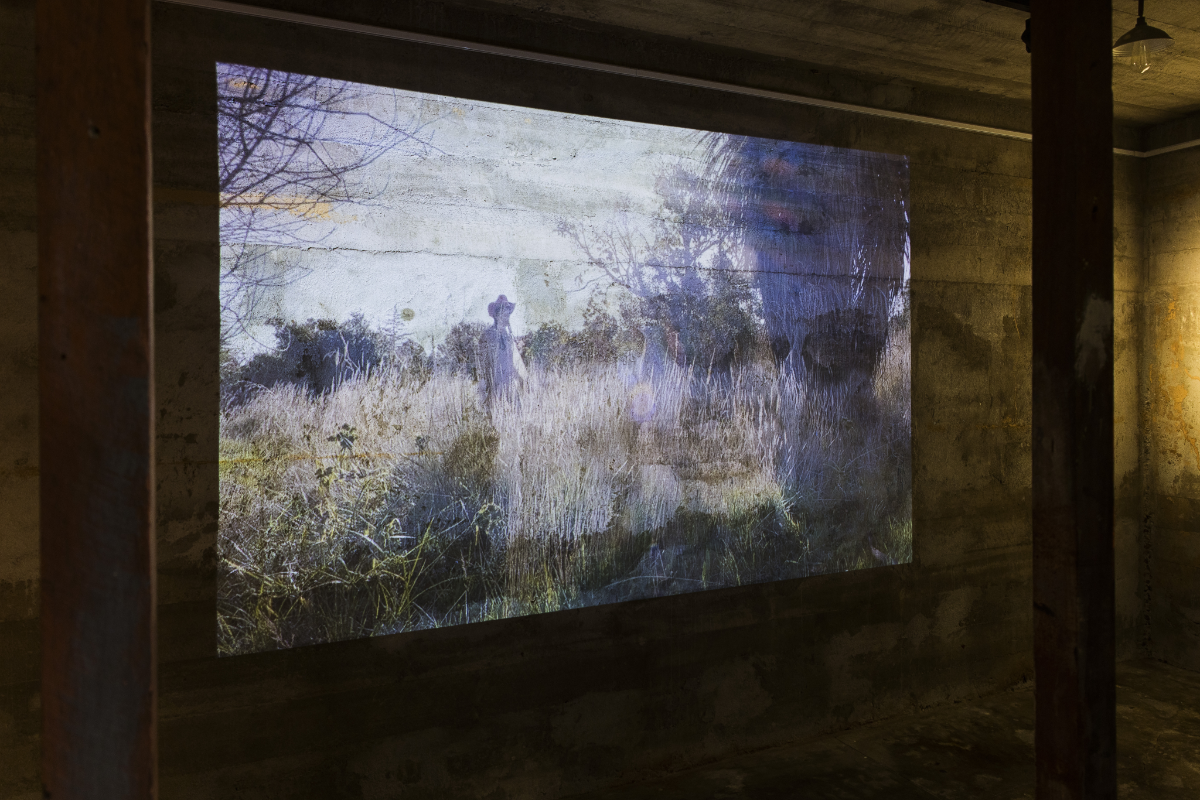
Davies’ Cowgirls is housed inside the Bomb Shelter — a concrete bunker which stored archives during World War Two and functions as a discrete gallery within the building. In a video work she performs as a ‘cowgirl’ in an imagined 2075, among associated works of art, costumes and a manifesto for the environmentally challenged future. Nature’s pollinators have declined some 25-60 per cent in recent decades from multiple causes, from a warming climate to biosecurity risks, all associated with the loss of biodiversity among species. In this exhibition, future humans step in to fill pollinating gaps, assuming our responsibilities and developing new types of relationships with earth, soil, animals and plants. It’s an intriguing concept, with Davies as Cowgirl 47 on a quaint rescue mission, inviting viewers to consider a novel intervention to ensure that biodiversity and ecological balance may continue.
Using the pollinator as a sexually suggestive and practical tool for sharing pollen, she walks, dances and kick-boxes around a struggling landscape, punctuated with cracked concrete and electricity poles. It’s joyful, with moves that are meditative then insect-sharp and, at times moody, the cowgirl-artist lying in the grass as if in reverie. It’s a sincere yet tongue in cheek exploration that overwrites the trope of cowgirl. Her tools of trade are displayed in hand-made pollinators, sticks with plant materials and natural fibres adhered with beeswax and string, with photographs of the protagonist bearing the fertile symbolism of the cowgirl costume (red boxing shorts, red cowgirl hat and flowing silk button-up shirt).
The concept and the video were developed during a 2024 residency in Aotearoa/New Zealand. Working with Movement Art Practice in Ōtautahi/Christchurch, Davies spent her time in a liminal space where buildings had been removed and nature was gradually returning. Yet her sense of a disrupted environment is echoed to an extent in the Toogoolawah township and surrounds where farming has, since the 1900s, irrevocably changed the landscape. In the narrative, cowgirl pollinators are subcontracted by the Bureau of Mutualisms to work with flowers. Natural pollinators (bees, moths and butterflies) are repopulated within the Bureau’s laboratory, with the kind of optimism (or false hope) invested in new technologies as a means of ameliorating damage.
Davies’ art practice has been an evolution, through performance, installation and movement. The sense of the more-than-human has been with her since childhood in an ethics of practice acknowledging materials and environments as co-producers, giving imaginative form to Donna Haraway’s ideas of becoming-one-with other species.
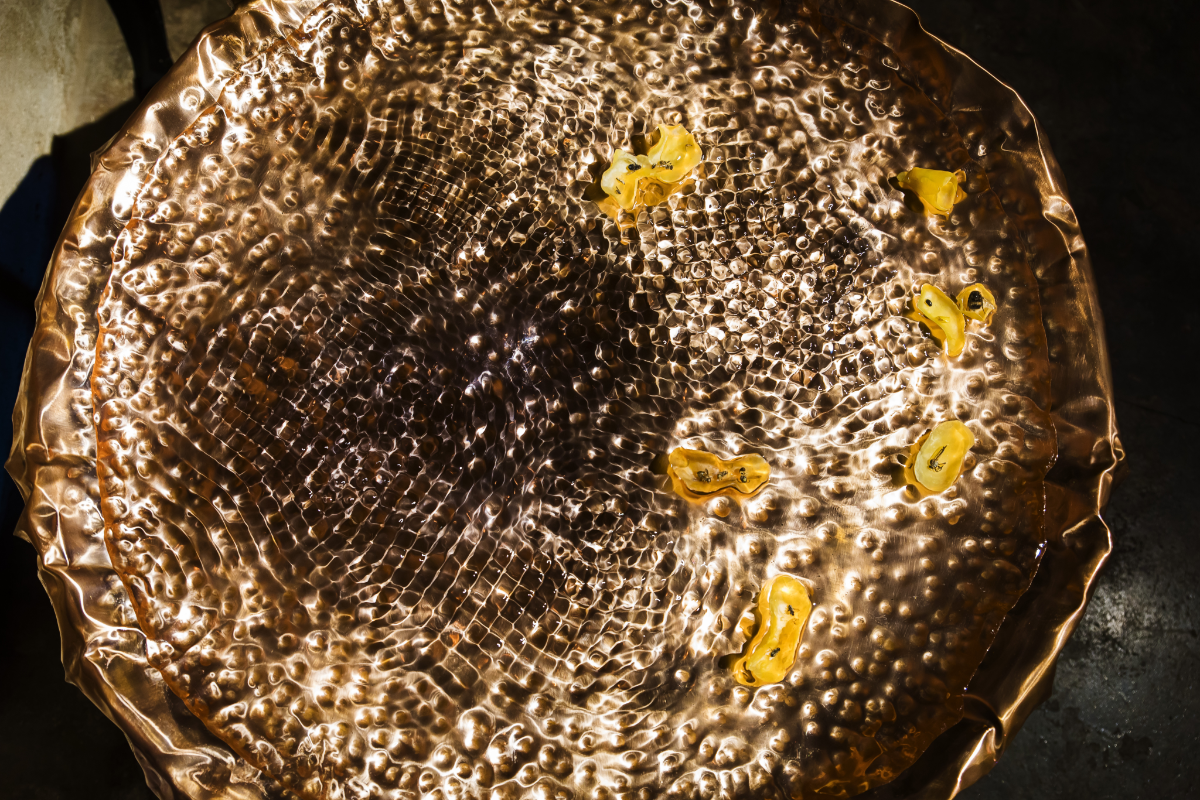
While the video is the central piece, individual works that convey the gravitas in the narrative most effectively are the tiny insect bodies lying in beeswax boats preserved in wax in a large copper dish in Eulogy for Pollinators (2025). Another powerful motif comes in a handwritten manifesto, which expands an emotional connection through evocative illustrations, handmade paper and closely observed nature.
Davies is programmed alongside The Show in the larger gallery space filled with commissioned work that interprets local agricultural shows from the Somerset region through the eyes of nine local artists: Elizabeth Poole, Jim Filmer, Gracie-Dawn Lewis, Naomi McKenzie, Jim McKenzie, Noela Lowien, Sandi Hook, Susan McConnel and Jan Godfrey. The Show reflects the preoccupations of rural Australia, not uncritically, but without the existential threat apparent in Davies’ work. Yet here too are relationships—long established and ongoing, between people, communities, animals and the land—with sensibilities that shift with changes to climate and season, and the embrace of new technologies in farming.
Through sculpture, ceramics, drawings, paintings and video, these imaginative interpretations of the agricultural show explore such histories, what they mean for the community and what they leave behind in terms of memories, as well as what they celebrate. The smell of hay is inseparable from Show sounds (2025) by Jim McKenzie, an audio mix of animal and other ‘sound’ rites (from the show ring to sideshow alley). Naomi McKenzie’s The growers, the makers and the jam drop bakers (2025) assembles Polaroid photographs that record the choreographed judging of animals, production of baked goods, side show alley’s machine-made physical thrills and the often-multigenerational involvement in what is an annual coming together of mostly country people. Within the gridded format, some of these images are wrapped in chicken wire in a subtle critique of the cruel realities of agriculture and animal husbandry amid an overarching, celebratory tone.
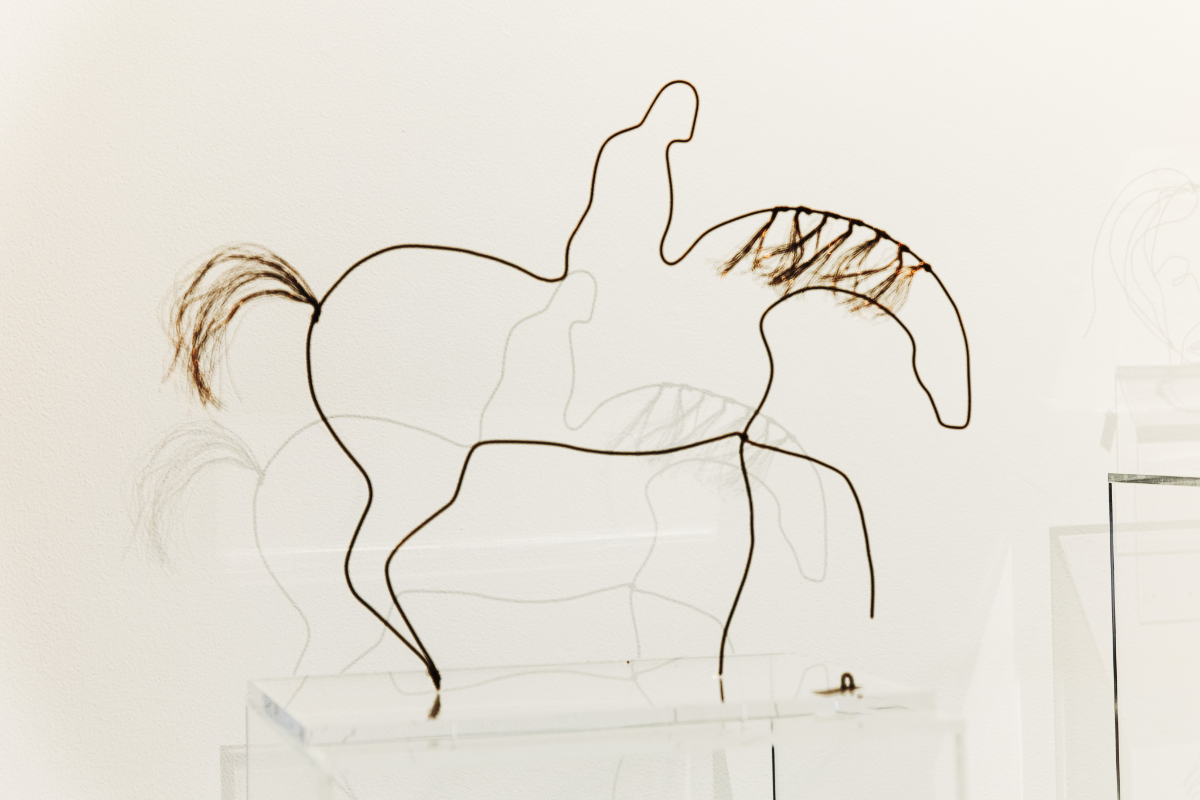
Nostalgia travels alongside these yearly presentations, marking dedication to the craft of making and baking, the relationships between humans and domesticated animals and the growing of food. Such agricultural events showcase innovation while they roll out the usual fair fare—dodgem cars, thrill-seeker rides and rotating clowns. Elizabeth Poole’s wire sculptures capture the athleticism of horses but highlight too the exploitation of farm animals at the hands of the dominant species. Jan Godfrey’s ceramic Delights of the Earth (2025) enshrine horticultural produce and prize winners in media also harvested from the earth.
In these two summer exhibitions The Condensery draws together a framework that embraces contemporary art in narratives that both converge and differ. The conceptual sharpness of Davies’ work is countered by its gentle narrative, its positive view of the future, and an imagined innovation (or fantasy) that may restore some ecological abundance. (Drones are among the technology already supplementing botanical pollination). In celebrating the culture of rural communities and their achievements and partnerships between the land, humans and animals, The Show also sounds concern about animal agency and human dominance from a slightly different perspective.