Germans refer to the area as Baden Württemberg's heart, a “ländlich”, meaning “bucolic” area famous for its red wine; not a paradise, but very far from the madding crowds of Frankfurt. The art museum is rather unique, a restored building, preserved under laws protecting national monuments. It operated for two centuries from the mid-1700s as a shelter for sheep on a government farm, with a three-level "Fachwerk" timber frame, rustic wattle-and-daub walls and a tiled roof. It’s in this unlikely setting, rather cluttered and crammed, physically and philosophically diametric to both Sydney and Papunya that this bespoke conversation between Imants Tillers and Aborginal art takes place.
Some are intrigued. Some are excited. Some are vexed by cognitive dissonance. Those are the main responses from German visitors to Wildes Paradies / Fierce Paradise, which features 66 artworks by the Sydney-born Imants Tillers, including nine works Tillers made in collaboration with Warlpiri artist Michael Nelson Jagamara, born at Pikilyi, about 400km northwest of Alice Springs in central Australia. Ten works from the Tillers’ family collection, by Jagamara and other Aboriginal artists Emily Kame Kngwarreye, Peter Pijaju Skipper, Sue Elliott, Sam Tjapanangka, plus two works by Anglo-Australian Tim Johnson, give further context. A criss-crossing of cultures, histories, and themes of Aboriginal, German and Latvian diasporas are signature to this exhibition, co-curated by Hubert Sawatzki and Tillers’ German-based daughter Isidore Tillers.
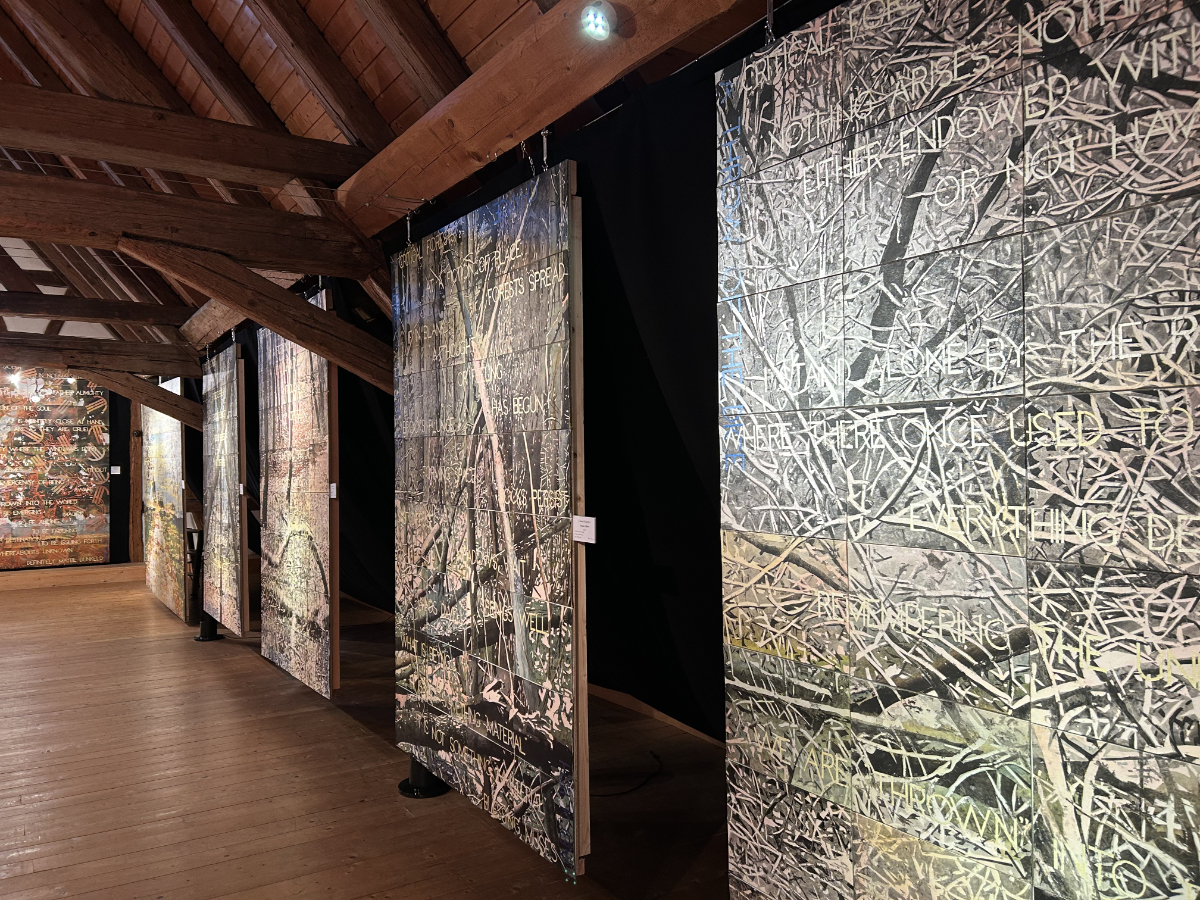
Perhaps simplest for visitors to appreciate is the series of paintings Critical Forests (2022–24), which tantalise with a somehow eternal tranquillity, familiar to most Germans, worshipers of vacations in the Schwarzwald and Sunday walks in forests. In these, Tillers was inspired by photographs by the German artist Gerhard Richter and made reference in the title to a 1769 book published in Riga (now Latvia’s capital), Critical Forests, or Reflections on the Science and Art of the Beautiful.
Tillers is well known in the Australian art scene for his appropriation art, notably the controversy surrounding the Biennale of Sydney in 1986, where his painting The Nine Shots (1985) appropriated—without permission—elements from Jagamara’s 1984 painting, Possum Dreaming (later renamed Five Stories). Present-day Australians know better than to appropriate without permission from First Nations artists, but that was then. It took more than a decade of contact, mediated by mutual friends, before Tillers and Jagamara reconciled and collaborated on joint works, creating two dozen paintings before the latter's passing in 2020. Jagamara was big in the 1980s and his works are held in every major public collection. He is well known for designing the mosaic in front of Australia’s Parliament House in Canberra and his Five Stories was sold by Sotheby's in 2016 for over AUD $680,000 — the then-highest valuation for a work by a living Aboriginal artist.
Both artists’ reputations in Germany are much more subdued, Jagamara having been shown only four times in group exhibitions including the touring Aṟatjara: Art of the First Australians in Düsseldorf in 1993 and Tillers in several group exhibitions since Documenta 7 in 1982. He is better known in Latvia, where his work has been featured in four major exhibitions and where he was awarded Latvia's highest state honour, the Order of the Three Stars. Wildes Paradies is his first major show in Germany.
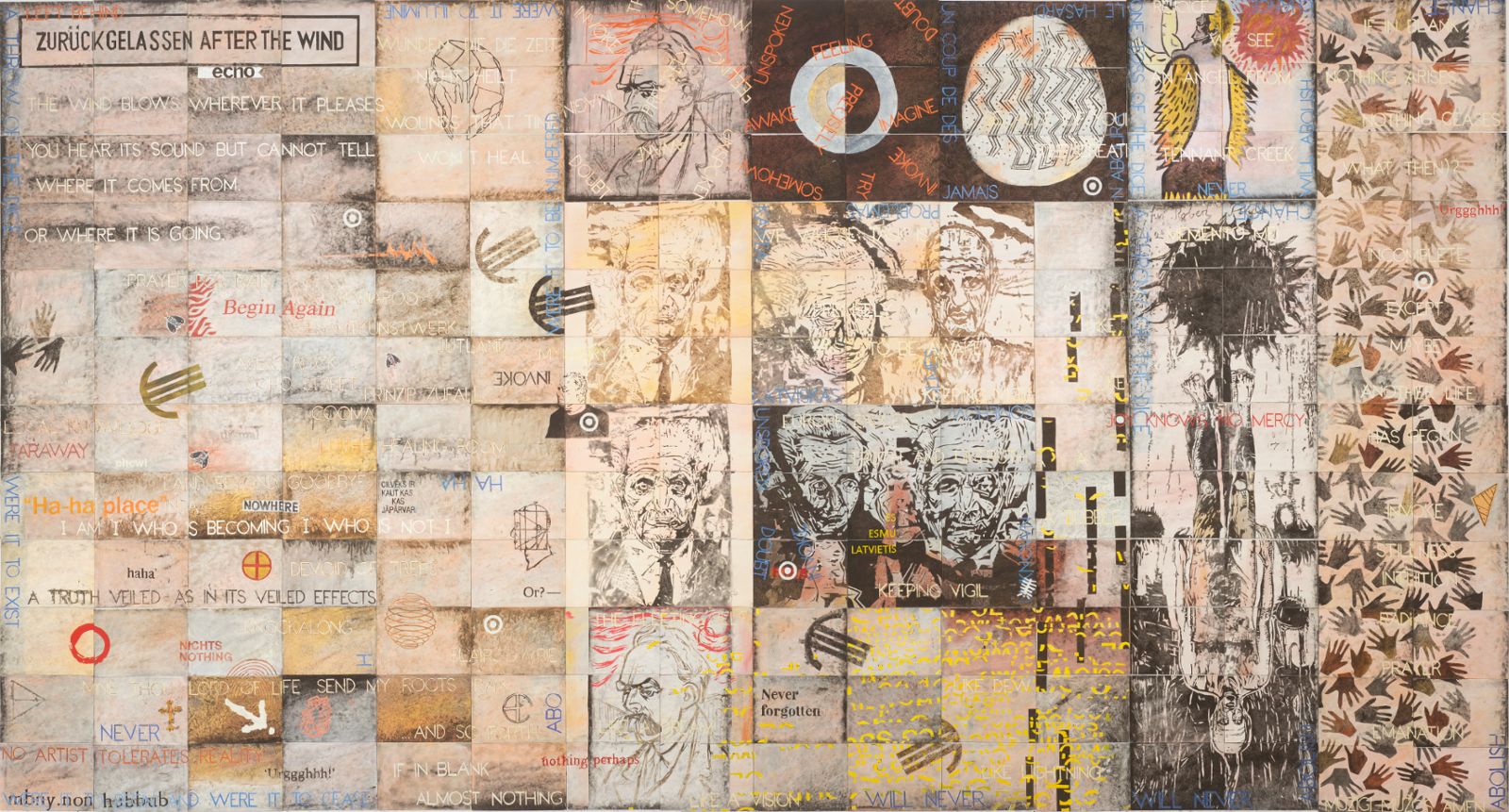
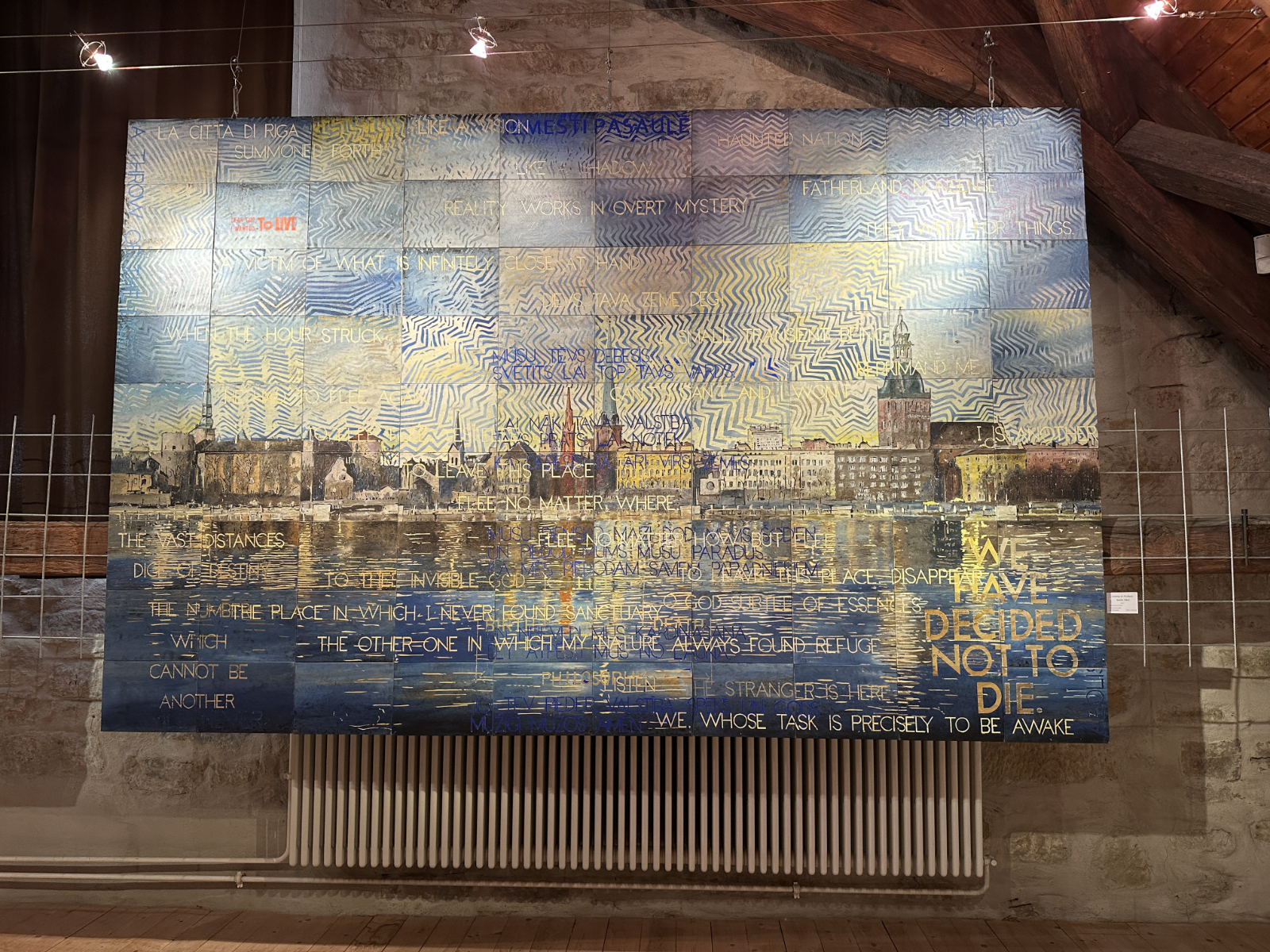
Tillers’ Zurückgelassen (Abandoned) (2025) on 192 panels was created especially for the exhibition and is the largest displayed. It consists of several zones: fainter and text-filled on the left, darker and symbol-heavy on the right, whereby nine portraits in the centre-field, their eyes peering in various directions, evoke unexpected intimacy. The philosophers Kant, Nietzsche and Heidegger are iconic in Germany, and recognised by many visitors. Anselm Kiefer’s art is explicitly referenced towards the right of the painting with a sketch of a sunflower, the layout resembling his Wege der Weltweisheit: die Hermannsschlacht / The Paths of World Wisdom: Hermann's Battle, (1978). In Tillers’ work, the words WE WHOSE TASK IS PRECISELY TO BE AWAKE / KEEPING VIGIL / EUROPE ENDLESS / TRUTH AND UNTRUTH / KEEPING VIGIL are stencilled across the visages. Is that a message for our times, when ‘truth’ and ‘fake news’ are screamed from all sides, when merely keeping vigil is simply bearing witness, not protecting? The moody or muted colours of this and other works generate their own impressions and subliminal message.
Tillers has strong connections to his ancestral roots in Latvia, where both parents were born. With unintentional irony, Tillers noted in an ABC interview about his first visit to Latvia in 1976 that ‘there was a deliberate policy of, you know, deportations and Russification’ and ‘… people there had been colonised, and [there was] quite a lot of anxiety.’ Tillers said that experience left him very grateful to have been born in Australia. The irony is in the parallel circumstances of his future co-artist Jagamara, whose country had been colonised by Europeans.
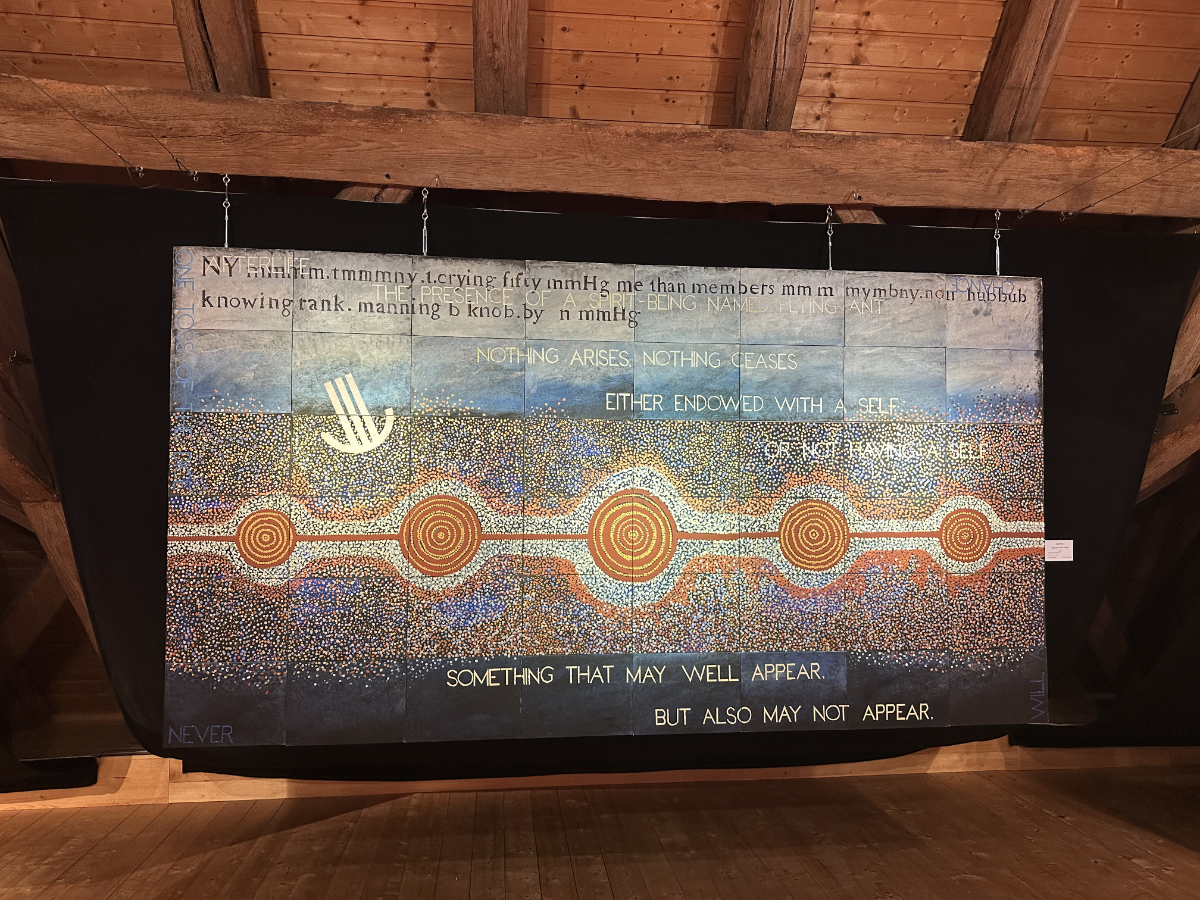
Throughout Tillers' works, fragments of sentences and stacking of symbols—some reminiscent of Indigenous artworks, including Jagamara’s—overpower the viewer seeking to interpret (or interpolate) meaning. The impression is of storms of inspiration, which resolve not in a visible epiphany but in a missive demanding reflection and exegesis. The collaborative Jagamara/Tillers paintings are even more enigmatic.
Tillers himself emphasised, in an introductory wall text near the entrance of the exhibition, that the collaborations from 2001 to 2024 ‘brought him only an auspicious entanglement.’ He likened each and every work by Jagamara to an epitome of the Secret Painting (1967–68) series by the conceptual artist Mel Ramsden, which consisted of a framed painting, completely overpainted with enamel, and a short text declaring the contents of the painting as forever unknowable, except to the artist. Australians familiar with First Nations art use terms such as secret/sacred, usually without noting such parallels. In his works, however, Tillers draws more parallels than a line engraver.
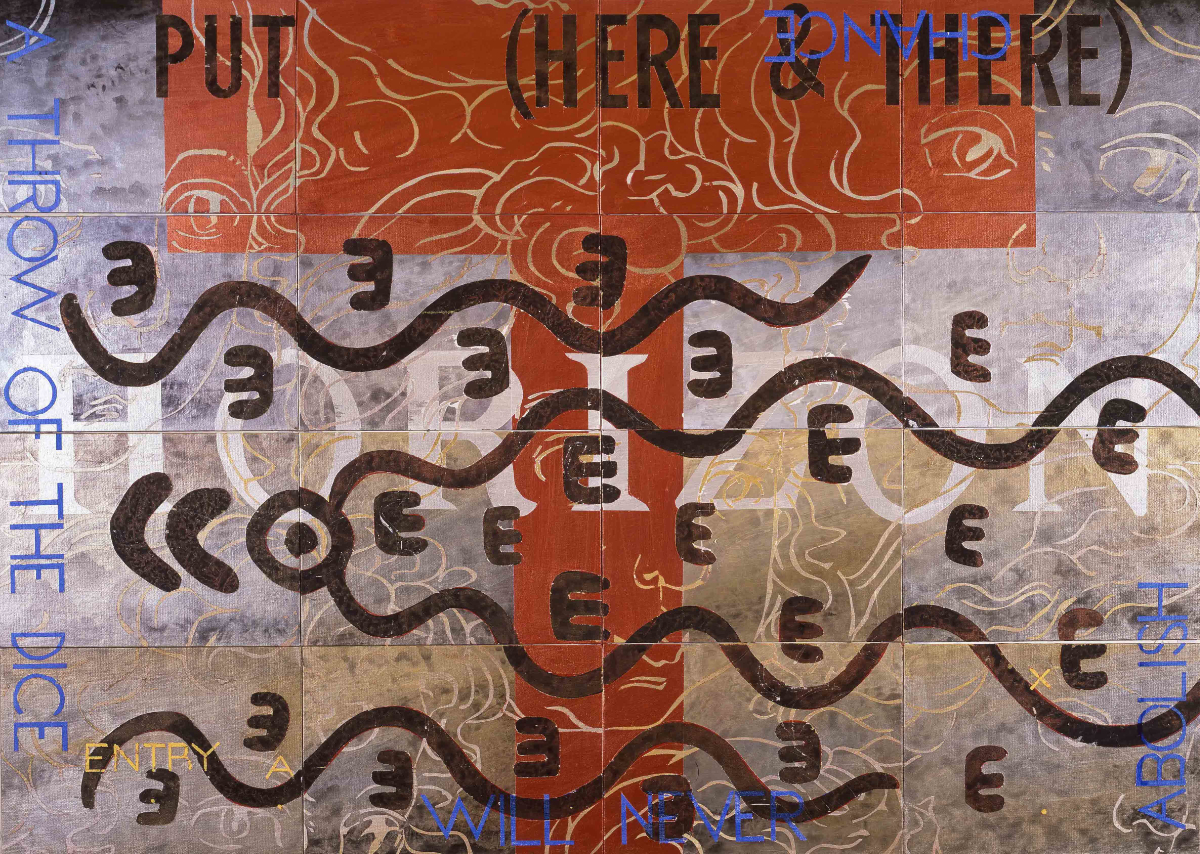
In Nature Speaks: AX (2002) Jagamara turns the tables on Tillers' appropriation and overpainting of his Five Stories symbology, by accepting Tillers' draft painting, then overpainting it. Tillers included the word HORIZON as an indicator of what would normally be a pictorial horizon, the red T references both Tillers as artist and earlier works appropriating from the artist Colin McCahon, the line-drawings of putti/cherubs (seen in German Romantic artist Philipp Otto Runge’s work) represent winds influencing journeys. The oft-recurring phrase A THROW OF THE DICE references Stéphane Mallarmé's 1897 poem "A Throw of the Dice Will Never Abolish Chance", a de facto motto for Tillers. Ultimately, it is hard to establish who is overpainting who in this mix of wavy black lines and E-shaped designs related to the travels of the Possum Ancestor, but the work illustrates the cultural divide the artists were trying to bridge. The two approaches are like oil on water, one’s culturally specific iconography overlayering the other.
The inclusion in this exhibition, for the first time, of seven joint works completed after the passing of Jagamara in August 2020 opens a new chapter in Australian art history. Posthumous completion of art works by collaborators is (grudgingly) accepted in Western art history, from Rubens to Raphael to Sol LeWitt, but in the case of Jagamara and Tillers, special issues arise: the degree of Indigenous agency and independence, white artistic mediation, and the granting by Aboriginal artists of one-time or multiple permissions to recreate their iconographies and/or stories. These arguments go right over the heads of the local audience, but will surely be at the heart of discussions if the Australian venue planned for 2027 is realised.
The importance of this exhibition to a German audience arises from its alchemical mix of cultures, styles and iconography, exposing expatriate wounds in identity and national heritage. It shows how appropriation art can excise deeper than surface imagery borrowed from others, down into the underlying meanings imbued by history (Australian, Latvian, German, Indigenous Australian). It deserves to tour other cities in Europe, however the necessary institutional or government backing is lacking.
 18.jpg)