Art historian Max Raphael understood art as an interplay between the material, the mind, and the process of creation. He considered the latter central in answering a question Marx had posed a century earlier: if art is a superstructure—that is, if it is a form of visual ideology reflecting the class history of its time—why do works of art continue to affect us long after the economic base has been transformed?[1] It is during the stage of production, when an artist chooses how to press or embed upon a material, how to maintain / twist / or transcend it, that Raphael saw the formation of ‘new qualities:’ the previously raw material ‘is transformed into a material of figuration.’[2] This imbues the work with a specific energy, a mystery of its own, which persists despite the passage of time or the flow of historical processes.[3] As John Berger, writing on Raphael, said: ‘the power of painting lies in its painting.’[4]
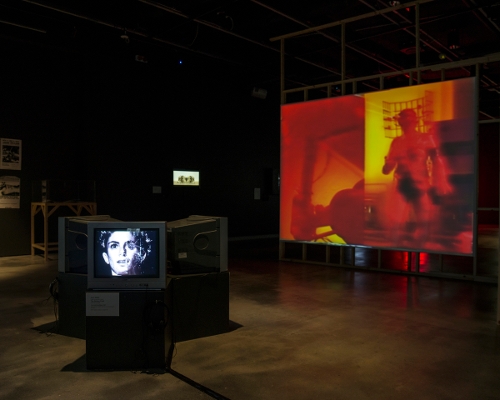
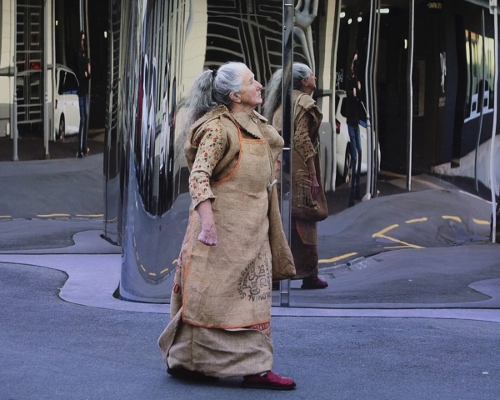
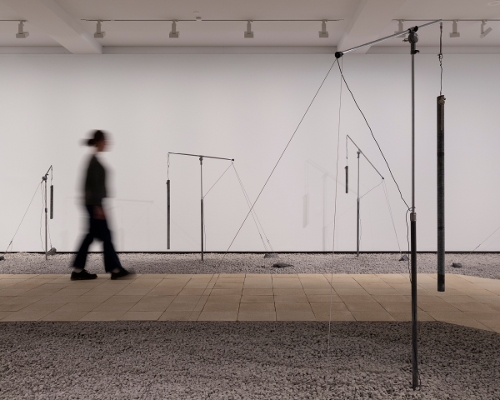
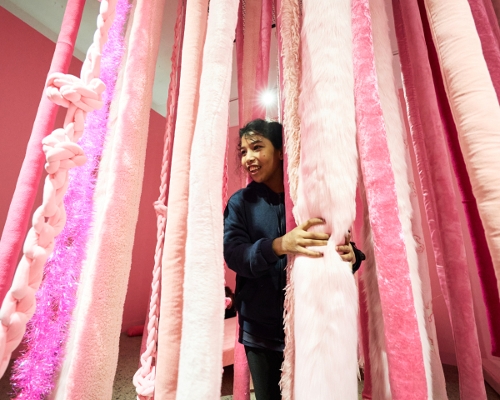
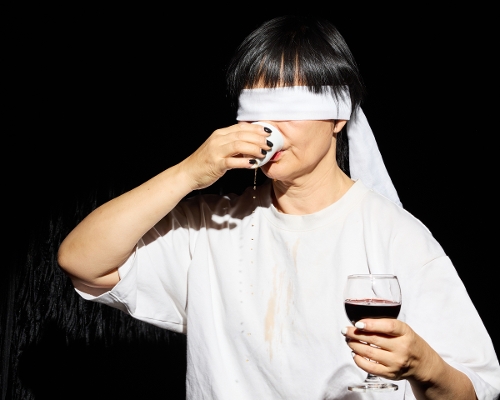
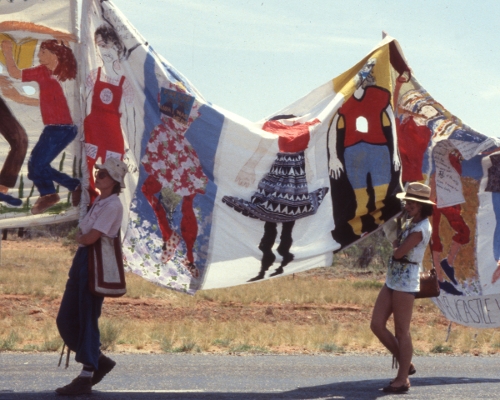
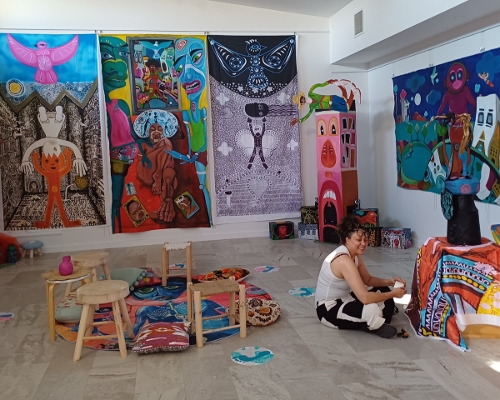
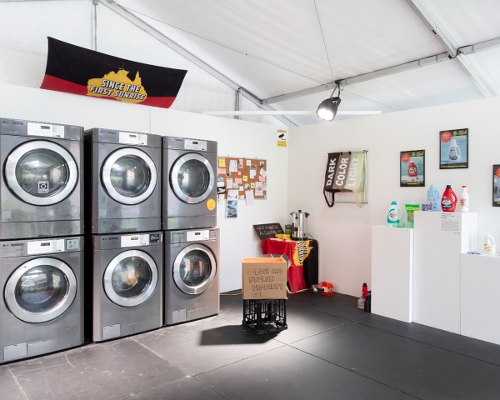
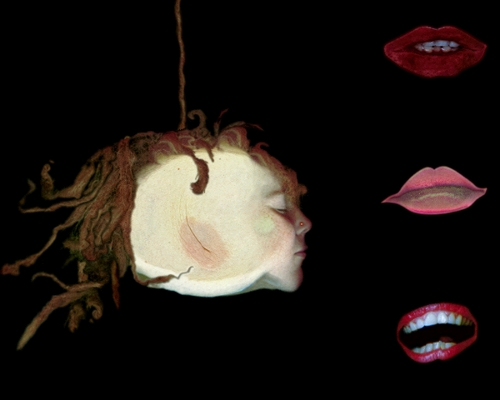
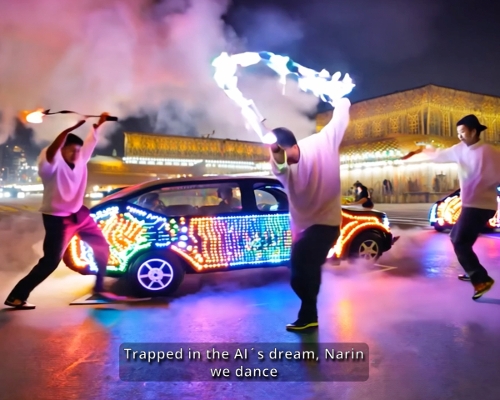
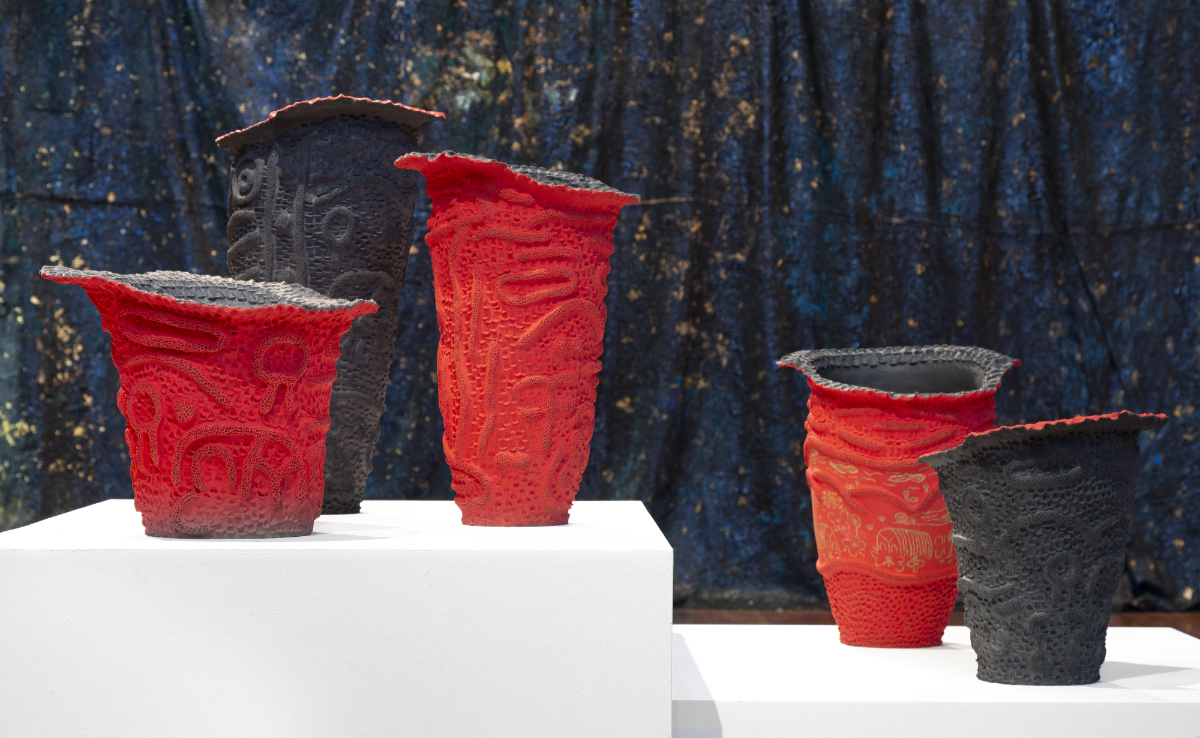
I was reminded of this emphasis on the process of creation in Yield Strength, the 2026 Adelaide Biennial of Australian Art curated by Ellie Buttrose. Yield strength is an engineering term referring to ‘the point at which material subjected to force begins to change irreversibly,’ and ‘a measure of a substance’s plasticity, resilience and boundaries’.[5] Rather than orbiting a theme, the artists were selected for their experiments in medium, a curatorial strategy Buttrose hopes minimises the risk of closed, prescriptive readings. Spread over three locations, the Art Gallery of South Australia (AGSA), the Samstag Museum, and the Adelaide Botanic Gardens, there are an abundance of strong works: Isadora Vaughan’s sculptural ecosystem, Nathan Beard’s silicone casts playing on delightful excess and abjection, Josina Pumani’s vessels referencing atomic bomb testing at Maralinga, Jennifer Matthews’ imposing cattle runs prodding you through the space, Julie Nangala Robertson’s dual-chromatic paintings, using overlapping dots that trace aerial views of Country and Prudence Flint’s distorted domestic scenes.
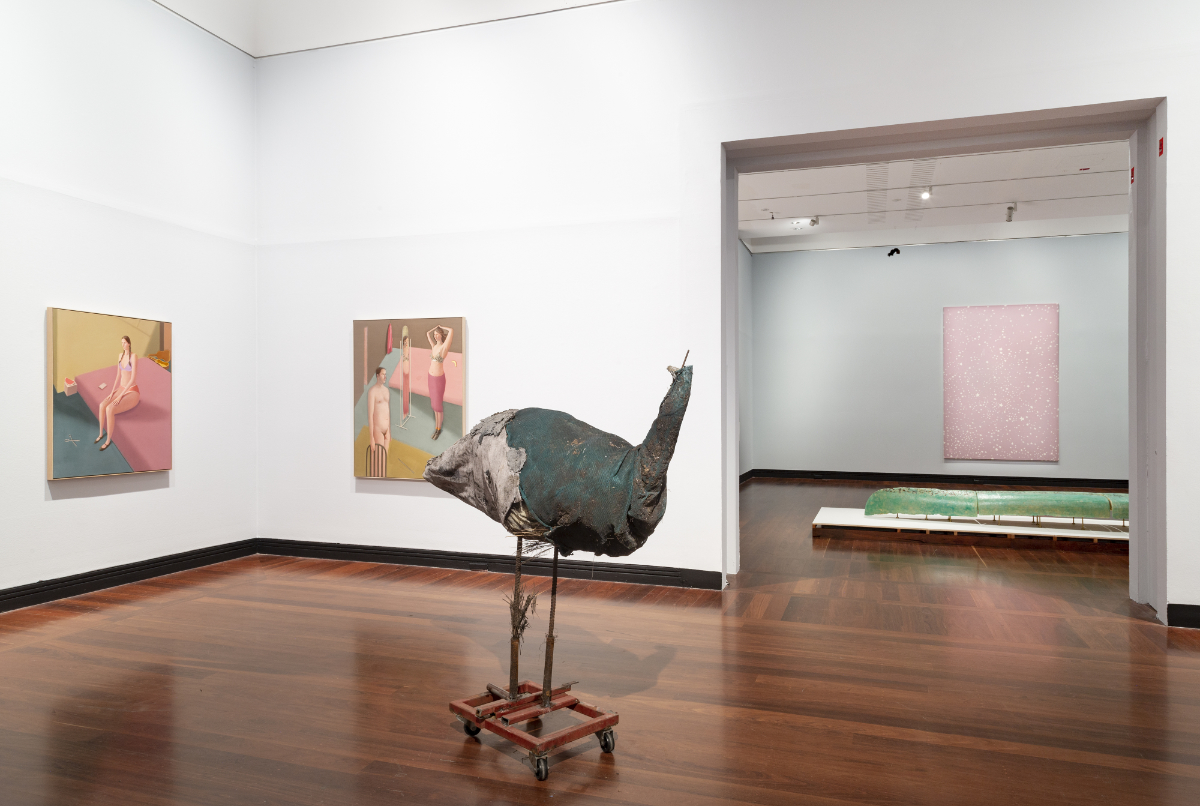
Starting in the atrium of the basement floor of AGSA, I encounter Pumani’s vessels, with Robertson’s paintings in the background. Their limited palette of red and black suffuse the otherwise organic forms with a forceful presence, rooting you in place. Extending this is Robert Andrew’s new eyes - old Country – Nagula (2025), a digital monitor connected to a kinetic drawing machine. A mechanical arm suspends the monitor, screening aerial footage of Country, as it slowly moves along the of the atrium wall dragging large chunks of charcoal. As the monitor inches vertically and horizontally, the charcoal marks the ‘white cube’ while broken pieces gather below. Andrew’s work thus persists with the organic motifs but disrupts this with fabricating materials. Next, the cold hardness of Mathews’ steel gives way to Flint’s soft, unsaturated paintings. Buttrose has concentrated closely on the way the viewer moves through the space, and each location has its own rhythm. At AGSA a pattern is established: repetition, accent, interruption, extension.
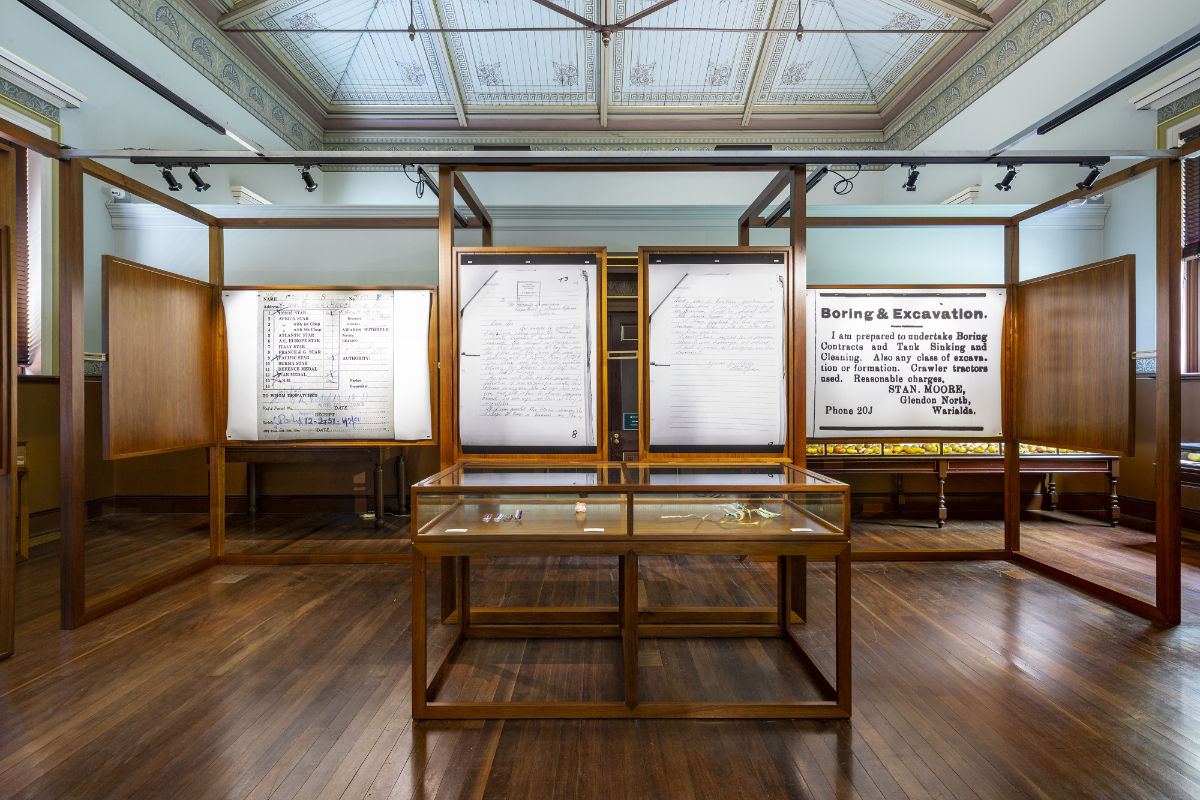
Samstag elicits an entirely different sense of texture and motion: walking through Vaughan’s sculptural installation there is a feeling of denseness. Objects are on or close to the floor, elevated at incrementally varying heights, blocking easy passage, suggesting an overflowing abundance. Pumani’s vessels reappear, this time on square plinths. Bundling, clustering, and clumping like this occurs across the gallery, structuring its own distinct current of repetition, friction, extension. In contrast, at the Museum of Economic Botany, Archie Moore’s Remnants of My Father (2025) inspires a delay in movement and a slower reflection.
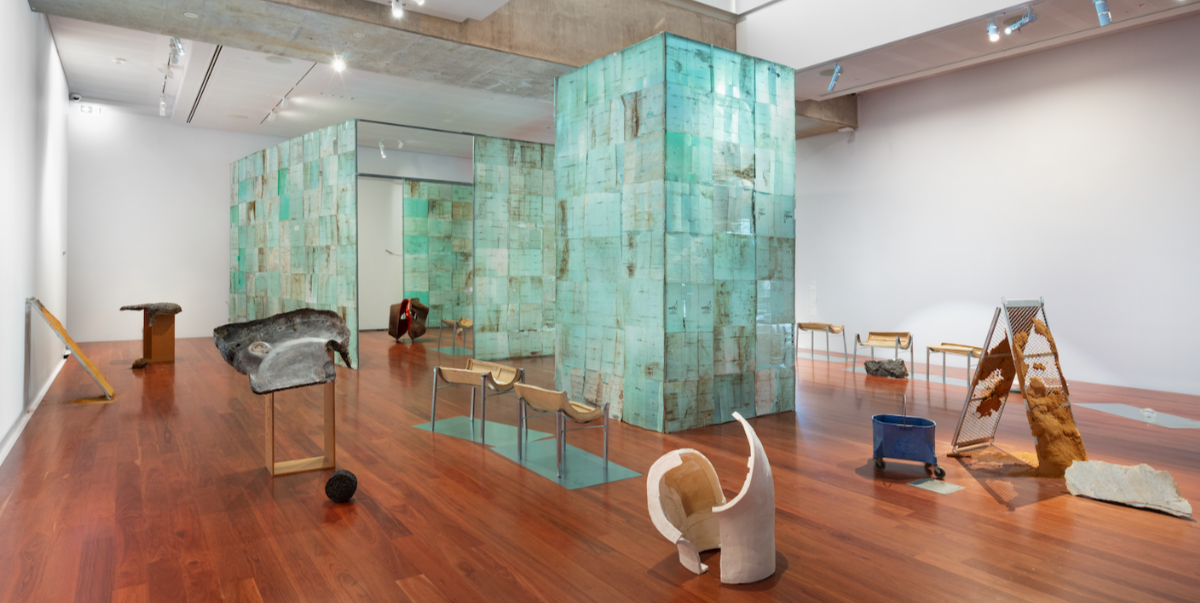
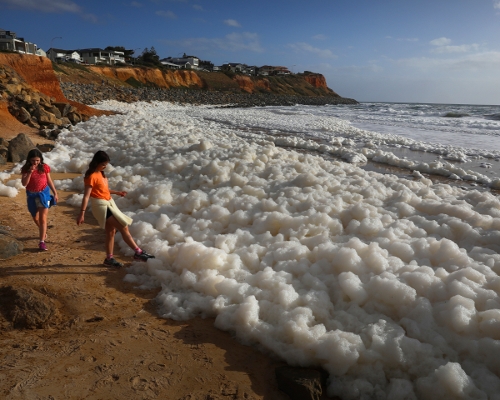
Buttrose’s Biennial is a genuinely dynamic show. Each work brings and maintains its own energy but is heightened by the correlation, correspondence, and tension between them all. The curation attends fastidiously and noticeably to both lighting and texture. Interruptions via oppositional materials produce surprising variations: next to Mathews’ gleaming steel is Vaughan’s dimly lit hay installation and Francis Carmody’s sombre lit, grainy foam sculpture. These and other points of textural disruption and contrast give the exhibition an energetic rhythmic movement. As I walk through the biennial, my mind keeps swirling back to the notion of energy fused via artistic production, an association that proceeds beyond merely the title, but is tangible throughout.
In a keynote lecture inaugurating the Biennial, Daniel Browning spoke of the necessity of Bla[c]k art criticism, and the need to appreciate works in their proper sociocultural context. This resonates with Buttrose’s curatorial statement: alongside material enquiry, Yield Strength functions as a metaphor for ‘how an awareness of another set of thresholds is forced upon us by political and environmental crises,’ and ‘the pressures that shape this moment.’ For the past two and a half years of witnessing genocide in Gaza and pushing back against its attendant horrors in the metropole, many of us have felt a seesaw of emotions: minor triumphs amongst larger terrors, small buoyant victories followed by the crush of devastating loss.
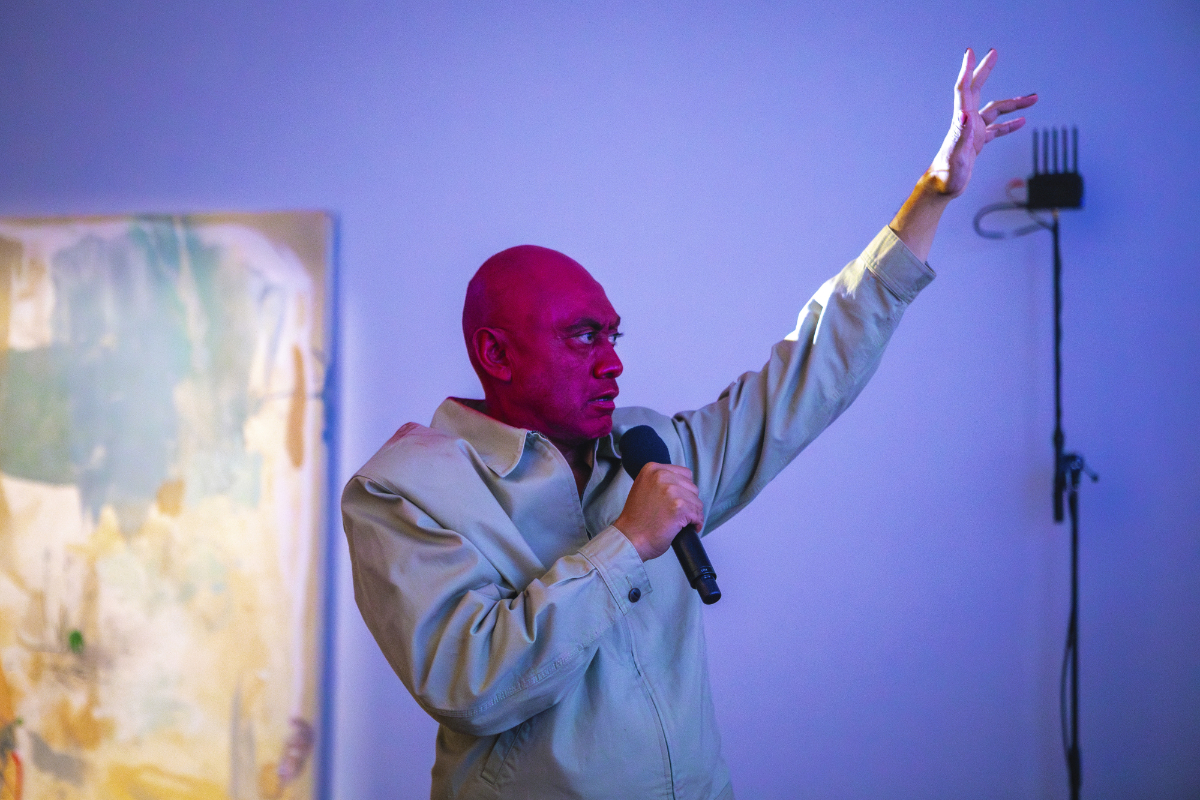
Within the opening days of the Biennial in late February, I felt that familiar swing of rapidly ascending and descending emotions. Minor triumph: a successful writers’ boycott refusing anti-Palestinian racism at Adelaide Writers Week, resulting in the opening of a livelier, grassroots alternative. Devastating loss: news of American and Israeli missiles massacring school children and adults in Iran and Lebanon. Though most of the works curated in the show are not loudly political, they speak in registers of colonial enclosure, violence, and ecological depletion. Brian Fuata’s opening performance at Samstag alluded to the global socio-cultural context perhaps most forcefully. Working with a sound engineer to manipulate and modulate his voice in real time, Fuata reiterated certain phrases: ‘artist’s back / artists back artists / back artists back artists,’ ‘Randa / Randa / Randa, and ‘it shouldn’t be illegal to fight back.’’[6] This acknowledged the solidarity forged between cultural workers under the political duress of this moment, solidarity that has played out in various instances across the continent (and the globe), that has stood against the destruction enacted by colonisation: solidarity as a form of kinship that situates us in the world.
Yield Strength navigates the interplay between material exploration, imagination, and context in a deft and sophisticated manner, presenting a complex curatorial strategy that does not retreat from the world but rather invites us to consider its artistic possibilities. In this way, it is an uplifting show embedded within bleak political and environmental circumstances, the kind of Biennial that responds astutely to the emergencies of our time to offer us signs of hope: a small triumph amidst devastating loss.
Footnotes
- ^ John Berger, “Revolutionary Undoing: On Max Raphael’s The Demands of Art” in Landscapes (London: Verso, 2018), 47.
- ^ Max Raphael, The Demands of Art (Princeton, NJ: Princeton University Press for the Bollingen Foundation, 1968), 211.
- ^ Berger, “The Work of Art” in Landscapes, 180.
- ^ Berger, 179.
- ^ 2026 Adelaide Biennial of Australian Art: Yield Strength (Kaurna Country/Adelaide: Art Gallery of South Australia, 2025), 20.
- ^ In reference to Palestinian/Australian writer Randa Abdel-Fattah, whose invitation to Adelaide Writers Week was rescinded, leading to the cancellation of the 2026 event.