Over three decades, Sydney’s 4A Centre for Contemporary Asian Art has had a major impact on Australia’s art ecosystem quite out of proportion to its size. Established as Gallery 4A in 1996 at a time marked by then-Prime Minister Paul Keating’s foreign policy ‘pivot’ to Asia, 4A has been a critical platform for emerging Asian Australian artists. But it has also reached outwards, bringing the work of significant figures from the region to Australian audiences. Other long-running programs have enabled Australian artists to connect with Asia, for example through the 4A International Artist Residency Program at Shen Shaomin’s studio in Beijing. Over time, the Gallery’s representation of Asia and Asianness has expanded to recognise South Asian, First Nations and Pasifika artists, creating a strong sense of community for the broader diaspora. Archetypes: 30 Years of 4A celebrates its survival—no mean feat—and represents the demographic, generational, and geopolitical shifts of the last three decades.
In a recent conversation at the Art Gallery of New South Wales between AGNSW director Maud Page and 4A’s first director, Melissa Chiu (soon to take up her position as director of the Solomon R. Guggenheim Museum, New York), Chiu recalled the atmosphere around 4A’s founding. Australia had been recalibrating its position within an Asian geography — Asialink was established in 1990; the first Asia Pacific Triennial was held in Brisbane in 1993; and the launch of ArtAsiaPacific magazine and an exhibition of avant-garde contemporary art from China, Mao Goes Pop: China Post-1989, at the Museum of Contemporary Art, occurred the same year.
Yet, as Chiu explained, the change seemed to be about Australia looking outwards for this cultural dialogue, rather than recognising Australian artists of Asian ancestry. It was also the time of Pauline Hanson’s notorious assertion that Australia was ‘swamped by Asians’, and 4A’s establishment was intended as a counter-narrative. As curator Amelia Winata notes in her Archetypes exhibition essay, ‘… from its beginning, 4A has been engaged with the politics of representation within an Australian context’.
The task for Winata was daunting — how to represent the scale of 4A’s achievements without turning it into a Greatest Hits, an ossified memorial, or a false mythology? In a recent interview with the author Winata shared that using archetypes in the title was an intentional provocation, a tongue-in-cheek riposte: ‘there IS no archetype!’
Winata conducted intensive research into 4A’s history before making any curatorial decisions about the exhibition, which questions the very notion of “Asian-Australianness” as a constructed identity. She asks us to critically consider, as she writes in her essay, ‘how the cultural identity of the artist informs readings of the work’ and to think about Asian-Australianness ‘through an expanded lens’. In this, she has succeeded—while artists such as Dacchi Dang and Emil Goh are critical figures embedded in 4A’s history—six younger artists represent the future, and an expanded focus on the now inextricable connections between the local and the global.
Of the twelve artists in the show, some have an extensive history with 4A, while others have not previously exhibited there. Some intend their ancestral heritage to be very present in their work, while for others this is not a concern. The artists of the MSAC Collective, for example, claim to represent the extraterrestrial diaspora, while Yusi Zang records apparently random moments in bland domestic interiors.
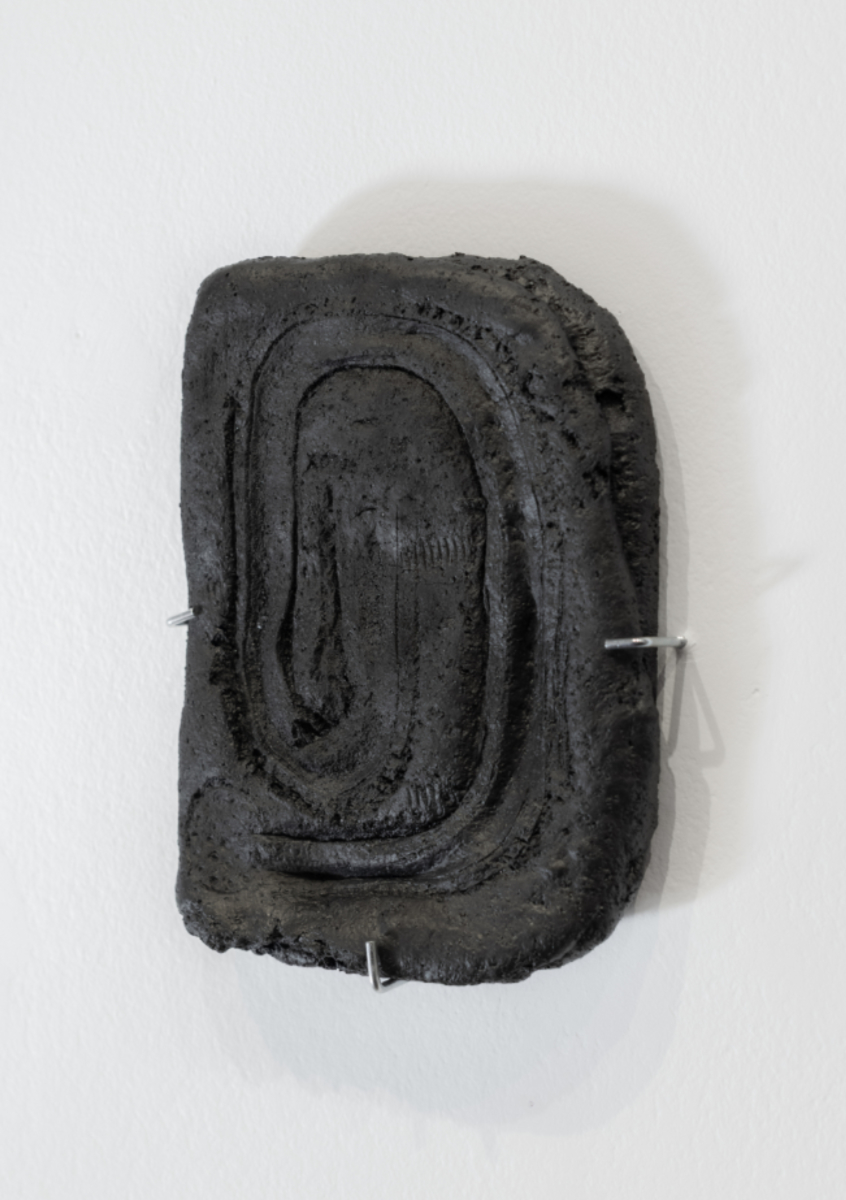
I was particularly struck by Sarah Ujmaia’s commissioned work, Carbon Loaves 1–7 (2026). Recalling the sourdough bread that survived the eruption of Vesuvius in 79AD, preserving even the baker’s stamp, her wonky carbonised loaves are imprinted with ambiguous objects, suggesting relics from our own civilisation. Ujmaia connects these artifacts of the everyday with how cylinder seals in ancient Mesopotamia were impressed into clay tablets. Her blackened loaves are shown with graphite drawings that reference an underexposed roll of film documenting the collection of Chaldean objects in a museum in her familial hometown of Ankawa, Iraq.
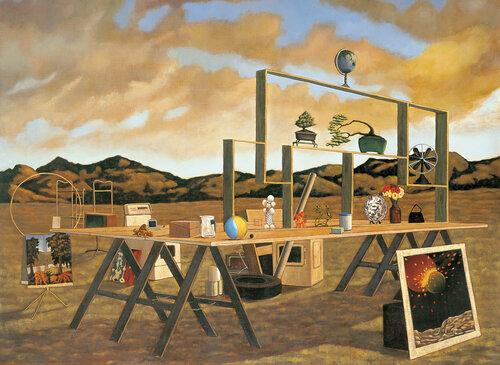
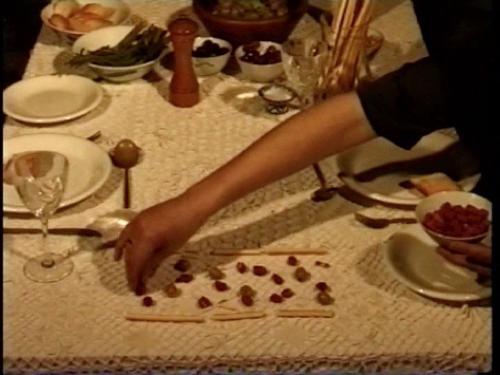
Sharing the space are previously lost VHS video works by Emil Goh (1966–2009), rediscovered through Winata’s painstaking detective work and converted to digital format. Filmed in London, Kuala Lumpur, Manchester, Shanghai, Sydney, and Tokyo by this hyper-global artist, they reveal tantalisingly ambiguous glimpses of densely populated cities. The ground floor space also includes Samraing Chea’s comic-inspired coloured-pencil drawings, such as Somehow, Kiana and Curly went into the High-Tech Research Centre. She heard Enough and Speaks Really Furious About Devices (2018), and Spencer Lai’s sculptures made of discarded, donated and recycled materials.
There is nothing overtly “Asian” about any of these works — a strategic repositioning by both artists and curator of clichéd identity politics and a rejection of orientalising notions of “Asian art”. The connection between them, to my mind, is an emphasis on the global metropolis and the everyday, whether that be ancient cosmopolitan Pompeii, contemporary cities seen through the lens of Goh’s camera, the uncanny modernist imaginary of Chea’s drawings or the discarded materials in Lai’s sculptures.
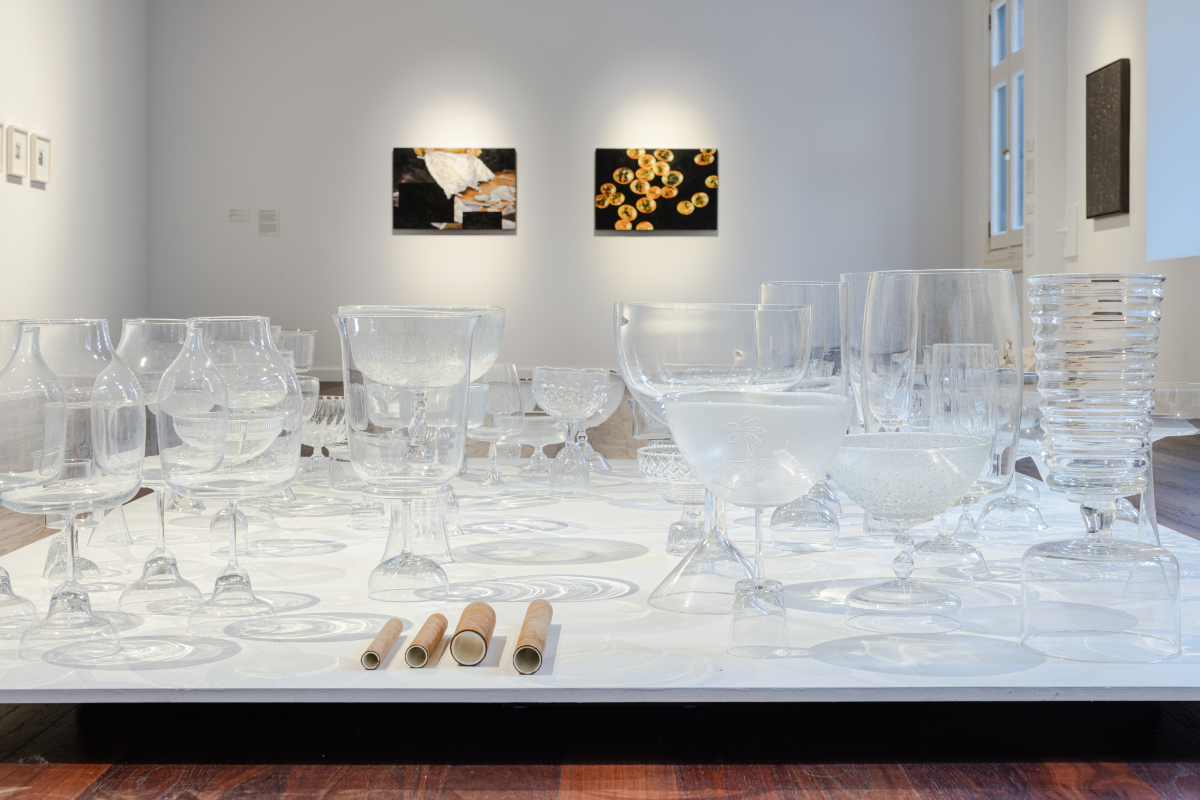
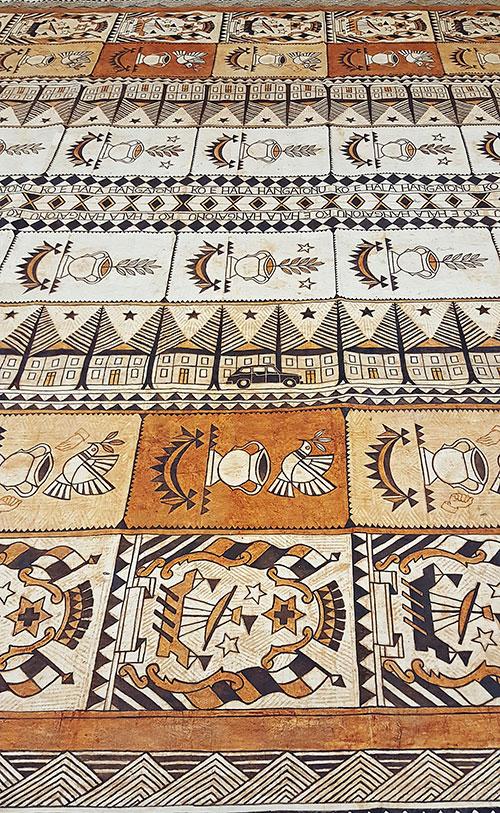
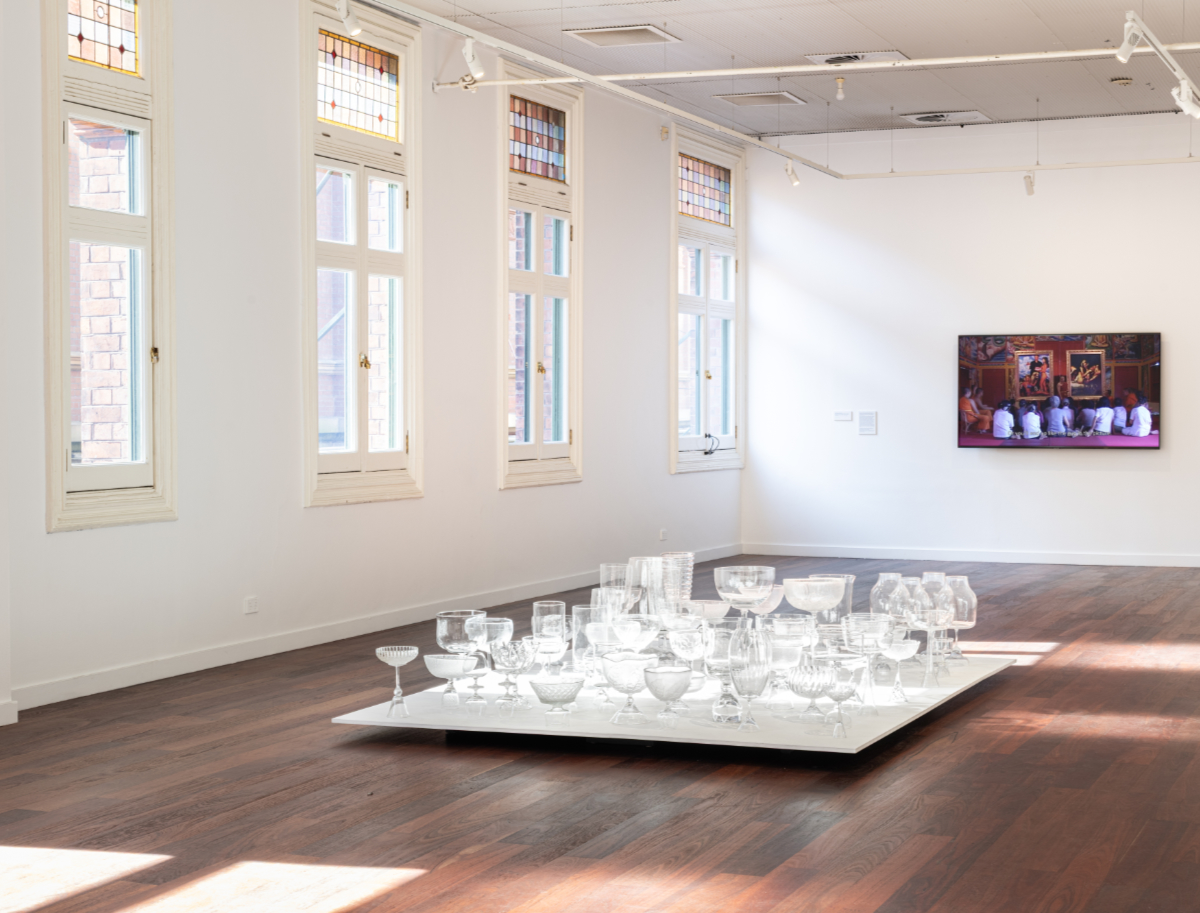
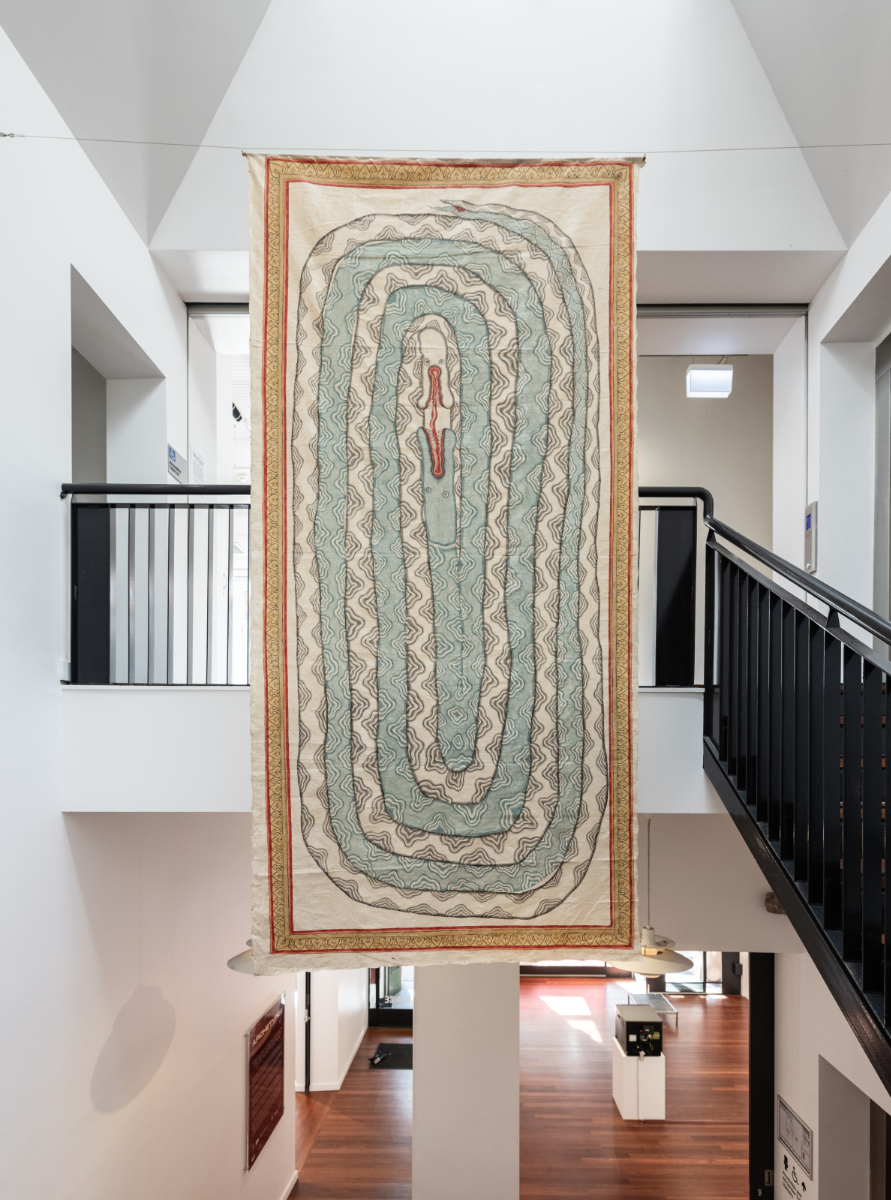
On the first floor, past Jumaadi’s stairwell-displayed textile featuring the Balinese folk tale Snake Wedding (2020), the atmosphere shifts. In the centre of the room, illuminated by light pouring through the stained glass windows, is Koji Ryui’s installation, Jamais Vu (2018/26), previously shown on Cockatoo Island in the 21st Biennale of Sydney. The effect is ethereal. On a large white plinth, glasses and stemmed dishes of various shapes and sizes collected from thrift shops have been glued together, creating absurdly non-functional objects. A soundtrack made by striking them with a piece of pipe covered in kangaroo skin recalls a temple bell. In its evanescent fragility, at once mournful and humorous, it reminds me of Chinese-French artist Chen Zhen’s Crystal Landscape of Inner Body (2000).
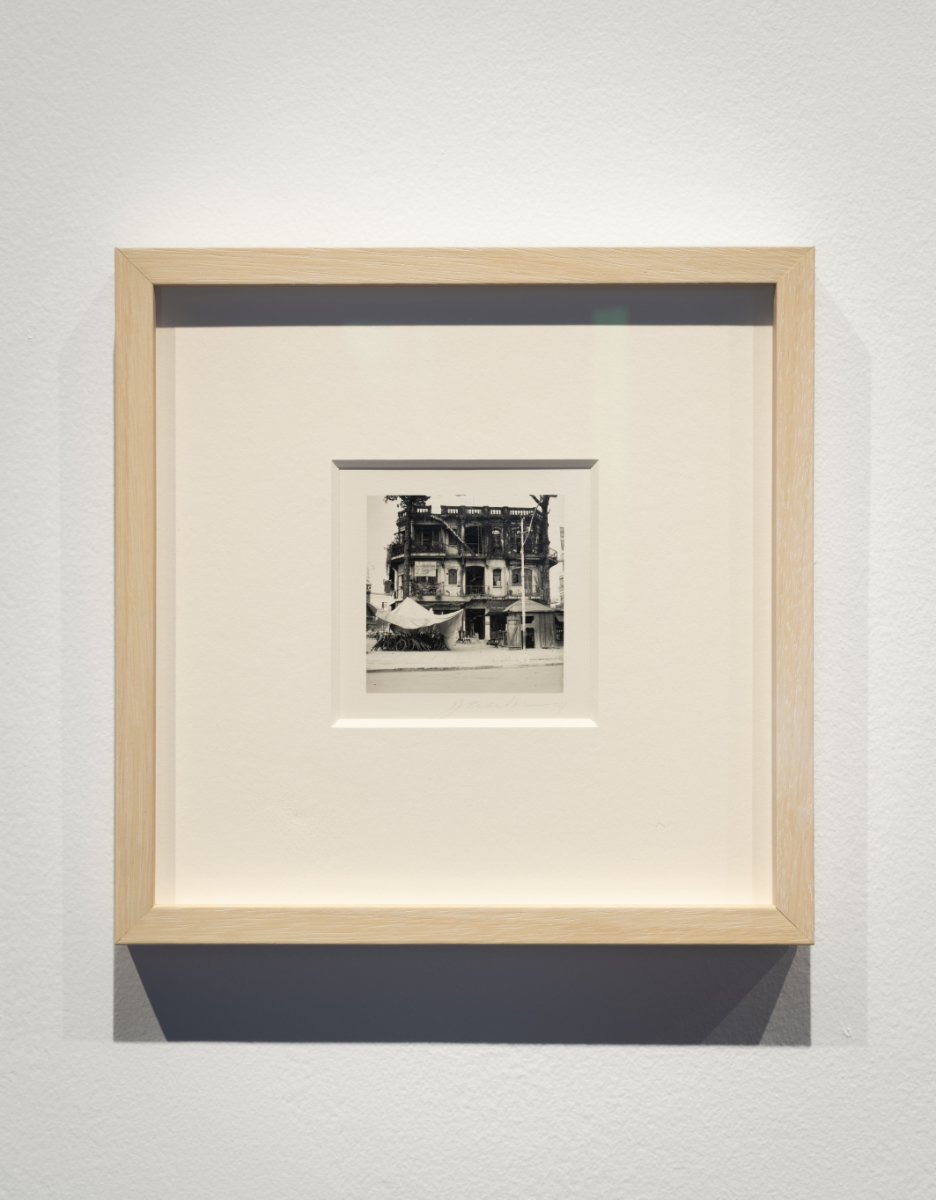
There is another reminder of Chen Zhen in Dacchi Dang’s tiny 8 x 8cm black and white photographs, some shot during his first return to Vietnam in 1994 after twelve years in Australia (previously shown at 4A in 1997), juxtaposed with other images shot in Paris in 2003 — the disjunctive yet strangely similar worlds of the colonised and the coloniser. Peering closely into these miniature windows onto two different worlds it is often hard to tell which is which. When Chen Zhen relocated from Shanghai to Paris, he felt himself to be amphibian-like, existing simultaneously in two elements. Dang’s photographs, too, evoke the unstable identity of the immigrant.
On diagonally opposite walls we see connections and contrasts between artists of two generations. Beijing-born, Melbourne-based Yusi Zang’s intentionally banal paintings of her cat’s tail peeking out from beneath furniture, Animal Instincts #1 and #2 (2026), invite us to reconsider apparently insignificant elements of the everyday. Opposite is a meditation on art and labour from Maria Cruz, who first exhibited with 4A in 2001. Three thousand, one hundred and ninety (2023) is part of Cruz’s One Million Dollar series, in which she traces euro or dollar coins and fills them in with oil paint or watercolour, the goal to paint one million dollars’ worth of coins.
At first appearing to be a modest pile of rocks, the ceramic forms in Yasmin Smith’s Forest (2022) were moulded from lumps of coal collected at a Helensburgh colliery that polluted Camp Gully Creek (on the edge of the Royal National Park) with toxic waste. Like Smith’s previous work created during a residency in China, here she examines the ecological challenges that affect us globally. Meaning and materiality are inextricably, beautifully imbricated — Smith used fly ash from New South Wales power stations to create her glazes.
At the far end of the room, representing 4A’s global collaborations, is a work from Thai artist Araya Rasdjarmrearnsook’s Village and Elsewhere (2011) series, in which she installed reproductions of canonical Western artworks in public spaces in Thailand, and filmed how villagers responded to them. Beneath a riotous profusion of brightly coloured Buddhist iconography, village children and elders sit in a temple in front of two reproductions — an untitled work by Jeff Koons depicting the artist posed between two bikini-clad women, and Artemisia Gentileschi’s early seventeenth century painting, Judith Beheading Holofernes (1612-13). A monk lectures the assembled villagers using the works as illustrations of moral precepts: a man like Koons, with ‘too much love’ from two women, will likely have his head cut off like Holofernes. Rasdjarmrearnsook examines cultural slippages of understanding and misunderstanding, connection and disconnection.
In the end, this sense of slippage, of grasping for meaning and connection, might be the most important thing I take away from Archetypes. For Winata, it was essential to shift the exhibition away from an overly obvious accounting of 4A’s successes to include younger artists from a post-Internet generation who have different conceptions of their Asian-Australian identities. In their distinct ways, though, each artist in the exhibition examines the fragile, fluxing and fractured world we now inhabit.