A week after visiting Tweed Regional Gallery the image that has stayed with me is Humpback whale migrating south, (2024)—not strictly a portrait, but the entry point to Worlds Around Us, the outcome of Sammy Hawker’s Nancy Fairfax Artist in Residence at the Gallery's studio. The exhibition fills a darkened space off the main concourse from which each window frames a picture postcard of Wollumbin / Mount Warning. The ‘dark room’ works effectively as a companion show to the Olive Cotton Award for Photographic Portraiture which celebrates 20 years in 2025.
In Hawker’s grainy photographs, salt-crystals leave a residual trace on the grey seascape; in another of the three oceanic scenes, a whale’s tailfin tricks the eye, instantaneously appearing like a black-winged bird taking flight. Such fleeting illusions increase the private pleasure of looking and a metaphorical cliché offers itself as I fly out of Coolangatta days later: a barely submerged whale looking for a moment like a sinking ship registers a more poignant metaphor of collapse. Further south over the Hunter Valley, a vast open-cut coal mine completes the loop.
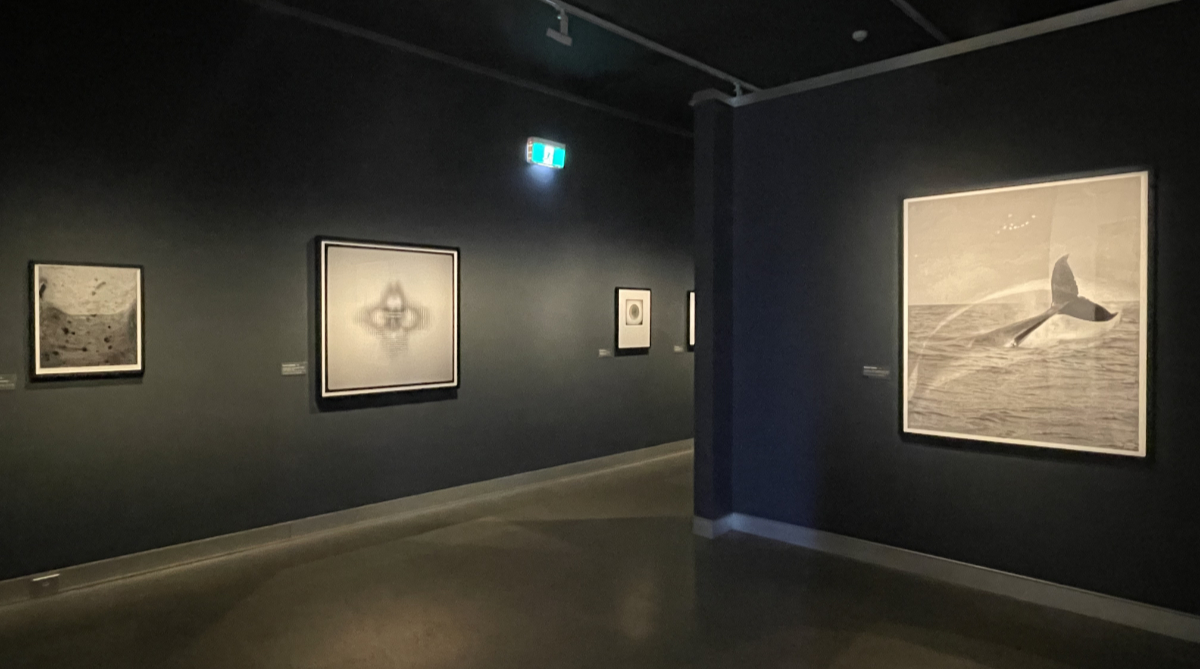
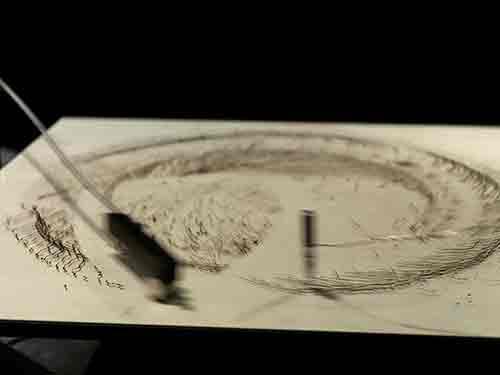
In concert with Hawker’s romantic quasi-vintage naturalist views, five inkjet prints made from hydrophone recordings of humpback whale song gathered off Australia’s east coast by Mark Franklin of the Oceania Project evoke the loss apparent in the Anthropocene. These monochrome mandala-like images are distilled from recordings using an analogue cymatic instrument. The effect of this underwater chorus and its mechanical reproduction is hypnotic, otherworldly, creating a beguiling art/science collaboration with environmentalist intent.
Hawker is a Canberra based artist and winner of the 2022 Mullins Conceptual Photography Prize, among other ‘contemporary’ and ‘national’ photographic awards, though such categories are not mutually exclusive. As for so many artists, categorisation is a double-edged sword, one that Olive Cotton reflected on late in her life.
I would not like to be labelled a romanticist, Pictorialist, modernist or any other ‘ist’. […] I want to feel free to photograph anything that interests me in whatever way I like.[1]
Whatever her ‘wants’ Cotton’s legacy is assured despite her non-strategic art career — from pioneering studio photographer in the 1930s and early 40s, to raising a family in rural Cowra and her eventual revival as a modernist-icon of feminist art histories in the 1980s. The biennial award in her name at Tweed Regional Gallery offers a $20K acquisitive prize sponsored by Cotton’s family, and this year her daughter Sally McInerney is one of four judges—all professional curators—which explains how the 65 photographs hold together so well as an exhibition, preselected from a staggering 853 entries. (Do the maths on artists' entry fees, and it's clear that awards play a vital role in regional galleries' budgets.)
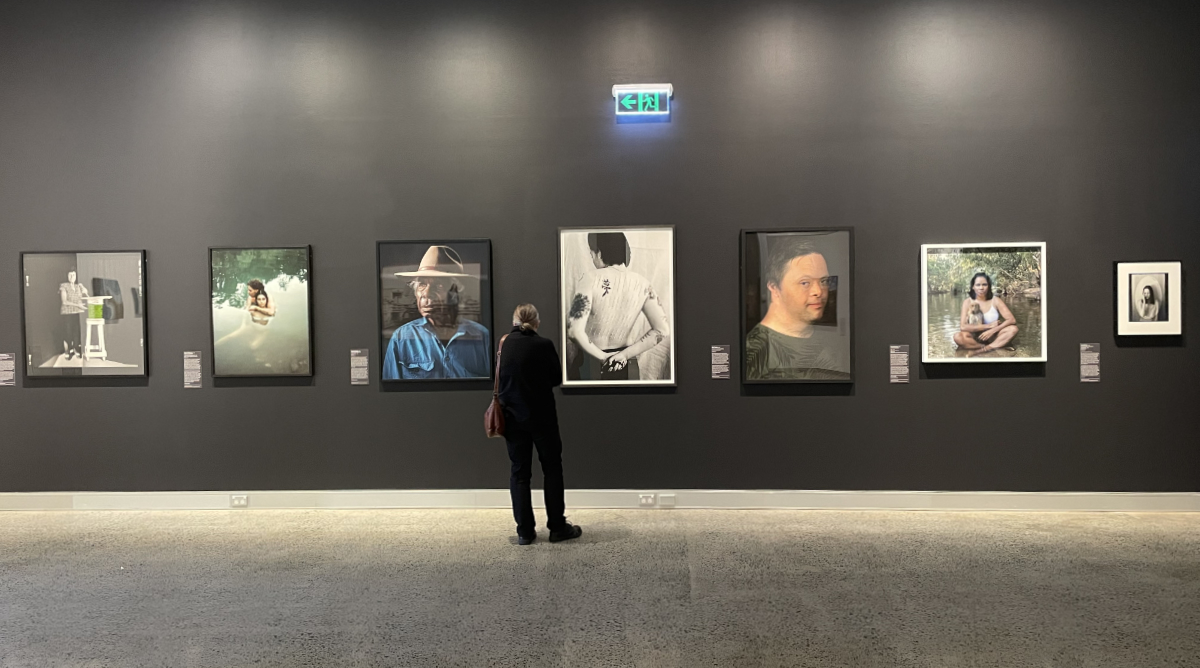
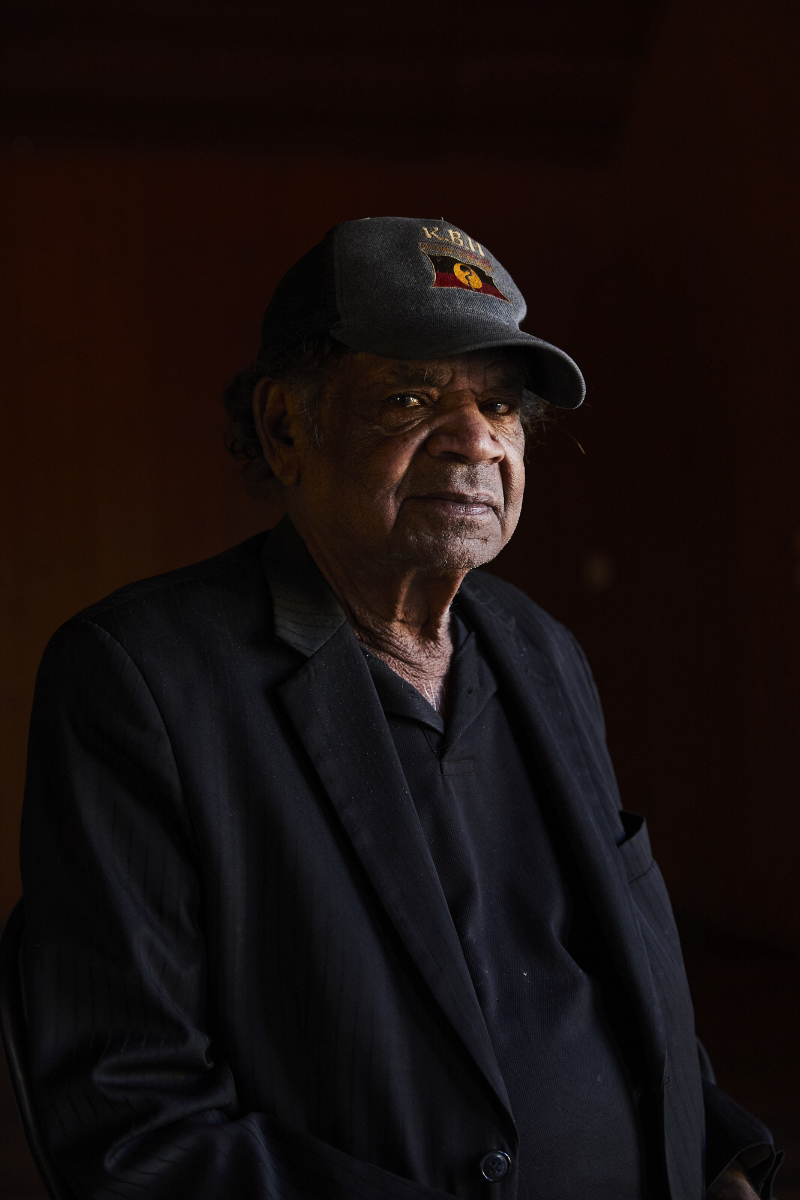
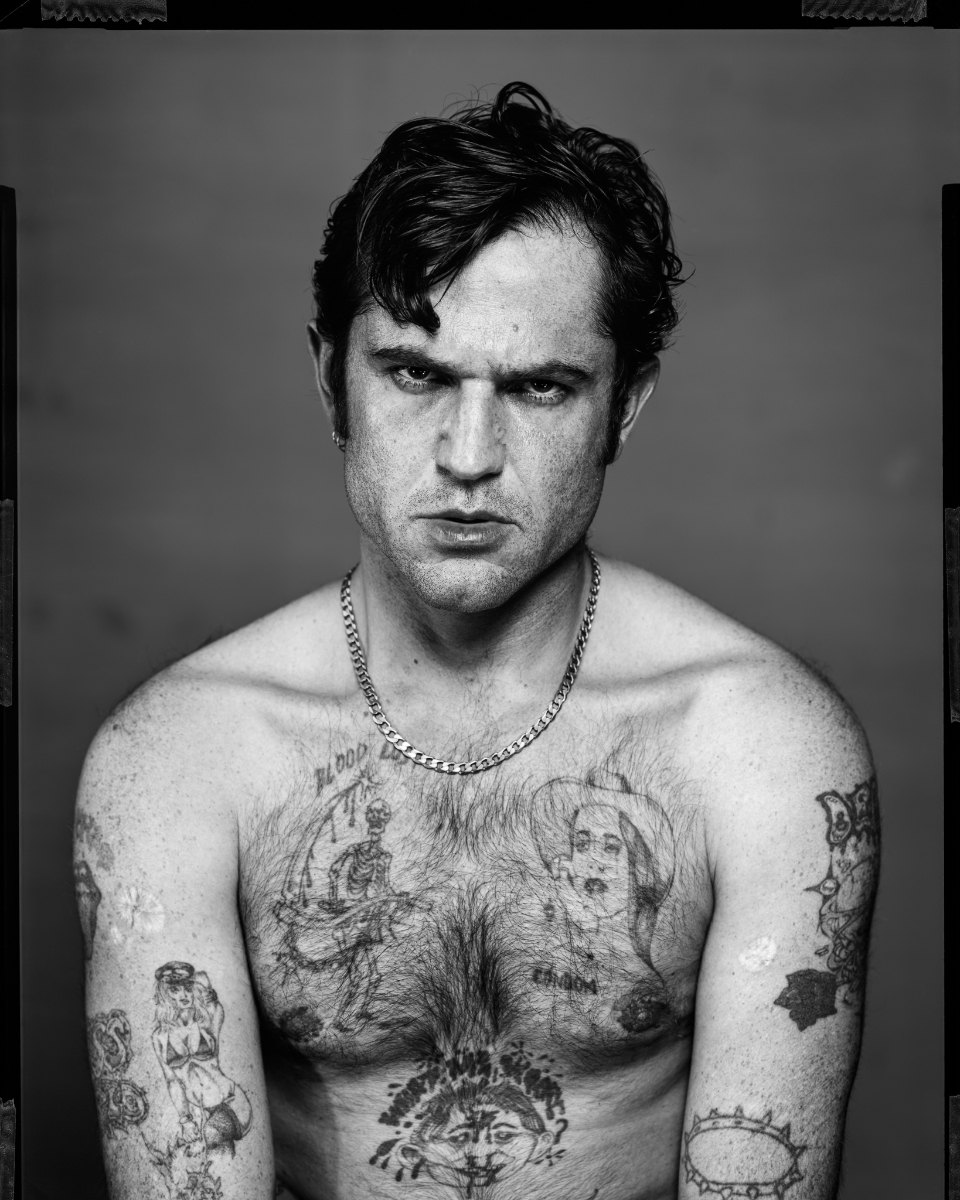
Naturally, sub-themes emerge within the overarching genre of portraiture. When I viewed the exhibition the winner was undecided, but Tace Stevens’ classical three-quarter view Uncle Bill (2023) is no surprise, free of artifice with an ease between sitter and shutter. Sixty per cent of the subjects are male, and Aboriginal men are well represented. Each of the latter carry a strong historical and political narrative such as the fight for equal pay on pastoral stations witnessed in a determined dignity in Mervyn Street’s eyes captured by Michael Torres, and echoed in Paul Blackmore’s striking side profile of Peter Morton.
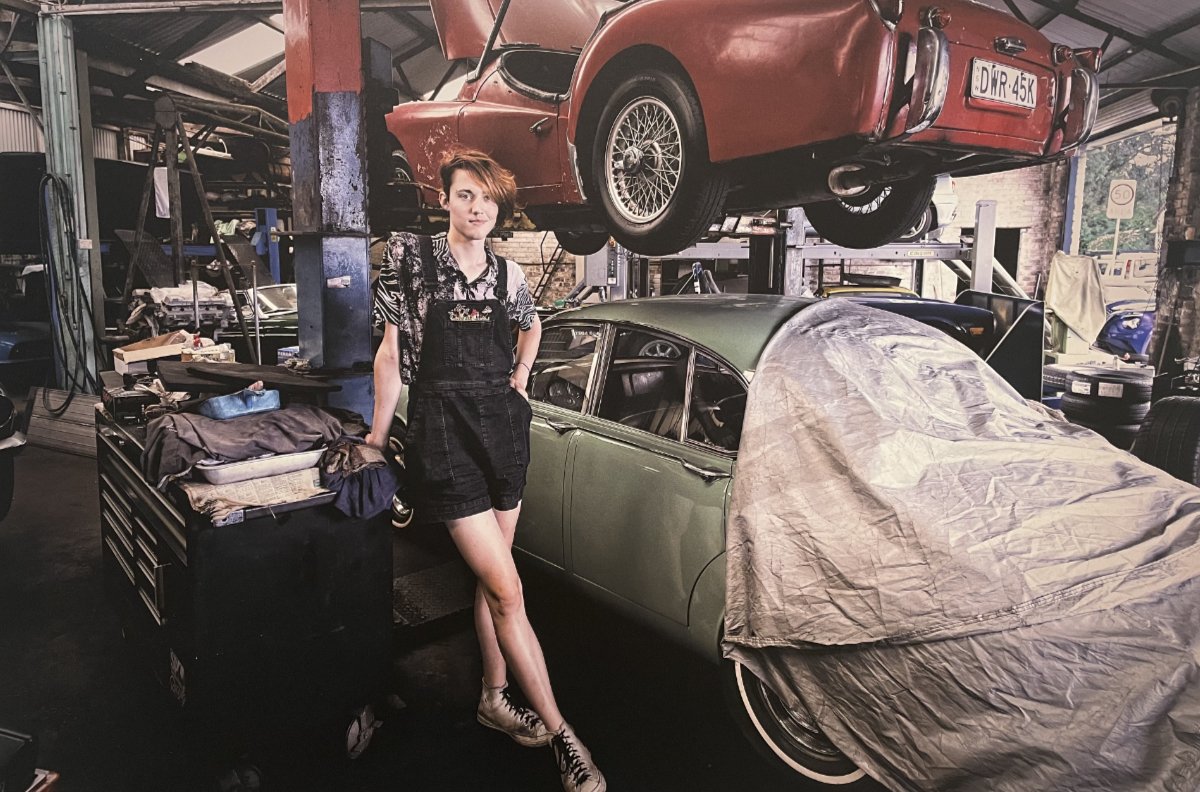
They say clothes make the man but so does the setting. In two separate images, glamourous young men pose in mechanic’s workshops, each on the cusp of greater adventures; older men reveal their vulnerabilities; children express anxieties and energetic joy, and on occasion the photographer uses the portrait as an entry point to issues of social tensions such as the desperate housing situation, post-flooding in the Northern Rivers.
Mothers and grandmothers are enduring subjects, from Kalyani Holden’s playful Mum and the Persimmon (2025) to Ayman Kaake’s (exhausted) Malak, Mother of 12, Lebanon (2024), featured in similar repose for Kaake’s National Photographic Portrait Prize at the National Portrait Gallery, currently in Canberra (where the $50K award went to Hoda Afshar).
Ali Tahayori’s Archive of Longing series (2025) is on a roll rewriting narratives of love, loss and desire through photographs embellished with the traditional Iranian techniques of Āine-kāri (mirror works). Here, his sleeping grandmother is the subject of his attention, acknowledging a recent bereavement and the heartbreak of war and political conflict. Tahayori was recently awarded the $30K NSW Visual Arts Fellowship, and a look across the Olive Cotton Award entries includes a range of established artists and previous winners (Ella Dreyfus, Tamara Dean) in cohort with photographers outside the standard pool.
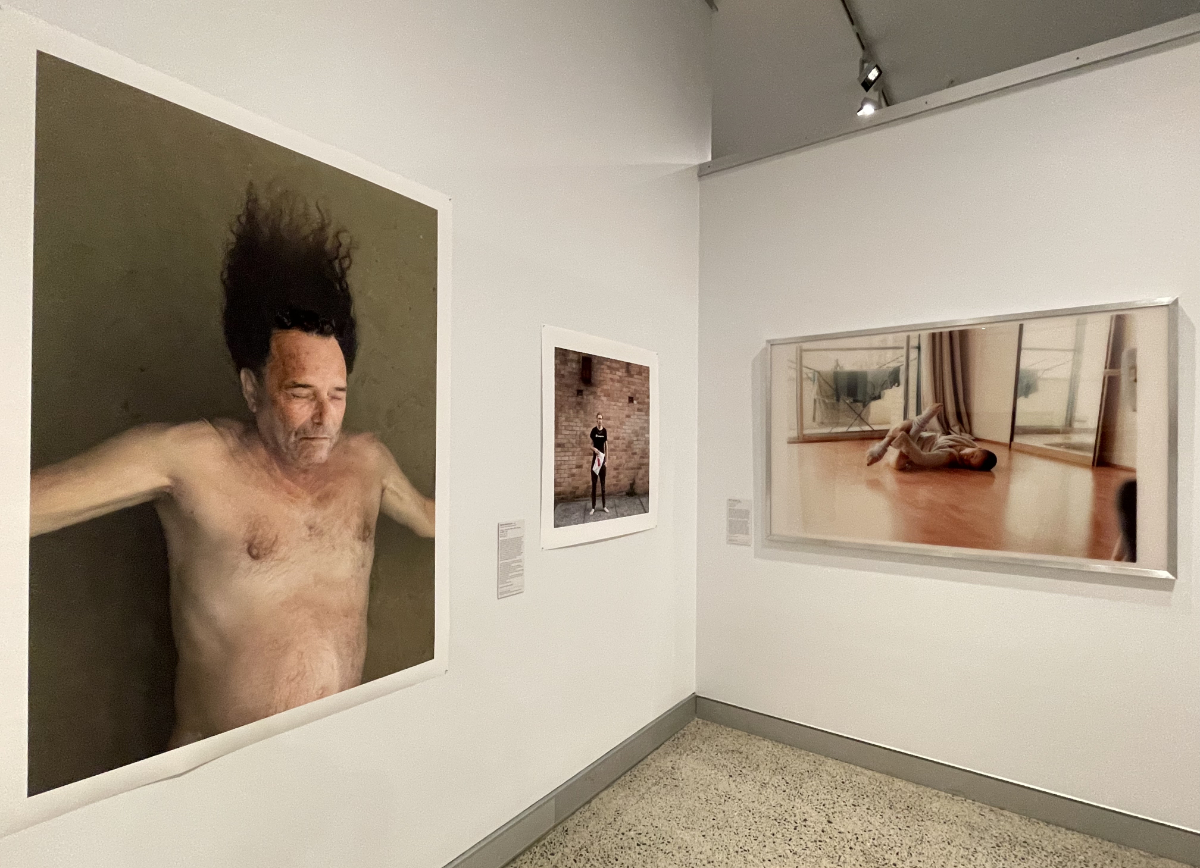
It can be hard to see beyond the zeitgeist identity politics to the individual, and to look beyond the artistry, gimmick, style or documentary realism that the photographers align their practice with. There’s the additional challenge of looking past ‘the photograph’ as a ubiquitous, potentially spurious form, leaning into the void of mass media images. Paradoxically, a challenge in reviewing shows at regional council galleries is their lack of resourcing for professional installation shots.
The most conventional portraits such as Alex Frayne’s Portrait of Joshua Compton (2024) and Shea Kirk’s Jack Mannix (right view), (2024) are hard to argue against. There are however artists pushing the idea of what a portrait can be: Anne Zahalka reveals her subject Riste Andrievski through his physical absense, and Andrievski returns the visual game with Anne Zahalka (figures in an appropriated historical landscape) (2025) both set within the Illawarra/Dharawal forest.
Diminutive in scale, Prue Hazelgrove’s intimate portrait of life partners in Summer’s end at Riverbend (2025) and Kojiro Oishi’s gelatin silver print of Jennifer—her face obscured by a bunch of Australian native flowers—are among the more elegiac homages to Cotton. A slow read across the exhibition's lengthy captions and artist's statements tells us a lot about the range of motivations behind each portrait. It's a welcome reminder that in an environment where everyone assumes the democracy of the medium, there are photographers—and there are image makers with intent and precision.
Footnotes
- ^ Helen Ennis, Olive Cotton: A life in Photography, (Fourth Estate/Harper Collins Publishers Australia: 2019), 457
_Card.jpg)