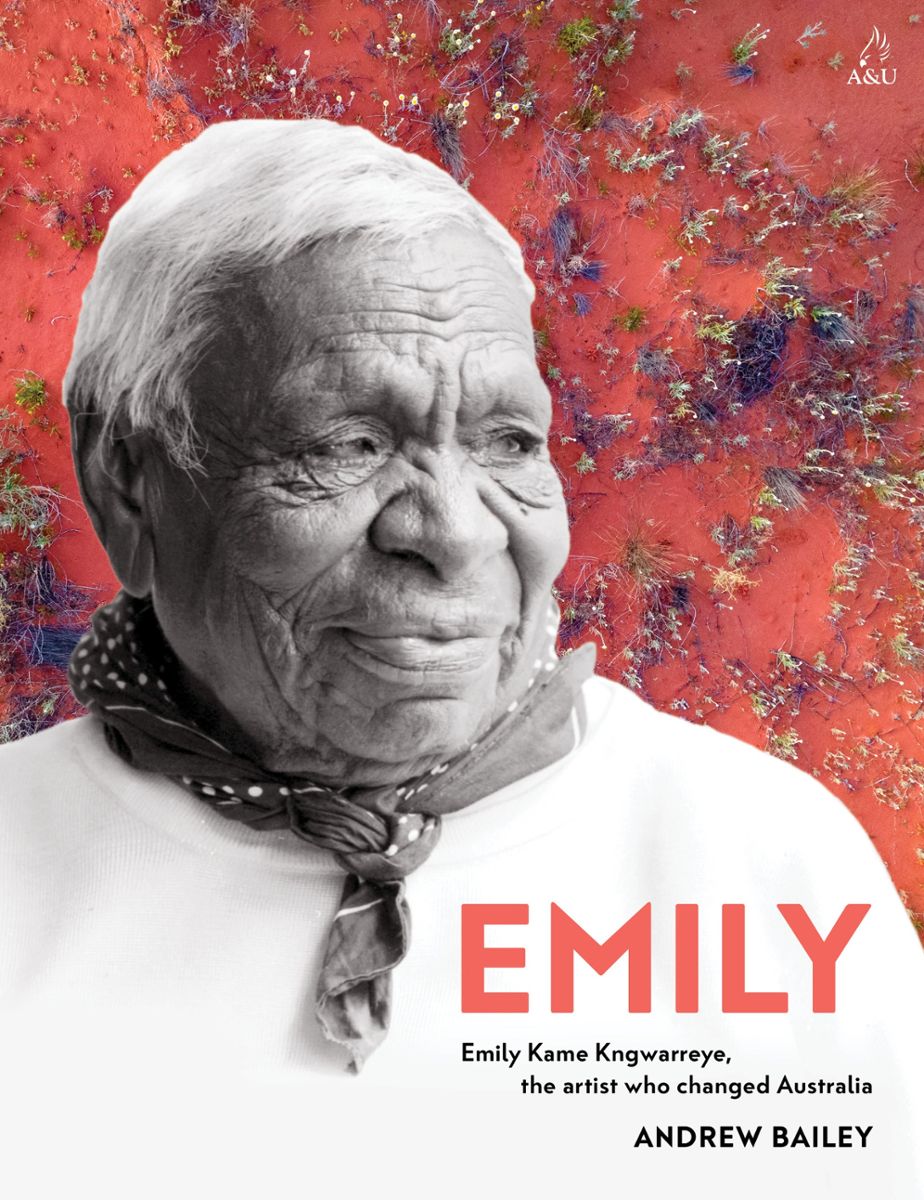
How should Emily Kame Kngwarreye be written? It was an unforeseen issue for Andrew Bailey when, well into his biography of her short career as a contemporary artist, he was caught out by the notorious fluidity of Aboriginal orthography. In this case, the linguist Jennifer Green had a problem with the vowel ‘e’ to signify the pronunciation of Anmatyerr words. While Bailey is faithful to the new orthography throughout the book, he decided to stick with the original spelling of her name upon discovering that in 1995, during preparation of Kngwarreye’s first retrospective at the Queensland Art Gallery, she approved how her professional name was to be spelled.
Bailey’s handling of this still heated issue reveals the great virtue of his book: let research settle the matter and do not get distracted by questions peripheral to the main agenda. Besides, he had already decided to simply call her Emily, as it is the name by which nearly everyone knows her, and I will follow suit. She is one of those few artists known in artworld vernacular by their first name: Piero, Leonardo, Vincent, Frida, and Emily.
Most writing on famous artists, presume it is all about the artist, their feelings, and their art. This was not Bailey’s agenda. He makes it all about the artworld, taking us into its backrooms. There may be ‘important Emily stories’, he admits, but Bailey didn’t feel equipped to tell them. A sensible plan, because as respected curator Judith Ryan said in the catalogue of Emily’s first retrospective: Emily is an ‘enigma’. She revealed so little in her occasional utterances and there is only meagre, if any, symbolism in her paintings that might indicate her intentions. Unlike other art from her community, said Ryan, her work ‘does not narrate “stories”’ but ‘grapples with the essence in an Abstract Expressionist sense.’[1] Like nearly every commentator on Emily, Bailey can’t occasionally help proposing his own theories about Emily, but being a retired economist, he admits he is no art expert.
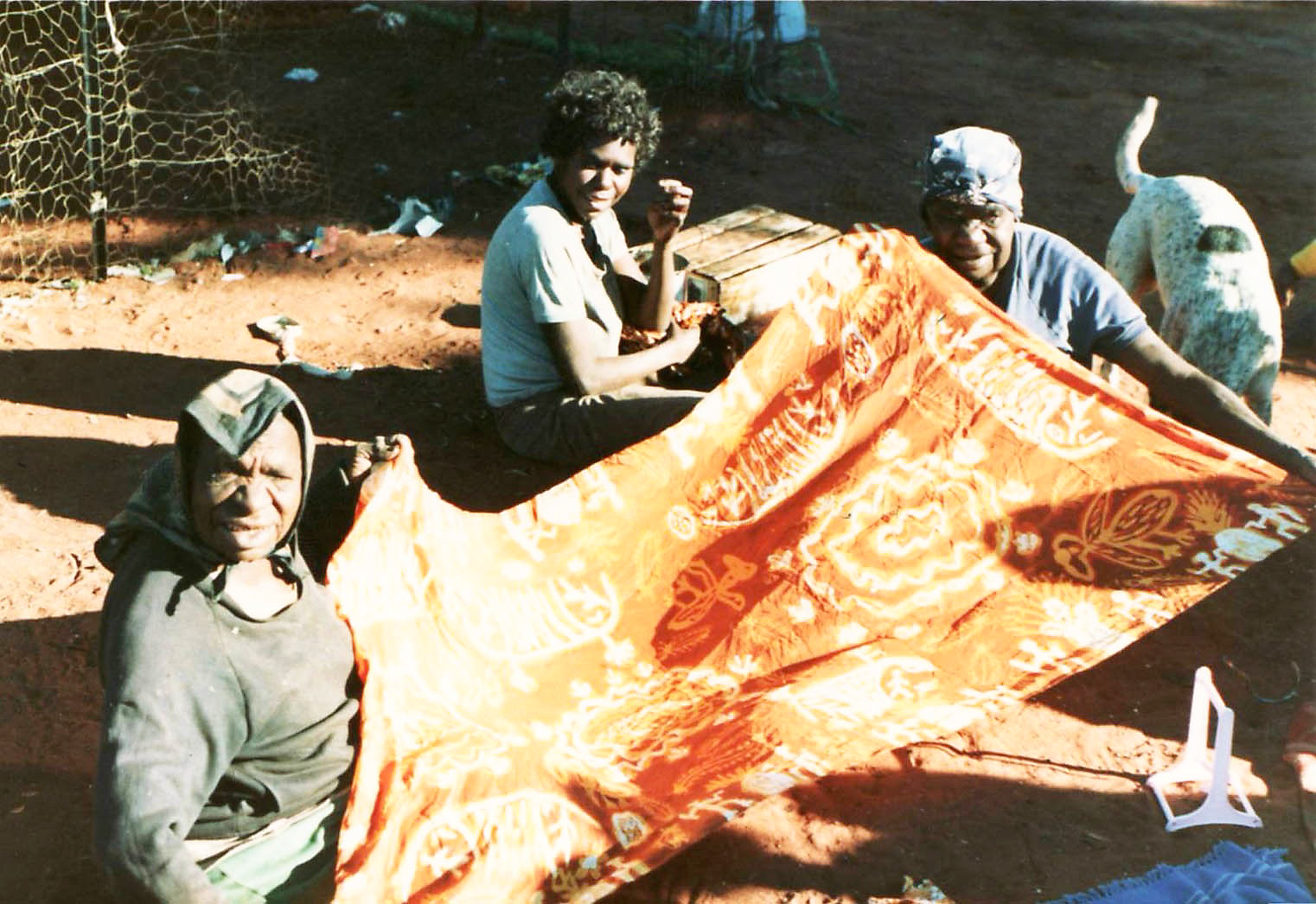
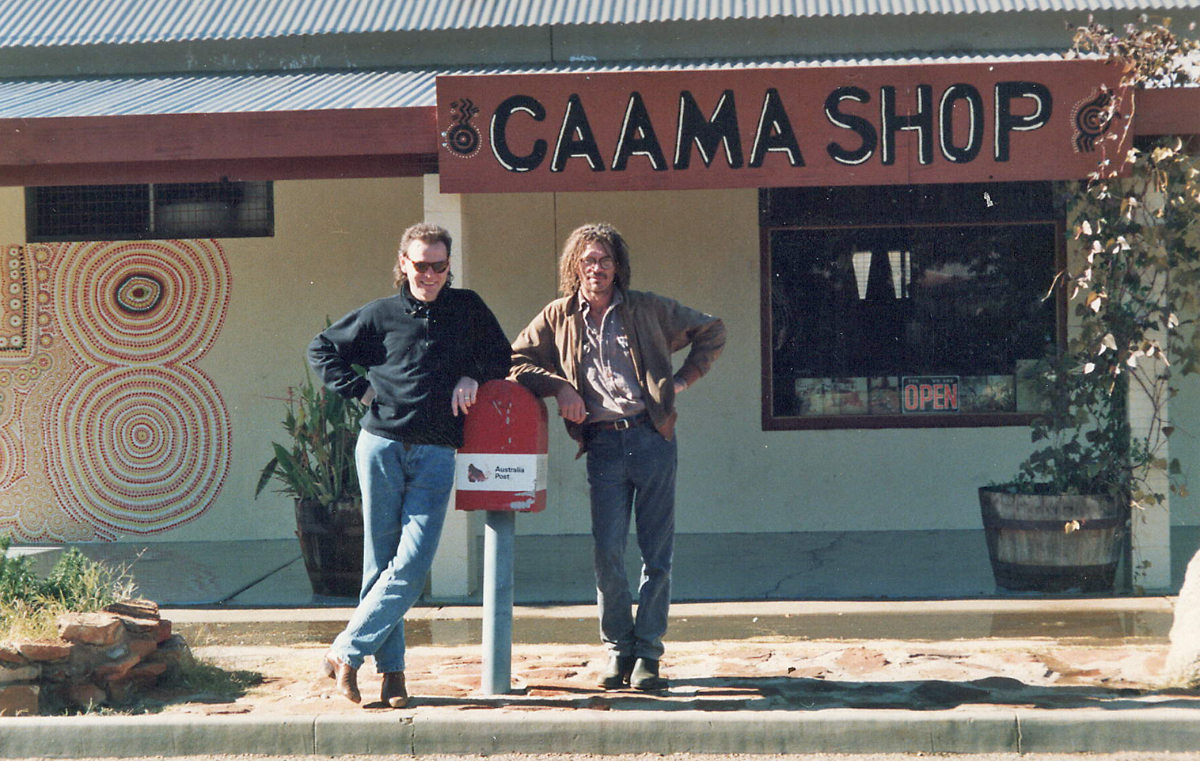
The bigger enigma, as Bailey infers, is how Emily became an artworld celebrity, though I suspect a deciding factor of him going down this road is that it was achievable. His approach is investigative and anecdotal: archival research and drawing on the memories of artworld experts who were close to her, most prominently the art manager Rodney Gooch, the dealer Christopher Hodges, and the curator Margo Neale. Their rapture before Emily’s work and her almost saintly presence in their memories evoke a spectral image of the artist, especially since Emily’s own voice is relatively absent. Nevertheless, as Bailey says, these eye-witness meetings carry weight as evidence and have an ‘immediacy’ that at times catches ‘the emotion of the moment’. With an ear for these moments, Bailey’s reportage brings the reader along, putting flesh on the tales that have swirled around the “Emily phenomenon”. While Bailey doesn’t shy away from controversial aspects of Emily’s enormous production, there are no new revelations; the artist and her art remain an enigma, never quite coming into focus.
Judging by the few things Emily did say about her work, she may well have wanted it like that. Generally, artists are flattered by inquiring questions about their art and happily explain its meaning. It’s amazing how much Aboriginal artists have been willing to reveal. But, there are always those who don’t like to be pinned down. ‘Make it up! Make it up!’ said Tracey Moffatt to the critic John McDonald trying to pry information about her and her art. ‘I always say there is not one wrong reading’, retorted Moffatt. ‘Nothing can be wrong […] I know it’s cliched but it [art] has a universal aspect’.[2]
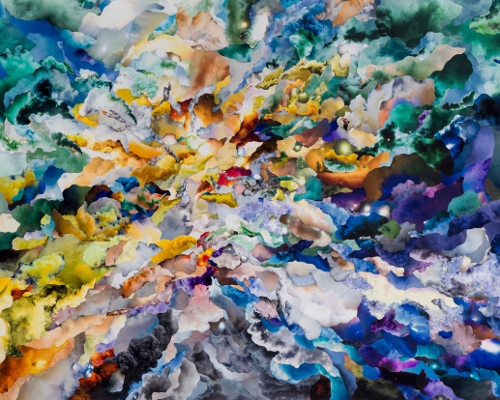
When asked about the colours in her paintings, Emily pointed to the landscape around her — always a good ruse. Or she simply said her work is about ‘whole lot’, i.e., all the Dreamings. On prompting Emily for further meaning, Hodges said she looked ‘straight down the barrel of her pointed figure [at me] and said, very deliberately, “You know”’. Bailey returned to this anecdote in his conclusion, thinking, in a rare comment on what Emily thought, that she must have been supremely confident ‘of the ability of her art to communicate the spiritual power of Alhalker [her Country]’ to outsiders. There are other possibilities. Were her obfuscations meant to throw meaning back onto the viewer? Were they and her very abstract paintings ways of resisting the anthropological analysis that still plays a large role in the interpretation of Aboriginal contemporary art and, like Moffatt, lifting her art up into a universal transcendental dimension that is open to everyone?
Judith Ryan put it differently: Emily’s ‘business was painting … undiluted expressions of the artist, independent of any accompanying documentation’ until ‘her work appeared to meet with that of the great exponents of Western abstraction’.[3] Indeed, as is apparent from Bailey’s panel of experts, late modernism is the main prism through which Emily’s work has been acclaimed in the artworld, and her contemporary Jackson Pollock, not another Aboriginal artist, is the painter with whom she is most often compared. He is the most referenced artist in the book aside from Emily. The Japanese curator Akita Tatehata told Bailey that Kngwarreye is ‘a greater painter than Pollock’, and that ‘her work represents the very essence of the pursuit of modern art’. In a few short years, said Tatehata, ‘she traced the evolution of modern and contemporary art all by herself. It’s unbelievable … She was the only case of an artist painting outside the context of her time’.
Bailey picks up on this constant refrain, repeating it in his final pages when he nominates Emily’s most remarkable achievement as the large retrospective at Tate Modern last year, and ‘its new conceptualisation of Emily’s art and her connection to mainstream modernism’. There is no doubt that the experience of European modernism and its postwar transatlantic expressions opened artworld eyes to ‘seeing’ Papunya painting, and that it was, as Bailey suggests, an important factor in Emily becoming an artworld icon. However, it also leads Bailey to believe he has discovered something original in the singular impact of Emily’s art on the nation’s psyche. Analysing the exhibition history of Aboriginal art in Australia between 1980 and 2000, Bailey was surprised to discover a sudden artworld acclaim of Aboriginal art around 1990, and that it coincided with both the meteoric rise of Emily and a noticeable shift in the national desire for an Indigenous heritage. From this he surmises that Emily almost singlehandedly conquered the artworld for Aboriginal art, and in the process Aboriginalised the national psyche. Bailey rounds off his book with the big claim that ‘she was really, REALLY something. Probably a genius … and probably our greatest artist ever’.
Besides being purely circumstantial, Bailey’s declaration points to a flaw in his methodology. His experts didn’t include any professional art historians, who during the second half-century have been unpacking both the logic of modernism as it endured a fatal crisis, and the legacy of colonialism in Australian art. These much larger historical forces, which have their roots in the fall of Europe’s empires, not the genius of one artist, are for this art historian at least, the origins of Australia’s current national identity predicament. Talk of an artist’s ‘genius’ opens a mythic realm. It follows a familiar pattern in Australia. Less than a decade after Emily died, many in the artworld were claiming Tracey Moffatt as Australia’s greatest ever artist, in the 1960s and 70s it was Sidney Nolan, in the 1920s and 30s it was Arthur Streeton and Hans Heysen. Each generation it seems, has its own Australia, its own myth of national identity. In this sense, Bailey is right; Emily currently holds the title of Australia’s greatest artist, but in 2023, 60% of Australians still voted NO to an Aboriginal voice in the nation’s parliament.
Footnotes
- ^ Judith Ryan, "In the Beginning Is My End: The Singular Art of Emily Kame Kngwarreye," in Emily Kame Kngwarreye—Alhalkere—Paintings from Utopia, ed. Margo Neale (Brisbane: Queensland Art Gallery, 1998), 39.
- ^ John McDonald, "Tracey Moffatt," Australian Financial Review Magazine, no. 3 March (2017).
- ^ Ryan, "In the Beginning Is My End: The Singular Art of Emily Kame Kngwarreye," 41.