
Biennales and Triennales began as international or national showcases, and to some extent they still fill that role, operating as a drawcard to see new art and new ideas in new places. Hoor Al Qasimi’s approach, as first foreign curator for this year’s Aichi Triennale (the sixth to date), is somewhat different. Examining the Aichi location with its more than one thousand–year history of quarrying clay for porcelain and silica sand for glass (among other materials), she found the perfect environment to consider the human–nature relationship. In a time of ongoing conflicts globally, seemingly without resolution anywhere, for anyone, Al Qasimi’s curatorial statement notes,
I aim to decenter both the apocalyptic and optimistic extremes we find ourselves compelled to run to. I find it is only through layering complexity in our dialogue about environmental justice can we face our responsibilities and realise our complicity.
Inviting more than 60 artists and groups to exhibit and perform at Aichi Arts Center, Nagoya and the adjacent ceramics town of Seto City, Al Qasimi has structured an event of great subtlety where relationships between artists from across the world are shown to have much in common with each other, often working with the transformation of the materials which form the basis of life.
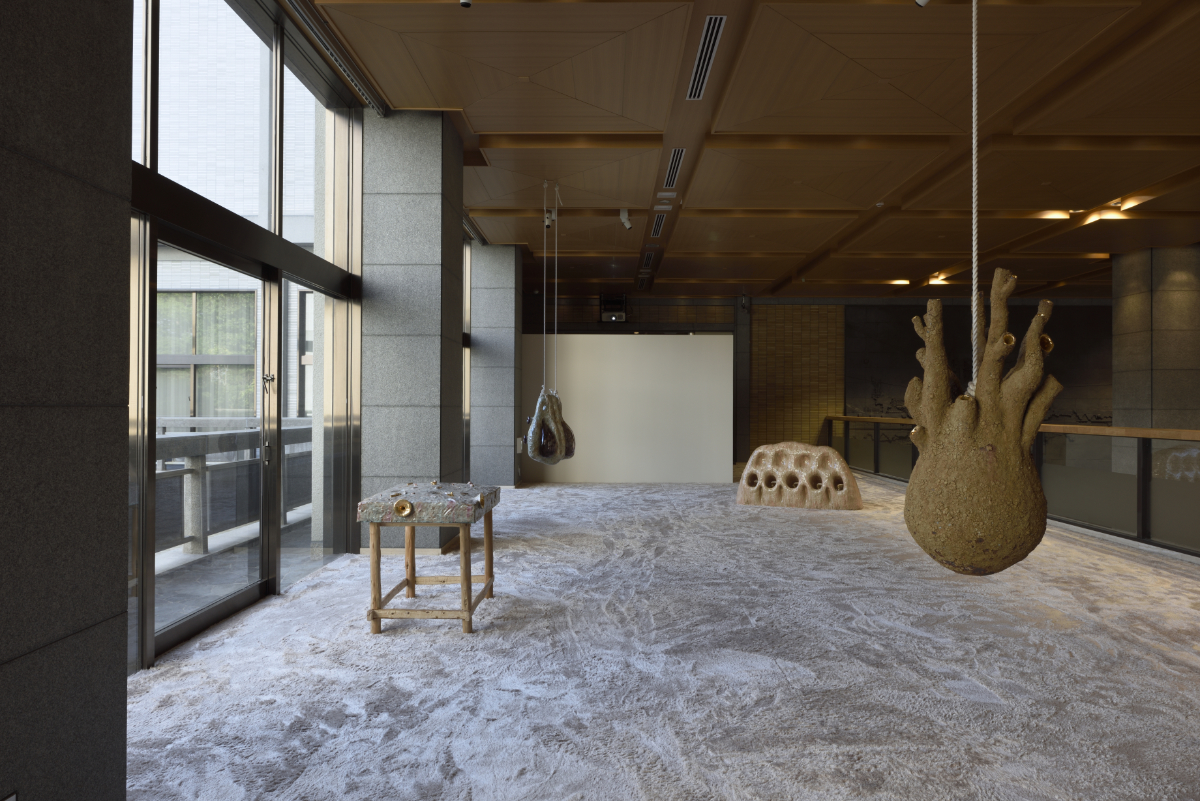
The key to Al Qasimi’s approach is the care with which artists’ relationships to the environment, to each other and to the generous, airy spaces are arranged. This begins in Seto City where artists occupy the Aichi Prefectural Ceramic Museum and a number of buildings in the town: a derelict primary school (Adrián Villar Rojas), a defunct bathhouse (Sasaki Rui), a teahouse (Ohkojima Maki), other eateries (Michael Rakowitz, Barrack) and the still–operational porcelain quarry.[1]
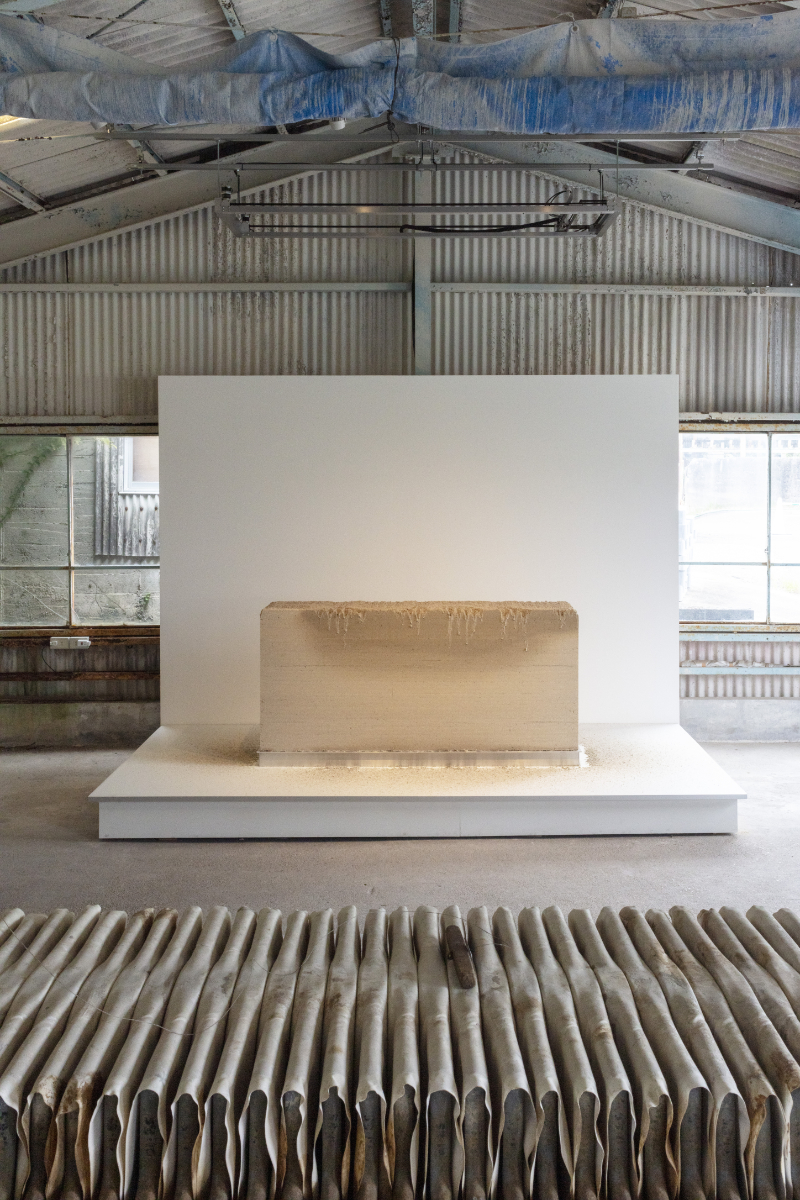
One of three Australian artists in the Triennale, Robert Andrew’s work occupies two locations in the quarry. His kinetic installations utilise the local clay, and by different means each structure is slowly worn down. Language in Buru (2025) uses dripping water to erode the massive object Andrew has constructed and installed at the highest point of the quarry buildings. The water slowly reveals ‘buru’, a word gifted to Andrew by his Yawuru Elders which means everything around you that you can see from the earth to the sky, and in time. Such all–encompassing vastness creates an environment that invites contemplation, an experience that runs right through the Triennale.
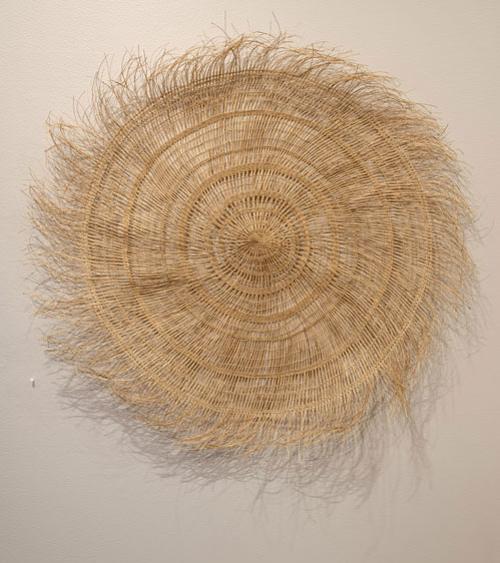
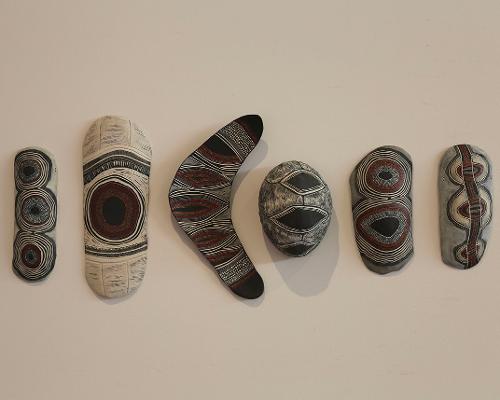
Al Qasimi has taken a long view of the idea of time as a generative form. The modernist construction of daily measures to control human labour and production is put aside so that the focus can more easily be on the time of matter. Further, not all the work in the Triennale was made recently, in several cases reaching back to the 1940s, 1970s and 1990s. The ‘when’ is less important than the relevance and endurance of ideas and observations. The ‘now’ is always formed by the past and our reactions to it. In addition, the use of local clays, sand and ashes to make or modify vessels, for example, puts geological time front and centre. This is particularly evident in the work of Yasmin Smith, Saijo Akane, Ogawa Machiko, Asano Yuriko and Hive Earth, among others.
As with notions of time’s mutability, the layered nature of vessels is subtly introduced. Al Qasimi makes one reference in her writing to the Syrian-Lebanese poet Adonis, in the Triennale’s poetic theme—a time between ashes and roses. In order to begin again, one must remake the world, differently. To do this, sustenance is necessary. To carry this sustenance, vessels need to be made. Ursula Le Guin’s compelling text —The carrier bag theory of fiction (1986)— can equally be applied to other cultural forms. We are constantly buffeted by conflict and disaster, whereas the simple, much more important, reality of existence is that all living things need food and water. The makers of the vessels to carry sustenance have tended to be women, and it is women who quietly carry this Triennale.
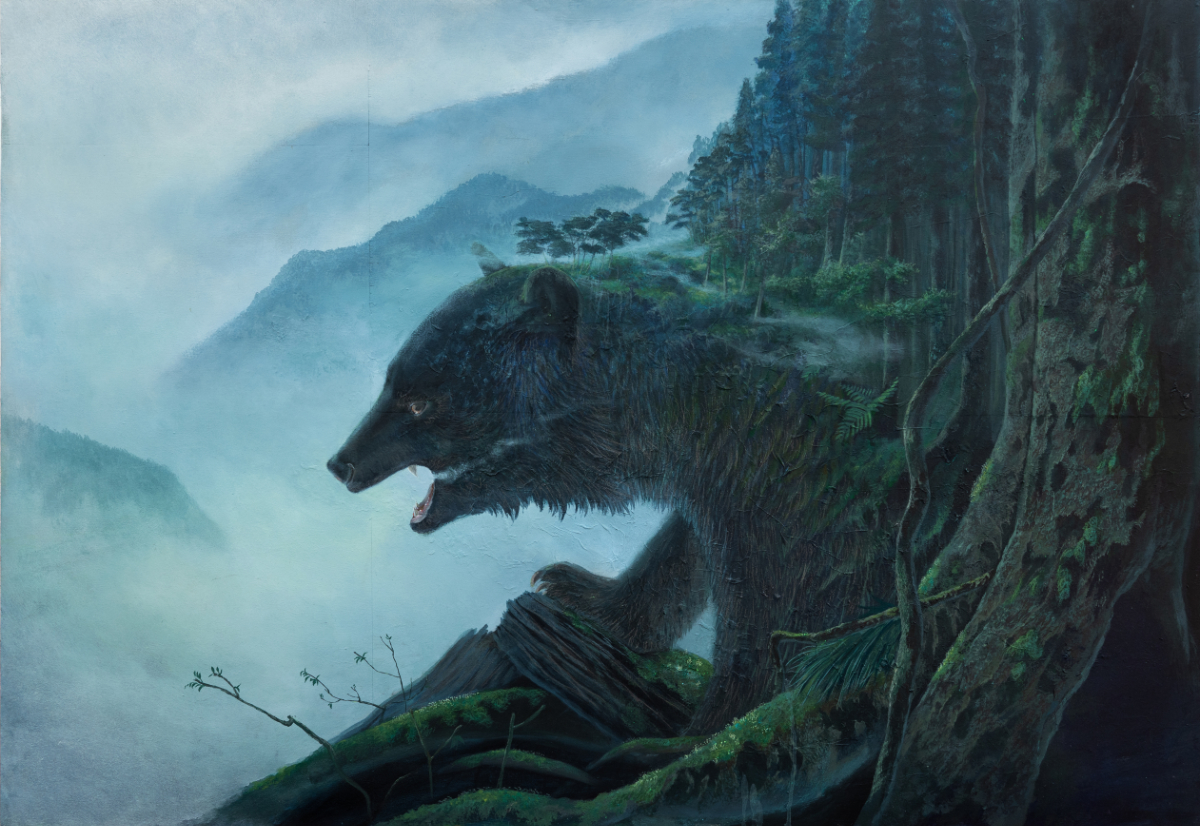
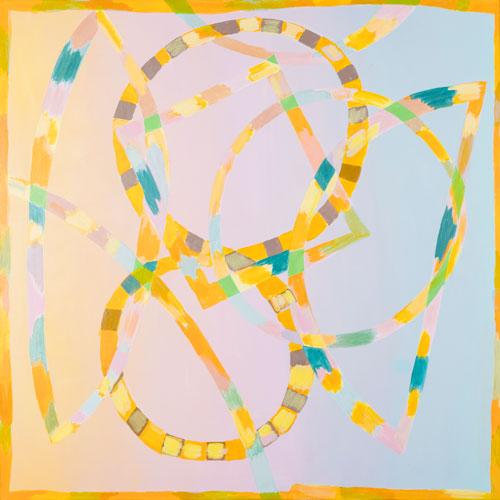
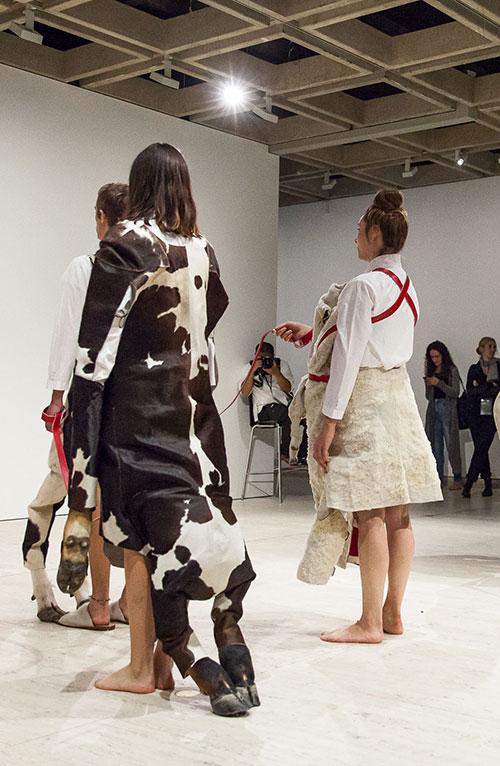
The number of women artists is not trumpeted, yet their work is pervasive. Some are deeply engaged with local materials, such as Saijo Akane’s monumental, highly finished ceramic objects which are utilised in performances and also function as sound generators. Others, like Wangechi Mutu maintain a dignified and powerful distance, even as we gaze down on the sleeping, dreaming ‘serpent’ which represents the artist. Nagasawa Aoi, a hunter as well as a painter, depicts bears embedded within and emerging from the Tohoku mountains. Kamala Ibrahim Ishaq makes large scale paintings as well as pottery bringing a spiritual dimension to her depictions of nature and women. Afra Al Dhaheri extrapolates the delicacy of human hair into the monumental, revealing the material’s fundamental strength.

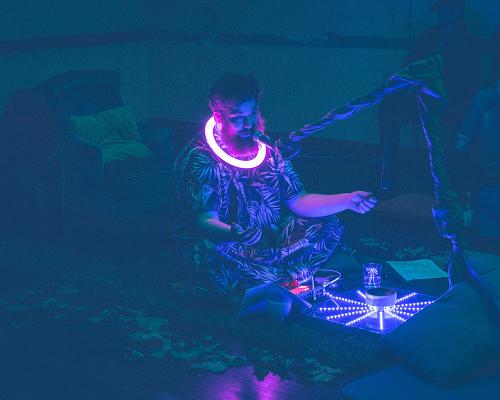
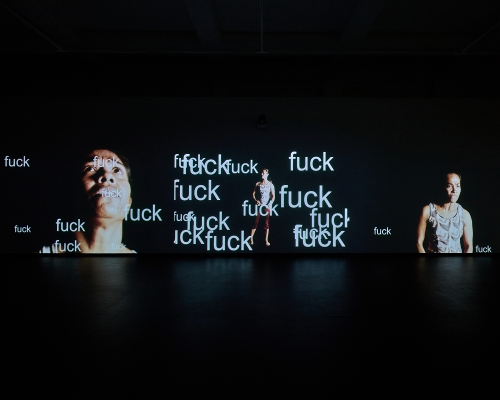
Working collaboratively, Basel Abbas and Ruanne Abou–Rahme’s audio–visual work presents the strength and grief of loss, as do those of Mirna Bamieh and Mayunkiki. Bassim Al Shaker paints the bombings he witnessed as a child in the 2003 Iraq war, while Simone Leigh’s monumental sculptural forms confront the audience with the lived histories of Black women. Kato Izumi’s paintings and sculptures emerge from the biomorphic, revealing origins and relationships that continue to live within us. John Akomfrah’s three-screen video installation Vertigo Sea (2015) is a highly polished, visceral rendition of the human relationship to the oceans.
Al Qasimi deals with the violence and grief of our times with remarkable sensitivity given the conflicts throughout the world in 2025. Through the ideas and practices she espouses, a convivial inclusive approach is offered, that is both chastening and encouraging. Similarly, the artists, many of whom work together and with wider communities. Appointed to lead the 25th Biennale of Sydney in 2026, Al Qasimi is an exemplary curator, constructing capacious spaces for artists and audiences that are conducive to further thought and action in the world. She is not a moralist, but somewhat akin to cultural theorist Lauren Berlant who understood the cruelties of optimism and the necessity to move toward the possible.

Footnotes
- ^ While Japanese names are ordered with family name first, in keeping with the Aichi Triennale texts (and a tendency among Japanese with an international reputation today), the Western naming convention is used throughout this review.
_Card.jpg)