
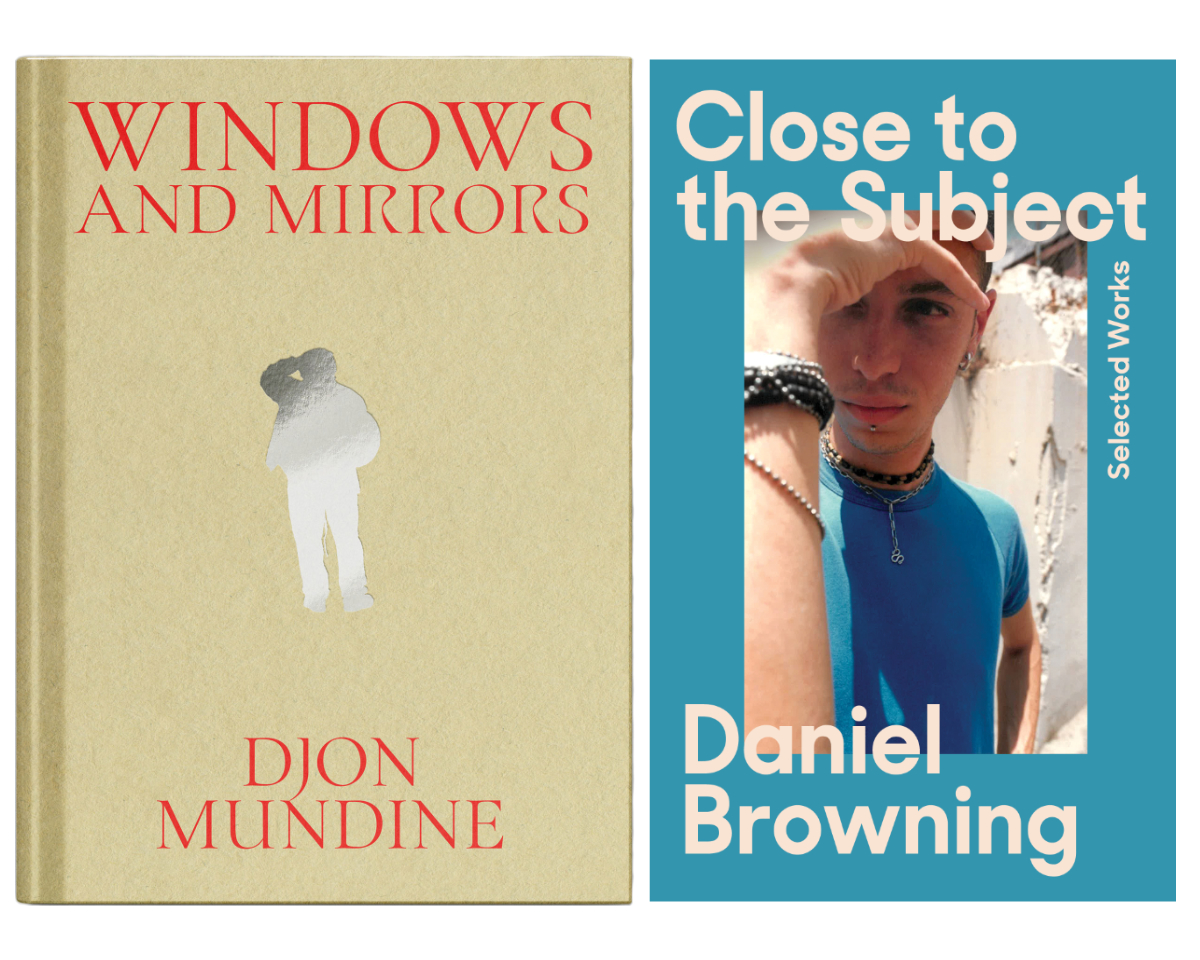
In the preface to the chapter ‘Dear Brother: The Harrowing Life Journey of Archie Roach,’ Daniel Browning, referring to Roach’s epic 2019 memoir Tell Me Why, proclaims, ‘This book is not just a memoir, it’s part of our national story.’ Skilfully blending playscript, memoir, poetry and radio interviews from 2007 to 2023, Browning’s perspicacious and multi-award-winning book, Close to the Subject: Selected Works (2023) warrants equal reverence and adulation. With uprightness, poeticism and clarity of language, Browning reminds us all to reimage our colonial history and face the difficult truths of our twenty-first century colonial order by bringing Indigenous presence to the centre of our slowly evolving cultural psyche. As a truth-telling force, Close to the Subject should be fast-tracked into all national secondary English and arts syllabuses as an unapologetic challenge to what W.E.H. Stanner called “The Great Australian Silence.” If you need proof, the chapters, ‘Unceded: Contesting the National, or Australia is a Foreign Country’ and ‘Fernado’s Ghost,’ provide it.
As an arts writer, Browning’s proficiency is threefold: locating the value of the work and illumining its nuance/s, whilst at the same time, philosophically situating the work politically, culturally and socially with proficiency and finesse. Browning’s commitment to—and understanding of—Indigenous art practice and discourse is profound in its depth and range. During his remarkable career as a journalist, Browning has, along with other Indigenous and non-Indigenous authors, succeeded in correcting Indigenous art’s historical exclusion from Australian art history through the power of his writing. I am reminded here of Susan Lowish’s sentiment in her compelling publication Rethinking Australia’s Art History: The Challenge of Aboriginal Art (2018), where she writes, ‘[…] it is the writing about the art rather than the art itself that becomes the location of arts definition,’ [author’s emphasis]. Browning’s compelling storytelling and status as an Indigenous public intellectual has played a vital role, within a larger, multi-peopled and intergenerational project, in raising Aboriginal art’s standing within wider contemporary Australian art practice and discourse.
That said, upon reacquainting myself with Browning’s previously published exhibition reviews, a pattern I observed was that Browning, for the most part, seems to only write about art that he likes. This is not a bad thing. Nonetheless, I do find that this style of art criticism often feels more promotional than polemical. Whilst being consistently attentive and descriptive (and sagacious), at times I felt an absence of gratifying tension within Browning’s art writing, often present in criticism where the art triumphs in dimming the writer’s curiosity; or when the art lacks distinctiveness or impact; and/or is conceptually weak.
Equally forceful, Djon Mundine’s OAM recent 2025 Windows and Mirrors, the writer’s first (encyclopaedia-like) anthology — serves as a formal retrospective that spans Mundine’s long-standing career as an activist, writer, artist and curator. Comprising catalogue writings, institutional critique, key works, archival images, and curatorial accomplishments across four-decades, Windows and Mirrors represents a vital chapter in the broader narrative of Australian contemporary Indigenous art and discourse. Further, Windows and Mirrors profiles Mundine’s success at offering a unique reflexivity or an institutional reframing of how Indigenous art in this country is mediated, critiqued and curated. For instance, the depth of his mediatory skills that helped create The Aboriginal Memorial (1987-88), permanently on display at the National Gallery of Australia (NGA).[1] The work has deservedly been described as one of Australia’s most important works of art in numerous contexts and is something of a leitmotif for Mundine. Comprising the work of 43 artists from Ramingining, central Arnhem Land, it is certainly one of the most momentous works in the NGA — a work that stands as a defiant act of Indigenous cultural sovereignty, imagined while much of white Australia blindly celebrated its Bicentenary. Commemorating all Indigenous people who have died defending their land since 1788, The Aboriginal Memorial contains themes of transition and regeneration within Indigenous culture. As a commemorative war memorial, the work is emblematic of the resilience of Indigenous people and culture; it reflects Mundine’s proficiency at mediating between Indigenous and non-Indigenous curatorial and aesthetic frameworks by comprehensively challenging non-Indigenous audiences’ expectations around the need for excessive explanation and contextual interpretation of Indigenous art practice/s. Mundine contextualises this in the opening essay of Windows and Mirrors, ‘Forest of memories, forest of hope: A personal account of the making of The Aboriginal Memorial, where he explains,
Aboriginal art was, and still is, under incredible pressure to meet European expectations of Aboriginal culture. Certainly, various factions within the art market have tried to influence the way in which Indigenous artists express themselves; whether they truly represent Aboriginal aspirations is questionable.
Thankfully, contemporary Indigenous artists are still navigating this space, and many are succeeding at challenging previously held classifications of what defines Aboriginal art as a category.
Although sharing similar themes and authorial significance, there are noticeable differences in tone and style that separate both publications. Browning blends his subjectivity or, as several other writers have described, his “blackfella subjectivity” into his genre-pushing storytelling that results in a style that feels intimate and poetic. It reads as an evocative and intellectual act of self-possession and recovery. In contrast, Mundine’s tone and voice feels formal and less narrative-driven in documenting a similar breadth of material and is more centred around chronology, historiography and visuality.
An undeniable similarity that these remarkable publications share is the unconcealed depth of empathy and regard that both authors have for Indigenous Peoples, or as Tony Birch stated in his own review in The Saturday Paper, ‘[…] compassion for our people.’ As defiant thinkers and journalist/writer- provocateurs, Browning and Mundine’s insightful and elegant publications are a triumph of assured storytelling: deeply sympathetic, textually rich, finely detailed, and emotionally resonant — a well-wrought portrait of the evolution of Australian Indigenous culture and history. Browning and Mundine are writers of immense conviction and authenticity. These are the qualities we need as we collectively and courageously face our twenty-first century colonial landscape, and its ongoing associated atrocities.
Footnotes
- ^ Another example of Mundine’s insightful curatorial mythology is further evidenced in pioneering exhibition Ngadhu, Ngulili, Ngeaninyagu held in 2008 at Campbeltown Arts Centre. The exhibition was the first all-inclusive exhibition of Indigenous artists from New South Wales.

_card_Crop.jpg)