Looking outward is a much-documented preoccupation of Australians that is very much alive in the arts. There is a hopeful glimmer in "outward-lookingness"[1] that draws the eye, books a ticket and escorts us willingly away from Australia into the world. I’ve noticed friends and colleagues spirited away to places like the Galapagos Islands, Cambodia, Bhutan, Siberia ... However, this outward-lookingness is not just a personal gaze upon exotic lands afar, or a wish to escape the familiar embrace of Australia but an intentional strategy Indigenous artists are applying to the malaise of the stiflingly low glass ceiling of Indigenous arts. Whether it is looking out for opportunities or outward looking to admire Indigenous artists abroad; the sector is, in a self-determined way, seeking a place beyond the institutionalised categorisation of "Indigenous arts".
Dorreen Massey describes 'outward-lookingness' as a 'consciousness of wider geographies and responsibilities of place'.[2] Our influence is not just confined to our places and countries, but has rippling effects far and wide. 'We are responsible to areas beyond the bounds of place not because of what we have done, but because of what we are'.[3] Massey and other relational geographers critically apply the idea that we are all simultaneously inward-and-outward looking in our impact on the world because of the relationality of what we are doing to those close and far, in space as in time. I bring in this theoretical lens because I think it’s a neat way to conceptualise how our dialogue in the Australian Indigenous arts sector is closely related to dialogues happening in artistic First Nations sectors across the world.
Two years ago, the National Gallery of Canada held the first International Indigenous survey, Sakahàn (meaning 'to light [a fire]' in the language of the Algonquin peoples of southern Quebec and eastern Ontario). The exhibition featured the work of 80 artists from 16 countries and created a global conversation between the works with the audiences, amongst the artists and interpreted by an international advisory group of curators, including Brenda L. Croft, the former senior curator of Indigenous art at the National Gallery of Australia. The curator of Sakahàn, Greg Hill, described this selection of artists as a new generation 'adept at navigating the irony, incongruity, complexity and fertility contained in the concept of indigeneity' [4]; Stephanie Radok, in last year’s issue of Artlink Indigenous, described the exhibition as a new beginning [5]; while Kristina Van Dyke evokes how the works activate because 'their tone [is] dependent on the socio-political climate and the identity of the speaker'.[6] This "new generation" of Indigenous artists are navigating some pretty choppy waters as they create new territories, claiming and disputing, rousing and stirring the pot in an effort to re-energise the concept of indigeneity in a globalised context.
Massey’s idea of outward-lookingness could be a starting point from which to explore the rippling effects in the work of Indigenous artists both near and far. Perhaps, we share a common departure point[7] rather than a common language with our brothers and sisters across the world. Each artist has a perspective to share, influenced by multi-generational experiences of indigeneity; meanwhile, their work functions more like a mnemonic device portraying powerful ideas and narratives about what it is to be an Indigenous artist today.
I wish to encourage the debate in these specialist issues of Artlink Indigenous to enact the critical turn in Indigenous arts. Like a Facebook relationship status update, this "outward-lookingness" towards the "dominant art world" for critique, or space, or funding, or validation, is complicated. Two of the major pressures on the Indigenous arts sector are binary discourses which create crevices in language that we can get stuck in; and the neoliberal economic discourses that threaten to swamp artists and the arts sector. I present these two pressures as examples of the tensions Indigenous artists describe as restricting voice and freedom for their creativity.[8] Artists resist these limiting situations, naming them and shaming them in a bid to create social space for Indigenous peoples.[9]
Binary discourses
The Globe and Mail’s James Adams described the largest survey of international Indigenous art, Sakahàn, as a 'mighty capricious ghetto'.[10] Curators Greg Hill, Candice Hopkins and Christine Lalonde exhibited the large body of work that aimed to engage with 'varied models of cultural and aesthetic expression and ontological and epistemological approaches to indigeneity'.[11] Despite this intentional, relationally engaging curatorial process, discursively we are returned to the missions, to the reservations, securely categorised. The power of framing the narrative about how to interpret Indigenous art continues to evoke colonial hegemonic performativity.
These ways of speaking to Indigenous arts spaces by powerful actors, like those in the media, act to silence the transformational influence of Indigenous voices.[12] Silenced, also, through the application of cultural relativism, in reinforcing the debates about identity/post-identity; embedded/disconnected; authentic/inauthentic; cultural/assimilated as binary oppositions, these terms continue to plague our vocabulary, given that we, too, wield them.
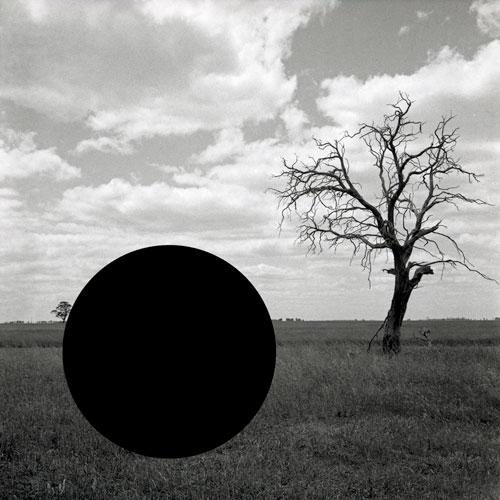
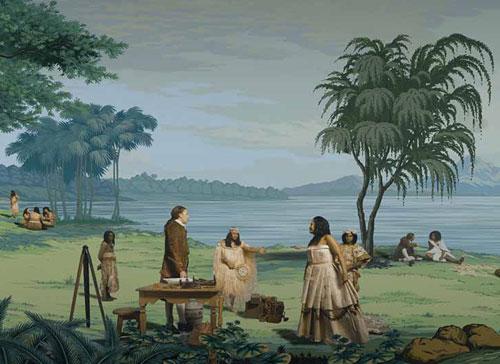
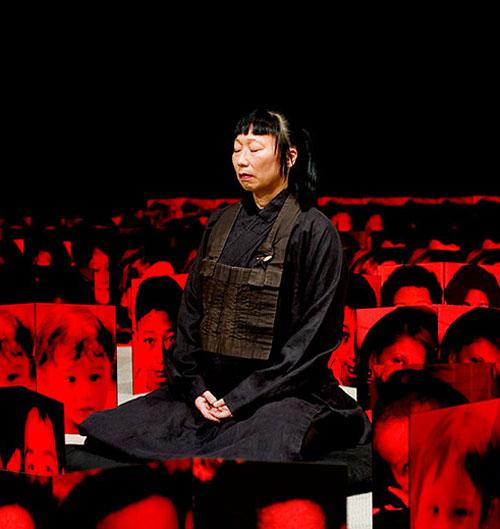
Indigenous artists don’t simply resist this colonial hegemonic performativity. The discourse is an ongoing battle over language/land/bodies and the way they are framed and narrated. Artists like Shigeyuki Kihara, r e a, and Dakaxeen Mehner subversively wink at the establishment, irritate the binary tensions and nuance the debate through their visual imagination. For example, looking at Mehner’s Da-ka-xeen The Thlinget Artist (2007) from his Reinterpretation series; Kihara’s (2005) series Fa’afafine; In the manner of a Woman; and r e a’s 2009 series PolesApart all play with fundamental elements of art — time/space and the body. These three photographic images perform resistant and perhaps romantic embodiments of indigeneity.
There are echoes of this continuing conversation being taken up in more contemporary work like the work of Tlingit/Aleut artist Nicholas Galanin, Things are Looking Native, Native’s Looking Whiter (2012), whose mashed-up photo imagery irritates, scratching open questions in often amusing ways. Or Marja Helander’s Trambo (2013) [13], a video work where ideas of the nomadic transience emerge as she drags a trampoline into place for the purposes of reliving nostalgic memories.
When thinking about these images and watching the video work, the meditation on Indigenous identity in a globalised/commodifed world does suggest that the pressures bearing down upon Indigenous artists are complex and ubiquitous, beyond the usual binary divisions. Even questions like 'What is Indigenous?' enact colonial hegemonic performativity that perhaps limits the language available for Indigenous artists. Even the 'moral responsibility' [14] of representational image-making accomplishes a set focus and commitment to inward looking at self, identity and history. Where to from here?
Neoliberal discourse
Neoliberal discourse seeks to co-opt by inserting economic interests and behaviours at the heart of the way we think about the world. The Indigenous arts sector is not immune to this dynamic process because the sector, both nationally and internationally, is a set of networked relations between powerful and less-powerful players. Understanding the interconnectedness of players (like national galleries, art dealers, festival producers, curators, editors and directors, advocacy bodies, educational institutions, arts centres, individual artists and arts managers etc) seems to be crucial for survival in this highly politicised and relationally challenging space.
Acker et al. describe the Australian Indigenous arts sector as a 'combination of factors [involving] disparities in power and knowledge and also, often, incommensurate "regimes of value"'.[15] These conflicting 'regimes of value' [16] place the production of Indigenous art under pressure. These market pressures are also complemented, aided and abetted by acquisition tastes of institutional buyers. The Storylines report by Johnson et. al.,[17] concluded that the most well-collected and exhibited Indigenous Australian visual artists make up 4% of the 586 artists in their study. Further, they contend that there is a 'star system' at work in the visual arts industry. And is this any surprise? Genocchio applauds the occupation of Aboriginal artist as one of the few that approach equality with 'white counterparts'.[18] Doesn’t success and opportunity attract further success and opportunity?
But what does this mean? There would be great significance in understanding the social networks that enable and deny access and how they structure our Indigenous arts sector, both nationally and internationally. My concern is that the limited opportunities of the star system drive intense competition, which exacerbates rivalry, jealousy and cliques, simultaneously attracting great success for a limited number of artists. For a sector fundamentally interconnected—some with closer links to powerful players, others further away from those circles of opportunities, some embedded in cultural kinship frameworks, others stretching to international places away from country and home—this is foreboding.
Recently, I wrote about my growing concerns that the rise of the economy surrounding the creative class was setting a series of norms that lock out as many people as they enable, creating a serious concern about the way the arts are mobilised as an economic engine for the affluent.[19] I raise these concerns here because international artistic collaboration, exhibition and audience engagement is a conversation about both access and capital. This means that there is a tailwind that accelerates the growth of the star system of well-connected and collected artists, whose savvy and innovative work has created value for an arts market, securing them further opportunity and brand presence that makes them and their work very attractive. This group of artists also hold the responsibility—whether they like it or not—to represent the Australian Indigenous arts sector; their work embodies the best/most critically intriguing of what we have to offer.
The trend within the global arts sector to focus on the development of, and servicing of, individual artistic careers is cause for disquiet. I have worked in this particular area for many years, mentoring artists as they consider the tightrope they must walk between what is valuable to the market and collecting institutions and their own artistic voice. Making a reasonable living wage has become a day-to-day reality for many Indigenous artists. Creatives move between festivals, residencies, projects, exhibitions and community-based work, often juggling multiple projects in different locations and for different audiences. Supporting this reality is the oft-cited discourse of Richard Florida who paints a pipeline for the rise of the creative classes.[20] Artists (nay, all of us) are sold the idea that a career has a singularly upward mobile trajectory; but in order to get on that escalator, artists have to monetise their artistic output and, increasingly, their creative persona.[21]
The global trend towards personal branding is a dominant discourse we are all in some way engaged in (for example, social networking and the construction of virtual self(s)(ies)). For artists who have constructed a brand presence around their body of work, and their corporeal body, connections with the markets that purchase or pay per view create mutual relational dynamics. Preece and Kerrigan propose that artist brands can be conceived as 'the identity projects of consumers where brands create myths to connect with them'.[22] Artists perform salient identities, and their work creates new frames and narratives for audiences to adopt, adapt, critique and engage with. Artists perform reflexive self(s) that portray images/ideas of authenticity. This creates followers and markets for their work/self.[23] Hence, the value of artistic product is made up of the market valuation of the object/performance itself as well as the brand presence or value transferred by the maker.
An example of an artist articulating the language of branding is musician and composer William Barton, who says, '[...] you’re almost always on duty as yourself, but that’s your brand name — not your brand name, but your brand or your persona and personality.' He describes this idea of his brand as consisting of images of what others respond to from his artistic presentations coupled with the projection of who others think he is or what he stands for. William shares his life story regularly in the public domain and produces a consistent narrative from which others can extract value.
Inside the pressure cooker
So how do we make sense of these tensions? And is it particular to Australia? Do we need to pay attention to these external "non-art" considerations at all? In my research with Australian and American Indigenous artists, these pressures were frankly spoken about. Indigenous artists describe these overlapping territories inside of themselves that they navigate when they are doing their work. My research finds four territories, in a landscape of inevitably more, that speak to the pressures described above and other intersecting cultural norms, community pressures and expectations.
The four territories are around questions of authorisation in a bi-cultural world (am I culturally authorised, do I have community authorisation, can I self authorise?); identity and belonging (being both fearless about speaking your mind and connected to community in a supportive way); artistic practice (the struggle with walking the tightrope between being innovative in your practice as well as operating as a representational voice and/or custodian of cultural values); and history, colonisation and trauma (expressing and containing trauma through the work and your own body as well as seeking to empower and generate hope for young people and for the future).
Individual Australian Indigenous artists embody a glorious pressure cooker of ideas, legacies, tensions, expectations and responsibilities. They also live within a stifling, contained sector where the limits of funding and opportunities to have their work seen are real, especially for those artists who are less well-known or exhibited. So it is important and maybe even urgent for artists and the sector as a whole to consider the effects of an inward-looking focus and think about the already well-established dialogues, trade routes and visitations of the Australian Indigenous arts sector as an outward-looking, relationally-rich network.
Footnotes
- ^ D. Massey, ‘London Inside-out’ in Soundings 32, London 2006: http://www.lwbooks.co.uk/journals/articles/massey.html. Accessed 20 February 2015. B. Goldsmith, B. ‘Outward-looking Australian cinema’ in Studies in Australasian Cinema, 4:3, 2010, 199–214.
- ^ Massey (2006)
- ^ D. Massey, ‘Geographies of responsibility’ in Geografiska Annaler 86, 2004, p. 16.
- ^ G. Hill, ‘Afterword: Looking back to Sakahán’ in Art Monthly Australia, no. 262, August 2013, p. 17.
- ^ S. Radok, ‘Sakahán: International Indigenous art’ in Artlink, 34:1, March 2014, p. 89.
- ^ K. Van Dyke, ‘Sakahán: international indigenous art’ in Artforum International, 51:9, p. 163.
- ^ F.H. Goodyear Jr, ‘The challenge of this moment’ in J. Baker & G. McMaster, Remix: new modernities in a post-Indian world, New York: National Museum of the American Indian, 2007.
- ^ M. M. Evans, ‘Exploring Indigenous artistic leadership’ in C. Voyageur, L. Brearley, & B. Calliou, Wise Practices in Indigenous Leadership, Banff: Banff Centre Press, 2013.
- ^ P. Freire, Pedagogy of the oppressed. Harmondsworth: Penguin, 1970
- ^ James Adams, ‘Sakahan exhibit aims to “explode the box” of aboriginal art in Canada’, The Globe and Mail, 17 May 2013: http://www.theglobeandmail.com/arts/art-and-architecture/sakahan-exhibit-aims-to-explode-the-box-of-aboriginal-art-in-canada/article11992899.
- ^ G. Hill, p. 13.
- ^ J. K. Fletcher, Disappearing acts: Gender, Power and Relational practice at work, Cambridge: MIT Press, 2001.
- ^ Marja Helander: https://vimeo.com/88235520.
- ^ H. A. Giroux, H.A. (1994) ‘Benetton’s “World Without Borders”: Buying social change’ In C. Becker, The Subversive Imagination: Artists, Society and Social Responsibility, London and New York: Routledge, 1994.
- ^ T. Acker, L. Stefanoff & A. Woodhead, Aboriginal and Torres Strait Islander Art Economies Project: Literature Review. CRC-REP Working paper CW010. Ninti One Limited, Alice Springs, 2013, p. 20.
- ^ B. Genocchio, B. Dollar Dreaming: Inside The Aboriginal Art World, Prahran: Hardie Grant Books, 2008.
- ^ V. Johnson et. al, This side of the Frontier: Storylines Full Report, Sydney: University of New South Wales, 2009, p. 47.
- ^ Gennochio, p. 211.
- ^ M. M. Evans, ‘Are the Arts the Economic Engine of Affluence?’ in Public Administration Review, vol. 74(3), 2014, 431–33.
- ^ R. Florida, The Rise of the Creative Class: And How It’s Transforming Work, Leisure, Community and Everyday Life. New York: Basic Books, 2002; R. Florida, The Rise of the Creative Class Revisited. New York: Basic Books, 2011.
- ^ A. C. Bunten, ‘A call for attention to indigenous capitalisms’ in New Proposals: Journal of Marxism and Interdisciplinary Inquiry, 5(1), 2011, pp. 60–71.
- ^ C. Preece & F. Kerrigan, ‘Multi-stakeholder narratives: an analysis of the construction of artistic brands’ in Journal of Marketing Management, DOI: 10.1080/0267257X.2014.997272, 2015, p. 6.
- ^ L. Wee & A. Brooks, ‘Personal branding and the commodification of reflexivity’ in Cultural Sociology (4)1, 2010, pp. 45–62.