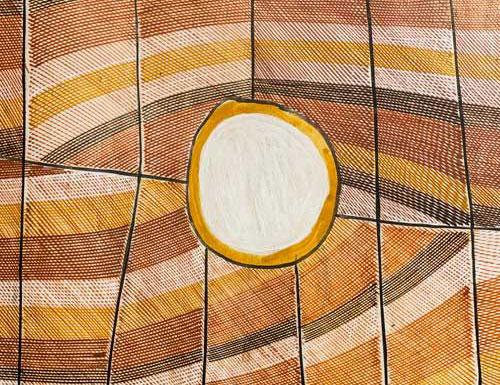
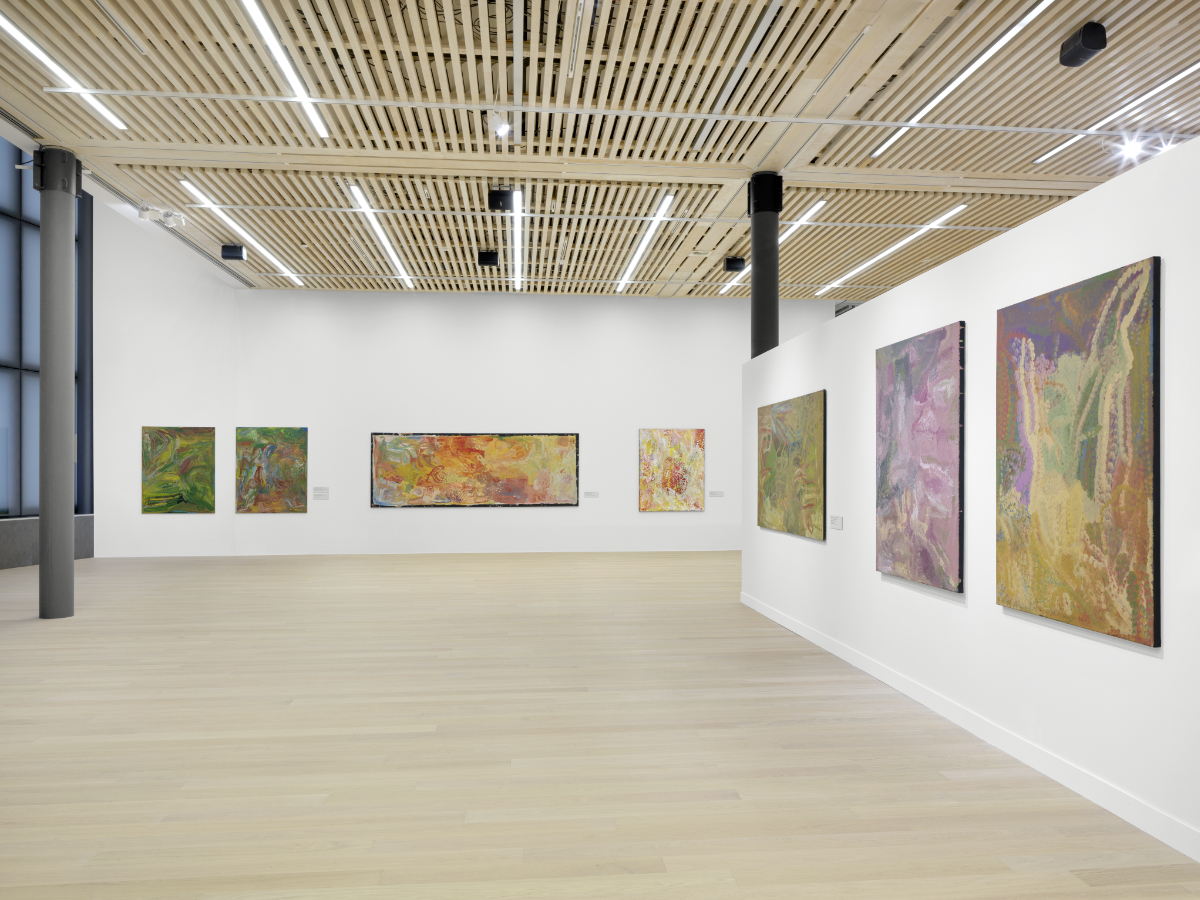
Currently showing at Fondation Opale, in Lens, Switzerland, is the first retrospective of its kind in mainland Europe on Emily Kam Kngwarray (Emily Kame Kngwarreye)[1], who passed away 30 years ago this September. Kngwarray is now widely considered to be the most famous Aboriginal Australian artist — if not the most famous Australian artist. Some art museum directors even think ‘you can hang an Emily painting on the wall in New York or Paris, and it will “work” without further explanation’. Others insist that the breadth, depth and “weight” of the themes inspiring Emily’s art requires a doctorate, or at least a 254-page catalogue as published by Tate Modern. Fondation Opale takes a middle course between these two extremes. Visitors overheard at the Lens opening (yes, I snooped) said ‘Hmmm’, ‘C’est splendide!’ or ‘What is that?
The exhibition draws heavily on the Kngwarray exhibition (curated by Hetti Perkins and Kelli Cole) which closed this January at the Tate Modern, on tour from the National Gallery of Australia (NGA) in Canberra, but with some key differences. Bérengère Primat, French-born chairperson of Fondation Opale, one of the partners of the Tate exhibition, (and a key lender), brought that exhibition to Lens to further her mission of ‘promoting dialogue between cultures and peoples through art’. And as Tate director Karin Hindsbo puts it, ‘This project encapsulates what Tate Modern is all about: celebrating the world’s most significant artists — those who shape international art history, speak to our times, and imagine new futures [...]’.[2]
Previous Kngwarray retrospectives were held in Brisbane in 1998 and twice in Canberra in 2008 and 2023, and in two Japanese cities in 2008. The "Emily story" has changed little since that first exhibition however there has been increasing international acclaim and a growing sense of canonisation on the Australian art scene. But how is that story being shown in Europe?
Europeans have had the chance to view some of Kngwarray’s works approximately eighty times since her first exhibition in Dublin in 1990. Three-quarters of those shows were in smaller towns and a quarter of the exhibitions during the peak of her career in the 1990s were in museums of ethnography.[3] In the past year, Kngwarray had a small appearance at a rural gallery in Germany, a strong presence at Musée Rath in Geneva, several works on view in the exhibition Roots in Lens early in 2026, and all year in Berlin at the Australian Embassy. Still, hardly overwhelming.
Has Fondation Opale said anything new about Kngwarray? Not really, but it made a significant effort to involve eight of Kngwarray’s female relatives in the hanging of the exhibition and in an informal panel session at the opening. The co-curators in Lens, Kelli Cole (Warumungu and Luritja, previously curator of special projects at the National Gallery of Australia) and Georges Petitjean (head curator at Fondation Opale, previously curator at the Aboriginal Art Museum in Utrecht) recounted that the artists were excited during their private preview of the exhibition, briefly singing or dancing when inspired by specific memories. Further, a parallel exhibition, Utopia, featured forty-four artworks and sculptures from Kngwarray’s Central Australian community, as if to demonstrate that her artistic legacy continues. The contrast, however, underscores her singularity as an artist.
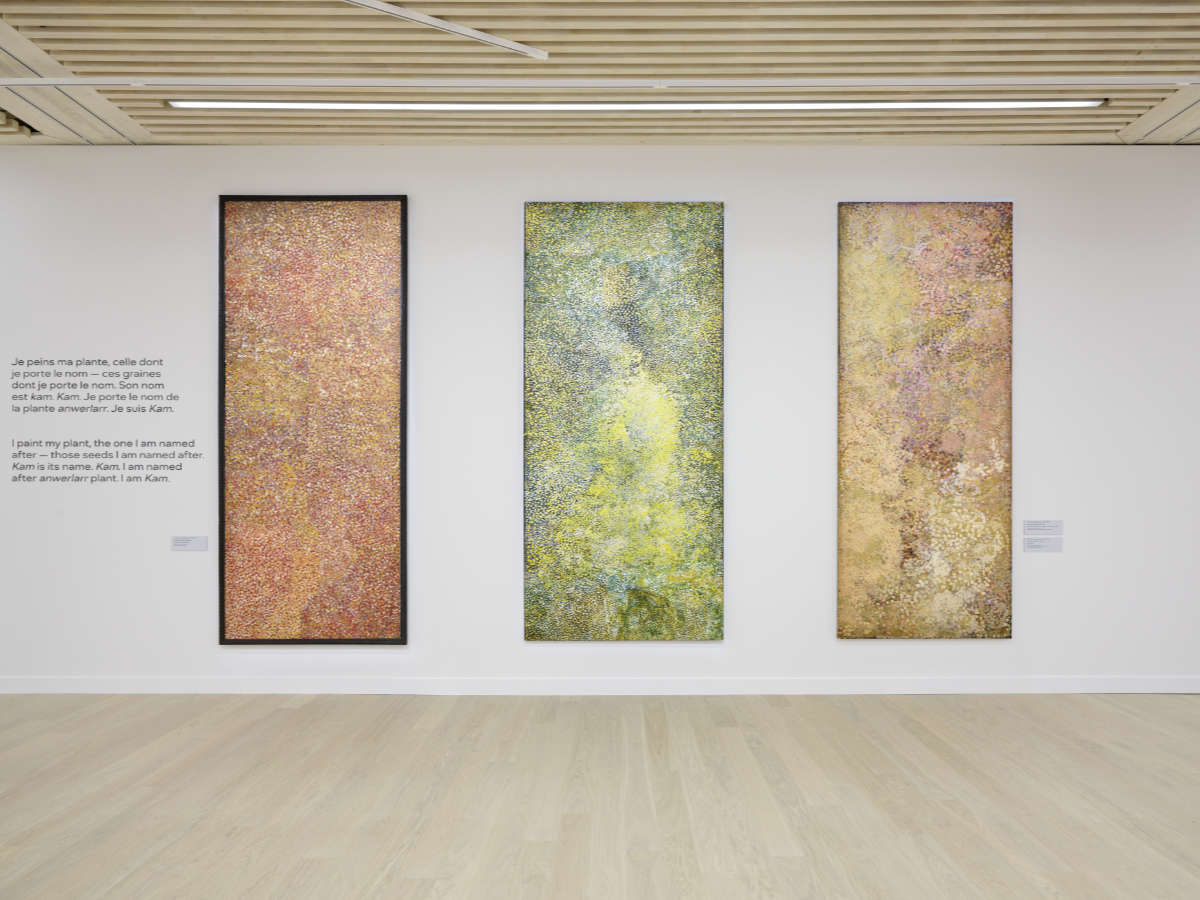
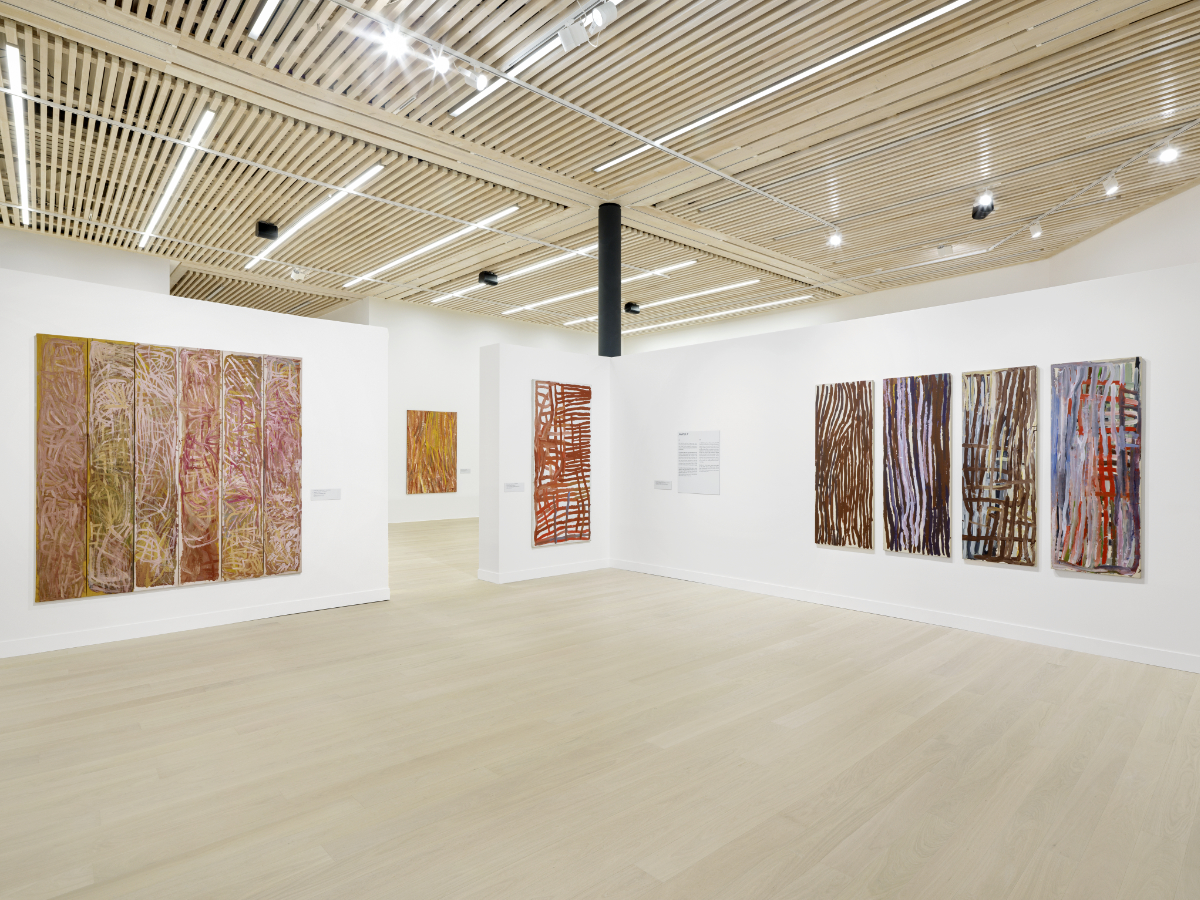
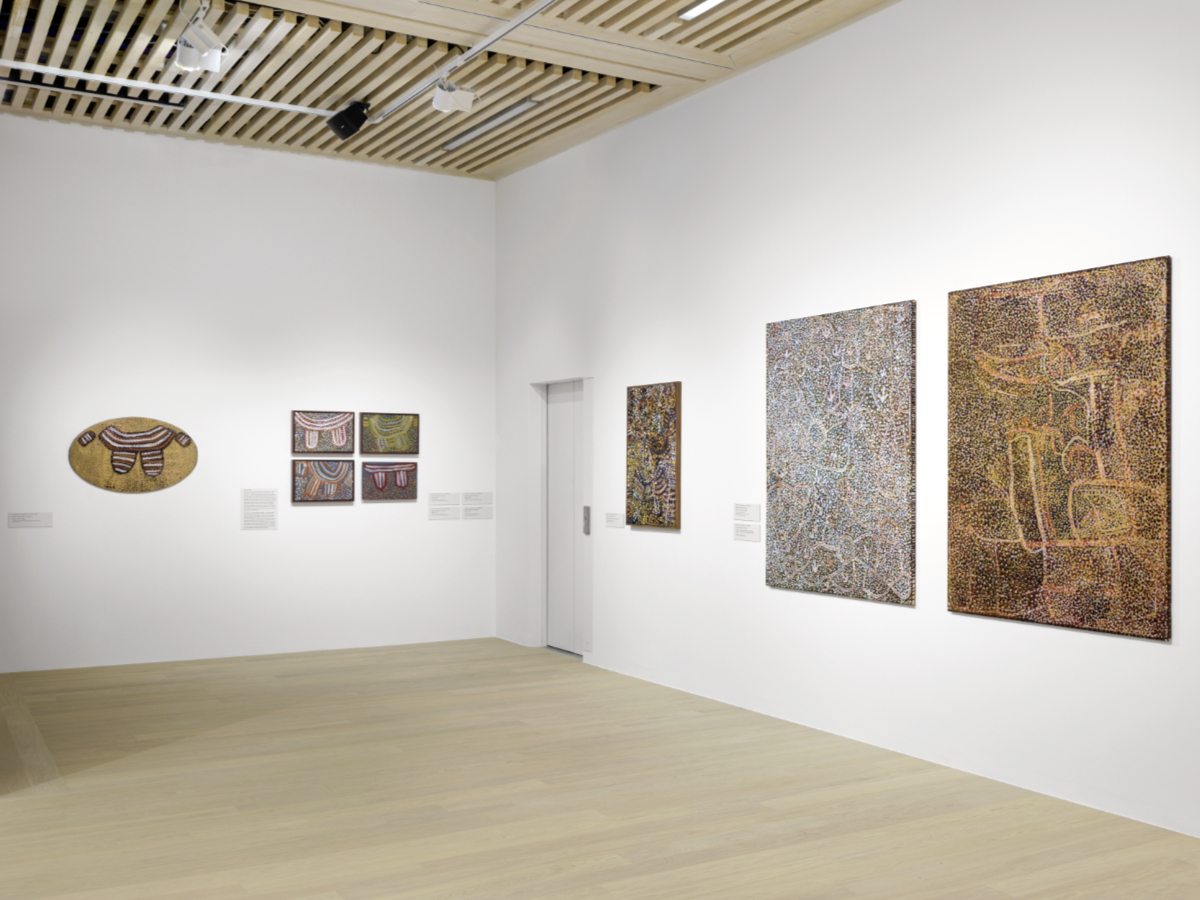
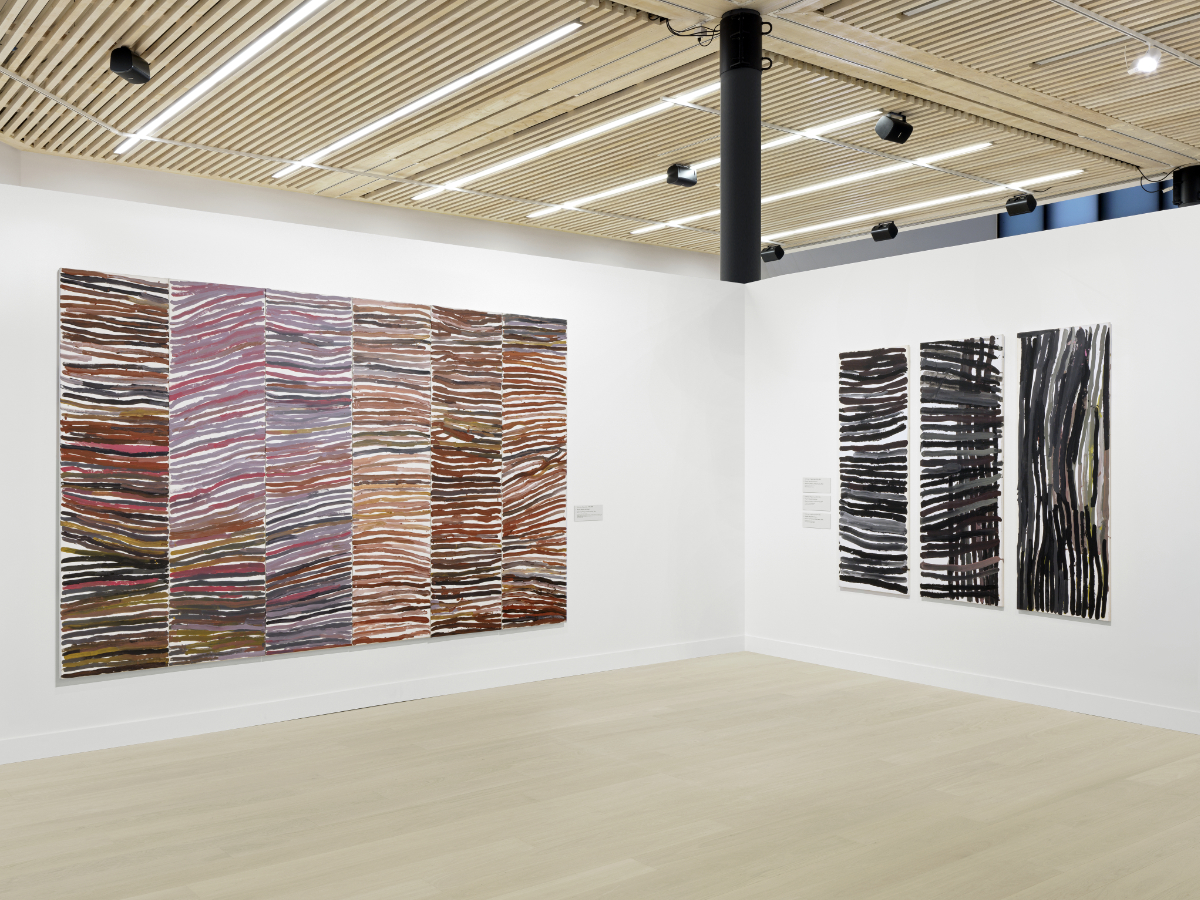
Fondation Opale presented the art differently from the Tate and NGA shows by inverting the chronological sequencing and instead placing the larger works from her later years at the entry of the exhibition, for greatest impact, with the smaller, more intimate works on the second floor. The hanging of multiple sets of “triplets”, of visually similar artworks, showed Kngwarray’s expert handling of variations on a theme. Several of the famous batiks from the earliest days of the Utopia Women’s Batik Group, some on loan from the Janet Holmes à Court Collection in Perth, were displayed in a dimly lit staircase area between the two floors, due to curatorial insistence on low light levels following their overexposure for six months in London.
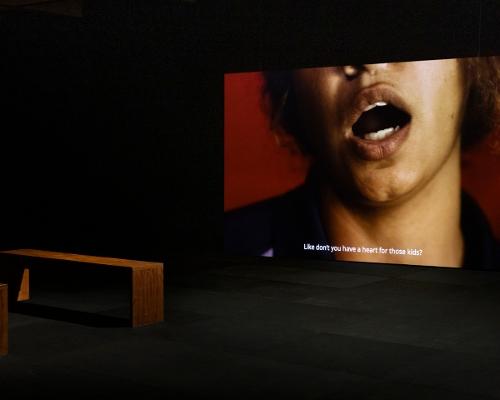
Audiences could also watch a documentary film spoken mainly in Anmatyerr with English subtitles, acknowledging the life, cultural traditions and intent of the artist. The Fondation Opale publication in English was smaller than the Tate or NGA catalogues, labelled as a monograph reviewing the artist’s impact rather than as a curatorial reframing of the exhibition.
The hang was classical white walls and small self-effacing wall texts. Because of reduced hanging space, the set of 81 works, A Summer Project: Utopia Women’s Paintings (1988–89) that initiated the Utopia painting movement, was not shown; however, this allowed several imposing additions. Among these were a rare set of ten paintings from 1995 using ochres on canvas, Arlatyey (Pencil Yam), arranged in its own alcove. Kngwarray had been urged by her artist–nephew Greeny Purvis Petyarre to use the ochres he had collected on their Country. She took up the challenge, temporarily detouring from her vibrant acrylic painting materials, and showing her characteristic and fearless improvisation, even during the last year of her life.
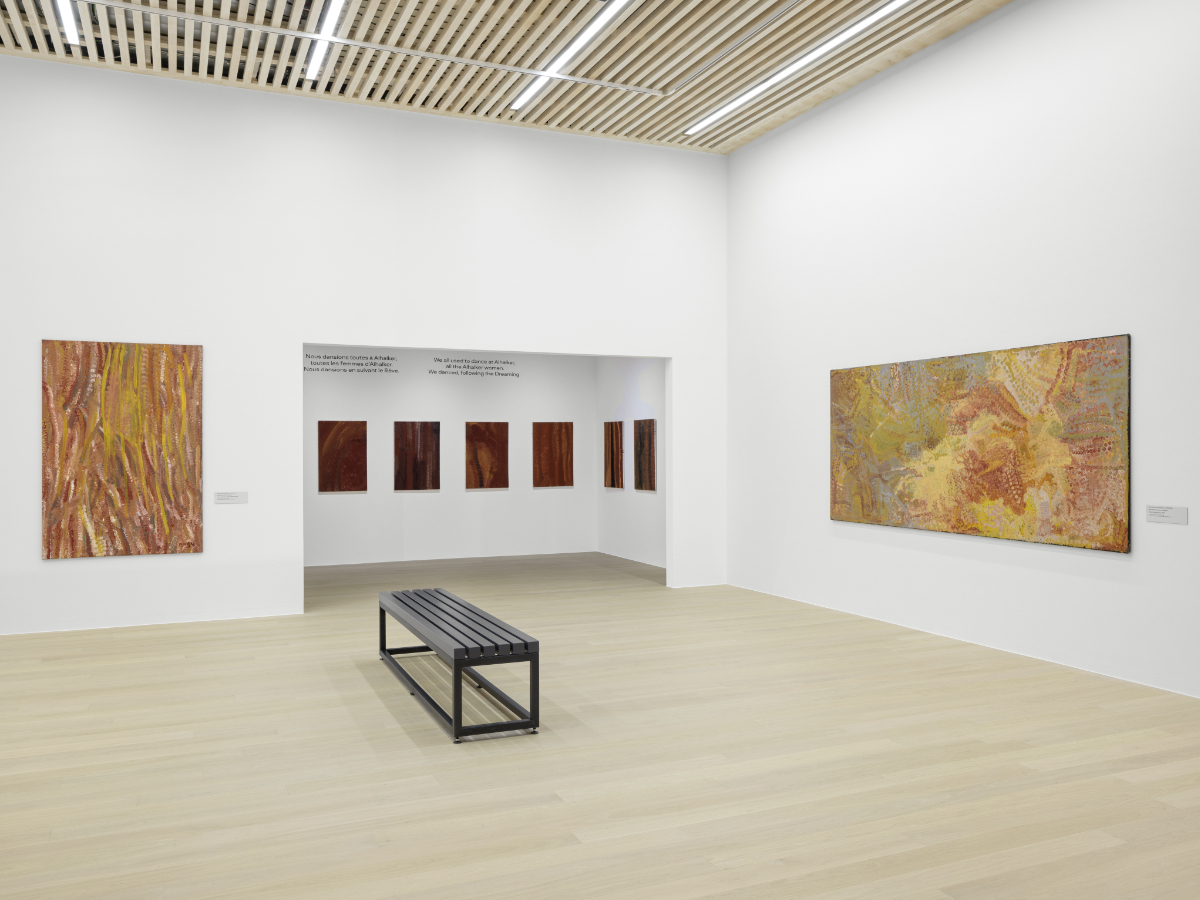
Which parts of Kngwarray’s artistic life story were not covered? The overpowering eight-metre-long Anwerlarr Anganenty (Big Yam Dreaming) (1995) did not make it from Australia, neither for Lens nor the Tate show, because the NGV had reserved it for their blockbuster The Stars We Do Not See: Australian Indigenous Art currently touring the USA. Neither was the imposing Earth Creation 1 (1994) shown, a work controversially omitted from both the NGA and Tate shows. It remains a work of contention, despite it starring in the 2015 Venice Biennale, on request of the chief curator Okwui Enwezor.[4] It is now in the collection of the Australian magnate Andrew Forrest; however, as Primat said in a short interview, ‘I haven’t given up on showing that one’.
As with most discussions of Kngwarray’s art, the panel session with her female relatives was not very revealing. They were shy, saying little. English is not their preferred mode. Nonetheless, their presence was honoured, and they saw the audience listening far more closely than usual in Europe. The audience raised some critical questions during the public talk. A tense moment arose when Bernhard Lüthi, organiser and curator of Aratjara: Art of the First Australians that toured three major European art museums in 1993–94, asked, ‘What about politics? You did not mention that anywhere, although land rights are implicit in every painting.’ Lüthi is not one for euphemisms. Cole elided the issue by emphasising her own presence as “political” in the sense that she is of Indigenous heritage and has promoted Aboriginal themes throughout her decades-long career at the NGA. The discussion moved along because no one was prepared to speak about the years of court cases that Kngwarray helped fight before (limited) land rights to her community’s Anmatyerr and Alyawarra lands were ceded in 1979. Furthermore, the artists in the room had experienced the march of the Australian military into their homelands during the Northern Territory Intervention in 2007. But that was not the story they came to tell.
What is art, but memory given form, outlasting reality? The memory can never end, at least in the view of the Indigenous artists, who see the art as a reflection and a reinforcement of timeless laws. In the view of European art historians, the successful end will be when art by Kngwarray and other exemplary Aboriginal artists is placed in thematic exhibitions in major art galleries alongside other top international artists, with the same matter-of-course acceptance as works by Pablo Picasso, Sol LeWitt, or Yayoi Kusama.
Footnotes
- ^ There is ongoing argument between linguists and curators on the correct spelling of the artist’s name.
- ^ See Elizabeth Fortescue, “Superstar of Australian art Emily Kam Kngwarray to get Tate Modern show in 2025”, The Artnewspaper, 1 December 2023. Most media responses in Australia and the UK have been positive.
- ^ Lindsay Frost and Darren Jorgensen "Analysing the Global Phenomenon of Australian Indigenous Arts: A Database of Exhibitions Overseas", (unpublished, under review for ANZJA, July 2027).
- ^ See John McDonald, “Emily Kam Kngwarray”, Art Column, 16 December 2023.