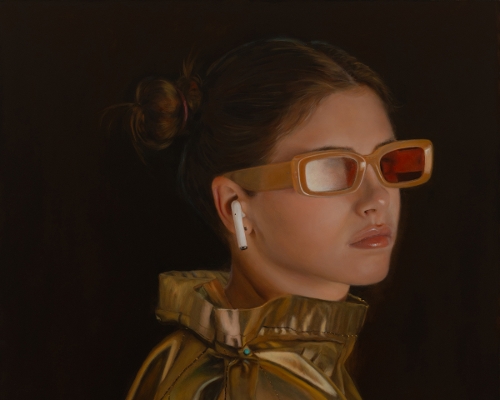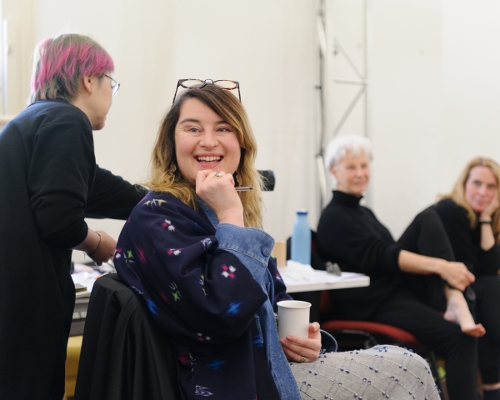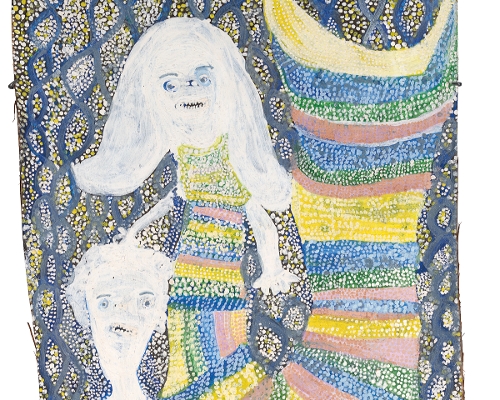
A few years ago when struggling to breastfeed, I posted a suite of artworks on Instagram. They redressed what felt like a dearth of images on the complex act: Marie Antoinette’s Temple du Lait at Rambouillet — an allegory for political dominion and control over the health and wealth of French society; a Greek mastos cup used in rituals to rebirth the dying; ceremonial kinships with Country in Emily Kame Kngwarreye’s Awelye paintings; and the perverse fecundity of Patricia Piccinini’s Skywhale (2013). Despite the immense public reception to Skywhale, it was four years after its maiden flight that the monolithic, many-breasted creature was read through Piccinini’s experience of acute postnatal anxiety.[1] Large-scale invisibility.
The Instagram post received a flood of responses: stories of mastitis, hospital trips, public shame and private victories. When invited to guest edit an issue of Artlink, I returned to this groundswell. Across 44 years of the imprint’s publishing, this is the first magazine dedicated exclusively to the theme of motherhood in the arts. As the archive might suggest—Feminist Perspectives (1984), Art & the Feminist Project (1994), Art and Childhood (2001) and Positioning Feminism (2017)—feminism is cool: motherhood is naff. But the overwhelming response to The Mother Issue writer’s call-out dispelled this myth, proving the subject evergreen, evolving and far from exhausted.
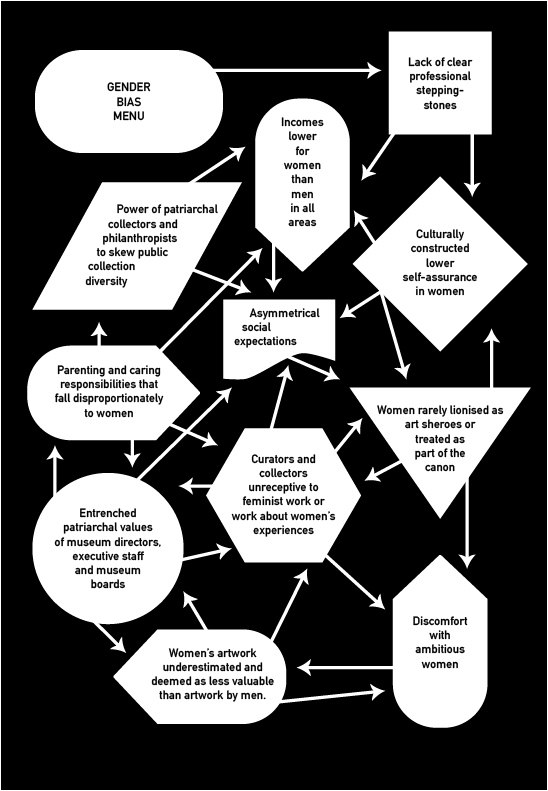
The Mother Issue holds up a millennial lens to parenthood. As an opening gambit, we asked Elvis Richardson to objectively measure a subjective identity: the artist-mother. Richardson has been checking receipts on gender parity in the Australian art world for the better part of two decades and her data-driven essay on the twinned trajectories of artist professionalisation and motherhood illuminates that the needle hasn’t moved much this side of Y2K. Bound to the legacies and challenges fought—still being fought—by previous generations, The Mother Issue mirrors current realities: the profound medicalisation and tech-industrialisation of motherhood and maternity over the last quarter century (as of 2023, one in every eighteen babies born in Australia are conceived through IVF);[2] radical atomisation of care, families and intergenerational knowledge (‘...the childcare manual is the emblem of the new mother’s psychic loneliness.’);[3] enduring antagonisms against motherhood regarding power, agency, visibility and capital, in the artworld and beyond;[4] and, more obliquely, mothering in an age of political dis-information, wars and climate chaos, during capitalism’s end game. Mothering amongst the existential ruins.
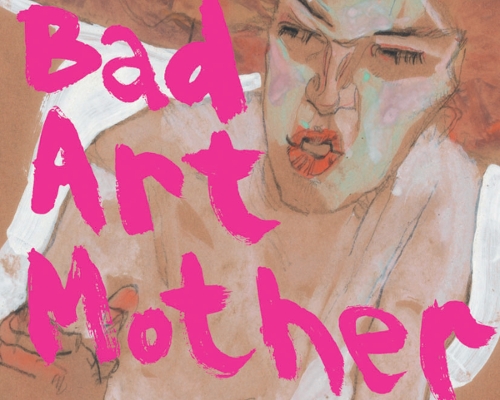
While the millennial focus has to do with the age and stage of writers and artists, it is also framed by the conditions of contemporary arts writing and art criticism — another field that has been radically dispersed over the last two decades. Most articles herein draw on a naturalised second-wave feminist tenet: that the personal is the political, and the subjective experience can be richly creative. Direct quotes and first-person interjections are powerful tools when staking claims on the contested grounds of motherhood as Tahney Fosdike’s book review of Bad Art Mother (2022) demonstrates. Fosdike’s own journey is set against the novel’s central taboo: outsourcing the care of your child to make more time for art.
These devices also point to a ground zero of contemporary art’s pluralism. In an economy fuelled by atomisation and ‘cutting out the middleman’, American cultural theorist Anna Kornbluh describes our now late-stage moment in terms of immediacy; interpretation and mediation have been disbanded for the to-camera confessional.[5] Although Kornbluh uses the term critically, immediacy is robustly wielded in The Mother Issue. Savannah Smith’s essay follows prejudicial art historical ‘hunches’ into a proposition on motherhood and photography. Imaging motherhood has always been a complex affair, but photography has played a profound role in liberating representation and the gaze, and as a trace of life. Let’s not forget Roland Barthes’ Camera Lucida (1980) was, foremost, a eulogy to his late mother.
In the twenty-first century, photography, and by extension moving image, have also become the mediums of performativity and mass dissemination regarding capital and motherhood. Curators Sophie Gerhard and Katharina Prugger touch on this omnipotent algorithmic messaging in their conversation about MOTHER: Stories from the NGV Collection — an exhibition first conceived while they were both on maternity leave, in one of those rare art sector jobs with appropriate compensation (as Richardson’s data reveals).
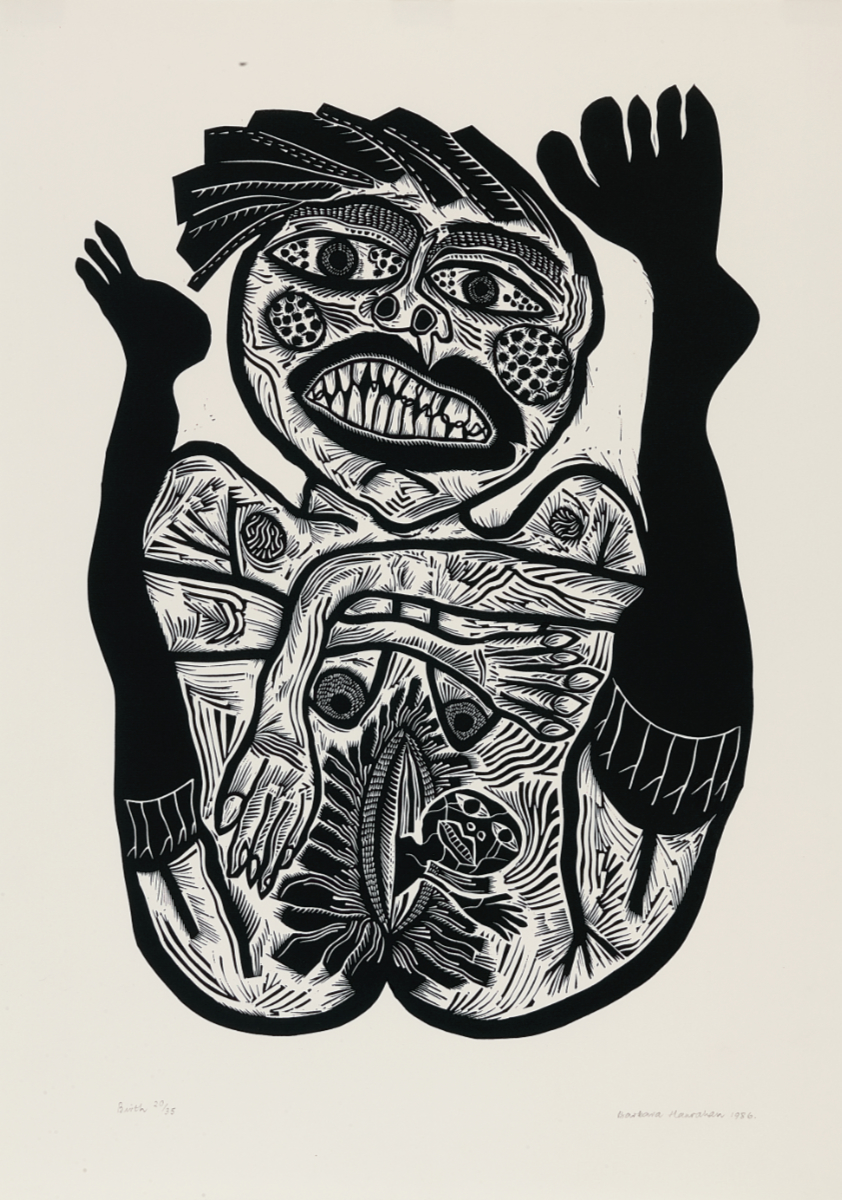
Across the issue, writers, artists and curators tap into a rich seam of transhistorical artworks, from the oblique to the graphically pivotal. Our editorial team almost ran with Christine Godden’s birthing photograph as a lead image before self-censoring: Instagram would remove it, deeming it categorically “pornographic”. Despite the new threat of synthetic images to photography’s already tenuous hold on truth, it remains haunted by moral panic. Just this year, four photographs from Sally Mann’s ground-breaking series Immediate Family (1992) were seized by police, taken from the walls of the Modern Art Museum of Fort Worth in Texas.[6]
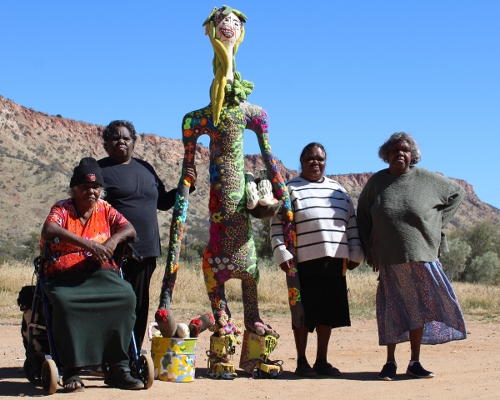
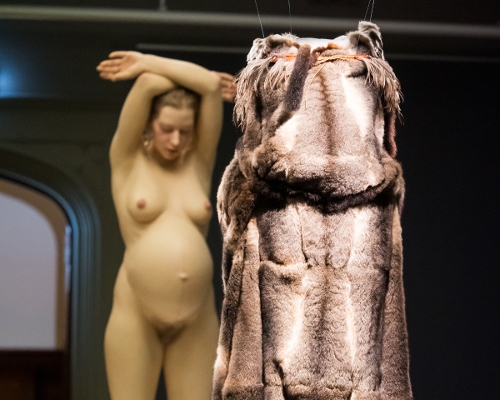
Immediacy finds other forms too. Gerry Bobsien traces the artistic and public response to Ron Mueck’s towering Pregnant Woman (2002) at Maitland Regional Art Gallery, resulting in a vaulted gallery’s worth of Post-it note confessionals. In an essay-interview hybrid, where the worlds and words of six mother-artists in Aotearoa weave across one another, Tessa Ma’auga also pins living history to the page. As does the shared storytelling of Louise Robertson, Dulcie Sharpe and Marlene Rubuntja on Beautiful Ulkumanu (2025), the latest soft sculpture by Yarrenyty Arltere Artists. Another towering matrilineal figure, ulkumanu (old woman) traverses Country as an abundant figure of fertility, bounty and protection.
Josephine Mead’s (M)Other is an Opera!—a novel on navigating successive rounds of IVF as a queer artist—has its roots in memoir, another form of the times, according to Kornbluh. For The Mother Issue however, Mead witnesses its translation into theatre. Jingwei Bu’s visceral poetry on the material shifts and two life-threatening births informing her endurance practice also offers translation: between cultures, languages and selves — the provider, protector, artist, mother.
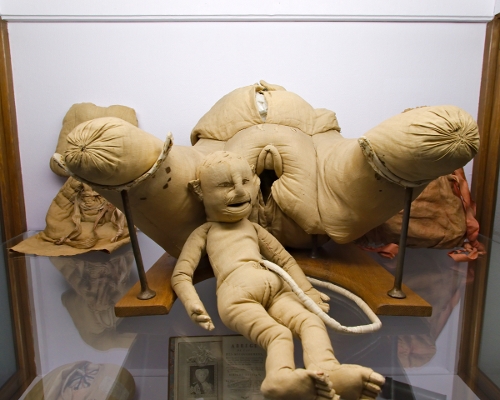
Art historical legacy, however veiled, is also a throughline. Warwick Heywood seeks out maternal imagery from the nineteenth to 21st centuries in the Cruthers Collection of Women’s Art, held and managed by the Lawrence Wilson Art Gallery at the University of Western Australia. Invited to write on Marian Sandberg’s digital kinetic uterus Remote (2024)—an artwork concerning surrogacy, the industrialised fertility complex and distribution of the self through networks and data—Elizabeth Stephens turned to the artificial uteruses of centuries past. Dina Jezdic and Zoe Freney both capture phases of mothering beyond early childhood: the former through the lateral thinking, play and world-building of Sara Hughes; the latter, in a potent reflection on the maternal gaze and the art of letting go.
The Mother Issue is shadowed by the compounded crises unfolding for mothers and children globally. Kornbluh could be reminded that, on this front, mediation is still powerfully weaponised, as Una Rey’s review of Pat Hoffie’s exhibition at Queensland Art Gallery unpacks. Ultimately, The Mother Issue sits squarely in the contemporary art world of Australia and Aotearoa / New Zealand, where it grapples with welcomed degrees of struggle and progress. Its pages illuminate love and loss; challenges to the conventions of motherhood; maternal thinking as an intellectual force; and permeations of mothering — through illness, death, with and without biological children, being childfree by choice, and mothering other people’s children. The issue bears witness to culture problems surrounding motherhood in the twenty-first century and, inversely, the perennial talismanic powers of culture as mother.
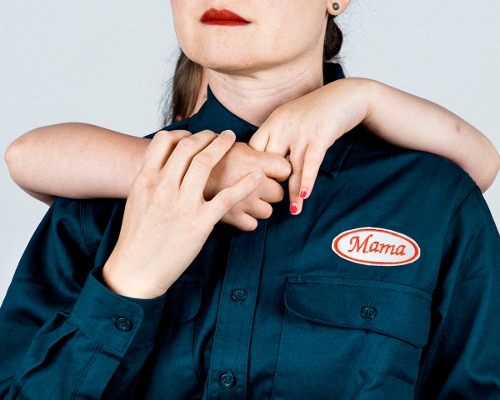
Many thanks to the writers and artists who make up The Mother Issue and to our publishing partner, The Sheila Foundation and its Chair, Kelly Gellatly. A generous thankyou to the Artlink team and Tania Lou Smith, whose photograph on our cover captures the dark humour, ironies and aspirations of new motherhood. As they say, it takes a village.
Footnotes
- ^ Tai Snaith interview with Patricia Piccinini in ‘Natural Woman — Patricia Piccinini’, A World of One’s Own, podcast: mp3, 14 December 2017, 39:02 mins
- ^ Arna Richardson, ‘Fertility Clinics in Australia - Market Research Report (2015-2030)’, IBIS World, updated January 2025
- ^ Rachel Cusk, A Life’s Work (Fourth Estate: Michigan, 2001), 15
- ^ See Leonora Risse, ‘Unpaid ‘women’s work’ is worth $427 billion, new research shows. See how much your unpaid labour is worth’, The Conversation, 3 November 2025; and ‘What’s Holding Women Back in the Arts—And How Can We Fix It?’, The Art Angle, podcast: mp3, 3 April 2025, 43 mins
- ^ Anna Kornbluh, Immediacy, or The Style of Too Late Capitalism, (London: Verso Books, 2024)
- ^ Olivia Hampton, “Photographer Sally Mann warns of ‘new era of culture wars’ after art seizure”, NPR, 25 September, 2025.