Award exhibitions can suffer under the cumulative weight of their own convention becoming something quite other than their inspirational beginnings. The Telstra National Aboriginal and Torres Strait Islander Art Awards (NATSIAAs), now in its 42nd year, is often viewed in this light, criticised for its failure to fully tap the breadth and best of current Australian Indigenous contemporary art practice. Yet since 1984, the NATSIAAs have continued to evolve, for better and worse, maintaining flagship status at the Museum and Art Gallery of the Northern Territory (MAGNT). The NATSIAAs effectively act as a kind of anchoring amid the slew of related commercial and public gallery exhibitions and the festive, seasonal influx of visitors while Darwin simultaneously plays host to national Indigenous awards in music and fashion.
One of the key changes for this year’s NATSIAAs was the engagement of Melbourne-based Kate ten Buuren as guest curator, who was part of the exhibition’s selection panel (with artist Karen Mills and the Museum of Contemporary Art’s Keith Munro); together they chose the 71 finalists from over 200 entrants, so in a sense ten Buuren’s curating began at this stage. Her appointment shows a level of maturity and generosity on behalf of MAGNT and Curator of Aboriginal Art and Material Culture Rebekah Raymond, though it served a pragmatic aim in freeing Raymond to focus on the Northern Territory Art Gallery, MAGNT’s impending new contemporary art wing.[1]
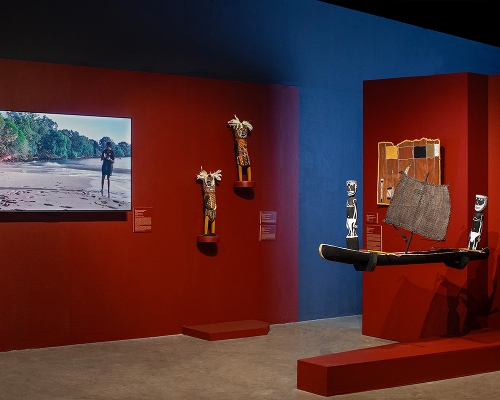
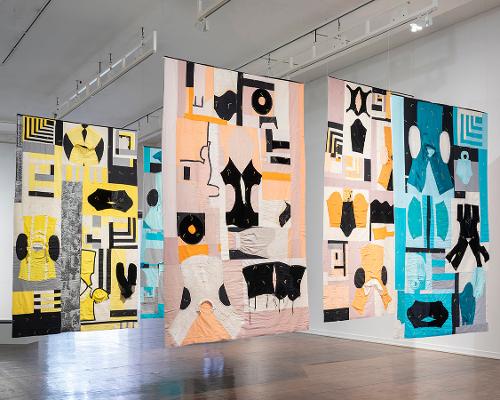
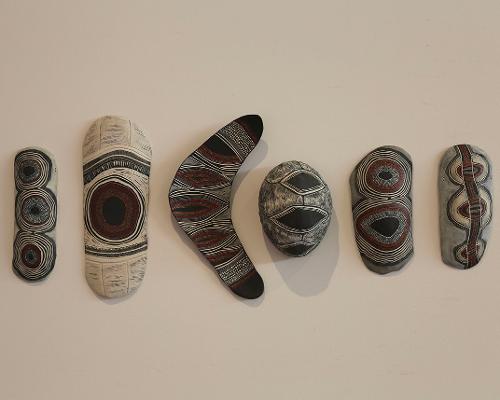
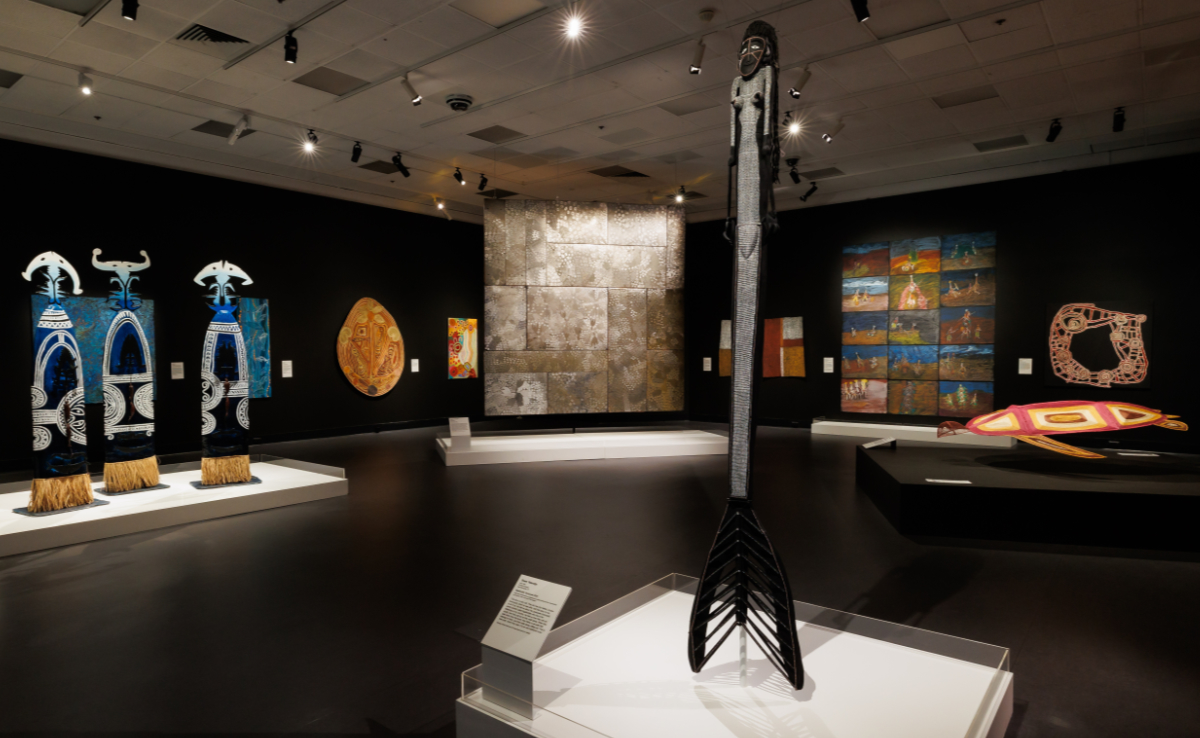
Ultimately ten Buuren performed well in the curatorial role, presenting a show which hit the right aesthetic and thematic notes in its hang, and to which she spoke with conviction and insight. Sometimes works by artists from the same communities or cultural regions are placed together, as with the charming Wandjina stoneware figures by Mowanjum artists Barbara Bear Arndie and Mildred Mungulu and the luminous Wandjina bark painting by Kalumburu artist Angelina Karadada Boona. On other walls ten Buuren mixes it up: the fine chevron patterning of Obed Namirkki’s Kunkurra (The Spiralling Wind) (2025) flanked and echoed by Kent Morris’s kaleidoscopic digital print Karta Kartaka (pink cockatoo) no Mitchell fella you # 2, (2024), and in contrast to Cindy Mpetyan Dixon’s wildly vigorous Arnwekety (2025) acrylic painting. Or the delightfully quirky run of works in one corner by Dulcie Sharpe, Doriana Bush, Johnathon World Peace Bush (Highly Commended Multimedia Award), Conway Ginger and Norm Yakaduna Stewart, a descendant of celebrated nineteenth century Kwat Kwat artist Tommy McRae.
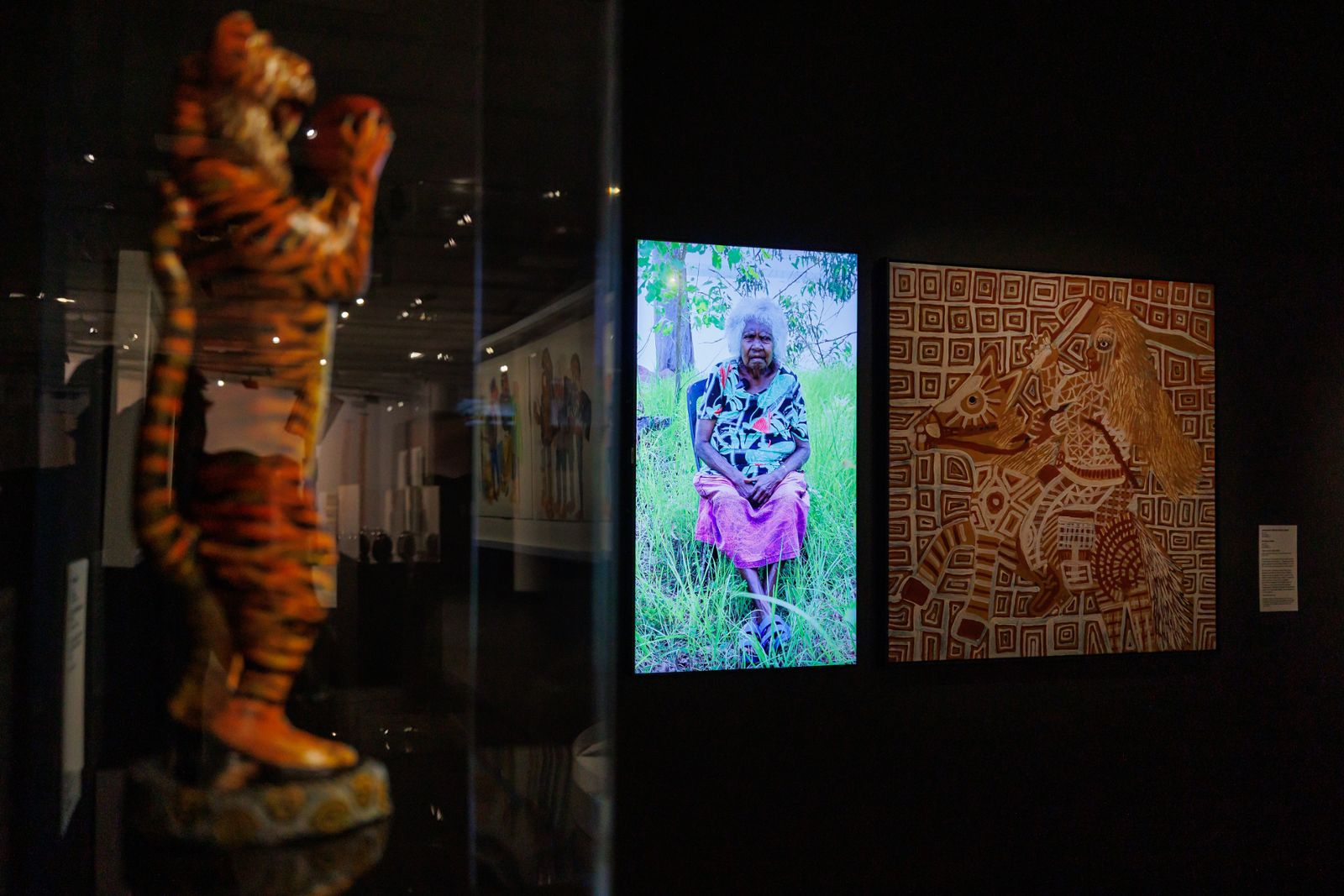
Ten Buuren highlighted the fact that this year’s exhibition saw an increase in artists from southeast Australia who accounted for around ten per cent of finalists. The NATSIAAs have always been Top End-heavy, with MAGNT striving to fulfil its national ambit. The NATSIAAs now seems to show fewer of the highest-profile Indigenous artists, which no doubt contributes to perceptions of the NATSIAAs as having lost its edge. Many of these artists have been past winners so perhaps it’s a case of stepping aside. Since The Australian’s ‘white hands on black art’ APY art centre scandal in 2023, entry to the NATSIAAs includes the rather heavy-handed requirement for commercial galleries representing entrants to be signatories to the Indigenous Art Code, which would rule out many artists unwilling or unable to enter independently or via an art centre.
I do have a soft spot for the NATSIAAs—critical lens aside—in all its varying versions, however far the winning works may deviate from my own taste, as do the many artists who continue to hold the NATSIAAs dear. Kuninjku artist Owen Yalandja is a worthy winner of the Wandjuk Marika Memorial 3D Award with his lean and towering Ngalkodjek Yawkyawk (2025) figure, following his win of last year’s Bark Painting Award with the same subject. Word from Maningrida suggests Yalandja has eagerly begun planning his 2026 entry.
NATSIAAs success can significantly boost a career especially for an emerging artist as was the case when Jenna Mayilema Lee won the 3D Award in 2020. Her work HIStory vessels marking the 250th anniversary of Cook’s landing at Botany Bay comprised ten traditional Aboriginal carrying vessels made from a deconstructed copy of the Ladybird edition of The Story of Captain Cook. The next year, her first solo exhibition at MARS Gallery, A New Translation, was a sell-out. Of Smoke and Rain at the Northern Centre for Contemporary Art (NCCA) opened in line with the 2025 NATSIAAs, billed as Lee’s first major solo exhibition and drawing on five years of practice. In this exhibition her ongoing interest in working with text and language remains strong, with an emphasis on the language of Darwin’s traditional owners the Larrakia people to whom Lee belongs.[2] The work at NCCA is largely underpinned by the publication Aboriginal Words and Place Names (1977) by A.W Reed, its pages and text transformed into works on paper, sculptural forms and film to suggest an ecology of cultural loss and reclamation.
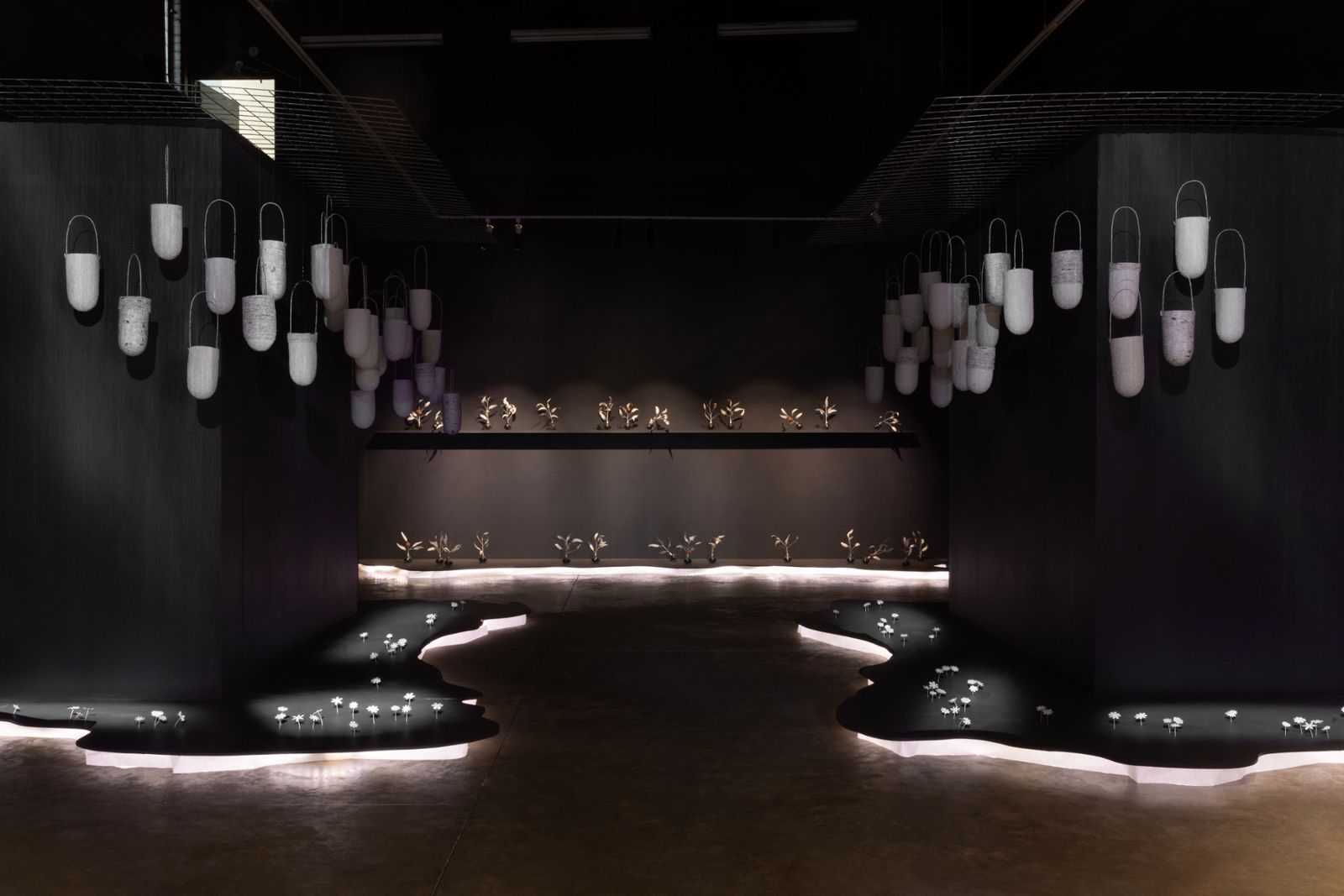
There is a soft allure to Lee’s aesthetic, along with the appeal of the finely crafted object which is especially evident in her dillybag and grasstree forms. One can appreciate its conceptual tug, with its play on (and with) colonialist museology and taxonomies, a theme which must resonate strongly for Indigenous curators working in such environments. For me, some elements of the work seem too literal and design oriented. I am drawn more to works with a poetic pulse, such as the effect of the single-channel film Her Heritage (2021) or the simple gesture of white ochre masking a dictionary page in dilli, dilee, dilly:bag (2025).
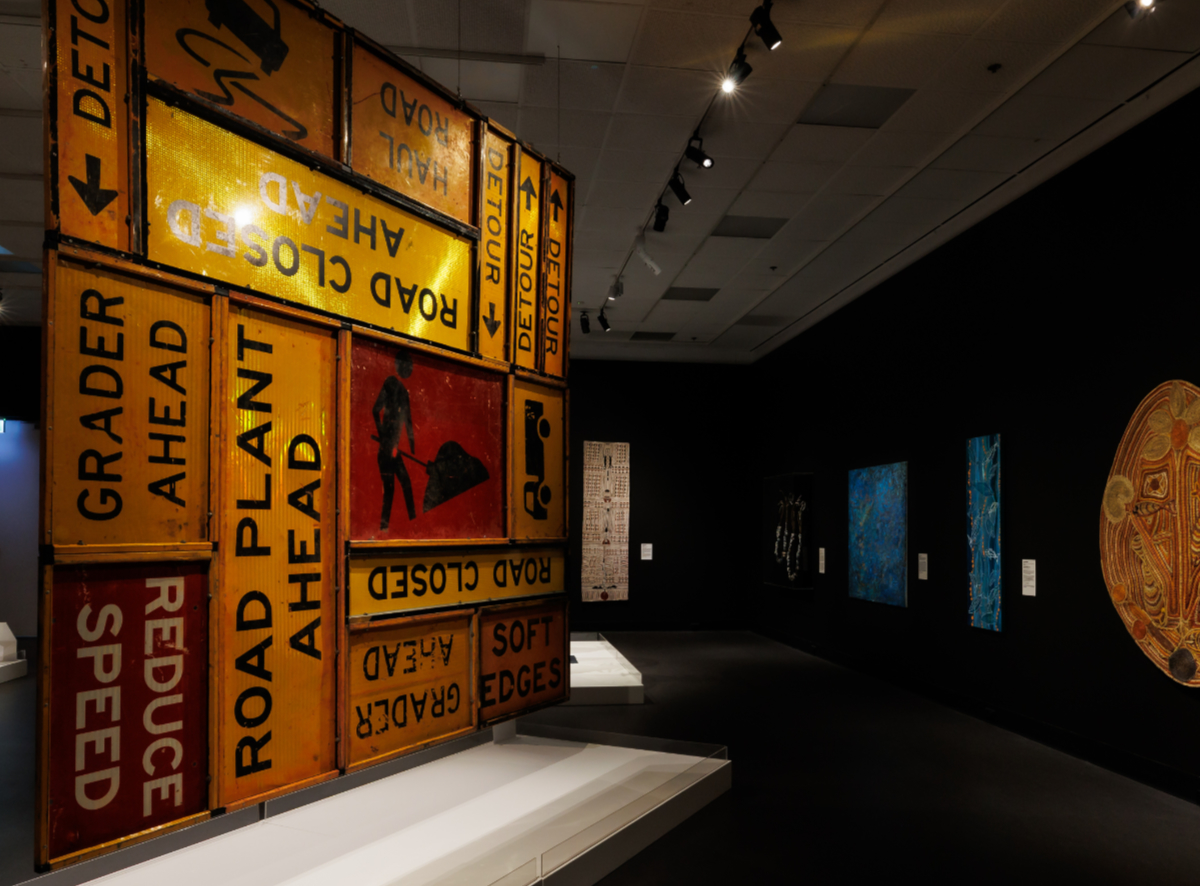
The Buku-Larrŋgay Mulka Centre at Yirrkala ('Buku') in northeast Arnhem Land, was victorious in this year’s NATSIAAS with Gaypalani Waŋambi’s etched metal / repurposed road sign composite work Burwu, blossom (2025) winning the overall $100k award. Remarkably, this is the third such accolade for a Buku artist in the past eight years, [3] and from a younger generation of Buku artists, Dhalmula Burarrwaŋa (winner of the 2023 NATSIAAs Emerging Artist Award) featured in the Darwin Festival with her solo show Djulpan—From the Stars at Outstation Gallery.
The Yolngu arts collective Miyarrka Media informs two exhibitions at the new Midpul Art Gallery at Charles Darwin University (CDU)’s new CBD Danala Campus. The Midpul gallery is named after the late Larrakia artist Prince of Wales, and danala is the Larrakia word for dillybag—here, as with Lee’s exhibition, the dillybag is symbolic of the integrity of knowledge and its transmission.
Admittedly, I had never heard of Miyarrka Media though they have been operating since 2009, have exhibited internationally and have produced award-winning films. They describe themselves as an intercultural and intergenerational collective based at Yalakun outstation, northeast Arnhem Land, their name signifying clan groups around Gapuwiyak (Lake Evella), 220 kilometres west of Nhulunbuy. Founded by Paul Gurrumruwuy (dec.), Fiona Yangathu (dec.), Jennifer Deger and David Mackenzie, Miyarrka Media draws on new members with each project.
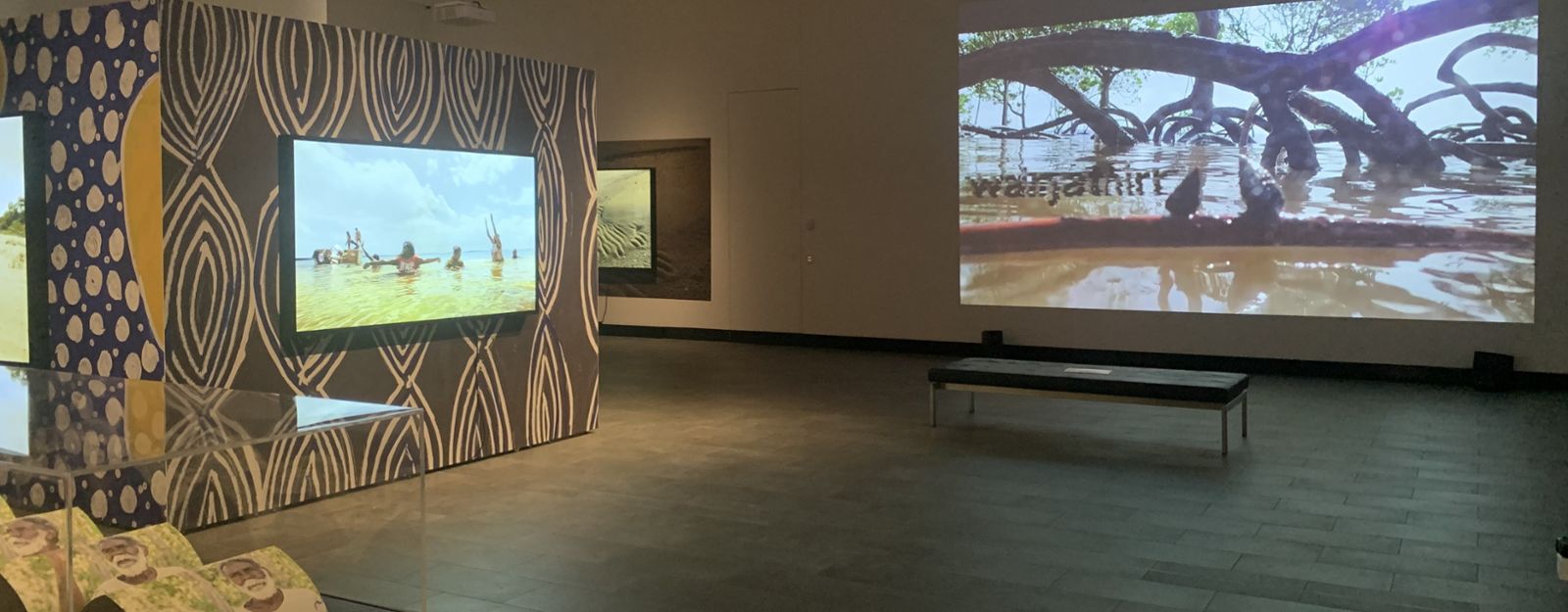
The two CDU exhibitions are RAŊIPUY: The beach is breathing in the main gallery and MILKUM GA WALŊA: Pattern, camera, life in the annex gallery. Each exhibition presents an installation comprising film, photography, written text and wallpaper-scale graphics based on clan designs. RAŊIPUY makes for a spacious hang while MILKUM GA WALŊA in the smaller space is busier. There is a lot of film and photographic content in both exhibitions along with publications for perusal in MILKUM GA WALŊA which is dedicated to Paul Gurrumruwuy and in part a manifestation of his CDU doctoral submission for a PhD by prior publication.
In their digital media and documentary density, both these exhibitions contrast heavily with the inaugural exhibitions at Midpul Art Gallery: From the ground up and the Jilamara Arts survey Yipapirraya arnuwujaputi … Tide going out, tide coming in …, the latter marking the end of Joanna Barrkman’s decade-long term as Curator, CDU Gallery and Art Collection. Both exhibitions relied strongly on collection and material object-based curating. At an artists’ talk for From the ground up, Barrkman explained that Liss Fenwick’s piece, The colony cares for everyone (2024) was only the second film work to be acquired for the CDU Art Collection. Although documentary-based installation is well practised in contemporary art, it still holds some novelty at CDU Art Gallery.
In sentiment, RAŊIPUY: The beach is breathing echoes Lee’s Smoke and Rain, each exhibition animating a sense of immersion in Country, in which language and written text prevail. In Smoke and Rain, language is abstracted and ironic while in RAŊIPUY it is made visible in and by Country—apart from some lines in English text boldly painted onto an opening stretch of gallery wall, warning visitors that ‘city life blocks your ears and steals your heart’. However, for all the wealth of imagery, research and assertion of vanguard anthropology, these two CDU exhibitions fell flat.
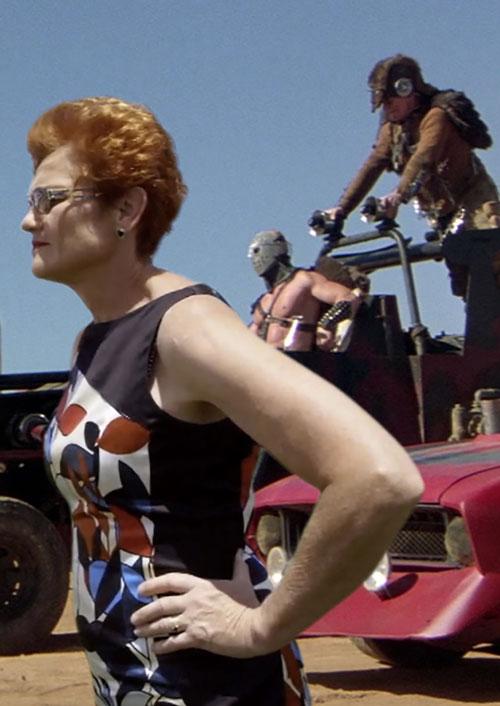
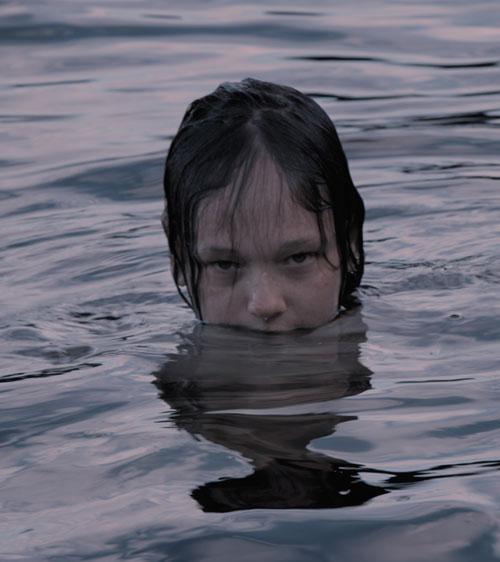
‘Intercultural’ may mean we can’t tell where the influence of one culture ends and another begins, as though edges between cultures have been softened. I see Waŋambi’s Burwu, blossom as an intercultural work because it so clearly speaks a (Western) contemporary art and related institutional language. Soft-edged-ness and interculturality in view of the pervasive world wide web were given an arresting twist in Therese Ritchie’s exhibition Sloppy, How boys broke the world shown as part of the Darwin Fringe Festival in July 2025. The exhibition ‘invites you to the Internet, algorithms, elites, AI, memes, conspiracy theories and teenage boys’[4], as reflected through eleven moderately-sized unframed digital prints. The exhibition title refers to low-quality AI-generated media known as slop, created to redirect web users to other sites and symptomatic of the sweep of cynical disinformation in an age of The Grotesque as Ritchie describes it. Indeed, her digital imagery for these prints abounds with grotesque figures which emerge from the turbulent, soupy seascapes which seem to characterise the slop.
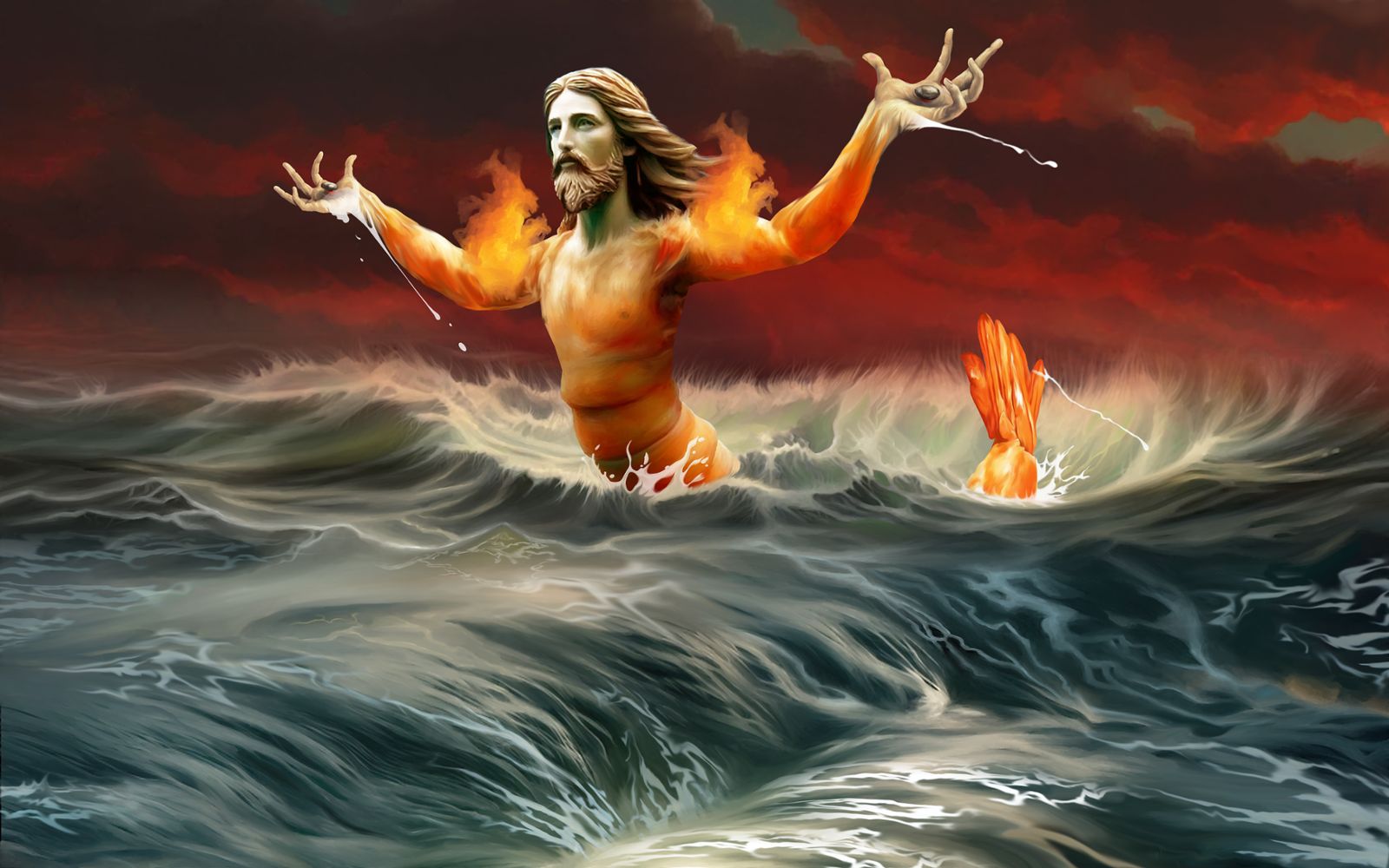
Ritchie’s images disturb, each bearing a title matched by detailed catalogue statements which unpack the terminology and tactics at stake. Terms like shitposting, copypastas, dank memes, incels (involuntary celibates), QAnon, redpilling. The images are intriguing in themselves, but the statements add insight. The Event (2025) depicts an impossibly contorted body half-submerged, head in hand, against a molten sky. The title relates to the viral hoax of QAnon posing as a high-level government source and promising a day of judgement (‘the Storm’ or ‘the Event’) when Trump was first elected. Free speech (2025) is a headless paddling dog as seen from underwater. Shrimp Jesus (2025) offers some humorous relief, a reference to the so-called series of AI-generated images flooding Facebook while highlighting its darker collusion in a global web of deceit.
Sloppy was a loaded exhibition, and true to form, Ritchie pulled no punches in sizing up (or down) her targets, faceless and high-profile. As an artist with a long history of print-based media, whose primary visual language is now digital imagery, Ritchie takes a critical interest in a space which directly feeds and is fed by ‘real-world’ power and politics. Our broader understanding of concepts of cultural and artistic integrity is inevitably influenced by such dynamics which, in turn, shapes the evolving identity of the NATSIAAs.
Footnotes
- ^ At the time of writing the Northern Territory Government has thrown the fate of NTAG (mid-construction) into doubt; see Penelope Benton, “NAVA questions NT Government’s backflip on new gallery”, 5 June 2025
- ^ For disclosure, my longtime partner Gary Lee is Jenna’s uncle.
- ^ Buku-Larrŋgay’s Guynbi Ganambarr won the overall award in 2018 followed by Djambawa Marawili in 2019.
- ^ Therese Ritchie, Sloppy, How boys broke the world (2025), ex. cat., online