The exhibitionary landscape for Yolŋu art from north-east Arnhem Land has been crowded of late. In 2021 Djalkiri: Yolŋu Art, Collaborations and Collections was the inaugural exhibit at the Chau Chak Wing Museum at the University of Sydney. Its former Macleay Museum curators have a history of co-operative and Indigenous-led curation, reinterpreting a rich group of barks from the 1940s with the Yolŋu Elder Dr Joe Gumbula. In the 1980s Djon Mundine had commissioned collections from Milingimbi and Ramingining for the affiliated Power Collection; Djalkiri crowned these curatorial approaches with an innovative display, and currently, the new-look Potter Museum of Art’s 65 000 Years: A Short History of Australian Art has a strong presentation of Yolŋu art.
Perhaps most significant was the big exhibition that toured the United States during 2022–2024: the Kluge-Ruhe Museum’s Maḏayin: Eight Decades of Aboriginal Australian Bark Painting from Yirrkala, in partnership with Yirrkala’s Buku-Larrŋgay Mulka Centre. The comprehensive intercultural project and its bilingual 350-page catalogue pushes further than ever before the strategy of giving precedence to the Yolŋu Matha group of languages, including essays by and interviews with the key artists. A Yolŋu sociocultural system is used to organise the book across the art of eight Dhuwa and eight Yirritja clans. Yolŋu Power: The Art of Yirrkala at the Art Gallery of NSW learns from these protocols and adapts them successfully to a vast new venue in a mainstream state gallery. Located below the grand plate glass pavilions that announce the Naala Badu building, the ticketed show has been raved about by everyone I know who has seen it. It is a massive success for the range and power of its visual offerings.
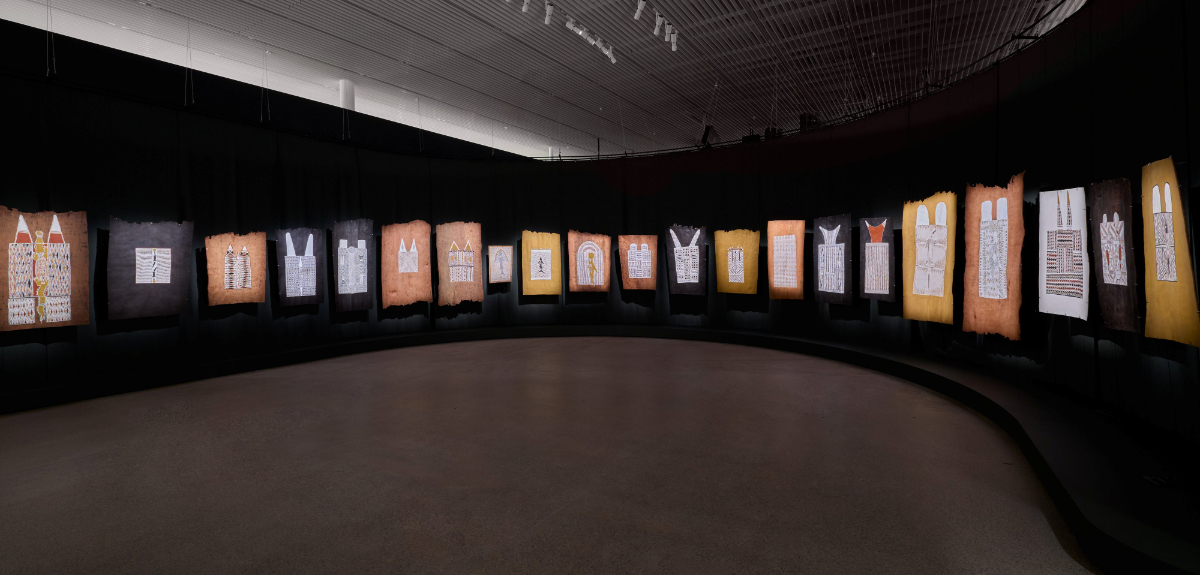
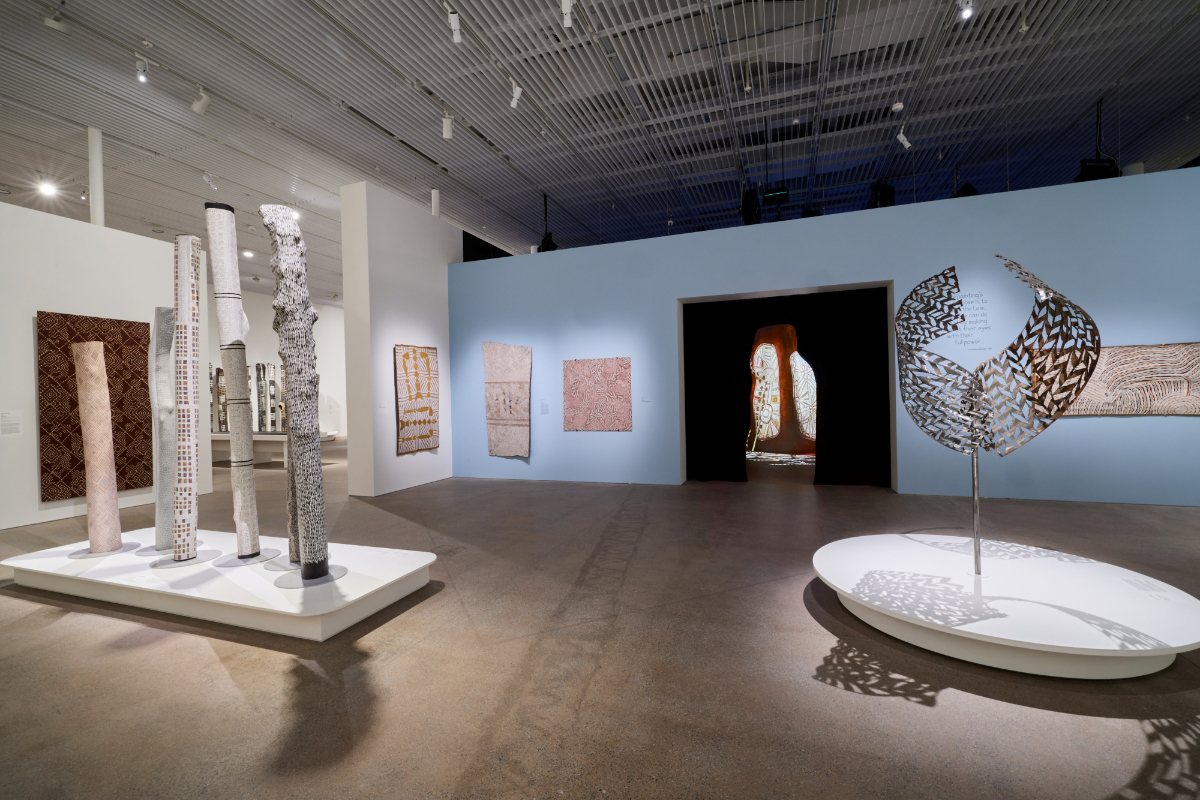
There is no shame in the fact that Yolŋu Power utilises a ‘whitefella’ processual logic, broadly moving from past times into current times. That said, there are clever introjections of new work on ancient principles, which stress the circular ‘everywhen’ temporality of cultural production on Yolŋu—and all Indigenous—Country. In this spirit, the second room contains a stunning semicircle of 22 barks with the austere and ancient designs (minyi’tji) of the sixteen Yolŋu clans exactingly executed. These rumbal (ceremonial body paint) panels, painted in 2022-23 by clan leaders, are like heraldic devices whose living geometric patterns are still painted today onto the chests of adolescent boys during initiation (the antenna-like forms above each panel refer to the painted ‘straps’ joining the minyi’tji to the boys’ clavicles).
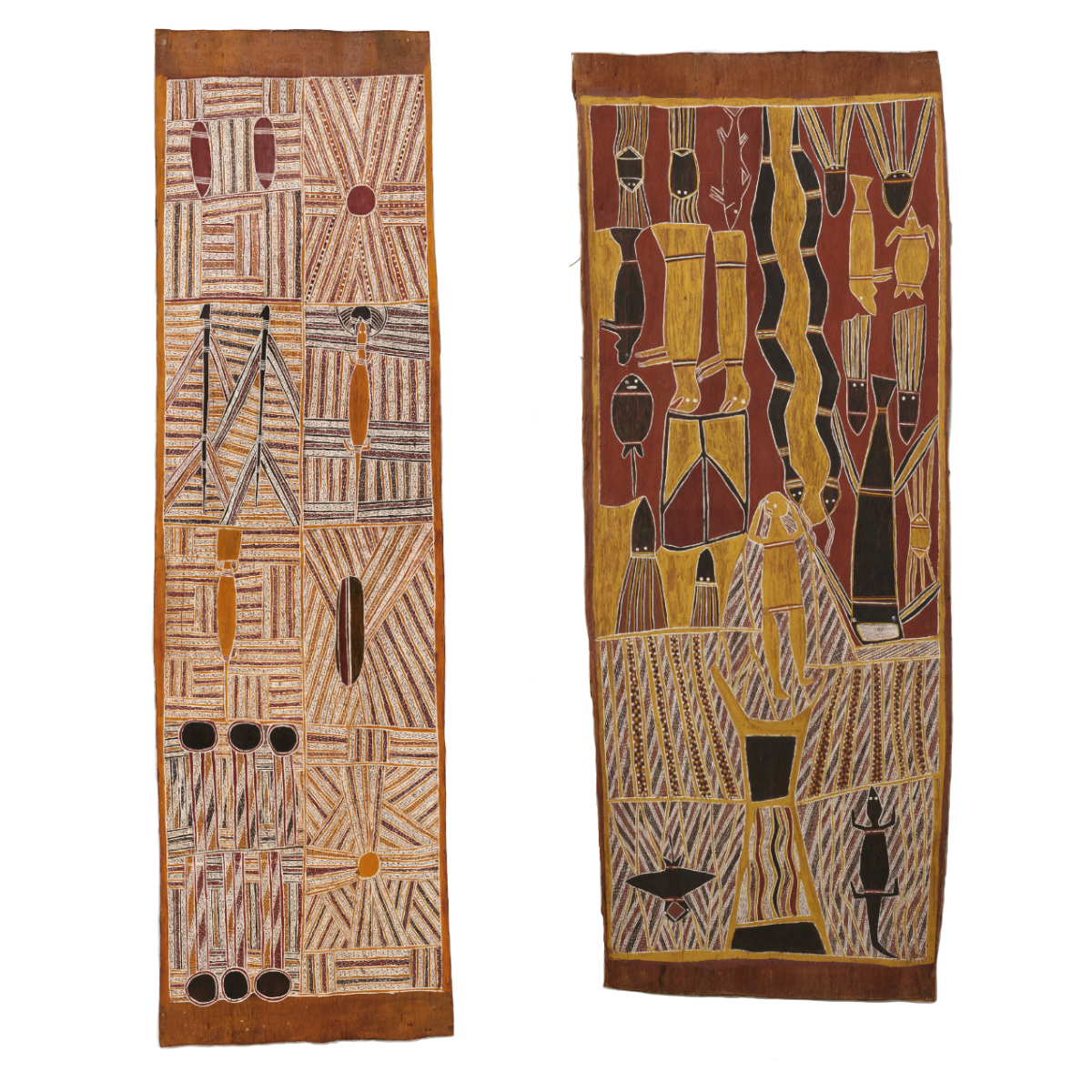
Right: Muŋgurrawuy Yunupiŋu The thunder spirits (Birimbira) 1961, natural pigments on bark, 150.2 x 60.4 cm, Art Gallery of New South Wales, gift of Dr Stuart Scougall 1961 © Estate of Munggurrawuy Yunupingu, Buku-Larrnggay Mulka Centre.
We are in the realm of maḏayin which the leading Yirrkala artist and cultural ambassador Djambawa Marawili has described as ‘ceremony, with its rich and complex song and dance cycles, and inherited patterns, designs and objects, passed down from our ancestors, [which] is Australia’s first high culture. Our opera as well as our law’.[1]
Marawili attended the opening night with a large delegation of Yolŋu and led a painted-up group that snaked its way ceremonially through the crowd. Quoted extensively in the catalogue, this innovative senior painter and cultural leader has been a key figure in continuing to extend to Yolŋu women the permissions needed to interpret certain maḏayin designs in paint. The major catalogue essays, by Buku-Larrŋgay Mulka Centre Director Will Stubbs and AGNSW curator Cara Pinchbeck, detail this story of negotiation across genders. It’s essential information in that women have emerged as key innovators and exponents of what I call here the new painting from Yirrkala.
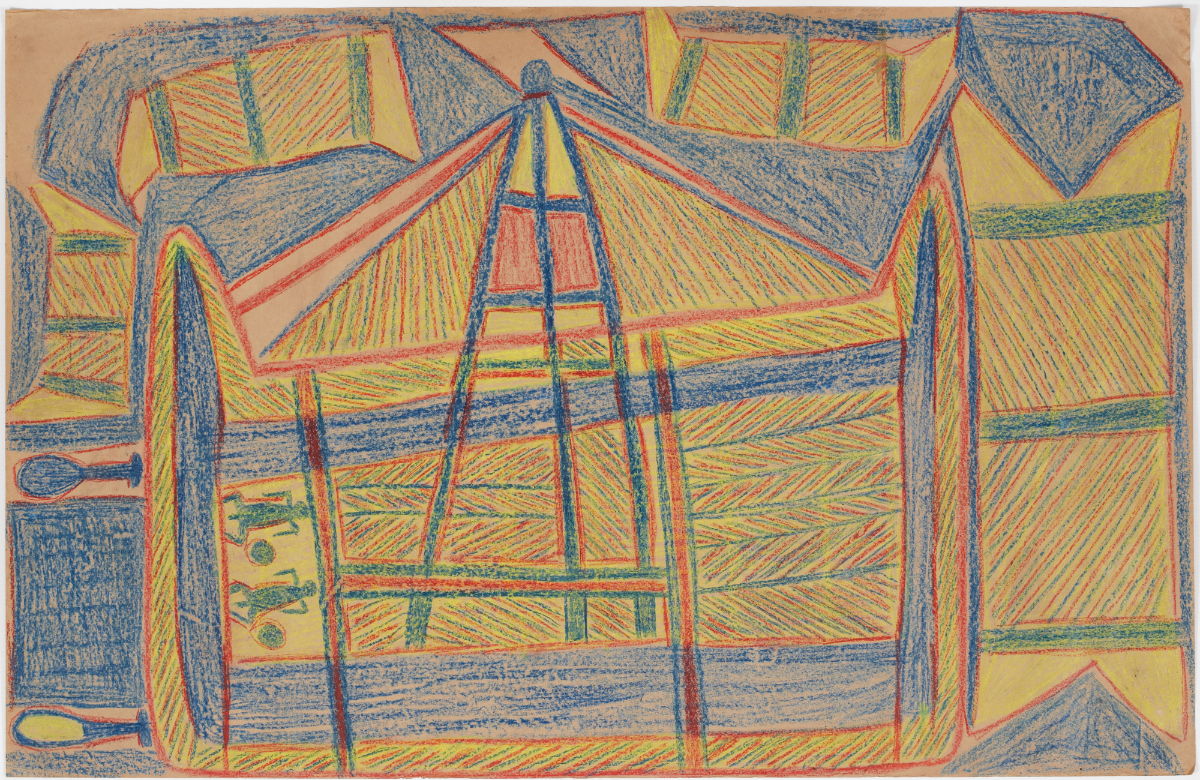
Pinchbeck is a quiet achiever. Appointed as a curatorial assistant under Hetti Perkins and Edmund Capon, she now runs a much expanded First Nations curatorial and educational group which oversees temporary exhibitions and the Yiribana Gallery (the entrance level gallery in Naala Badu). Pinchbeck knows Arnhem Land bark traditions well, having curated exhibitions on the art of Milingimbi, on Noŋgirrŋa Marawili in 2018 and the revelatory Yirrkala Drawings in 2013. This was a rarely seen array of large drawings in coloured crayons on butcher’s paper, commissioned in 1947 by the anthropologists Ronald and Catherine Berndt and now held in the Berndt Museum in Perth. A group of these marvellous pictures—one of the earlier recorded manifestations of the minty’ji behind today’s art movement—is visible in a large room dedicated to works on paper.
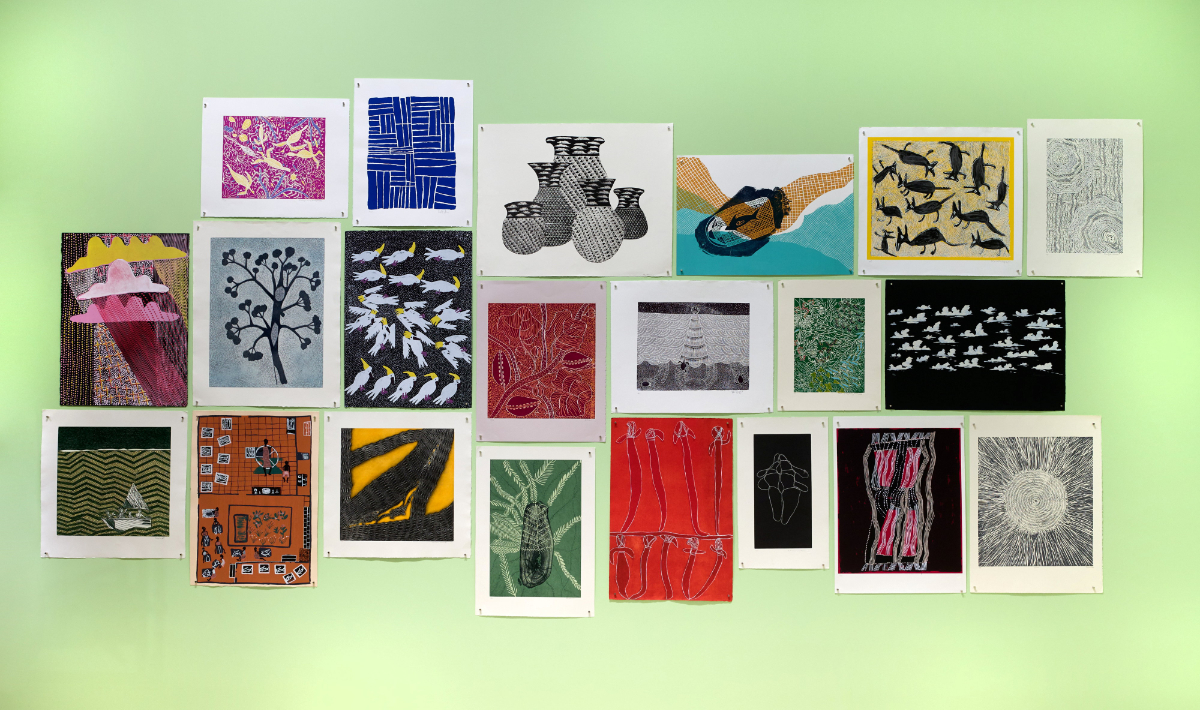
Opposite the framed drawings is a busy salon hang, comprising dozens of the prints produced over the decades since Banduk Marika’s linocuts of the late 1980s helped launch printmaking at Yirrkala. Highly coloured screenprints, etchings and woodblocks feature figurative and animal designs, as well as botanical and aquatic motifs almost psychedelic in their visual impact. An image of the print workshop at ‘Buku’ art centre is amusingly depicted in Marrnyula Munuŋgurr’s In the early days – Lino (2003).
I found the great centre of aesthetic gravity to lie in the first four rooms of Yolŋu Power. After being exposed to rumbal, one encounters an older, more austere display of tall and broad barks, made on commission in 1958-59 in Yirrkala for Sydney surgeon Dr. Stuart Scougall, most frequently displayed in the Gallery’s permanent Australian collection hang (alongside the Tiwi tutini poles). These are museological firsts, as Indigenous Australian artworks acquired by a state art gallery, rather than a natural history museum. The senior men who created them are great names in Yolŋu art history: Marika, Mangalili, Marawili, Gumana and others. These tall barks swarm with animal and ancestral presences in dozens of geometric compartments, featuring the great religious cycles of the two moieties, in particular the Djang’kawu and Wagilag Dhuwa creation narratives.
New art from Yirrkala occupies the second half of this 400-object exhibition. Despite experimentation with colour schemes, support materials and media, there is cultural discipline here. First, the rigour of consulting clan leaders to gain permission to publicly share certain stories. Second, the reinterpretation of the minty’ji and the clan designs across a range of new media, in realms not traditionally associated with First Nations art.
These bear the stamp of the Mulka Project, a digital media initiative of the Buku-Larrnggay Mulka Centre. An arresting outcome is Rarrirarri (2023), a digital projection in a large, darkened room. Inside, during a five-minute cycle, a series of animated botanical motifs extracted by the Mulka Project technicians from the paintings of the late Mulkuṉ Wirrpanda is played over a tall fibreglass anthill and its surrounding ground. With an ambient soundtrack of peaceful bush sounds and song, the serpentine visual movement is quite hypnotic, and a popular draw for visitors young and old. A separate and in my view less successful Mulka installation was held during the exhibition’s first month in The Tank, the vast repurposed oil storage tank on the lower level of Naala Badu, with its forest of square concrete columns supporting a high ceiling. In an otherwise empty industrial space, at the base of each column, coloured LED lamps slowly change colour in unison. A soundtrack of forest sounds—bird songs echoing in the space—plays overhead.
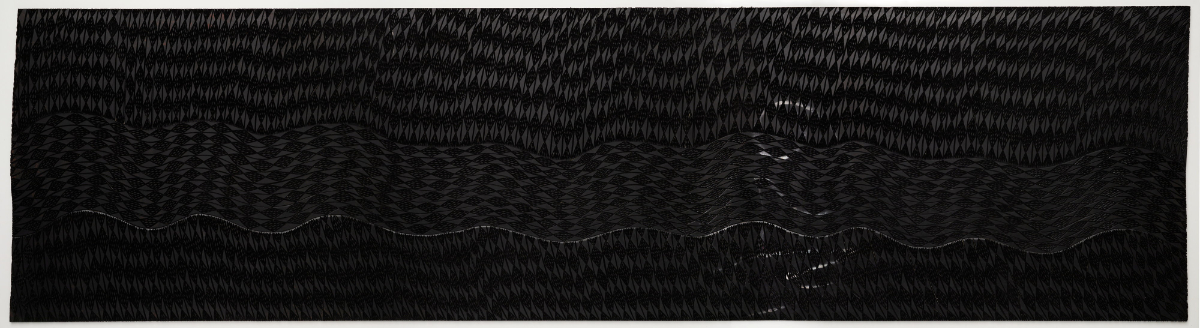
The move to non-traditional materials and colour schemes in these artists’ work in recent years separates Yirrkala from many other remote art centres. It was the artist Gunybi Ganambarr who began producing new-look pictures by inscribing minty’ji motifs and cross-hatching on metal panels, using an electric engraving tool, in about 2006. I first saw these works at Sydney’s Annandale Galleries. I found then—and I continue to find—the surfaces of these works to be harsh, hardly softened by handwork mechanically conveyed.
No doubt there is a witticism in Ganambarr’s use of scrap metals including aluminium, an alloy sourced, notoriously, from the nearby Gove Peninsula’s vast bauxite mine. The mine was allowed to proceed in the mid-1960s by a Federal Government that did not consult with traditional landholders. This profound affront led to the lodging of the Bark Petitions to Parliament in Canberra in 1963 and helped set the scene for the Aboriginal Land Rights Act (NT) in 1976, the Mabo decision and Native Title Act of 1992 and eventually the 2008 Blue Mud Bay legal appeal which granted Yolŋu control over their coastal waters. Most recently in March 2025, the legal victory in the High Court—Yunupingu v. Commonwealth—has awarded vast damages in compensation to the Gumatj clan for the long history of mining on their land.
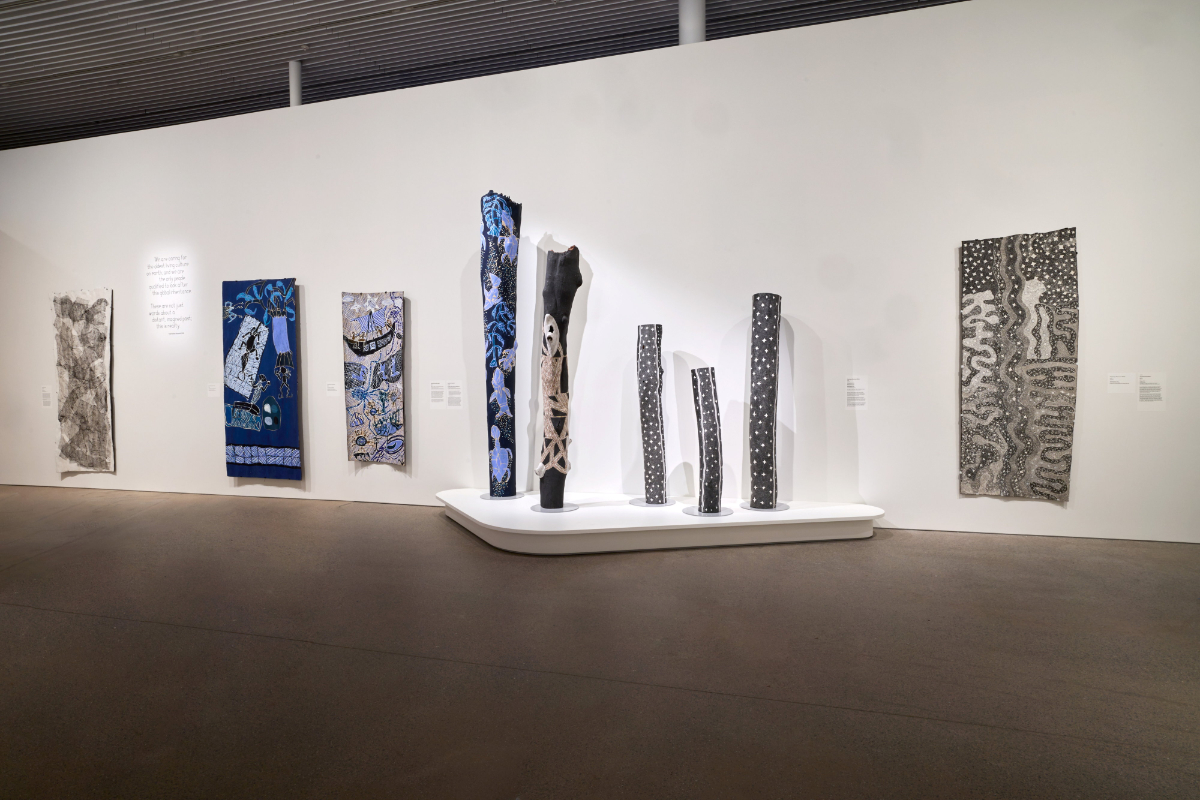
In the final room Ganambarr exhibits a great black floor piece, in fact a new rubber mining conveyor belt he has carved in intricate minty’ji designs. Nearby a tall standing sculpture in welded and painted aluminium diamond-shaped boxes by Wurrandan Marawili presses further away from the sculptural tradition of the carved timber mokuy figures or painted larrakitj (hollow-log coffins) seen elsewhere in Yolŋu Power.
Nearby are three barks and a larrakitj by Dhambit Munuŋgurr, whose visual trademark is the use of blue paint, her dark blue backgrounds offsetting manic figures in pale blue with animal forms outlined in black or white. Dhambit is an artist of great energy, who has been picked up (like the equally distinctive bark painter Nyapanyapa Yunupingu) by Rosyln Oxley9 Gallery. To see such artists supported by one of the most influential taste-making private galleries is to recognise the unstoppable creativity—and dollar value—of Yolŋu art today.
At the end of this enfilade of rooms is the Yolŋu Power exhibition shop. Yolŋu artists and 'Buku' in particular are savvy marketers, whether it be of their recent high art (to which the AGNSW gives excessive space), or exhibition souvenirs. Their shop is better than most in that, rather than the rank reproduction of exhibition works on coffee mugs, the community has made available a small number of authentic artworks—barks, woven pandanus baskets and mats—at modest prices. Exhibition T-shirts, tea towels and fridge magnets—de rigueur these days—are for sale, as are affordable reproductions of some of the best prints and a solid collection of books and catalogues on Yolŋu and other Indigenous art and artists.
The “hero” artist who has been selected for such posterisation and many of the bus-stop advertisements around Sydney is the late Noŋgirrŋa Marawili. The choice is a fitting homage to the originality of her vision, featured by the AGNSW in 2018 and in the 2022 Biennale of Sydney. In her barks, large floating, coloured forms, ovoid or angular, are traversed by and interconnected with staccato lines. They evoke nimbus clouds between which forked lightning streaks. This reading is supported by the titles Marawili used, such as Baraltjala – Lightning and the Rock, and Lightning and Sea Spray.
Yolŋu Power is a demanding exhibition, and it takes more than one viewing given the inevitable ‘rarrk-fatigue’: a visual exhaustion provoked by the thousands of tiny cross-hatched marks in any room of Yolŋu painting. But this is a summit event that gives insight into lives of a depth and cultural commitment that the rest of us—tied to today’s floating cultures of distraction—can only marvel at.
Footnotes
- ^ Yolŋu Power: The Art of Yirrkala, ed. Cara Pinchbeck (Sydney: Art Gallery of NSW, 2025), 79.