‘Do you get it?’ It’s what we say when a joke hasn’t landed: if you need to ask, they probably didn’t. And what’s to get? The world is awash with escalating catastrophes, and Artlink is no stranger to surveying contemporary crises as fathomed by artists. So therious, as Anita King and Kathryne Genevieve Honey’s applied neologism goes. Time for a laugh!
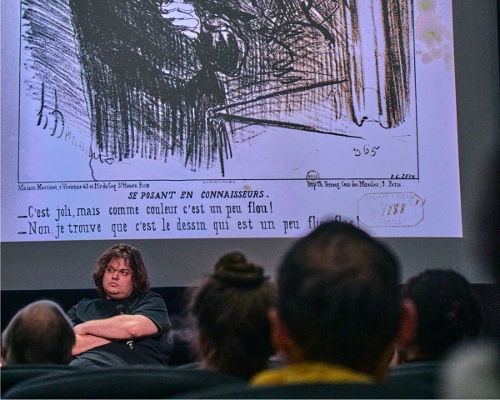
Theorising humour and detailing its typologies is not the main thrust of this issue, as that dry but important work is being done in other contexts (add Henri Bergson, Freud, John Morreall, Noël Carroll, and Simon Critchley to your reading list). But rather than how the funny works, two recent publications look at what it does: Comedy in Crisis: Weaponising Humour in Contemporary Art (2023), edited by Chrisoula Lionis who revisits the crime scene for us, and Humour in Global Contemporary Art (2024), edited by Mette Gieskes and Gregory H. Williams. In their introduction, they point out that a misreading of a now infamous caricature in a 2002 banner by Taring Padi—deemed not funny in the highest order—derailed documenta fifteen in 2022. Cicero says it’s ‘disappointed expectation’ that makes us laugh: well, maybe sometimes.
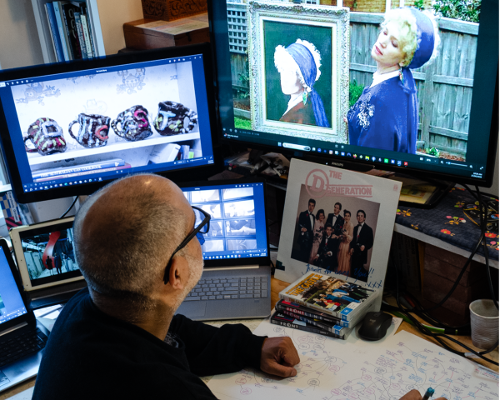
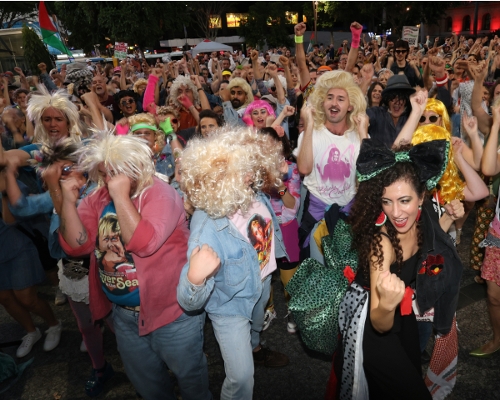
Tensions arise at the drop of a banana peel, and ‘I’m just joking’ is no defence. Reception theory (and practice) has never been more acute. Who can say it, who may get it? There’s no such thing as a free laugh, and the shared punchline is facing extinction. Intersocial and intercultural readings of humour are as atomised as the rest of the cultural field (bye-bye Bourdieu). Perhaps the most collectively shared punchline depends more on generational alliances than social or cultural groupings. For example, Roy Ananda’s romp with satire relies on readers tuned to a specific Australian televisual temporality, while Yasemin Sabuncu leans into chronic illness and toxic digital cultures of self-optimisation with a self-effacing lightness.
Encoded satire is almost a cliché of Chinese contemporary art, (most recognisably in Yue Minjun’s smiling faces) but Sam Gaskin mucks around with ironic, slapstick, and absurdist variants on Chinese visual puns and political jests plucked principally from The Hooligans, a recent show at White Rabbit Gallery. In doing so, he lured Tian Longyu’s hungry hybrid-faux-taxidermy sculpture onto our cover. By contrast, Beijing-born Yusi Zang’s cool humour is deadpan grunge in style. As Wes Hill observes, her work needs no stuffing.
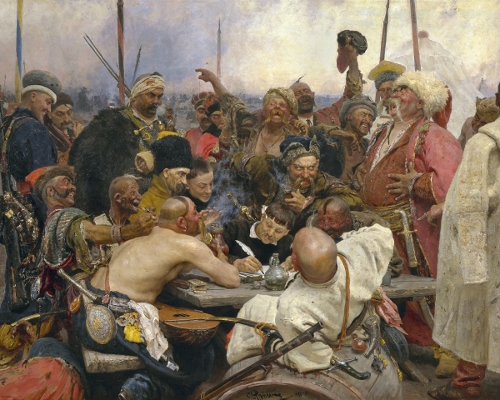
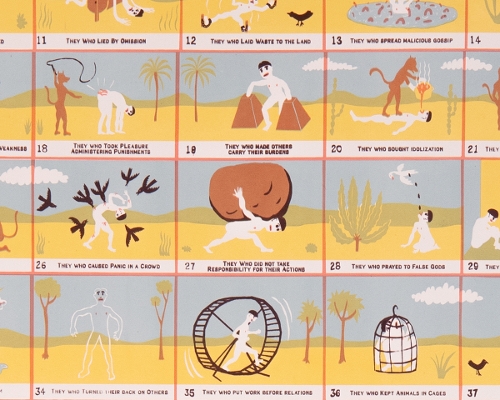
Humour typically does not translate well. What’s lost can be elusive, like Korean proverbs in EJ Son’s sculptural work as Soomin Jeong traces, or ongoing expressive resistance in Ukraine, as Solomiya Sywak’s analysis uncovers. Working between Indonesia and Australia, Malcolm Le Smith has borrowed from Islamic, Christian and secular forms of punishment to create a picture that’s funny as hell and ripe for a queer reading by Maurice O’Riordan.
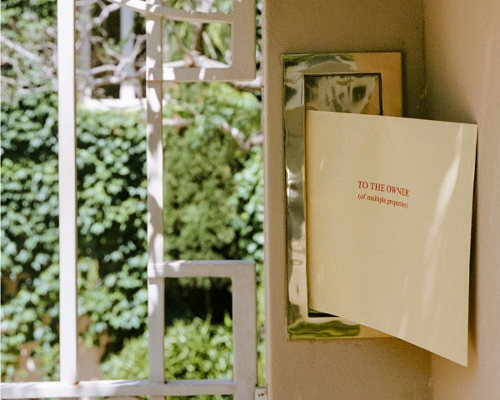
In a private reflection on subdued wit, Jaimee Frances Edwards plays the solo game of seeking out the artists’ subtle sleight of hand and the ambiguous joke, while Ellinor Pelz takes the ‘getting it’ enquiry into the public domain where art is less certain of its audiences. In bridging the distance between personal need, privacy, individual wealth, and the fundamental human right to housing, Alana Hunt continues her ongoing performance work To the Owner (of multiple properties). While Hunt’s project sits within taxonomies of the practical joke, it represents a powerful instance of using humour to address social inequity and historical injustice, aka colonialism. It’s a theme taken up by a retinue of Indigenous contemporary artists, (especially those with Queensland origins), highlighted in this issue through the work of Keemon Williams in conversation with Simone Hine.
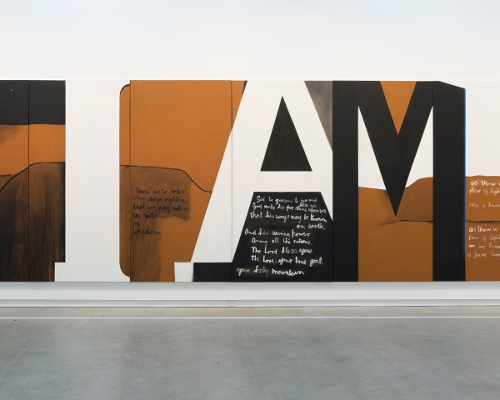
The art world isn’t famed for ‘getting itself’, despite so often being the (clenched) butt of the joke. Belle Beasley looks at the online and IRL critic-troll Diva Corp, whose merciless heckling lands punchlines that come back to bite them. Talk about a self-own. It’s also a comic flaw Scott Robinson identifies within a bloc of contemporary artists fascinated with AI, the biggest stand-up we’ve seen to date and one that takes its audience for fools. In Peter Wood’s essay on Colin McCahon’s revered modernist icon Gate III, the text is treated with amusing irreverence — amusing because it’s ‘the thing out of order’, in the wrong place, a classic indicator of the joke.
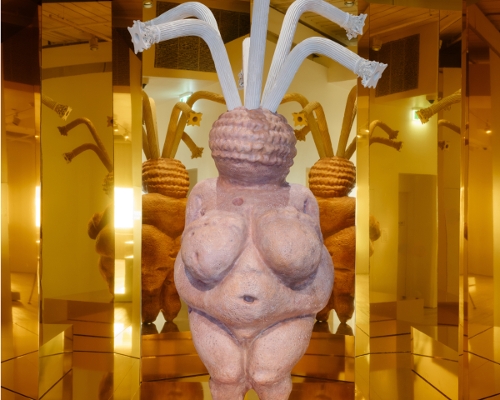
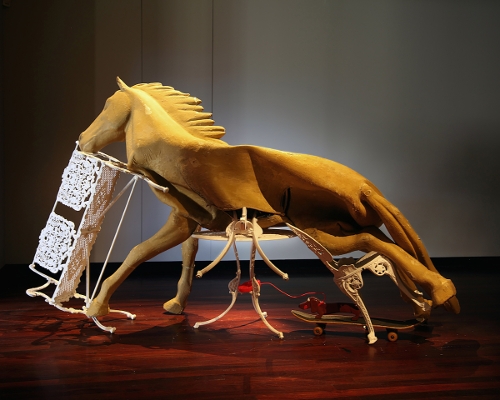
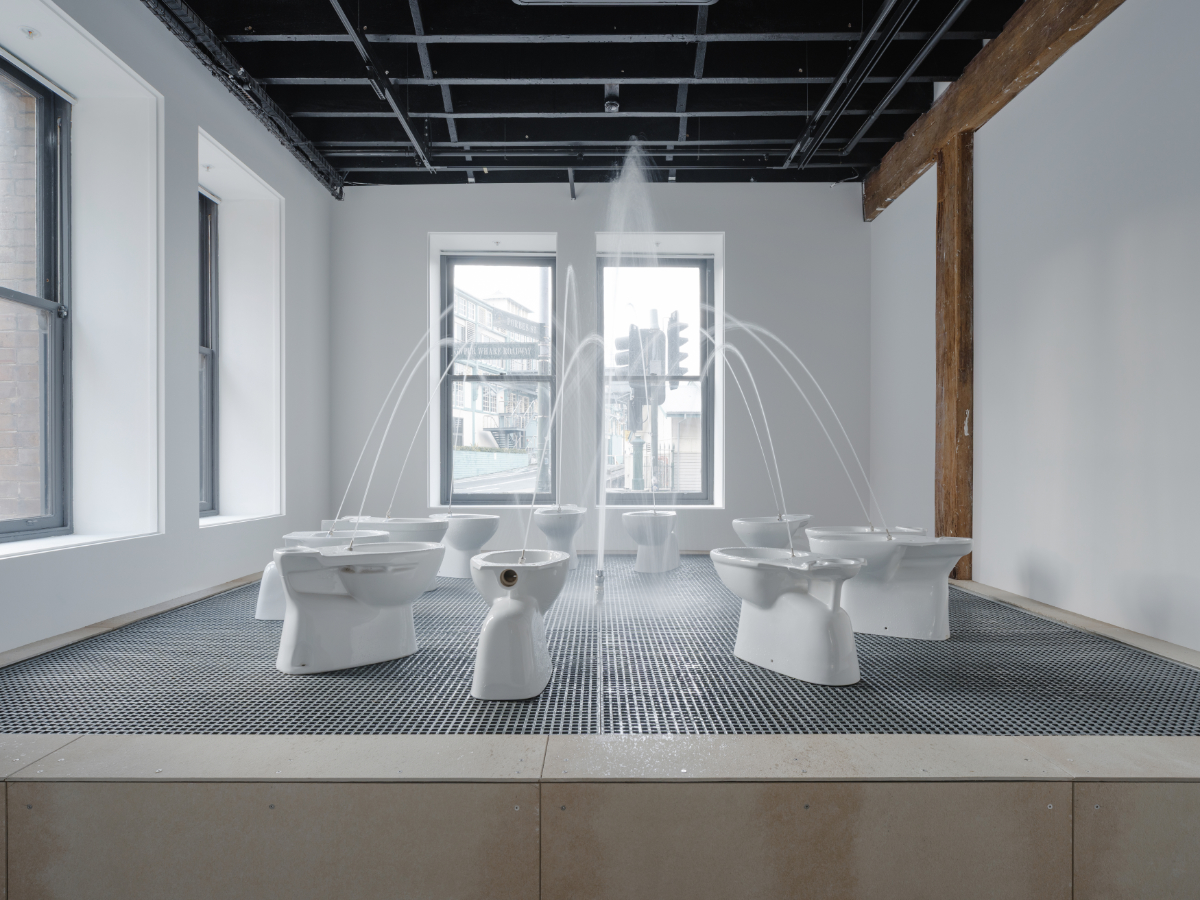
Jokes can, and often do, misfire. They cause embarrassment when people don’t get it. Like bodily malfunction or bad plumbing, they can cause a stink. European art history’s favourite thigh-slapper, R Mutt’s Fountain (1917) still flushes through the canon, and EJ Son’s Fountain (2025) gives it a new twist. Duchamp turned the urinal sideways; Son turned the water back on in a ballet of spraying bidets, its dysfunctional plumbing and formal beauty suggesting a folly for our times. How’s that for a tickle?