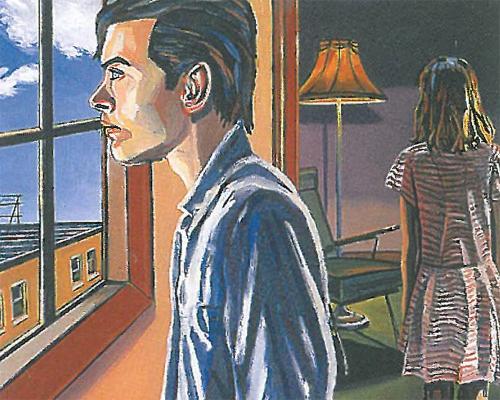
Tsubaki's giant grasshopper, perched atop the curving wall of the majestic Yokohama Grand Intercontinental Hotel, suggests fun. So do Gonzalez-Torres' sweets, wrapped in shiny grey paper, that you see on entering the main pavilion. But the inaugural and beautifully staged Yokohama Triennale is a serious event. There are over 100 artists from many countries in two pavilions, in the city's museums, in the nearby Queen's Mall and outdoors in the fabulous docklands area just outside central Yokohama.
At such events, one looks for great works and new directions, and at the art of other cultures. Here, there is perhaps a consolidation of forms - lots of screen-based work and installation, as well as Manga-style cartoons and computer animations.
Acknowledging globalisation, the stated aim of the Triennale is "to sustain the autonomous creativity of each region". Many artists highlight the impact of the post-colonial, making the event a socio-political showcase, a window onto a shrinking world and its histories. For example, Krzysztof Wodiczko's video Tijuana Projection shows Mexican women describing the abuse and oppression they have suffered. Anita Dube's His Master's Voice is a room of period furniture, including an old gramophone covered with ash to recall India's modern history. Destiny Deacon's collection of 'Aboriginal' souvenirs made outside Australia are shown with her photos of Aboriginal people. Though not great new art, these works reflect the curators' intentions.
William Kentridge's work is a glass bathroom cabinet with a rear projection inside it showing his animated drawings of a troubled world. Fiona Tan's enchanting video St Sebastian shows girls in ceremonial kimonos practising archery, a ritual in Kyoto for girls reaching the age of adulthood, their contemplative expressions shown in close-up. We mourn the loss of such ritual.
There is much photography. Fischli & Weiss's Sicht Bare Welt comprises 2800 colour transparencies, on 7 light tables, like an extensive collection of travel photos covering everything from the Pyramids to African villages and New York. Set out thus, the world shrinks alarmingly. Tatsumi Orimoto's three series of photographs document his performances - in the first his head is wrapped in pieces of bread as he talks to people in a European street. In another he has attached clips and string to Indian villagers' ears and numbered them. Thirdly, he has photographed Thai villagers wearing wide metal armbands bearing the names of oil-paint colours.
Uncomprehendingly, his subjects/ confederates become part of a self-parody symbolising their own cultural colonisation.
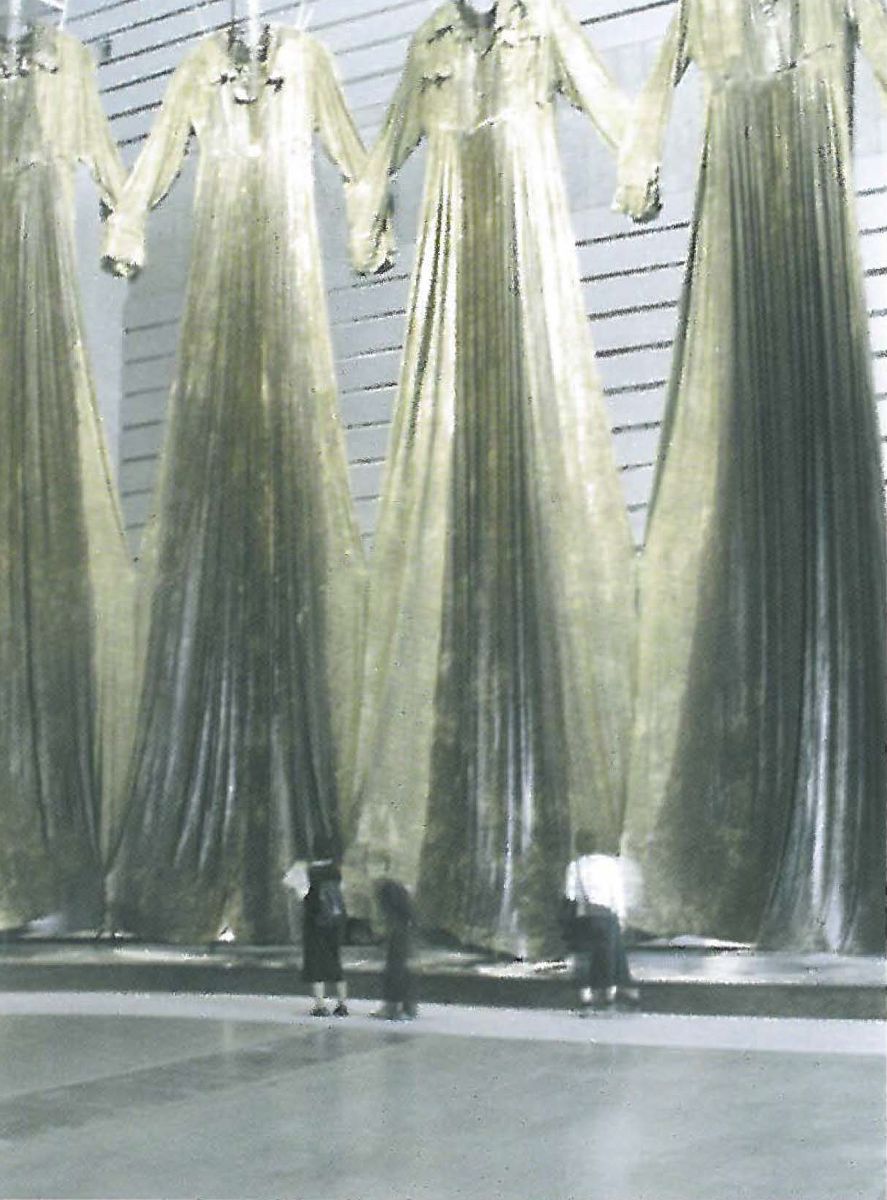
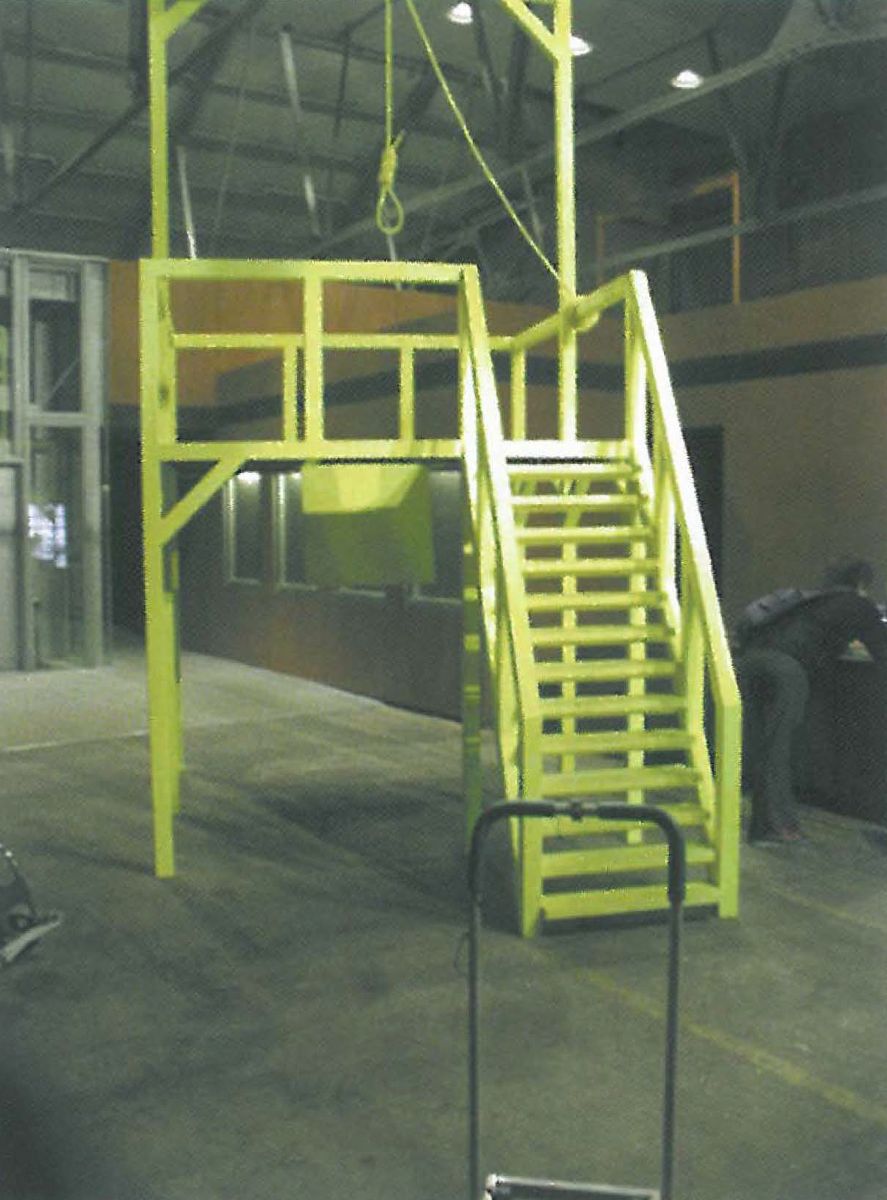
There is some powerful installation. Shiota Chiharu's extraordinary After That is a fountain - water pours down several old fashioned western dresses, about 10m high and stained with dirt, into an artificial pool of muddy water. Local group Candy Factory's Re:move is a full-sized timber gallows painted a garish yellow, around which are placed wheelchairs and exercise equipment, an adjacent video showing people learning to use a wheelchair.
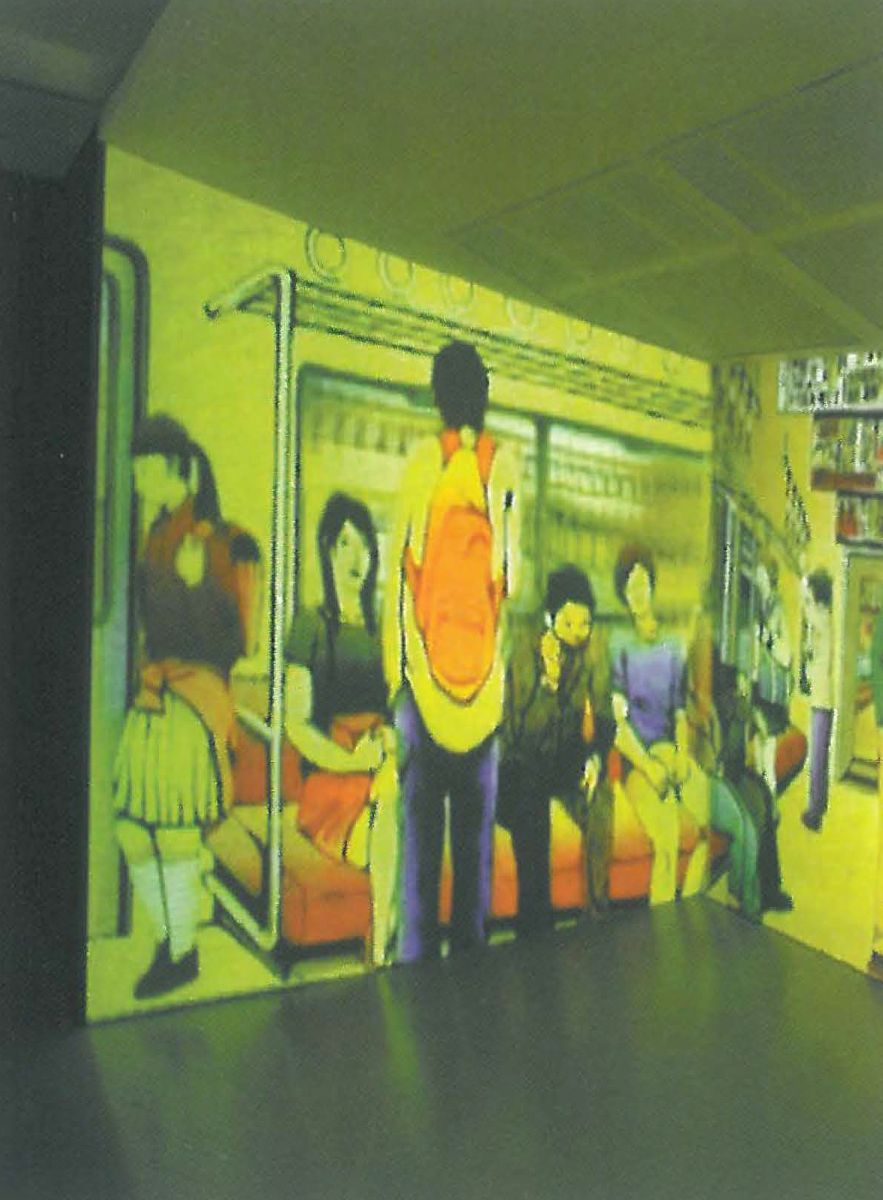
There is variety - Stelarc's exoskeleton, Yoko Ono's bullet-riddled freight car that emits bird song, Akimoto Kitune's fabulous computer-generated cartoons, and Kasuma Yayoi's room of mirrors and mirror balls, Narcissus Garden.
Viewers can participate - Marina Abramovic offers us magnetic shoes to try on her magnetic floor. Cai Guo-qiang's Fireworks from Heaven offers us reclining massage chairs from which to view artificial fireworks. John Bock's work is a low room with holes cut in its ceiling - you poke your head up into another space above, full of strange objects including Bock performing, your head on his floor. And in the Queen's Mall, a shopping precinct, Nakagawa's Recycle Project invites people to bring in an old favourite item of clothing and to write about it. Their statements are displayed and the clothing is recycled, transferring the individuality 'inherent' in the item to a new wearer.
Some works are brutally direct, eg Sun Yuan & Peng Yu's 5m neo-classically styled column of fat taken from liposuction surgeries. Zhang Huan's Family Tree is a series of 9 large colour photos showing the face of a young man progressively covered by writing until completely blackened. American Indian activist Jimmy Durham's The Petrified Forest comprises two rooms, the first darkened and empty but for the sound of shovelling. The next is a brightly lit office - desks, chairs, computers - over which cement has been poured.
For me, the nicest work was Jun Nguyen-Hatsushiba's video Memorial Project Nha Trang Vietnam - towards the complex - for the Courageous, the Curious and the Cowards. It shows several young men pulling/ pushing/ riding old tri-shaws along underwater, pausing occasionally to surface for breath. After reaching a depth of about 5 metres, they swim off. There follows a slow scene of the underwater topography which is dotted with white tents of mosquito netting, like an empty village - a moving portrayal of post-colonial Vietnam.
Yokohama's strongly political Trienniale suggests possible future artistic directions.