Shopping & Extreme Pleasures
Has art become just another consumer product? Relationship of art to retail and porn eg in the work of James Guppy, Jose da Silva. Also the Auckland Triennial reviewed. Co-editor Helen Grace

Topic list: body image, censorship, consumer culture, design, electronic culture, feminism, food, gay issues, gender, identity, popular culture, pornography, sexuality.
Subscribe or Order this issue » (from $14 inc. postage)
Articles in Vol 24 no 2, 2004
Captive Bait: The Work of Jose Da Silva
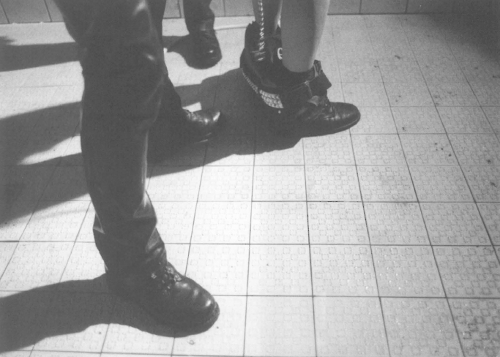
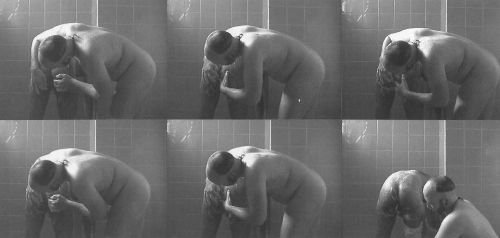
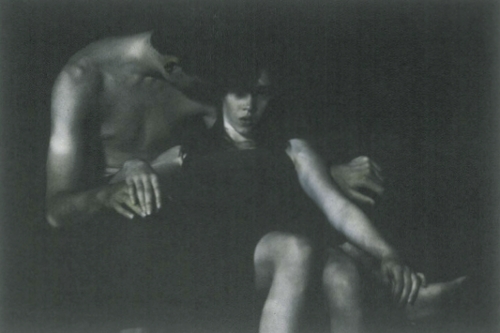
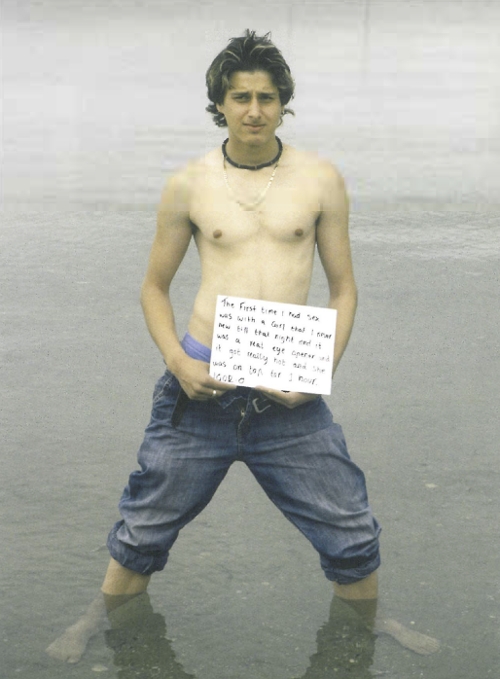
Feature by Daniel Mudie CunninghamThis essay looks at the work of Jose Da Silva, a young Brisbane artist whose work explores the way pornographic images and acts of violence shape gay male subjectivity. Da Silva underscores the way sexual violence is repeatedly fetishised and performed in gay porn, and by extension queer culture. Da Silva's work is bait, designed to lure an audience with its amateur porn pull. Once captive, an audience finds itself figuratively trapped in a seedy backroom where sexual violence is not simply patterned on recognisable social problems like homo hate crimes and/or gay male domestic violence. —
Chaotic Attractors: Jake Chapman Lecture Tour 04 
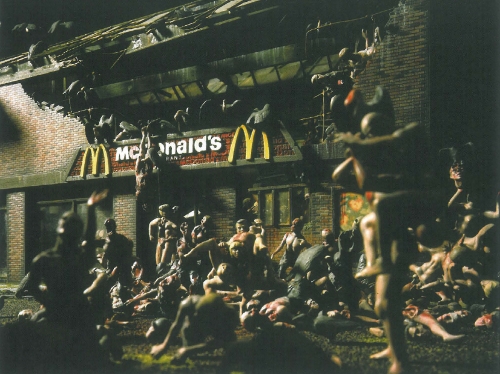
Feature by Kit WiseThe two hours of Jake Chapman's lecture at the Capitol Theatre in Melbourne in March 2004 were in many ways a homage to Modernism and the aesthetic of industry - albeit back-handed. The hierarchies of art history, the possibility of the poetic and the tradition of humanism all came under attack. The core issue circled around throughout the discussion was the degree to which art was simply a diversion for the middle-class: a market-responsive product or cathartic moment in which people could be and even pay for the privilege of being shocked. —
Enchantment/Disenchantment: The 2nd Auckland Triennial
Feature by Edward HanflingThe generic theme for the 2nd Auckland Triennial Public/Private sought to address central issues concerned with the relationship of the visual art 'scene' to that of the everyday life (to banality), the potential or otherwise of new technologies to engage with the conditions of modern society and the ability of art to deal in specific 'ideas' of a social and political nature. Furthermore in bringing together artist's projects that are cross-cultural and transgenerational, the curatorial aim was to make connections which would intensify the privacy debate. Edward Hanfling examines some of these works with regards to such issues and concerns. —
Flatness Packed
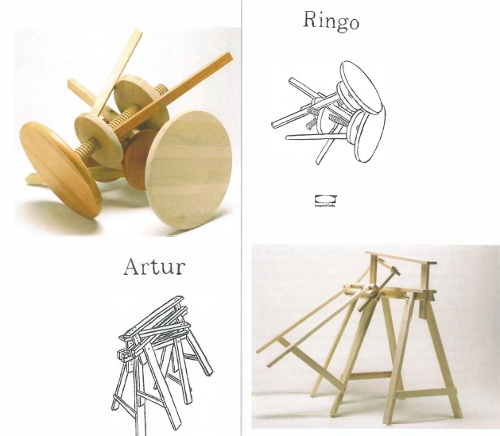
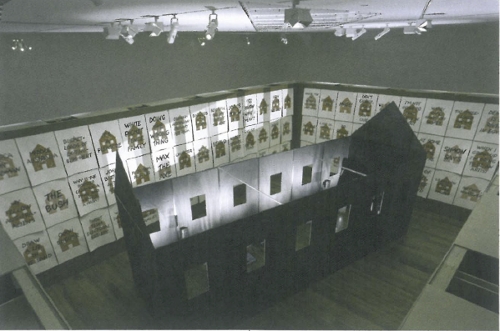
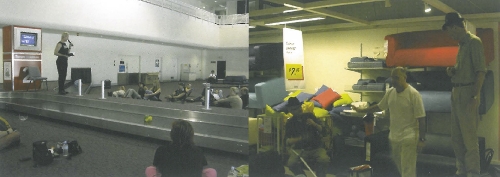
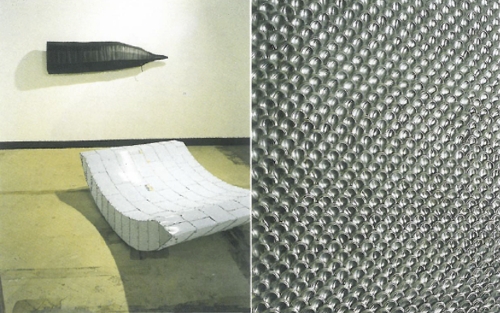
Feature by Alex TaylorWhile the idea of modern and contemporary art are located in a fairly nebulous discursive realm, the notion of modern or contemporary lifestyle (the two seem, in fact, interchangeable) are very much a part of the familiar rhetoric of consumer spending. No Nonsense Return Policy (2003), Pat Foster and Jen Berean's installation at BUS Gallery, documented six miss-assembled items of IKEA furniture and dissect the curious aesthetic cycles that drive the commercial products in both realms. Taylor looks at this work and others which are focused on drawing attention to the formal and ideological intersections between modernism and the stuff of homes and home decoration. —
Food Slut>Manifesto
Feature by Paul Van RykeFood increasingly became alienated from the body over the latter half of the twentieth century. Its material, its preparation, its distribution and its consumption became hostage to the banal aesthetics of the food stylist, the aridity of cultural studies and the repressive partnership of the public health zealot and the liability lawyer. Paul van Reyk here presents a manifesto on the 'food slut', a model for the examination of current food consumption trends in our society. As he states, a food slut is never indifferent to food, any more than a sex slut is indifferent to sex. —
How Much is that Artwork in the Window? Notes on Shops and Art
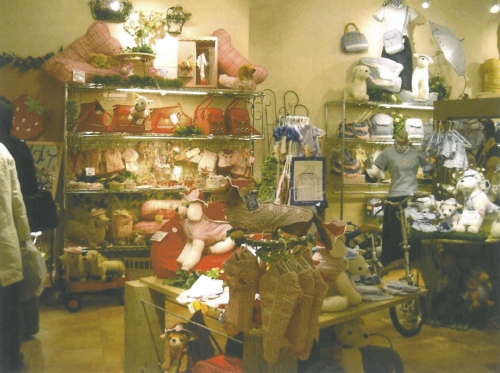
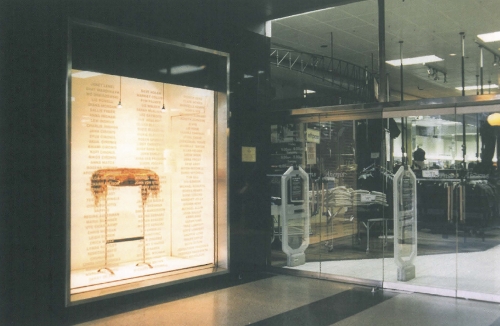
Feature by Juliette PeersThrough reference to Walter Benjamin's writings, Peers suggests that it has become commonplace to describe the city in terms of the progress of the flaneur, the middle class bohemian who strolled through the city, moving in the ephemeral sphere of impressions and images. This article looks at shopping as a central feature to the manner in which Australian art and culture has developed. The artist is a shopper and collector, moving through the materiality of things. Australian culture has itself become flaneur-ised over the past decade in the expansion of new museums and cultural precincts inviting discovery and added pleasure to the experiences of viewing and consuming art. —
One or Two Things about Art and Shopping
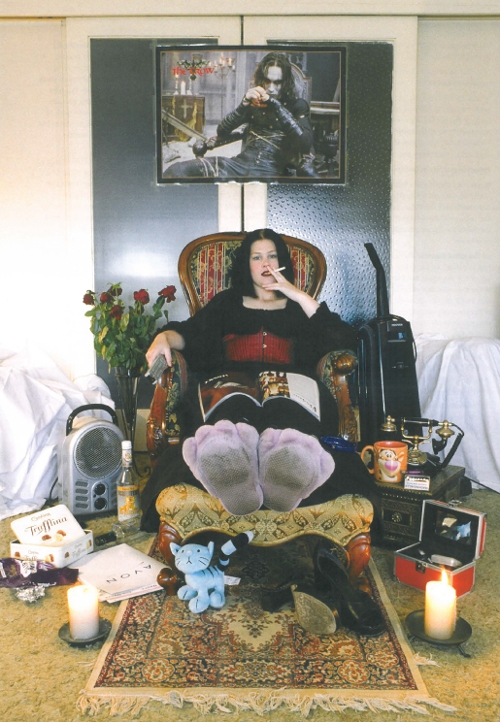
Feature by Josephine WilsonThis article explores the relationship between art and shopping, in particular the contemporary alignment of the two as one and the way feminist identity is largely constructed through the media and consumption. Wilson looks at the work of Barbara Kruger and her critique of Western consumer habits, in particular the way Kruger explores the different shopping patterns of men and women to reflect some inherent gender traits. —
Pornography and Photography
Feature by Helen GraceA series of three exhibitions which appeared to erase or at least redraw the boundaries between art photography and pornography was seen at the Australian Centre for Photography in Sydney in 2003. Helen Grace talked to Alasdair Foster, Director of the ACP and curator of one of the exhibitions, about this timely and challenging project. —
The Perverted Gaze of the Artist: Recent Work of James Guppy
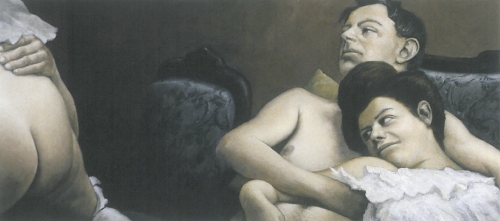
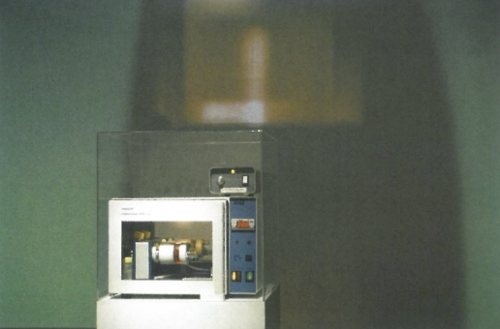
Feature by Joanna MendelssohnJames Guppy has a curiously ambiguous place in contemporary art. This is not because of his subject matter, but rather because of his technique. For the most part Guppy's recent work is not about fun, nor is it even really about sex. Rather he argues it is about the nature of exploitation. He argues that artists by their nature are voyeurs who see the world around them and all its objects as items to be used as visual product. His recent Peeping Box series taps into this idea where images of sexual activity with a particular sadistic overlay are presented behind thick glass to incite some vain attempt on the part of the viewer to engage in such voyeuristic acts. —
Tokyo Shopping Mix: An Email Saga*
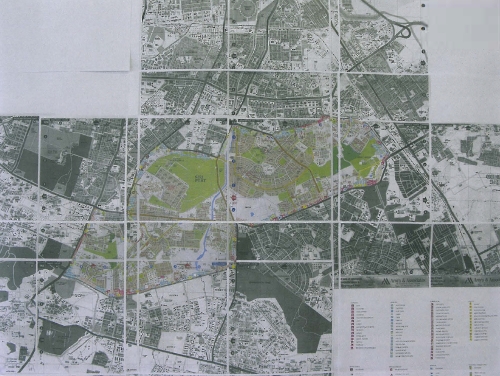
Feature by Stephen HaleyIt is not hard to shop given the entire city of Tokyo seems to be premised on the activity. Tokyo is a space as complex and flowing as the most convoluted natural system. One may be in a train station but it is filled with shops. Above ground, below ground, on the ground - shops. Haley documents his activities over a period of a couple of months in what is most likely the world's largest consumer oriented city. He discusses the somewhat surreal and absurdist nature of this environment and paints a picture of the plethora of advertisements, signs, extreme fashion trends and other visual paraphernalia that consume the city. —
Joan Kerr, Art Historian: February 1938 - February 2004
Obituary by Craig JuddJoan Kerr, Art Historian, February 1938 - February 2004 —
2004 Adelaide Biennial of Australian Art: Contemporary Photomedia 
Review by Maria BilskeArt Gallery of South Australia, Adelaide
29 February - 30 May 2004 —
Allthatglitters: Contemporary Visions of the Gold Coast / Allthatglitters: 50 Years of Gold Coast Kitsch and Memory 
Review by Koula Aslanidis7 February - 21 March 2004
The Gold Coast City Regional Art Gallery
14 February - 9 May 2004 —
Art of the Biotech Era: Art, Culture and Biotechnology 
Review by Julianne PierceExperimental Art Foundation, Adelaide
27 February - 3 April 2004 —
Artists' Week 
Review by Stephanie BrittonAdelaide Bank 2004 Festival of Arts
28 February - 4 March —
Boogie, Jive and Bop 
Review by Briony Lee DownesPlimsoil Gallery, Hobart
5 - 28 March 2004 —
Group Material 
Review by Phillip WatkinsBen Booth, Neil Haddon, Anthony johnson, Anna Phillips, Lucia Usmiani and Kit Wise
The Queen's Warehouse Gallery
Tasmanaian museum and Art Gallery, Hobart
18 March - 2 May 2004 —
Holy, Holy, Holy 
Review by Stephanie RadokFlinders University Art Museum
20 February - 17 April 2004 —
New 04 
Review by Cliff BurttGuy Benfield, Nadine Christensen, Stephen Honegger & Anthony Hunt, Tom Nicholson, Sangeeta Sandrasegar, Parekohai Whakomoe
Australian Centre for Contemporary Art, Melbourne
23 March - 16 May 2004 —
New Home for University Art Museum 
Review by Susan CochraneMayne Centre, University of Queensland
Opened 15 April 2004 —
Now, Beauty: Cover or Re-Mix 
Review by Simon BlondPerth Symposium, various venues
19 - 21 March 2004 —
Place Made - Fifth Australian Print Symposium 
Review by Stephanie RadokNational Gallery of Australia
2 - 4 April 2004 —
Repercussions: Individual and Collaborative Works 
Review by Ted SnellPeter Hennessey & Patricia Piccinimi
Greenaway Gallery, Adelaide
28 February - 28 March 2004 —
Songs of Australia: Volume 16 
Review by Adrian MontanaAleks Danko
The Ian Potter Centre, NGV Australia
Melbourne (and touring)
7 February - 18 April 2004 —
Suburban Edge 
Review by Joanna MendelssohnAustralian Centre for Photography, Sydney
5 March - 18 April 2004 —
The Space Between 
Review by Jessica HemmingsJohn Curtin Gallery
Curtin University of Technology, Perth
14 - 17 April 2004 —
Transmission and a Selection from 32 Cars for the 20th Century - Play Mozart's Requiem Quietly 
Review by Penny CraswellNam June Palik
Sydney Opera House Forecourt
8 -26 January 2004
National Gallery of Australia, Canberra
26 February - April 2004 —
Other articles & reviews
in this issue
- Artlink on the Road: a China Diary

News by Stephanie Britton - News from the Front

News by Tory Shepherd - Artrave

Artrave by Edblog