Fallout
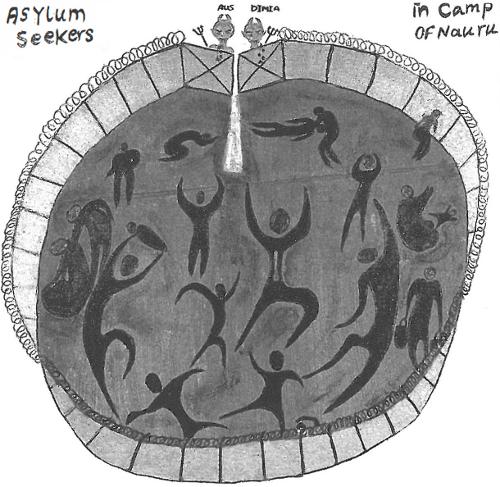
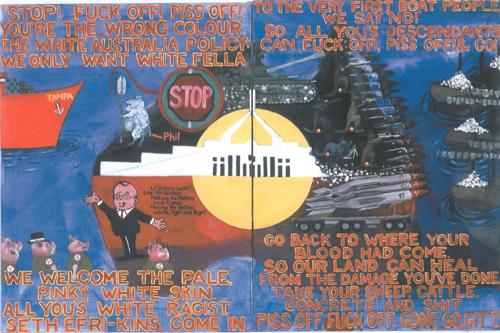
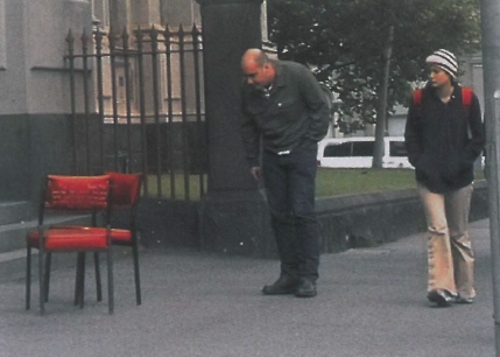
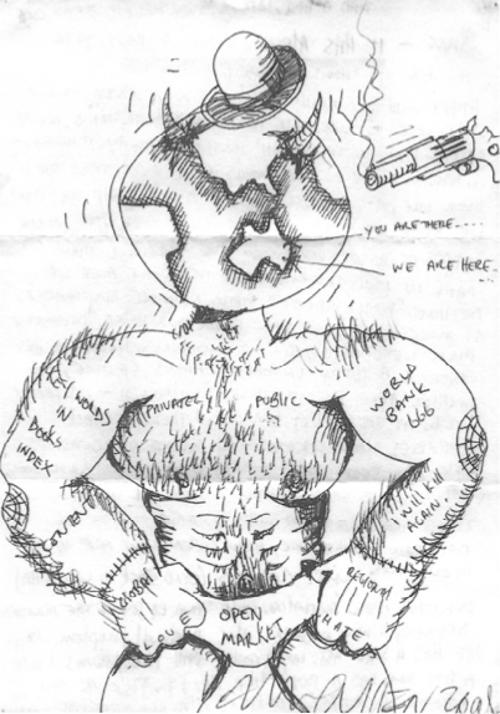
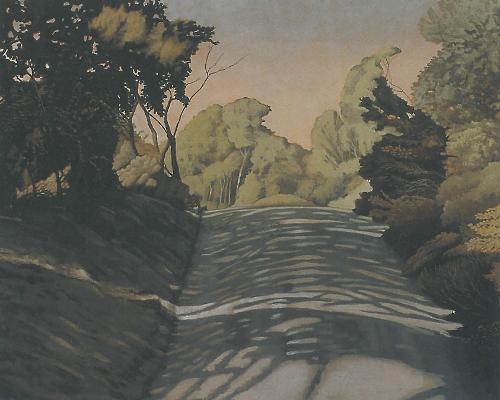
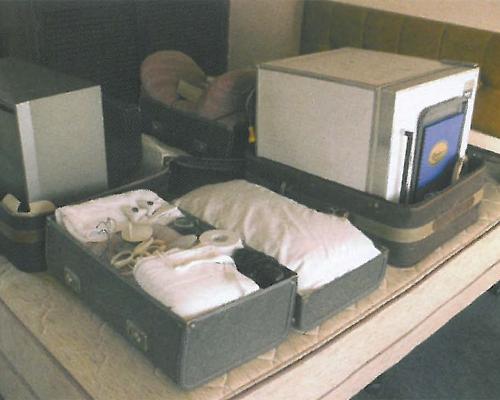
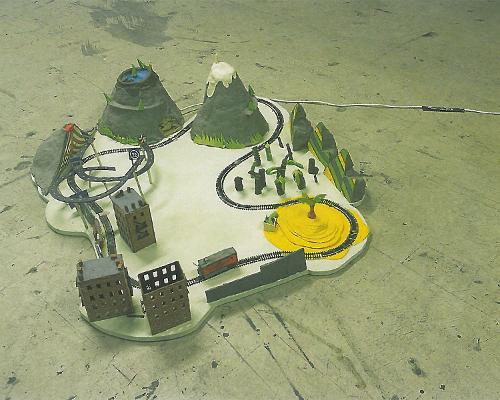
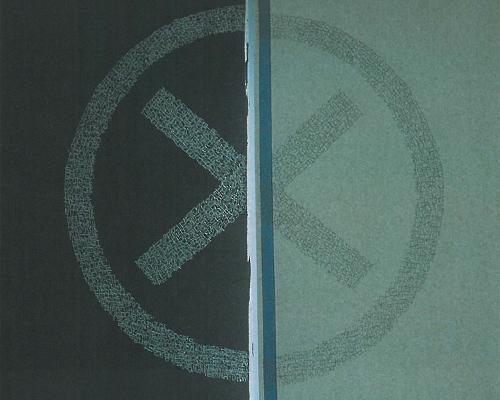
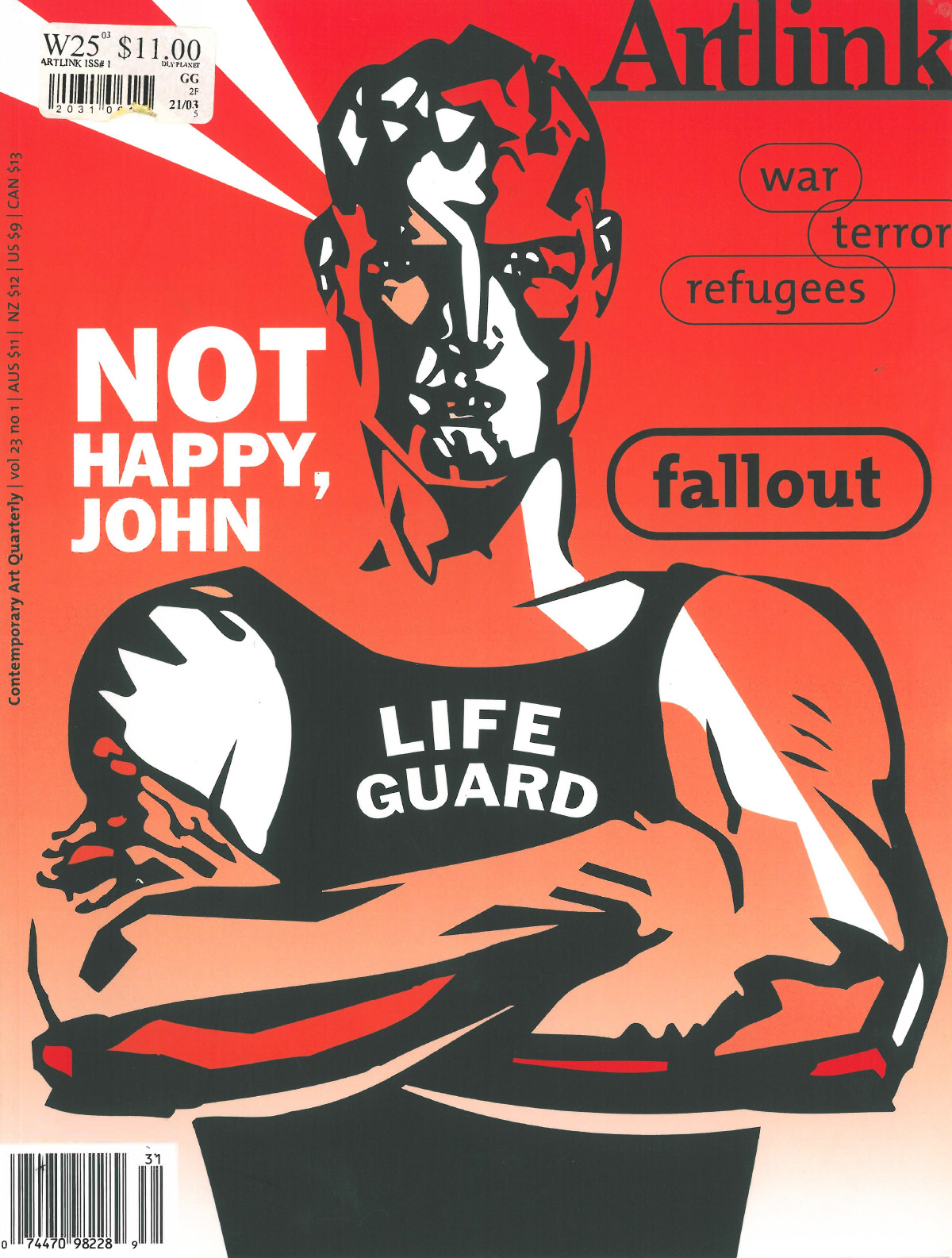
A nation trying to deal with a phoney war, the resurfacing of racism, paranoia and panic over border control and a population deeply split over its government's actions in relation to these. Artists respond to the shame of the Children Overboard episode, the Tampa Crisis, the inhuman conditions in our refugee detention centres and the 'war on terror'. We look at how easily the surface acceptance of peaceful multiculturalism and reconciliation can be disturbed by external forces. Earlier waves of boat people reflect on this situation through new exhibitions and performances. Prominent and emerging artists combine to make their voices heard.
Subscribe or Order this issue » (from $14 inc. postage)
Articles in Vol 23 no 1, 2003
A Memory of Times Past
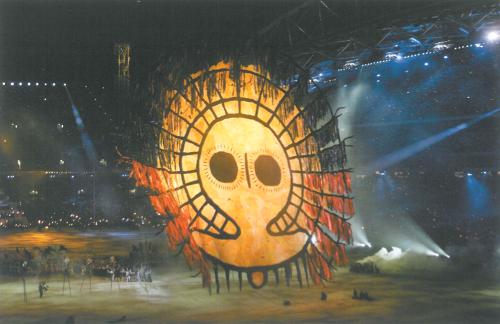
Feature by Joanna MendelssohnAustralia's 'official culture', the face that government puts on to show the country to the world has changed, and although those changes were set in motion well before the events of 11 September 2001, they are only now beginning to emerge as defining forces. Mendelssohn looks at the role of the 2000 Sydney Olympic Games as a celebration of Australia's diversity and one of the main catalysts for such change. However, there is a darker side to all of this celebratory glory which Mendelssohn has addressed with reference to Australia's political climate and the granting of permission to express its collective worst feelings of fear and loathing. —
A4 Refugee Project: Artists in Solidarity
Feature by Jane GallagherThe A4 Refugee Project began in July as a response to Austcare's call for participants in Refugee Week 2002. Letters, flyers and e-mails were sent to contemporary artists throughout Australia with the request to submit a work as a gesture of support for refugees. The works addressed all sorts of issues surrounding the topic of refugees: alienation, lip sewing, consumerism, wire fencing, loneliness, nationalism...and punctuating these were abstract works that allowed some breathing space. The works were donated to the James Hardie Art Archive at the State Library of Queensland and will provide a permanent document of the artistic response from the community to this issue. —
Afghanistan Unveiled: Refugee Artists
Feature by Angelika Tyrone and Helena StewartAfghanistan Unveiled was an exhibition in South Australia of paintings and drawings by four refugees from Afghanistan: Ali Reza Ramzi from Western Australia, Ghulam Sakhi Hazara from Queensland, Sayed Mansoor from South Australia and Shafiq Monis from New South Wales. All of these artists have recently lived in detention and one is still in detention. The artists use art as a way to depict their lives under the Taliban regime, their flight to Australia and their experiences in Australia. The exhibition received television, radio and newspaper coverage, both locally and nationally and over 200 people attended the opening with many more viewing the exhibition over the following two weeks. —
Ambient Fears: 11 September
Feature by Nikos PapastergiadisArtlink here prints a slightly abbreviated version of Nikos Papastergiadis essay which was first delivered as a lecture in Finland on 30 September 2001. This essay covers issues surrounding the idea of the other, the enemy, and discusses some of the ramifications of the events of September 11. In november that year it was used as a companion piece to the exhibition Fallout at the Victorian College of the Arts. The Exhibition featured artists Destiny Deacon, Elizabeth Gower, Homi Vesal, Jarrad Kennedy, Justine Khamara amongst others. Nikos Papastergiadis is Deputy Director of the Australian Centre, University of Melbourne. —
Borderpanic: Culture Jamming
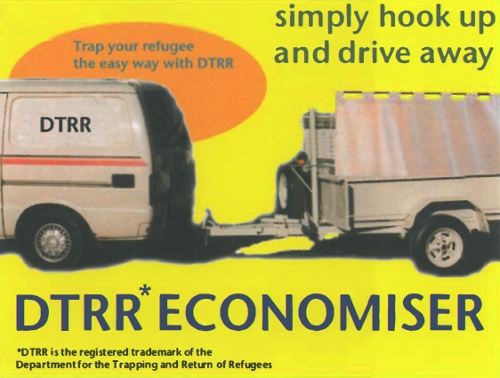
Feature by Ann FineganBorderpanic was a conference and tactical media lab hosted by the Museum of Contemporary Art in Sydney, a seminar hosted by Metroscreen and an exhibition at the Performance Space. It was a coming together of artists, activists, cultural theorists and people of social conscience examining a world of burning borders. Many of the artworks exhibited at the Performance Space reflected in positive mode the documentation, connectivity and networking between people around the planet. Some of the artists included in these shows were Julian Burnside, Ghassan Hage, Mickey Quick, Geert Lovink, Stephen Best and Peter Lyssiotis. —
Disorientation: Afghan War Rug, No Easy Answers
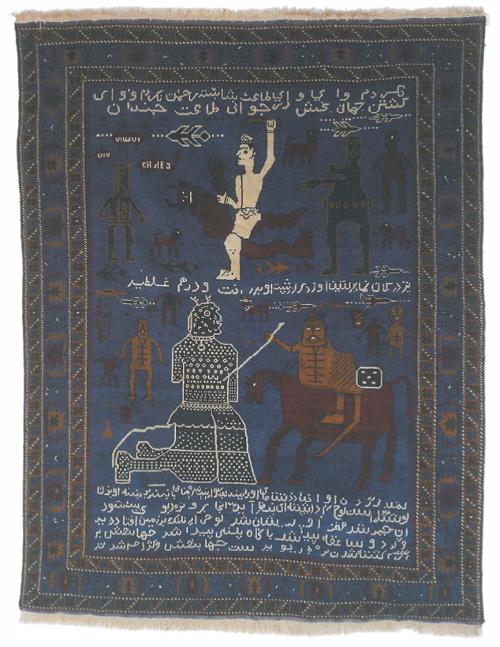
Feature by Nigel LendonLendon takes up the idea of cross-cultural interpretation and exchange as exemplified through the symbolism imbued in a traditional 'Afghan war rug', an item which was part of the exhibition 'The Rugs of War' held in June 2003. Through deconstructing the seemingly violent and barbaric visual imagery, Lendon is posing some important questions regarding the role of traditional artefacts and the valuing of such hand made craft once it has reached its destination in the west. —
Fallout: Quick Response to 9/11
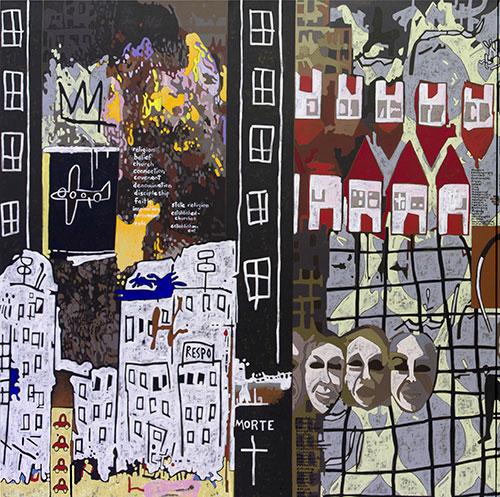
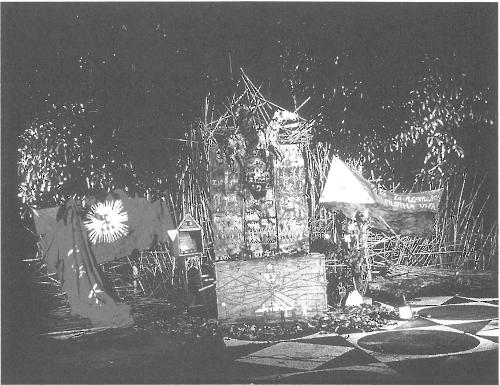
Feature by Mary Lou PavlovicFallout was a quick response exhibition that only lasted for one week. The show examined the impact on art of the September 11 attacks in New York and Washington, globalisation and the refugee crisis. The thirty-seven artists who participated, each at different stages in their careers, contributed their work purely on political conviction. Many of the works in the show were quite raw, and captured this desire to re-express the shock of the violence towards the western world, but also the violent and brutal way the western world sought revenge. Sanja Pahoki and Rowan Douglas were amongst those to exhibit. —
Gordon Bennett: Terrorism and History
Feature by Ian McLeanFor Gordon Bennett, as for many around the world who have been living in the anonymous killing fields rather than the pleasure gardens of modernity, 911 was another shock wave of a world war without end. In this moment of danger, the past again flashed by, brushing against the grain of history. McLean here looks at Bennett's imaginative migration to New York in 1998 and his ongoing conceptual pursuits in the realm of culture and colonisation, creating narratives which explicitly draw Australian and American colonial history together. —
Mike Parr: Close the Concentration Camps
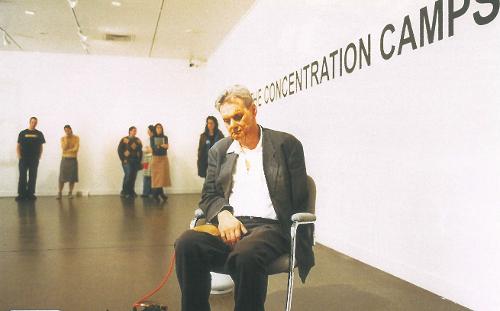
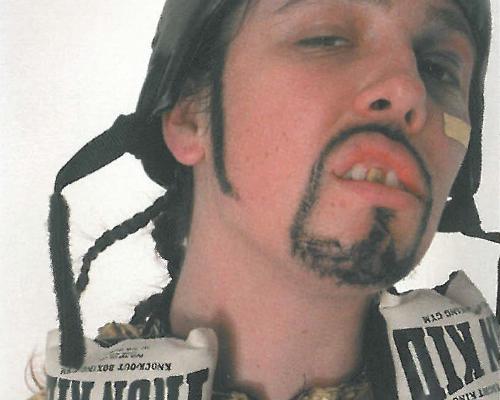
Feature by Adam GeczyAdam Geczy talks to Mike Parr about two of his performance pieces Malevich and Close the Concentration Camps within the broader sphere of political and performance art in Australia. As Parr proclaims, Close the Concentration Camps imposed the problem of self-mutilation as a kind of fact. Furthermore for him it seems that 'politics' in the Post-Modern is eroded by a kind of self-indulgent pluralism that can make real difference seem disreputable. Such issues are here examined. —
Our Voices: Living with Trauma
Feature by Mammad AidaniMammad Aidani was born in the port city of Khorramshar in South-West of Iran and later born into the English language and the complexities of the Australian environment in 1982. He here writes about his ongoing struggles since fleeing his country during the Shah's regime when the war between Iran and Iraq ultimately led to the loss of his family and friends. He speaks out about the current political and humanitarian agenda in Australia and the role of creativity in providing rich human emotions as noble causes to unite people. —
Pat Hoffie: Compassion and Anger
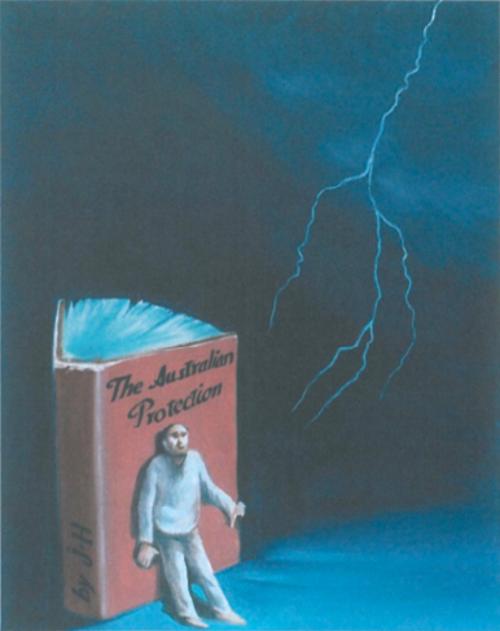
Feature by Timothy MorrellThe element of denial ingrained in Australian society provides the basis for much of Pat Hoffie's work. The popularly constructed myths, histories and relationships that reinforce Australian society involve a certain amount of self-delusion, and Hoffie uses her work to amplify this fact. This article explores some of the political and humanitarian issues at the core of Hoffie's artistic practice, with specific reference to the 'children overboard' incident and Australia's role in the 'war against terror'. —
Queue Here
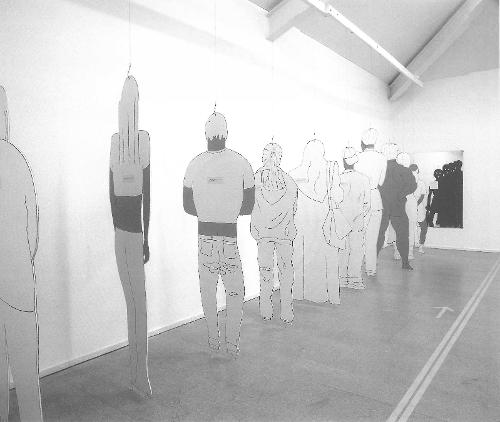
Feature by Merryn GatesOne of the key works in the 2002 exhibition Queue Here is by Pat Hoffie, an artist long concerned with issues of social justice. A frieze of paintings, lifted from portraits on the web of Australian Federal Members of Parliament, become, as Hoffie says, the 'horrific scared smiles of those we trusted to speak for us'. The artists featured in Queue Here (Pat Hoffie, Peter Latona, Holly Williams, Aseem Pereira, John Vella, Angelina Brazzale, Margaret Baguley, Penny Cain and Paul Gazzola) have all adopted tropes that point to the heart of the problem. If we are dealing with perceptions, then these are a truthful reading of Australia's current vision of its own culture. —
Refugee stories: Afghanistan and Iran
Feature by Madonna AbellaThe Migrant and Workers Resource Centre (MWRC) was established in Brisbane in 1995 by a group of migrant factory workers, with the aim of providing assistance to migrant communities. Recently, the MWRC conducted an independent investigation into the condition of refugees released from detention centres and now residing in Brisbane. The MWRC coordinator and the centre's consultant psychologist, Madonna Abella, visited the homes of refugees for face-to-face interviews, assisted by an interpreter. This article presents the findings of these interviews and the individual experiences of the refugees. —
Tasmania as Haven
Feature by Kevin MurrayDespite its troubled history, Tasmania has managed to offer quiet sanctuary for a remarkable range of peoples, natures and ideas. Much of Tasmania's political muscle has been exercised around environmental issues, backed by world heritage listing. Artists in the Haven exhibition which toured in 2003-4 each chose a biographical subject that dramatised the utopian appeal of Tasmania. Artists included Pip McManus, Geoff Parr, Patrick Collins, Anna Phillips, Jennifer Brook, Penny Carey Wells, John Vella, Helena Psotova and Judith-Rose Thomas. Each of these artists created works as tributes to various historical figures and all contain within them the thin glimmer of hope that beckons the darkened mainland above. —
Terrorist Training School: PVI Collective 
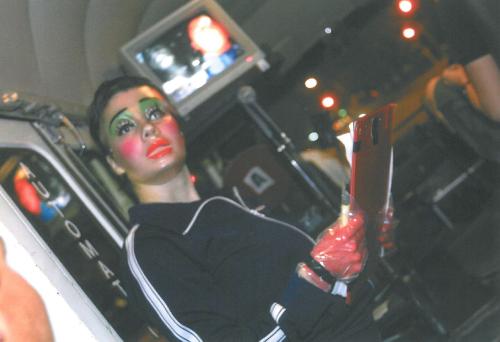
Feature by Josephine WilsonContemporary performance often seems bent on escaping the theatrical frame, eroding the boundaries, and making problematic the relationship between theatre and reality. In Terrorist Training School, the Perth-based performance group PVI abandoned traditional theatrical space altogether, opting for tour buses and trams. Wilson here sets the scene for the 2002 performance and discusses the performative and prescriptive aspects of both the theatrical and real life terrorist attacks taking place in all parts of the contemporary world. —
The Ballet of Nothing More
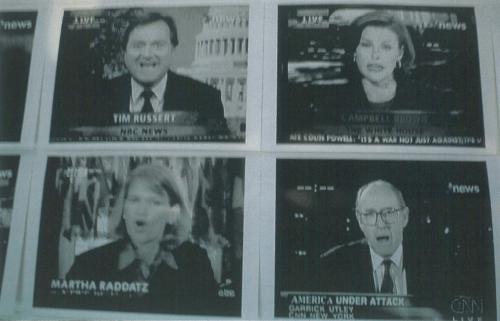
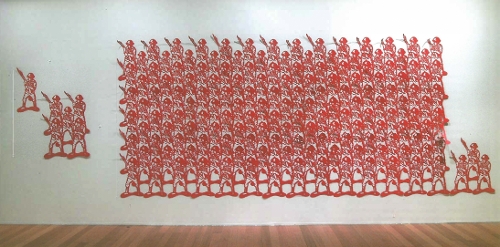
Feature by Megan KeatingMegan Keating's installation The Ballet of Nothing More uses sources from international military and propaganda imagery in order to allude to the present state of unrest within the world. Although no particular campaign or situation is specifically referred to, the paintings and papercuts aim to evoke an awkwardness or ambivalence indicative of contemporary experience. This work is not about war or the experiences of war but people's acceptance, detachment and displacement of such issues fuelled by the media and its methods of reportage. —
The Pacific Highway Solution
Feature by Wayne BarrowWayne Barrow provides a humorous dialogue between himself and two of his mates Boney and Dazza, the three of them on their way back to Sydney after a week of concreting. This article raises issues surrounding the problems with the construction of the Pacific Highway, the government's policies on mandatory detention and the shocking state of take away food along the way. —
The Pathos of Boat People
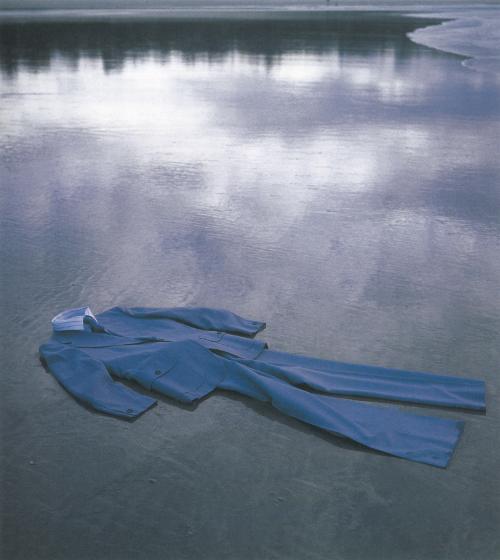
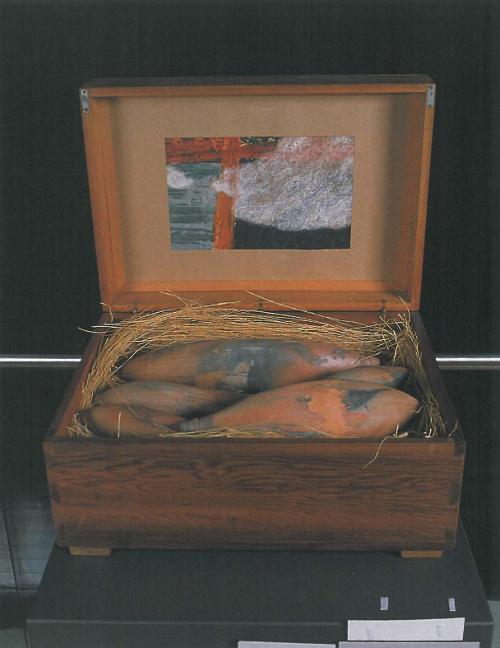
Feature by Shayne HigsonOn 10th April 1999, a large boat carrying 60 passengers and crew who had travelled all the way from China seeking asylum arrived on the shores of the small town of Scotts Head on the mid North coast of NSW. Shayne Higson created a series of poetic images in response to this desperate attempt for freedom. These poignant photographs present the remnants of these asylum seekers, the striped plastic bags and rusting hulk which were abandoned and replaced by suits, ties and good shoes, items worn by the refugees in an attempt to fit in with the mainland surroundings. —
The Promised Land 
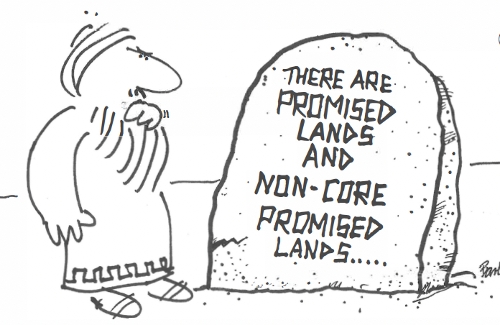
Feature by Linda JaivinLinda Jaivin tells an imaginative story of Moses' plight to the Promised Land, imparting an additional reading to this historical tale, one very much aligned with contemporary society and the struggles of refugees seeking asylum in Australia. The story depicts the promised land as "a liberal democracy which respects human rights and international conventions as set out by the United Nations" with the story leading the refugees to the ultimate reality of this supposed liberated new land. —
Viet Nam Voices: Lessons of History
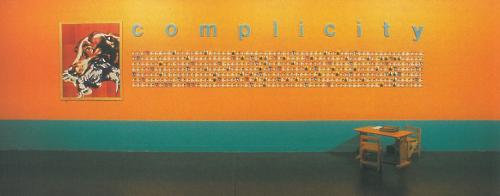
Feature by Clare RobertsonViet Name Voices was a unique exhibition, striving to give all major groups of participants the opportunity to be heard impartially, often in direct opposition to each other. The voice that is most passionate in this exhibition is that of the Viet Name veterans, who are speaking out after twenty-five years of silence. The issues raised by the unjust treatment of the veterans on their return to Australia are vividly addressed through their artworks, including the legacy of chemical defoliants such as Agent Orange, their betrayal by the Australian government, the mass media's complicity in wartime propaganda, and the enduring and unfulfilled need to honour and remember the dead. —
Woomera: An Artist's Response
Feature by Juan DavilaWith an almost complete silence on social issues for many years, Juan Davila has found there to be several immediate reactions towards his Woomera painting series. It is Davila's belief that, as artists we should remain open to the question of how such events as refugee detention in Australia are to be symbolized. His discussion here focuses on the the nature of these reactions and the loss of social-concern and figurative narratives within the commercial and state gallery art scene. —
Anthony Gormley: Inside Australia
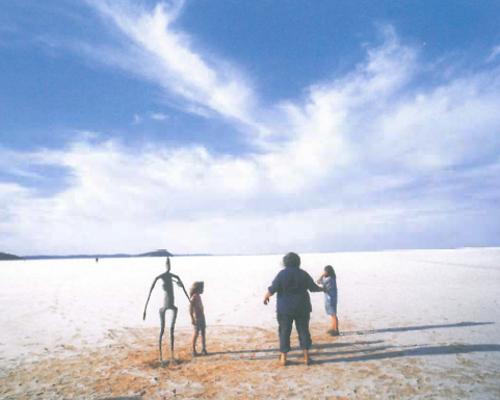
Review by Andrew NichollsAnthony Gormley: Inside Australia
Lake Ballard WA
January - March
Perth International Arts Festival
—
Art Built-in South Bank 
Review by Chris HandranArt Built-In South Bank
South Bank Parklands
13 September – 17 November 2002
—
Bronwen Sandland: Housecosy 
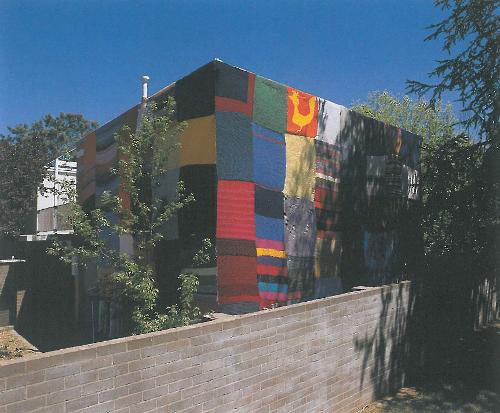
Review by Merryn GatesHousecosy by Bronwen Sandland one of 3 components for Cul de Sac, a Canberra Contemporary Art Space project
19 October – 3 November 2002
82 De Burgh Street, Lyneham ACT
—
Cerebellum 
Review by Tracey ClementCerebellum
Performance Space
Sydney
1 - 30 November 2002 —
David Keeling: Narrative, Sweet Narrative 
Review by Mary KnightsNarrative, Sweet Narrative
David Keeling
Bett Gallery, Hobart
—
Discomfort 
Review by Jennifer HerdDiscomfort
Fire-Works Gallery, Brisbane
29 November – 24 December 2002
—
Fieldwork 
Review by Ian NorthFieldwork
Ian Potter Centre: NGV Australia
Federation Square Melbourne
26 November 2002 – mid February 2003
—
Fiona Lee: Hard Copies 
Review by Sean KellyFiona Lee Hard Copies
FOYeR Installation Space, Salamanca Place Hobart
14 – 29 November 2002
—
Good Vibrations: The Legacy of Op Art in Australia 
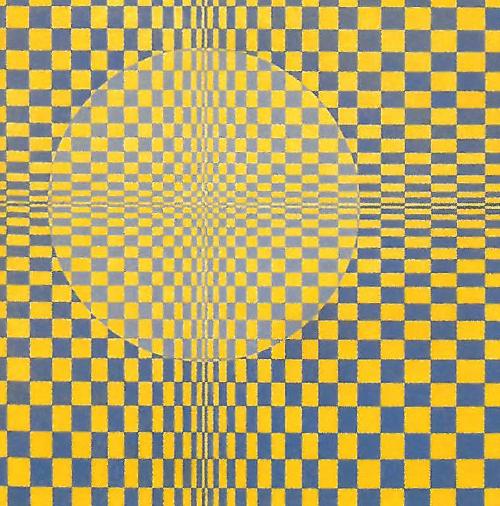
Review by Juliette PeersGood Vibrations: The Legacy of Op Art in Australia
Curated by Zara Stanhope
Heide Museum of Modern Art
5 October - 24 November 2002
—
Hotel 6151 
Review by Felena AlachHotel 6151
Rhodes Hotel, Perth
Artrage 2002
1 November 2002 —
Jan Flook, Recycology 
Review by Alex TaylorJan Flook, Recycology
Linden Centre for Contemporary Arts
11 October - 10 November 2002
—
Plans and Disasters and Modern Love Pictures 
Review by Stephanie RadokPlans and disasters
Matt Bate, Andrew Best, Louise Flaherty, Chris Flanagan, Viv Miller
1 - 17 November 2002
modern love pictures
Matt Bate, Bianca Barling, Jim Strickland, Arran Steirman, Katrina Simmons, Mimi Kelly & Clint Woodger
December 2002
Downtown, 27 Hindley Street, Adelaide
—
Trinh Vu: Reflections 
Review by Penelope RichardsonTrinh Vu: Reflections
19 October – 14 November
Christine Abrahams Gallery, Melbourne
—
Wild Nature in Contemporary Australian Art and Craft 
Review by David KerrWild Nature in Contemporary Australian Art and Craft
A survey exhibition of 43 artists
Curator Margot Osborne
JamFactory Craft & Design Centre, Adelaide
21 September – 10 November 2002
—
William Yang: Miscellaneous Obsessions 
Review by Joanna MendelssohnWilliam Yang
miscellaneous obsessions
Stills
Paddington, Sydney
16 October - 16November 2002
—
Other articles & reviews
in this issue
- Artrave

Artrave by Edblog - Carpet Wars by Christopher Kremmer
Book review by Juliette Peers - Value Added Goods: ed Stuart Koop
Book review by Martin Thomas