The 'Improved' Body: animals & humans

The 'Improved' Body: animals & humans

Vol 22 no 1, 2002


The implications of the new biotechnology for the human body and for the future of the species is visualised. Recent revelations that genetic makeup of animals is much closer to humans than was previously thought and possibilitues of trans-species hybridity is no longer just the stuff of myth or science fiction. Artists ask: how do we feel about becoming even closer to the animals we share the planet with? Current trends in surgery for transgender and cosmetic changes challenge notions of bodily identity. Writers include WJT Mitchell (Chicago) on Biocybernetics, George Alexander on Julie Rrap, Victoria Ryan on cosmetic surgery and art, Jane Goodall on Ella Dreyfus, Bronwyn Platten on bestiality, Anne Quain on transgenic pets.Also beautifully illustrated features on the works of Monika Tichacek, Sharon Goodwin, Michele Barker, Lynne Roberts-Goodwin, Juan Ford, Stelarc, Ionat Zurr and Oron Catts, Ray Cook, Helen Kundicevic, John Kelly, Jane Trengove, Stephen Holland and Tiffany Parbs.


Subscribe to Artlink - from $55. Subscriptions available for readers anywhere in the world.


NAVA - National Association for the Visual Arts


You are here » Artlink » Vol 22 no 1, 2002 » John Kelly

John Kelly

Author: Mr John Kelly, artist profile

John Kelly paints cows and horses, in particular, the legendary Phar Lap and Dobell's camouflaged bovines. Through using these narratives and adding new elements Kelly has created a multi-layered structure of ideas. This evolution works on a slow time scale that is at odds with today's fast consumer culture where products need to be refreshed and changed on a continual basis.
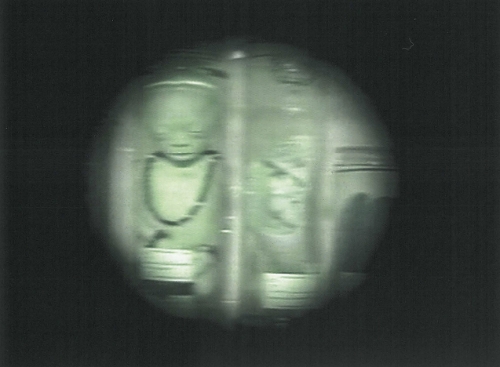
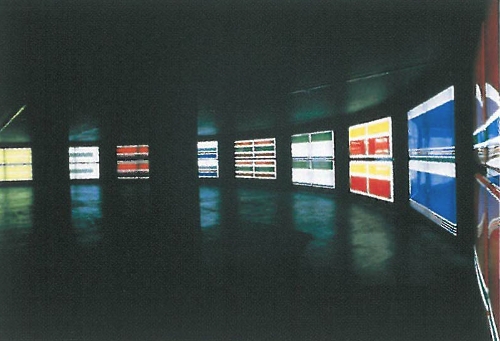
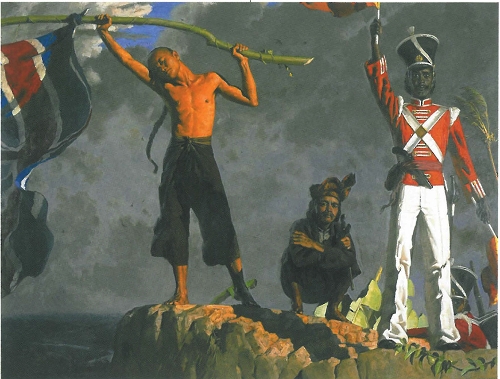
Kelly paints cows and horses, in particular, the legendary Phar Lap and Dobell's camouflaged bovines. He states: 'Ideas derived within an evolutionary framework, beginning with William Dobell and the strange camouflage scheme that he was involved in during W.W.II, are what drive my work. Through using this narrative and adding new elements I have created a multi-layered structure of ideas. This evolution works on a slow time scale that is at odds in today's fast consumer culture where products need to be refreshed and changed on a continual basis. Paradoxically we have reached a point where if anything becomes 'fashionable' it is immediately unfashionable because of its fashionableness. Therefore it will be replaced by the next big thing until that is also replaced and so on and so on. An artist such as Morandi, whose main body of work consisted of painting bottles, would have little chance of recognition in this world view.
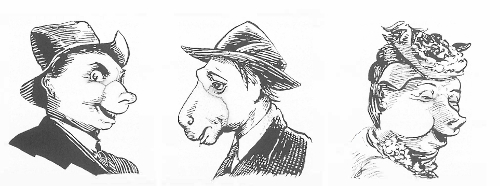
For me it is irrelevant whether I am painting cows, cubes or whatever. It is simply a matter of allowing ideas to 'evolve' on a fluent and continual basis. I believe it is only by creating my work in this slow evolutionary way that I can begin to create a truly intelligent art.'

Born and trained in Australia, John Kelly now lives and works in London. He won an Anne & Gordon Samstag International Visual Arts Scholarship Award to the UK in 1996 and has had numerous solo and group exhibitions in Australia and overseas. He was selected to exhibit his now famous sculpture Cow up a tree in the Champs de la Sculpture II on the Champs Elysées in 1999. He is represented in Australia by Niagara Galleries in Melbourne where he shows frequently, and by Piccadilly Galleries in London.


Article Index

Articles in this issue