Changing Climates in Arts Publishing
vol 29 no 4, 2009
In a world where newspapers and journals are being replaced by online versions, and traditional copyright is being challenged, many new scenarios present themselves. Artists and publishers are being asked to make choices and address questions that are environmental, technical, aesthetic, legal and financial all at the same time. * carbon emissions from print/online content * should all content be free * effect of re-mix and Creative Commons on creators' rights * search engine uses of arts content * catalogues and zine publishing * art biography as online data bases emerge. Powerful climate change imagery, new work by emerging and established Australian artists, flows through the pages. Plus bonus review section: 17 recent books & catalogues. Based on the Changing Climates in Arts Publishing forums organised by Artlink in Adelaide and Sydney in 2009 More on the forums including programs and vodcast. Discussions of a lively team of experts, writers, artists, copyright lawyers, arts publishers, activists: Zina Kaye, Elliott Bledsoe, Linda Jaivin, Daniel Thomas, Tess Allas, Joanna Mendelssohn, Sean Cubitt, Tamara Winikoff, Andrew Frost, Donald Brook, Lisa Havilah, Djon Mundine, Zoe Rodriguez, Bill Morrow.
- Artists and Authors
- Order this issue (from $12 inc. postage)
Subscribe to Artlink - from $52. Subscriptions available for readers anywhere in the world.
Advertisement:
Western Australian Indigenous Art Awards
Author: Ms Thelma John, reviewWestern Australian Indigenous Art Awards
Art Gallery Of Western Australia
25 July - 15 November 2009
When it was announced that an indigenous art prize, "Australia's richest", would be developed in Perth, I had hopes that the Award was going to be a recognition of the immense talent of Western Australian indigenous artists and would serve to familiarise Perth audiences with them, artists from our own region who have stellar careers, some of international significance, but who are rarely exposed to the general public. Problems with state borders and boundaries would have been tricky but instead, this opportunity became a national show of indigenous art. The result is a strong and compelling field of dazzling works from around the country yet I can’t help feeling that the Art Gallery of WA and the Government of WA, who have provided the funds, have missed the chance to celebrate their own (neglected) backyard in favour of a national prize.
Despite my reservations, this exhibition is one that you can immerse yourself in for hours, and especially so because each artist is represented by a small body of work. There is a wonderful feeling of moving around the country, from city to dry lake, from shopping centre to dreamtime.
View Larger Image
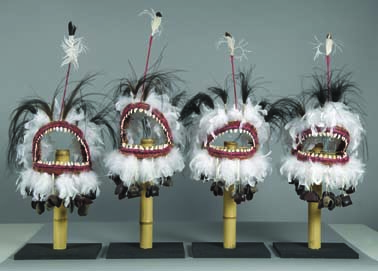
Ricardo Idagi Baizam Tirig (sharks teeth) 2008, feathers, mussel shell, goa nuts, bamboo, cane and raffia, 86 x 30 x 36 cm, courtesy Vivien Anderson Gallery, Melbourne. Photo: Ricardo Idagi.
The photographic series Optimism by Tony Albert of Queensland depicts a young man from behind, modelling a traditional woven basket (jawun) unique to his country, in a series of environments both urban and rural. These images bring the past and the present into dialogue as well as creating a tension between artefact and utilitarian object. As in most successful artworks, both the surface and subject seduce, leading us to ponder the infinity of political messages relevant to indigenous art that revolve around fashion, commodification and cultural practice.
The notion of the artefact as work of art plays a big role in the exhibition. Yolgnu artist Gali Yalkarriwuy Gurruwiwi danced at the launch, as well as showing his Banumbirr - Morning Star Poles decorated with earth pigment, bush string, human bone, hair and feathers representing the Morning Star or Venus. The powerful ceremonial objects of Ricardo Idagi from the Torres Strait Islands were awarded the $50,000 first prize. These headdresses and masks are created using traditional tools and materials such as turtle and other shell, feathers, seeds, hair, cane, raffia, nuts and ochre. They are a celebration of the living culture of the Torres Strait Islands, and the fusion of its religion, law and art. Fellow TSI artist Dennis Nona has similar concerns, mining his traditional stories to keep them alive for the generations to come. Nona transfers his carving skills into the medium of printmaking as well as sculpture. His skull Byerb Ibaik, cast in brass, with pearl shell and seeds, is a very accomplished and contemporary piece of work that engages the viewer even if they are unaware that skulls were a significant form of currency, as well as ceremonial objects in TSI history.
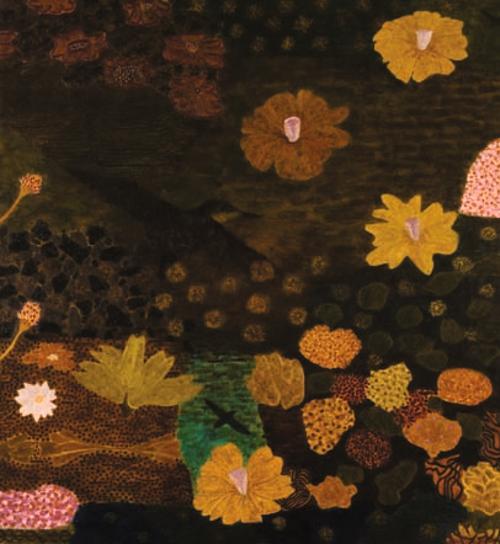
Painting is central, and just as vibrant as could be expected. The vibrating optical paintings of Doreen Reid Nakamarra bring the Kiwirrkura sandhills into three dimensions and some mystical land magic (or paint magic) allows us to walk those hills. Her minimalist zigzag repetitions capture both the shimmering heat and the undulations of her part of the Western Desert landscape.
Walmajarri artist Wakartu Cory Surprise, living in Fitzroy Crossing, won The Western Australian Artist Award of $10,000. She is an artist who has painted the same story/place over and over, confidently distilling the elements and exploding the colours of her childhood water sources in the Great Sandy Desert.
A High Commendation was given to Perth-based Chris Pease whose paintings deal with Nyoongar heritage and identity. Pease’s work combines postcolonial concepts with painterly appeal. In Law of Refraction, Pease reworks a rather creepy drawing (or caricature) of an Aboriginal group encountered by the artist Louis de Sainson, who visited King George Sound in 1826. One of the Minang men has been dressed in European garb and is showing his mirror to the others. Upon this image Pease superimposes a drawing illustrating the physics of light as well as a grid of symbolic roundels, juxtaposing the old and new worlds in a collision that continues today in Australia. Nearby, a minimalist panel employs as paint, balga resin from the native Xanthorrhoea once commonly referred to as blackboy. I dive into the sticky treacle of its reflective surface contemplating all and nothing.
View Larger Image
Ricardo Idagi Baizam Tirig (sharks teeth) 2008, feathers, mussel shell, goa nuts, bamboo, cane and raffia, 86 x 30 x 36 cm, courtesy Vivien Anderson Gallery, Melbourne. Photo: Ricardo Idagi.
Articles in this issue
-
ETW: Exhibitions 2 Watch: December 09 - February 2010

-
Artrave: Artrave

-
Editorial: Editorial

- Feature: Artistic intention, branding and value
- Feature: Artists want catalogues
- Feature: Collaborative Practice
- Feature: Communicating and the law
- Feature: Copyright materials in university teaching
- Feature: Copyright: Copyleft
- Feature: Creative commons: fair to share?
- Feature: Don't look it might bite: censoring the visual arts
-
Feature: Environmental costs of going digital

- Feature: Finding the right balance: print + online
- Feature: Freedom of expression and the mode of detachment
- Feature: From here to everywhere: the evolution of blogging
- Feature: Lean, mean and living dangerously
- Feature: Libraries, creators and Google
- Feature: Lives of the 'settled' artists
- Feature: Measuring the footprint: dead trees vs live text
- Feature: Mix and mash, take it, change it
- Feature: Netting the big and the little fish: monographs and biographies
- Feature: The Ramingining Megaphone
- Feature: Writing in the age of graphomania
- Feature: Zine publishing and the long tail
-
Preview: Acts of transformation: 2010 Adelaide Festival, Adelaide Biennial of Australian Art

-
Review: *some text missing*

-
Review: 4th Fukuoka Asian Art Triennale, Japan

-
Review: BeginningMiddleEnd

-
Review: Fiona Davies: Intangible Collection

-
Review: Floating Life: Contemporary Aboriginal Fibre Art

-
Review: Kathy Temin

-
Review: Kazuyo Sejima + Ryue Nishizawa / SANAA : an architectural intervention

-
Review: Milestones: Ken Orchard 1980-2009

-
Review: Nyukana Baker : Retrospective

-
Review: Shelter: On Kindness

-
Review: Shih Chieh Huang : Cubozoa - L-09

-
Review: Simon Gilby: The Syndicate

-
Review: Tim Burns: From the Garden

-
Review: Western Australian Indigenous Art Awards

-
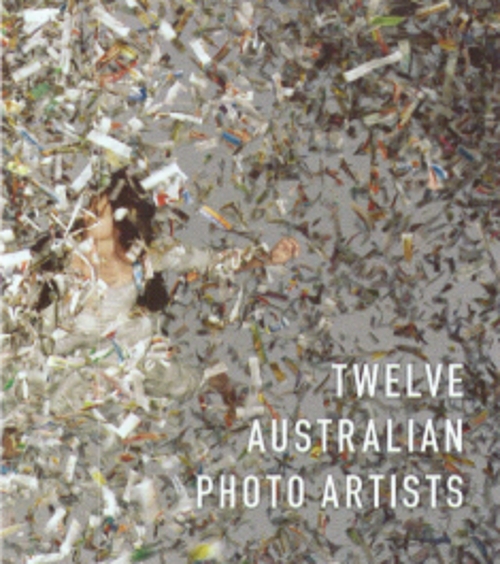
Review book : Twelve Australian Photo Artists by Blair French and Daniel Palmer

-
Review: book: Art in the biotech era Edited by Melentie Pandilovski

-
Review: book: Centre of the Periphery: Three European art historians in Melbourne by Sheridan Palmer

- Review: book: Colour Country: Art from Roper River by Cath Bowdler and My Father, my brother: stories of Campbelltown's Aboriginal Men by Dvora Liberman
- Review: book: Gallery A Sydney 1964-1983 Edited by John Murphy
- Review: book: Hedonism, populism and colonial pictures; The Art of Australia: Volume 1: From Exploration to Federation by John McDonald
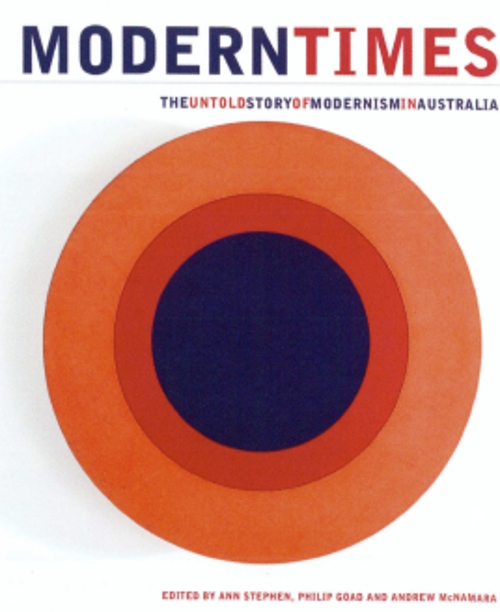
- Review: book: Modern Times: the untold story of Modernism in Australia Edited by Ann Stephen, Philip Goad and Andrew McNamara
- Review: book: Photography Between Poetry and Politics: The Critical Position of the Photographic Medium in Contemporary Art Edited by Hilde Van Gelder and Helen Westgeest
- Review: book: Possession
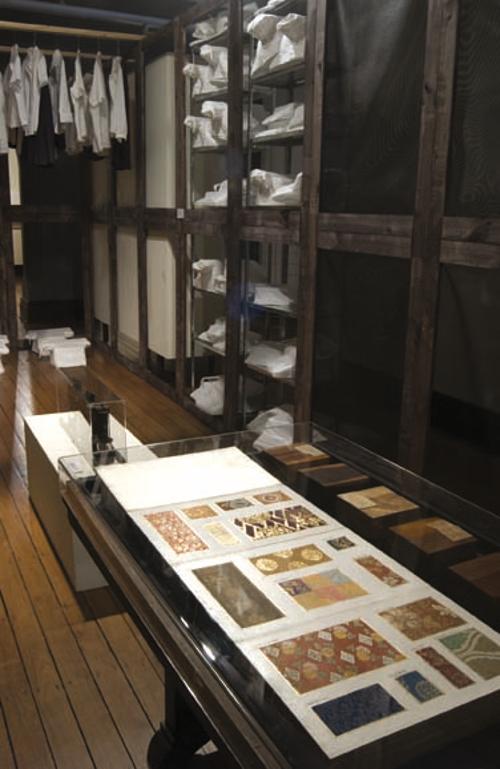
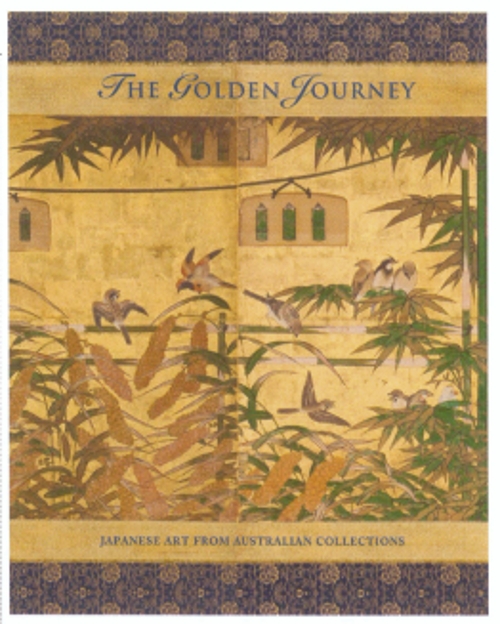
- Review: book: The Golden Journey: Japanese Art from Australian Collections by James Bennett and Amy Reigle Newland
-
Review: book: Wild Design - ecofriendly innovations inspired by nature by Alan Marshall and Back to the City - Strategies for Informal Urban Interventions Edited by Steffen Lehmann