Changing Climates in Arts Publishing
vol 29 no 4, 2009
In a world where newspapers and journals are being replaced by online versions, and traditional copyright is being challenged, many new scenarios present themselves. Artists and publishers are being asked to make choices and address questions that are environmental, technical, aesthetic, legal and financial all at the same time. * carbon emissions from print/online content * should all content be free * effect of re-mix and Creative Commons on creators' rights * search engine uses of arts content * catalogues and zine publishing * art biography as online data bases emerge. Powerful climate change imagery, new work by emerging and established Australian artists, flows through the pages. Plus bonus review section: 17 recent books & catalogues. Based on the Changing Climates in Arts Publishing forums organised by Artlink in Adelaide and Sydney in 2009 More on the forums including programs and vodcast. Discussions of a lively team of experts, writers, artists, copyright lawyers, arts publishers, activists: Zina Kaye, Elliott Bledsoe, Linda Jaivin, Daniel Thomas, Tess Allas, Joanna Mendelssohn, Sean Cubitt, Tamara Winikoff, Andrew Frost, Donald Brook, Lisa Havilah, Djon Mundine, Zoe Rodriguez, Bill Morrow.
- Artists and Authors
- Order this issue (from $12 inc. postage)
Subscribe to Artlink - from $52. Subscriptions available for readers anywhere in the world.
Advertisement:
Kathy Temin
Artist: Ms Elizabeth Gertsakis, reviewKathy Temin
Curators: Jason Smith and Sue Cramer
Heide Museum of Modern Art, Melbourne
1 August - 8 November 2009
Heide's twenty year survey of Kathy Temin’s work is accompanied by an excellent and substantial eighty-two page color catalogue with essays by Jason Smith, Sue Cramer, Naomi Evans and a recent conversation between Kathy Temin and Andrew Renton.
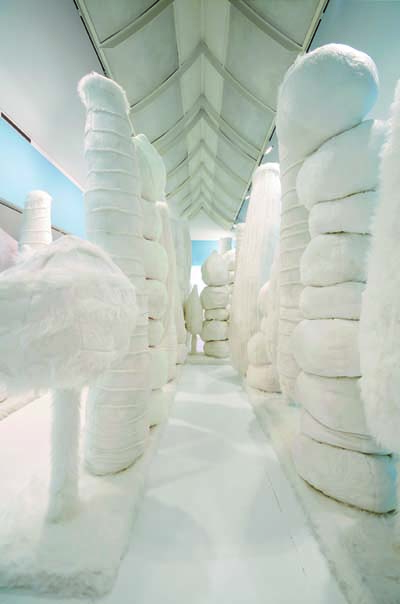
The essays focus on the key subjects of Temin’s practice: the art history and theory in her work; the place of the home/house as a public idea for an object aesthetic and her use of materials normally used for hobby/craft/displays. Cramer examines Temin’s later immersive structures as both witnesses to loss and monuments to the Holocaust.
The transcendent strategy of Temin’s work is comic sentiment. Her signature of the furry, quirky, absurd and absurdly erotic is a playpen and sandpit world of 'making’ that is child-like in reference and essentially demonstrative of the expressive as inseparable from the temporal.
Her objects declare the half-made, half-remembered quotations of pop design and manufacture. They are nostalgic decorative elements partly seen, partly re-created from the embarrassments of private wardrobes, defunct living rooms and toyboxes, of surfaces and textures that might be memories; invitations into both the naivety and adventure of the child’s labyrinth of imagination.
The installations suggest Santa caves or textile storage rooms, stockrooms or window dressings set aside from their intended but now expired moments of display. As a whole they are the efforts of the serious and committed hobbyist who as neither amateur nor valorised art practioner worries about kitsch as either minor or major. Temin’s visuality is the unsafe place of seduction, aversion and revulsion; webs of fibrous attraction whose true purpose is unknown but irrational for both hobbyist and artist. Both ‘makers’ must be rhetorically forgiven for they know not ontologically what they do. They learn who they are becoming in the process of making.
Wall and floor forms unravel metaphorically; strings and cords randomly shape space but are always in danger of being pulled loose or falling down. Temin is the feminist textile artist who will never be a lacemaker, seamstress or creator of the utterly precious object for the wunderkabinet and shadow box. Instead, like Rumpelstiltskin’s female creature that is compelled to keep relentlessly spinning to keep the abject away, Temin ultimately invites the object in to take over both the factory and the studio. At the heart of the fairytale of female manufacture is the active loss of innocence as feigned naivety, the corruption of the dollhouse and the offensiveness of the soft toy which is not overtly malevolent as much as banal and exhausted from the efforts at playing it into being and nothingness (apologies to Jean-Paul Sartre).
White Problem (1992) is a good early example of the flaccidness of this formal and erotic effort - half-erect is half-remembered. Similarly, visiting the horror fields of concentration camps can only ever induce the light touch of both cognition and recognition - understanding and complete stonewalling of any comprehension - a limbo of ceaseless immobility. This invokes the creation of forms which purport to attraction but deny all sense and collapse aesthetic sensibility into conceptual circularity. The pullulating spin is Temin’s labyrinthines, where all objects and surfaces can only speak as blurred embodiments, textures, lines of details, mimicries of pattern (loose, built or vitrined) compulsive and obsessive - like trying to paint cracks in the concrete which you then negotiate without falling.
Temin’s monochrome conversion of white forms into black White Cube: Fur Garden (2007) or Model for My Monument: Black Cube (2009) is like reversing images from negative to positive and back again - both retain sensuous appeal but produce a monolithic muffling, a kind of formalism of inchoate asphyxiation that defers to coyness or the pathos of cuteness as it points to its etymological linguistic origin as a description for ugliness. Overall the exhibition has effectively collected together twenty years of Temin’s Funhouse, which like Pink’s eponymous song, incarnates the comedic on the edge of anxiety.

Articles in this issue
-
ETW: Exhibitions 2 Watch: December 09 - February 2010

-
Artrave: Artrave

-
Editorial: Editorial

- Feature: Artistic intention, branding and value
- Feature: Artists want catalogues
- Feature: Collaborative Practice
- Feature: Communicating and the law
- Feature: Copyright materials in university teaching
- Feature: Copyright: Copyleft
- Feature: Creative commons: fair to share?
- Feature: Don't look it might bite: censoring the visual arts
-
Feature: Environmental costs of going digital

- Feature: Finding the right balance: print + online
- Feature: Freedom of expression and the mode of detachment
- Feature: From here to everywhere: the evolution of blogging
- Feature: Lean, mean and living dangerously
- Feature: Libraries, creators and Google
- Feature: Lives of the 'settled' artists
- Feature: Measuring the footprint: dead trees vs live text
- Feature: Mix and mash, take it, change it
- Feature: Netting the big and the little fish: monographs and biographies
- Feature: The Ramingining Megaphone
- Feature: Writing in the age of graphomania
- Feature: Zine publishing and the long tail
-
Preview: Acts of transformation: 2010 Adelaide Festival, Adelaide Biennial of Australian Art

-
Review: *some text missing*

-
Review: 4th Fukuoka Asian Art Triennale, Japan

-
Review: BeginningMiddleEnd

-
Review: Fiona Davies: Intangible Collection

-
Review: Floating Life: Contemporary Aboriginal Fibre Art

-
Review: Kathy Temin

-
Review: Kazuyo Sejima + Ryue Nishizawa / SANAA : an architectural intervention

-
Review: Milestones: Ken Orchard 1980-2009

-
Review: Nyukana Baker : Retrospective

-
Review: Shelter: On Kindness

-
Review: Shih Chieh Huang : Cubozoa - L-09

-
Review: Simon Gilby: The Syndicate

-
Review: Tim Burns: From the Garden

-
Review: Western Australian Indigenous Art Awards

-
Review book : Twelve Australian Photo Artists by Blair French and Daniel Palmer

-
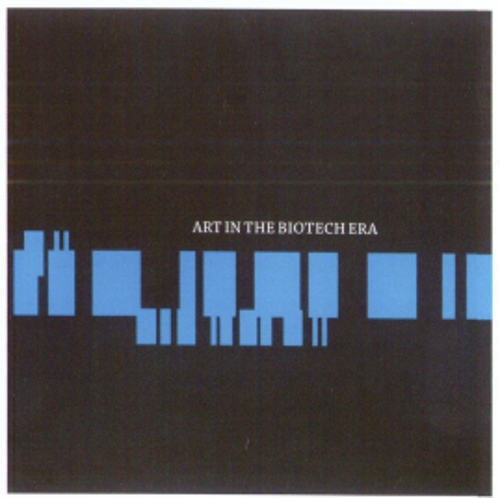
Review: book: Art in the biotech era Edited by Melentie Pandilovski

-
Review: book: Centre of the Periphery: Three European art historians in Melbourne by Sheridan Palmer

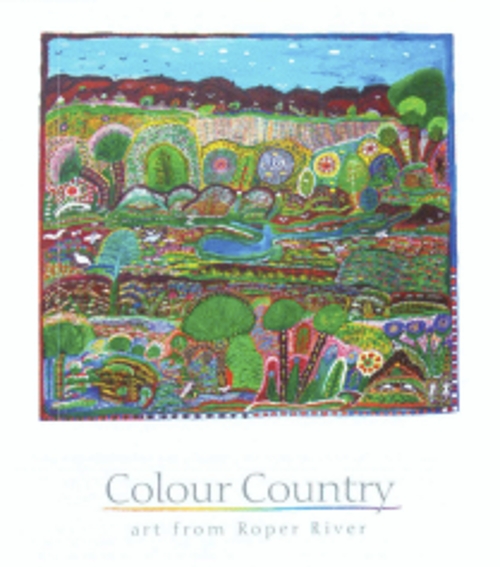
- Review: book: Colour Country: Art from Roper River by Cath Bowdler and My Father, my brother: stories of Campbelltown's Aboriginal Men by Dvora Liberman
- Review: book: Gallery A Sydney 1964-1983 Edited by John Murphy
- Review: book: Hedonism, populism and colonial pictures; The Art of Australia: Volume 1: From Exploration to Federation by John McDonald
- Review: book: Modern Times: the untold story of Modernism in Australia Edited by Ann Stephen, Philip Goad and Andrew McNamara
- Review: book: Photography Between Poetry and Politics: The Critical Position of the Photographic Medium in Contemporary Art Edited by Hilde Van Gelder and Helen Westgeest
- Review: book: Possession
- Review: book: The Golden Journey: Japanese Art from Australian Collections by James Bennett and Amy Reigle Newland
-
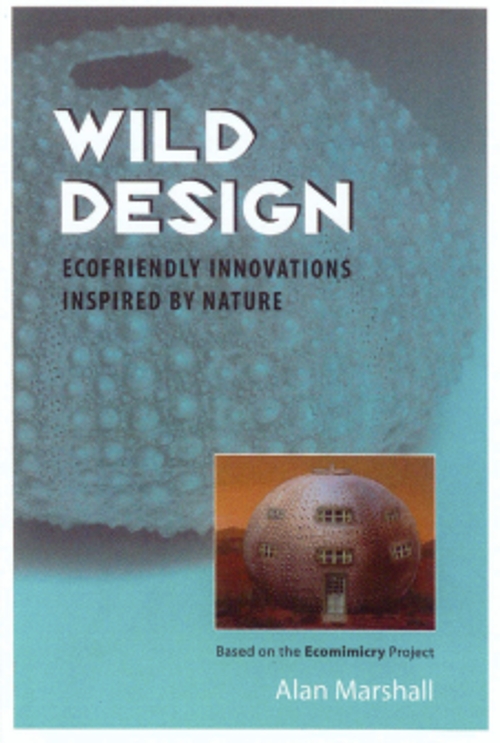
Review: book: Wild Design - ecofriendly innovations inspired by nature by Alan Marshall and Back to the City - Strategies for Informal Urban Interventions Edited by Steffen Lehmann