Changing Climates in Arts Publishing
vol 29 no 4, 2009
In a world where newspapers and journals are being replaced by online versions, and traditional copyright is being challenged, many new scenarios present themselves. Artists and publishers are being asked to make choices and address questions that are environmental, technical, aesthetic, legal and financial all at the same time. * carbon emissions from print/online content * should all content be free * effect of re-mix and Creative Commons on creators' rights * search engine uses of arts content * catalogues and zine publishing * art biography as online data bases emerge. Powerful climate change imagery, new work by emerging and established Australian artists, flows through the pages. Plus bonus review section: 17 recent books & catalogues. Based on the Changing Climates in Arts Publishing forums organised by Artlink in Adelaide and Sydney in 2009 More on the forums including programs and vodcast. Discussions of a lively team of experts, writers, artists, copyright lawyers, arts publishers, activists: Zina Kaye, Elliott Bledsoe, Linda Jaivin, Daniel Thomas, Tess Allas, Joanna Mendelssohn, Sean Cubitt, Tamara Winikoff, Andrew Frost, Donald Brook, Lisa Havilah, Djon Mundine, Zoe Rodriguez, Bill Morrow.
- Artists and Authors
- Order this issue (from $12 inc. postage)
Subscribe to Artlink - from $55. Subscriptions available for readers anywhere in the world.
Floating Life: Contemporary Aboriginal Fibre Art
Author: Mr Timothy Morrell, reviewFloating Life: Contemporary Aboriginal Fibre Art
Curator: Diane Moon
Queensland Art Gallery
1 August - 18 October 2009
View Larger Image
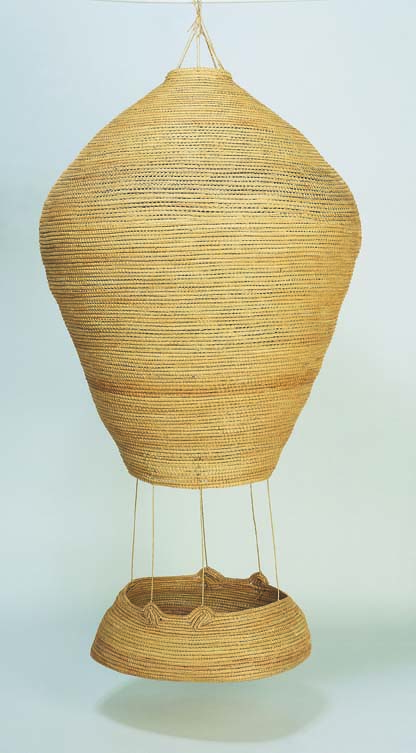
Yvonne Koolmatrie Ngarrindjeri people Hot-air balloon 2006, coil-woven sedge grass and river rushes, 194 x 90cm (diam.). Collection: Queensland Art Gallery.
The distinction between art and craft generally doesn't exist in traditional societies, and this exhibition embraced a surprising range of objects. Diversity was one of the pleasures of the show, but its greatest contribution was demonstrating that many utilitarian and ceremonial objects traditionally used by Aboriginal people are inspiringly beautiful. These artefacts are still being made in parts of Australia, and they are fine contemporary art. Yet museum conventions would classify most of the works as applied art: such things as body ornaments, ceremonial regalia, fish traps, baskets and bags. Some paintings and sculptures thematically linked to them were also on show and works with a conceptual or political basis were shown alongside ornamental and religious objects.
Diane Moon, the curator of the exhibition, is highly qualified to arrange displays of this material that not only recognise its original purpose and meaning, but also appeal to the primarily visual response of viewers in an art gallery. Much of her career has been spent in the Ramingining and Maningrida communities in the Northern Territory and at the Museum of Contemporary Art in Sydney. Since 2003 Moon is Curator of Indigenous Fibre Art at the Queensland Art Gallery which, since 2002, has been a major collection category.
Most of the work in Floating Life was from traditional communities in the north of Australia, principally Arnhem Land. A variety of other locations were also represented, notably the lower Murray River on the opposite side of the country, where Yvonne Koolmatrie weaves traditional yabbie traps and also spectacular sculptures. Many of the weaving techniques have been passed down through generations, but are often being used today in innovative ways. The process by which Mt Isa artist Shirley Macnamara makes spinifex baskets is essentially her own invention. Some of the artists, such as Danie Mellor and Fiona Foley, are part of the urban mainstream of contemporary art.
There were traditional string dilly bags woven by Judy Baypungala in Ramingining as well as non-functional string bags made from metal mesh by Lorraine Connelly-Northey in Melbourne. The delicate pelican down and pink-tinged cockatoo feathers used by Connelly-Northey in contrast with her otherwise harsh materials is a striking continuation of the superb use of this type of fibre in indigenous art. The blue, green, red and orange plumage of Australian parrots is used for making dazzlingly bright ceremonial regalia in the tropical north. The exhibition included headbands, armbands and tassels that not only provided a visual feast, but also a reminder that the traditional colour palette of Aboriginal art extends far beyond the restrained ochre colours that misguided purists expect to see. Feathers are an important component of banumbirr, the decorated poles used in the morning star ceremony in north-eastern Arnhem Land. The largest exhibit and literally the heart of the show was a collection of seventy-five of them. It was the largest group of these elaborate artefacts ever assembled. They formed a long rectangular forest in a corridor-like gallery at the centre of the exhibition. Banumbirr are painted and decorated with rich detail, and often bound with string that corresponds with the long line that is said to pull the morning star back down to earth after its nightly journey across the sky. They are often crested with brilliantly coloured or pure white feathers.
The distinctive, softly rounded then sharply pointed jawun basket from north Queensland was represented in a variety of interpretations. Most of the examples were raw cane. One by Abe Muriata, had an ochre-painted surface, while one was a pencil and crayon drawing by Danie Mellor.
The sheer aesthetic pleasure offered by this exhibition, and the interest generated by its largely unfamiliar content made it easy to overlook what may have been its most important aspect. Floating Life completely erased distinctions between artforms. It has been accepted curatorial practice for decades to acknowledge that the cultural divide between fine and applied art is artificial, but it’s very unusual to see an exhibition like this one, which made it possible to forget that such a division exists.
Subscribe to the Artlink newsletter now
Articles in this issue
-
ETW: Exhibitions 2 Watch: December 09 - February 2010

-
Artrave: Artrave

-
Editorial: Editorial

- Feature: Artistic intention, branding and value
- Feature: Artists want catalogues
- Feature: Collaborative Practice
- Feature: Communicating and the law
- Feature: Copyright materials in university teaching
- Feature: Copyright: Copyleft
- Feature: Creative commons: fair to share?
- Feature: Don't look it might bite: censoring the visual arts
-
Feature: Environmental costs of going digital

- Feature: Finding the right balance: print + online
- Feature: Freedom of expression and the mode of detachment
- Feature: From here to everywhere: the evolution of blogging
- Feature: Lean, mean and living dangerously
- Feature: Libraries, creators and Google
- Feature: Lives of the 'settled' artists
- Feature: Measuring the footprint: dead trees vs live text
- Feature: Mix and mash, take it, change it
- Feature: Netting the big and the little fish: monographs and biographies
- Feature: The Ramingining Megaphone
- Feature: Writing in the age of graphomania
- Feature: Zine publishing and the long tail
-
Preview: Acts of transformation: 2010 Adelaide Festival, Adelaide Biennial of Australian Art

-
Review: *some text missing*

-
Review: 4th Fukuoka Asian Art Triennale, Japan

-
Review: BeginningMiddleEnd

-
Review: Fiona Davies: Intangible Collection

-
Review: Floating Life: Contemporary Aboriginal Fibre Art

-
Review: Kathy Temin

-
Review: Kazuyo Sejima + Ryue Nishizawa / SANAA : an architectural intervention

-
Review: Milestones: Ken Orchard 1980-2009

-
Review: Nyukana Baker : Retrospective

-
Review: Shelter: On Kindness

-
Review: Shih Chieh Huang : Cubozoa - L-09

-
Review: Simon Gilby: The Syndicate

-
Review: Tim Burns: From the Garden

-
Review: Western Australian Indigenous Art Awards

-
Review book : Twelve Australian Photo Artists by Blair French and Daniel Palmer

-
Review: book: Art in the biotech era Edited by Melentie Pandilovski

-
Review: book: Centre of the Periphery: Three European art historians in Melbourne by Sheridan Palmer

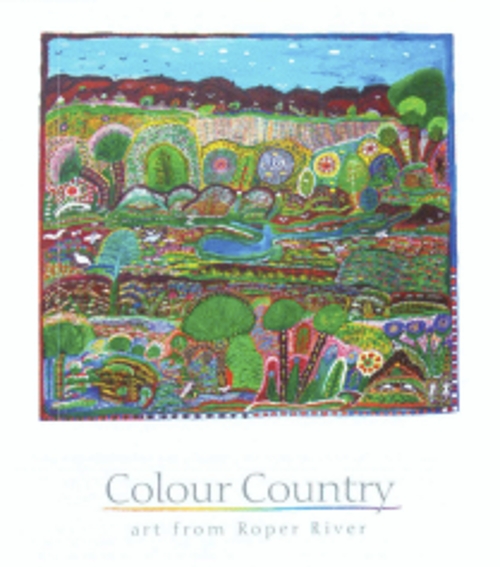
- Review: book: Colour Country: Art from Roper River by Cath Bowdler and My Father, my brother: stories of Campbelltown's Aboriginal Men by Dvora Liberman
- Review: book: Gallery A Sydney 1964-1983 Edited by John Murphy
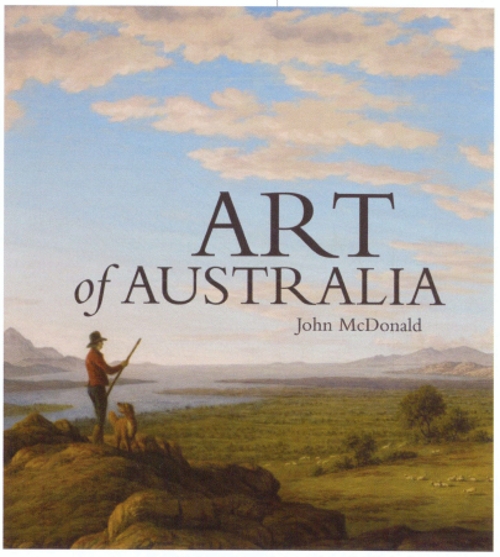
- Review: book: Hedonism, populism and colonial pictures; The Art of Australia: Volume 1: From Exploration to Federation by John McDonald
- Review: book: Modern Times: the untold story of Modernism in Australia Edited by Ann Stephen, Philip Goad and Andrew McNamara
- Review: book: Photography Between Poetry and Politics: The Critical Position of the Photographic Medium in Contemporary Art Edited by Hilde Van Gelder and Helen Westgeest
-
Review: book: Possession

- Review: book: The Golden Journey: Japanese Art from Australian Collections by James Bennett and Amy Reigle Newland
-
Review: book: Wild Design - ecofriendly innovations inspired by nature by Alan Marshall and Back to the City - Strategies for Informal Urban Interventions Edited by Steffen Lehmann