Art Mind Beauty
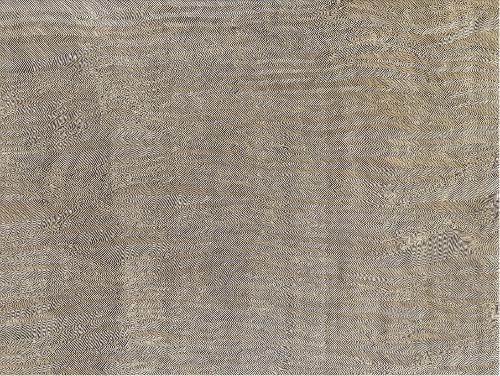
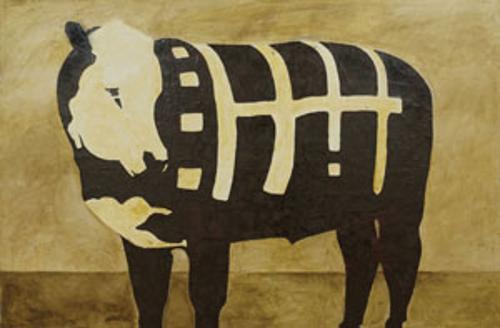
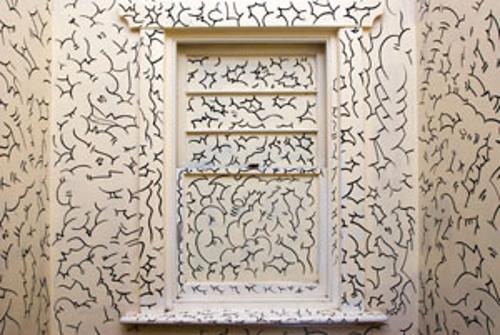
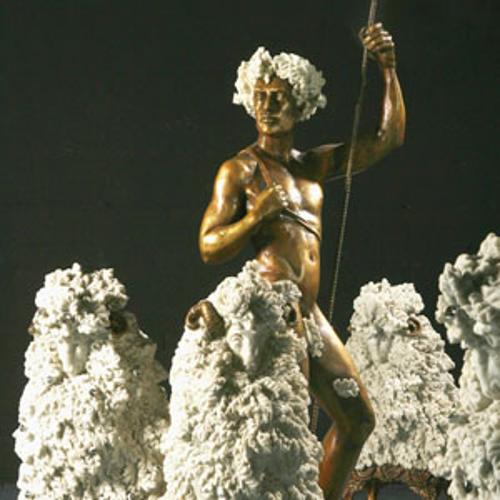
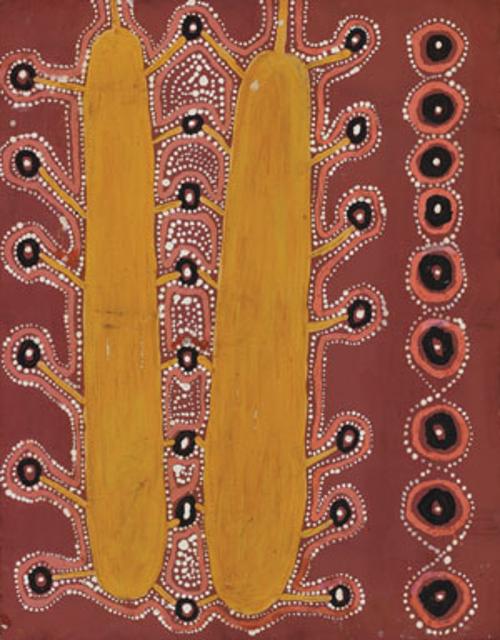
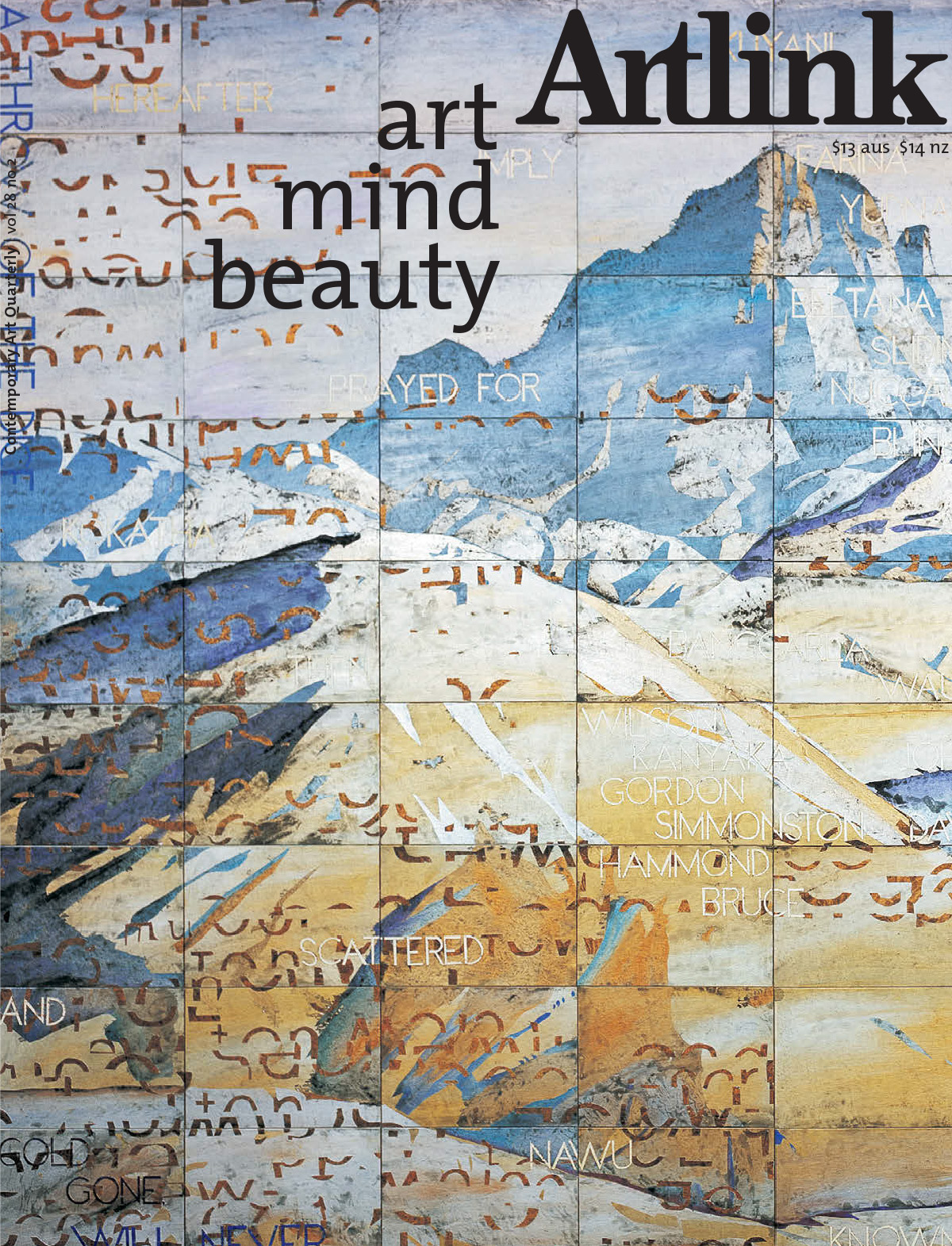
Art/Mind/Beauty tackles one of the questions exercising the minds of philosophers in the age of neuro-science - how does the mind create notions of beauty and why are some artists and audiences drawn to the fragile, the shimmering, the highly decorative and the nature-inspired? Has contemporary art been diminished by the absence of these visual pleasures? Perhaps beauty and a sense of the ineffable have crept back without our noticing. Could this be related to a fear that time is running out for the natural world? Artists who inspired this issue include Imants Tillers, Jon Cattapan, John Mawurndjul, Doreen Reid Nakamarra, Catherine Woo, Stieg Persson, David Keeling and Philip Wolfhagen (painters); Hossein & Angela Valamanesh, Giles Bettison, Kirsten Coelho, Timothy Horn, Ah Xian, Robyn Stacey, Karl Wiebke, Robin Best and Tina Gonsalves (other media). Editor Margot Osborne.
Topic list: craft, design, indigenous culture, theory & philosophy.
Subscribe or Order this issue » (from $14 inc. postage)
Articles in vol 28 no 2, 2008
Australian Beauty
Feature by Margot OsborneBeauty is problematic for contemporary art theory at least in part because it affords a pleasurable, life-affirming, yet ineffable experience. Yet Margot Osborne finds many examples to show that it has never really gone away.
As Peter Schjeldahl observed in 1996: 'Beauty will be what it has always been and, despite everything, is now in furtive and inarticulate ways: an irrepressible, anarchic, healing human response without which life is a mistake.'
Osborne writes: 'Embodiment, the synthesis of sensibility, skill and material form, is at the heart of beauty...The perception of beauty is an integrative sensual and cerebral experience, dissolving dualities of mind/body and repudiating outmoded art form hierarchies.'
—
Gatecrashing the sublime
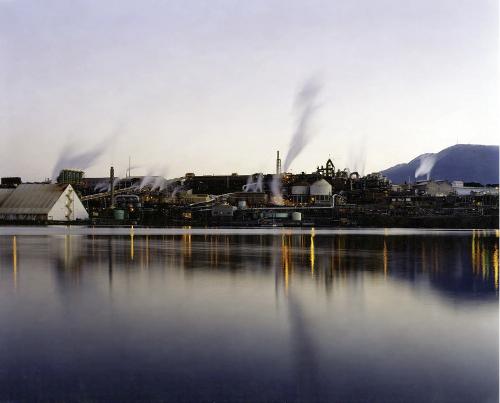
Feature by Peter TimmsIn his youth as a regional gallery director Peter Timms imagined an exhibition called Flat Earth that would show all country artists that where they actually lived was, like anywhere else, able to be transformed into art. This article looks at the different approaches to landscape taken by the work of Tasmanian artists David Keeling, David Stephenson, Philip Wolfhagen and Richard Wastell, and how they 'transcend social, moral or political point-scoring to achieve their own kind of beauty, a clear-eyed, unsentimental appreciation of the environment as it really is, which frankly acknowledges the harm, both physical and conceptual, that has been inflicted upon it.' —
On sunsets
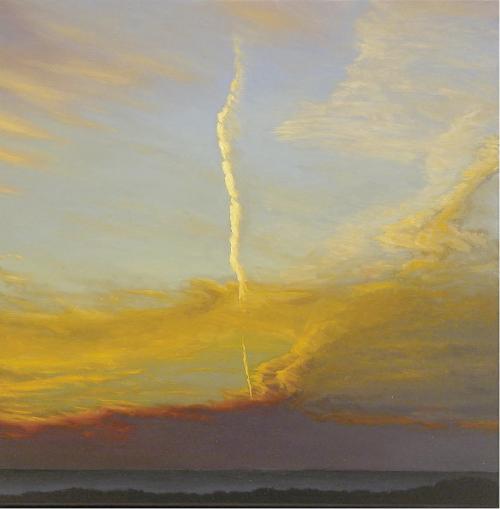
Feature by Ted SnellA voyage across sunsets in recent Australian art from Jim Thalassoudis to Anne Zahalka, Tim Storrier to Philip Hanson.
While at the outset Ted Snell quotes with approval Oscar Wilde's statement that 'nobody of any real culture ever talks nowadays about the beauty of sunsets' he goes on to show the enduring and meaningful presence of the sunset in both paintings and photography.
Thus he demonstrates that art involving repossession and reinvention can, in spite of having to deal with accusations of kitsch, parochialism and provincialism, turn old themes into pure gold, both actual and emotional.
—
Shimmering fields
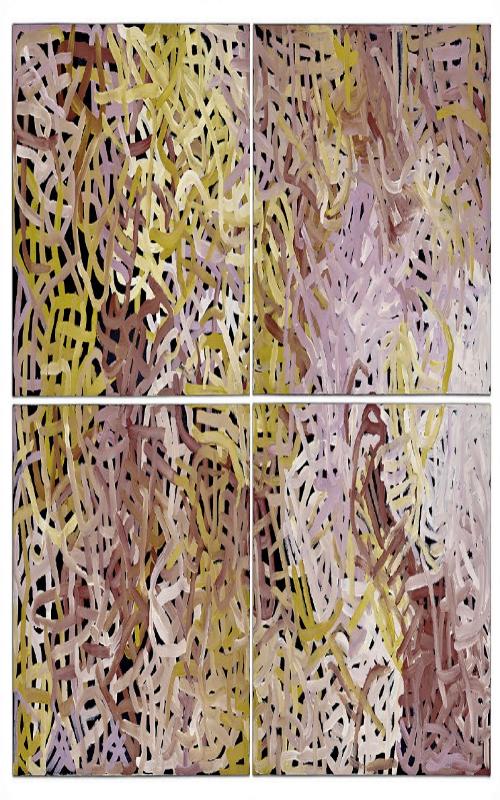
Feature by Cath BowdlerAn essay on Indigenous aesthetics in the paintings of John Mawurndjul and Gulumbu Yunupingu from Arnhem Land, and Doreen Reid Nakamarra form the Central Desert as their work appears in the exhibition Culture Warriors, the first Indigenous Triennial, curated by Brenda Croft and reviewed in Artlink (Vol 27 #4) by Daniel Thomas.
'Their works are site-specific, alive with meaning and essentially metaphysical and religious in conception. For these artists beauty equals power, the power of the creation stories that underpin their art.' —
Some digressions on ornament, abstraction and the stowaway
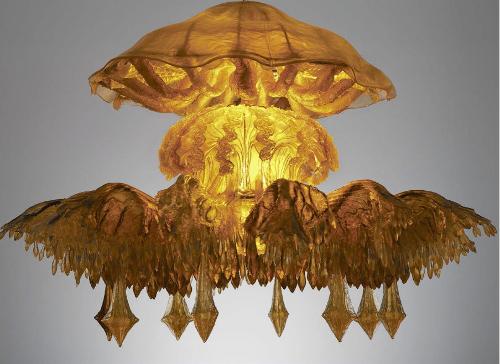
Feature by Wendy WalkerAn erudite elaboration of the concept that a certain amount of ornamentalism in art rather than being the opposite to minimalism is present within it as a secret stowaway. Wendy Walker muses on this topic with particular reference to the 2001 exhibition Ornament and Abstraction at the Fondation Beyeler, Basel, and its curator Markus Bruederlin's premise that ornamentation has played a more integral role in the development of abstract art than has previously been supposed. Walker illustrates her thesis with works by Christian Lock, Stieg Persson and Timothy Horn. —
The romantic spirit
Feature by Jennifer A. McMahonIn 2007 Jennifer A. McMahon, senior lecturer in philosophy at the University of Adelaide, published a book called Aesthetics and material beauty: aesthetics naturalized. (See book review by Michael Newall, this issue of Artlink.)
In the late 1970s McMahon was an art student looking for truth. Her move to philosophy to find truth makes use of Kant's doctrine of aesthetic ideas and argues that our perceptual and cognitive orientation to the world is reaffirmed through finding forms that seem to draw us to them for their own sake. When this occurs it unleashes ideas like immortality, infinity and freedom for which there are no perceptual counterparts. She argues that Beauty may be in the eye of the beholder but what constitutes the eye of the beholder is determined by culture.
—
Tina Gonsalves: Unleashing emotion
Feature by Darren ToftsTina Gonsalves is currently honorary artist in residence at the Wellcome Department of Imaging Neuroscience and visiting artist at the MIT Media Lab in the US. Her recent work is interested in adaptive, rather than expressive approaches to mental and emotional states. Gonsalves situates emotional states as rhizomorphic and emergent.
In her new works, she has given the media art world a new concept, the 'emotional algorithm'.
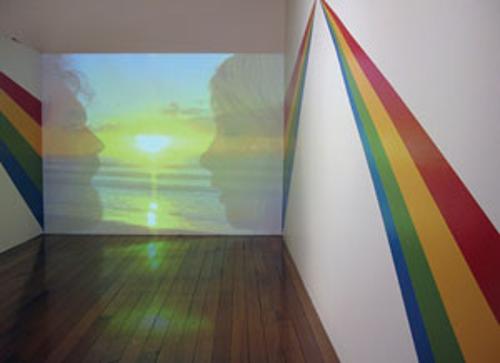
Feel: Chameleon (2007/2008) introduces multiple subjects, both projected images and people, into a panoramic installation. It is a complex exploration of ideas drawn from the emerging discipline of 'social neuroscience' which is interested in the ways in which people connect with the emotional state of others.
—
Truth and beauty entangled
Feature by Sian EdeSian Ede is Arts Director for the Uk branch of the Calouste Gulbenkian Foundation where she initiated an Arts and Science program to encourage artists to engage with new thinking and practice in science and technology. She is editor and co-author of Strange and Charmed: science and the contemporary visual arts (2000) and author of Art and Science (2005).
In this article Sian discusses the entanglement of truth and beauty by referring to John Keat's famous 1820 poem Ode on a Grecian Urn and its statement that ' Beauty is truth, truth beauty, - that is all Ye know on earth and all ye need to know.' and shows how relevant it is today in the fields of both art and science.
—
Ellen Dissanyake: homo aestheticus
Interview by Margot OsborneIn this phone interview conducted by Margot Osborne with North American ethologist Ellen Dissanyake in her home in Seattle her case for a species-centric approach to art is explored through the ideas in her books Homo Aestheticus (1992) and Art and Intimacy (2000).
She states that some form of art as an activity has existed in all societies across all times and is innate in human nature. The core of this innate activity is 'making special', or 'elaboration'. From this species-centric perspective, many recent developments in art are seen by Dissanayake as unfortunate aberrations and a denial of the positive life-enhancing qualities of art.
—
Cobi Cockburn
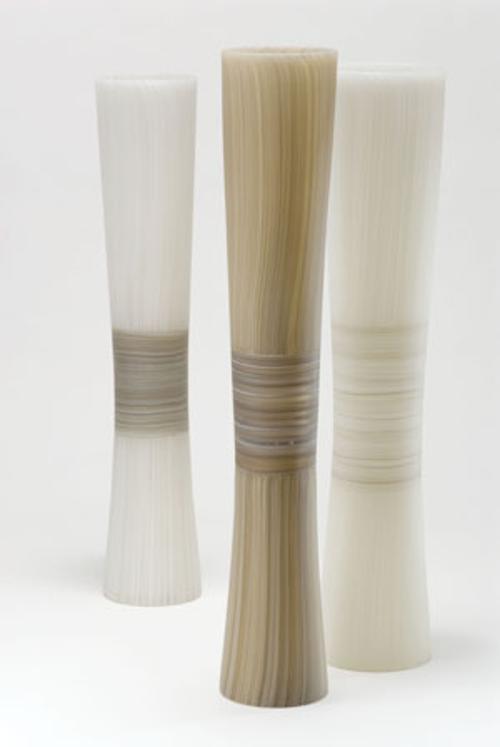
Profile by Karen FinchCobi Cockburn is a glass artist whose work reflects her journey through the world, first in response to the country around Canberra and more recently the Shoalhaven district. It is her personal response to the landscape in which she lives (as opposed to a larger environmental message) which drives her to continue to push herself with a medium not typically used for landscape.
Cockburn's working methods of fusing, slumping, rolling, hot forming and cold working glass demonstrate clear connections from one piece of work to the next. Central to her motivation is the desire to create works of subtlety and grace.
Cockburn's working methods demonstrate clear connections from one piece to the next, yet each piece is a self-contained process in itself. A self-confessed addict of her 'book' (her journal), Cockburn says that when she reviews her collection of journals, she can trace progress and a sense of continuous narrative. But she feels, on the whole, that her work is evolving more as a natural process as she herself develops both as an artist and a person. Each piece has its own essence, or presence, and comes together with others as collections which reflect part of the greater experience. Central to her motivation is the desire to create works of subtlety and grace, pieces that will stand for themselves but not shout at the viewer. —
Karl Wiebke
Profile by Margaret MooreKarl Wiebke has been making art for thirty years. Margaret Moore selectively reviews his oeuvre and concludes that though 'Beauty as an ideal is not a platform for his practice it is a consequence.'
His works are profoundly and atmospherically evocative of mood, weather, or nature like a bed of lichen or a sense of saturation. He has adopted a programmatic approach to his practice, setting schema and working toward attainment. That schema might incorporate an obligation of time, of mark-making, of palette or the allowance for interventions other than by his hand.
—
Robin Best
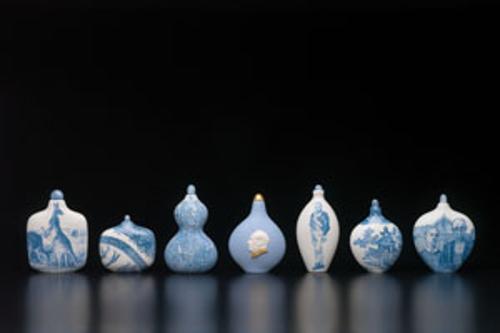
Profile by Stephen BowersRobin Best's ceramics reflect her attention to the importance of location. Her forms are classical, meditative and reflective, and has ranged from marine forms to works decorated by Ernabella artist Nyukuna Baker.
Her most recent body of work undertaken during and after a number of residencies in China reflects the complexity of the cultural, commercial and political history of China. Her snuff bottles are a picture gallery of images related to trade, culture and commerce, while others contain designs taken from each of the countries that blue and white porcelain passed through on its way from China to Europe via India and the Middle East.
—
A new global art history: CIHA 2008 (Congress of the International Committee of the History of Art) 
Review by Caroline Turner —
Annie Hogan: A Survey 
Review by Tim WalshCurator: Frank McBride
Museum of Brisbane
4 April – 6 July 2008
—
Chaos and revelry: Neo-Baroque and camp aesthetics 
Review by Saige WaltonCurator: Edwina Bartlem
18 January – 10 February 2008
Counihan Gallery, Brunswick
—
Chris Pease 
Review by Darren JorgensenGoddard de Fiddes Gallery, Perth
8 February - 5 April 2008
—
Handle me gently: Olga Cironis 
Review by Paola AnselmiOlga Cironis
Turner Galleries, Perth
11 April – 10 May 2008
—
Handle with care 
Review by John NeylonCurator: Felicity Fenner
Art Gallery of South Australia
1 March - 4 May 2008
—
I am a good boy 
Review by Sarah HetheringtonCurator: Elise Routledge
Firstdraft, Sydney
9 – 26 January 2008
—
In response to conversations with a therapist as a narrative device: Martin Smith 
Review by Ben ElthamRyan Renshaw Gallery
April 22 – May 10, 2008
—
Insights and a conversation 
Review by Anne KirkerA brief but notable account of the 2008 CIHA from the perspective of Anne Kirker describing the key speakers and their topical lectures in relation to art history. Kirker further elaborates on her experiences at the CIHA and what she deemed intellectually stimulating and intriguing. Kirker also summarises the general relevance and opportunities the CIHA provides. —
Liminal 
Review by Yvette WattCurator: Colin Langridge
Thomas Bachler, Andrew Dewhurst, Richard Giblett, David Martin, Todd McMillan, Ali Sanderson, Richard Wastell
Carnegie Gallery, Hobart
March 6 – April 13 2008
—
Now that I am a man I can go to war: Angela Lynkushka 
Review by Ulanda BlairMonash Gallery of Art
29 February – 27 April 2008
—
One night only project 
Review by Bec TudorCurators: Kate Kelly and Pip Stafford
Artists: Lindsay Arnold, Braddock, Lisa Campbell-Smith, Lachlan Conn, Moira Corby, Scot Cotterell, Lindsay Cox, Empire, Ghostpatrol, Andrew Harper, Jamin, Kate Kelly, Kirsty Madden, Noble, Michael Prior, Pip Stafford, Andy Vagg. Sound Artists: Chrysalis, Cycle, Global Ethnic, Matt Neidra.
29 March 2008
—
Papunya Painting: out of the desert 
Review by Stephanie RadokCurator: Vivien Johnson
National Museum of Australia
28 November 2007 – 3 February 2008
—
The 32nd congress of the international committee of the history of art (CIHA) 
Review by Stephanie RadokA brief description on the 32nd CIHA and its relevance in relation to art history and practices. —
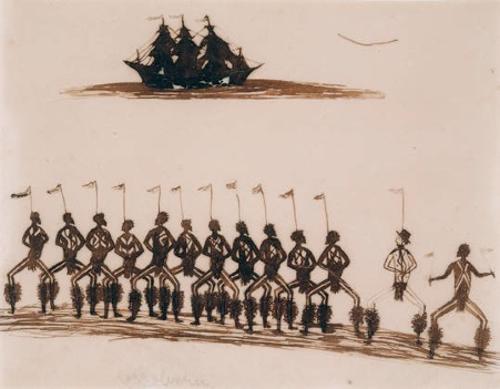
The Ship of fools: recent paintings, Bill Brown 
Review by Grace HughesWilson Street Gallery, Newtown
29 March - 20 April 2008
—
Other articles & reviews
in this issue
- Aesthetics and material beauty: aesthetics naturalized, Jennifer A. McMahon

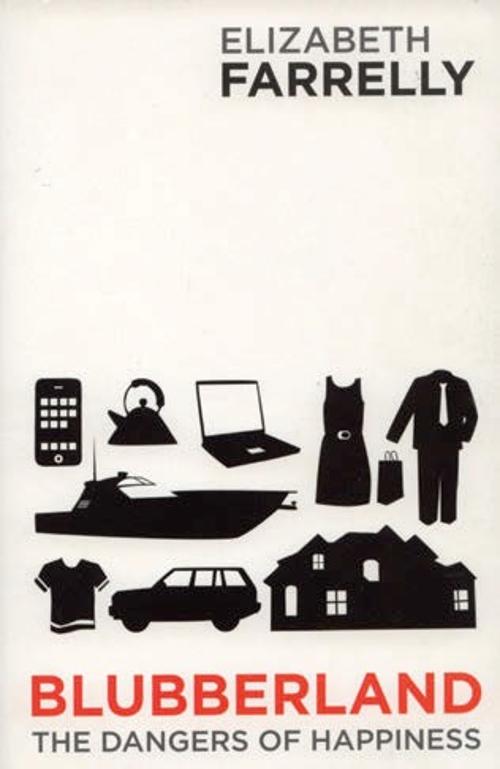
Review book by Michael Newall - Blubberland: the dangers of happiness, Elizabeth Farrelly

Review book by Alan Saunders - Contemporary beauty

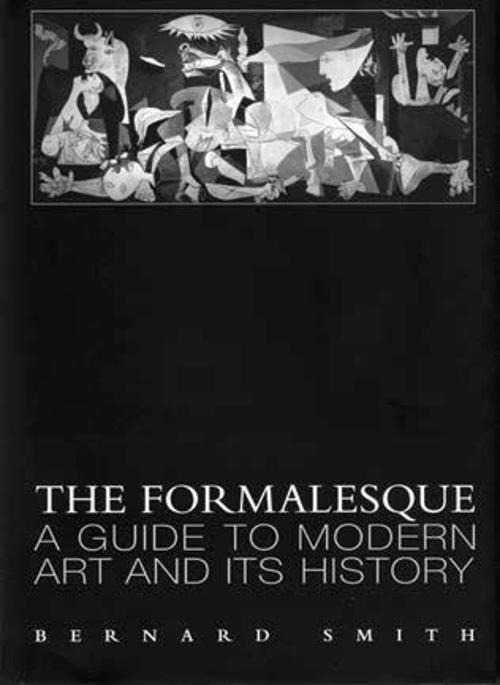
Gallery by Margot Osborne - The Formalesque: a guide to modern art and its history, Bernard Smith

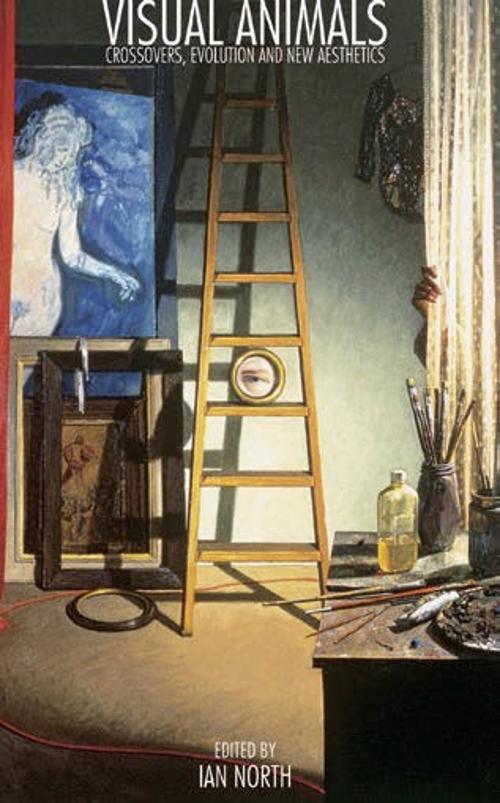
Review book by Ihab Hassan - Visual Animals, Edited by Ian North

Review book by Kevin Murray - Artrave

Artrave by Edblog