Subscribe to Artlink - from $52. Subscriptions available for readers anywhere in the world.
Advertisement:
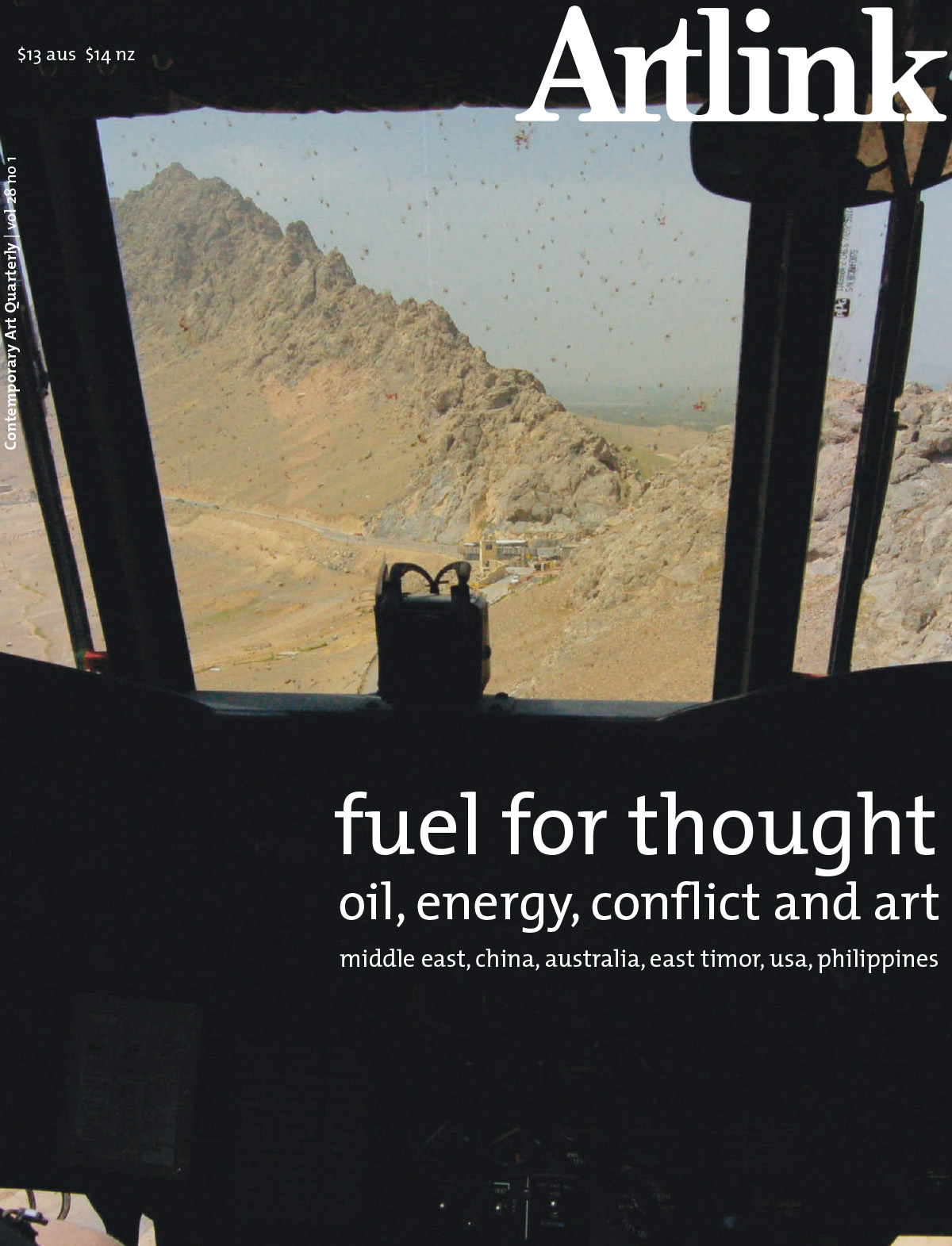
Fuel for Thought: oil, energy, conflict and art
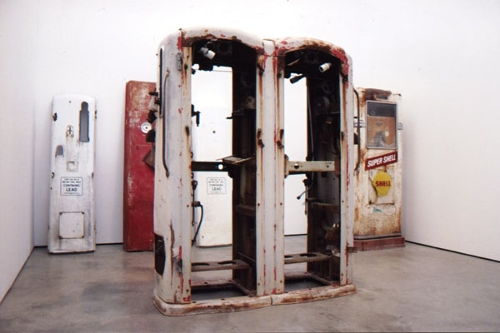
How are artists responding to peak oil, the search for alternative energy sources and conflict over resources? Artlink goes global in search of answers. The issue includes artists who have used alternative energy or whose work reflects the negative effects of an oil-based economy, with some powerful imagery by artists from the Middle East, East Timor, Iraq, the Philippines, Australia, California and Chicago. Burnt out petrol bowsers share the space with artwork which looks forward to a post-oil energy scenario. A video animation by Chinese artist Qiu Anxiong offers a profoundly moving experience on mankind's disastrous love affair with industrialisation. Australian artists include Charles Green and Lyndell Brown as official war artists in Iraq, as well as Alison Clouston, Zina Kaye, Madeleine Kelly, Carmel Wallace, Pamela Kouwenhoven and more. Editor Ian Hamilton.
Topic list: Asia, censorship, community, consumer culture, dissent, environment & ecology, globalism, law & censorship, migration, South East Asia, traditional culture, youth culture.
Articles in Vol 28 no 1
Writing images with words: an inheritance of ambiguous faces
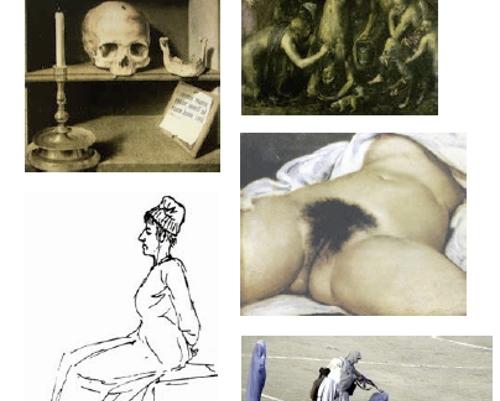
Featue by Bilal KhbeizBeirut-based artist and writer Walid Salek's book of essays, called Jane-Loyse Tissier, deals with stereotyping in art. He is concerned with the way the Third World is often treated as a cliche of constant emergency and crisis and not as a subjective and historical space. His essays reinterpret some canonical works of Western art by artists like Titian, Courbet, Ensor, Giotto and David. His claim is that all pictures and all interpretations are contingent and thus in defending the Third World's right to its own interpretations based on its own values the entire world is being defended. —
A rusty sign at the end of a bloody empire
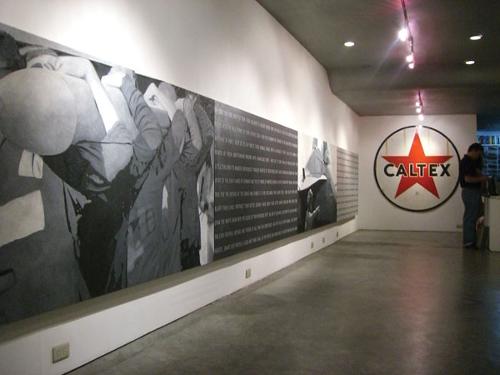
Feature by Lourd de VeraAt Magnet Gallery in Quezon City Filipino artist Norberto Roldan's exhibition Oil goes beyond the local situation and deals with the theme of peak oil as the root of all geopolitical evil, with the United States of America as the primary agent of ill intent. Lourd de Vera vividly describes it as a deliberate exercise in propaganda and sloganeering. Roldan takes a broad historical view and reflects on US policy in the Philippines over time while the rusting Caltex sign embedded in the exhibition asserts a warning: no empire lasts forever. —
Chance encounters: Pamela Kouwenhoven and Peter McKay
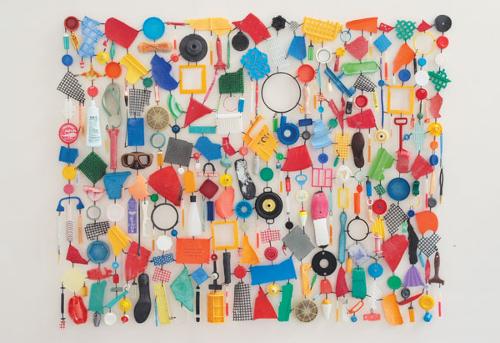
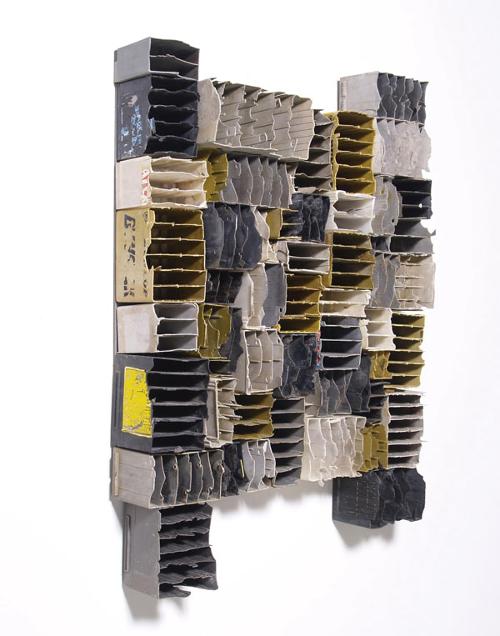
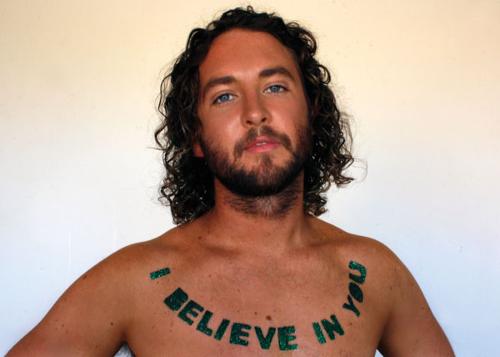
Feature by Melinda RankinTwo South Australian writers work with discarded materials to make strong commentaries on contemporary life. Pamela Kouwenhoven uses old empty plastic car battery cases to make Rosalie Gascoigne-like collages of faded colour and worn histories. Like her signature works using malthoid taken from beneath rainwater tanks, they have a strong environmental agenda, drawing attention to beauty as well as responsibility. Peter McKay makes playful works with serious messages. At night he makes patterns in oil stains on the road with glitter and photographs them. These works collapse the infinite into the accidental as galaxies appear on the ground. —
Conducting Mobility
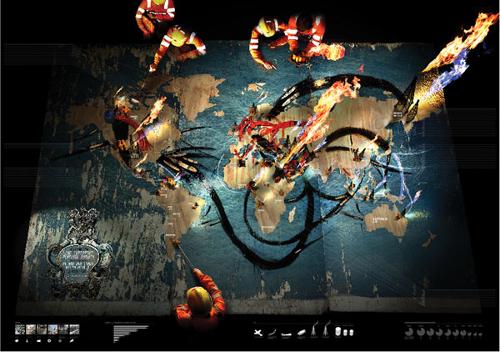
Feature by Claude WilleyArtists thinking and making work about fuel span the globe and delve into a wide range of ramifications. UK-based PLATFORM have done a multi-pronged report called Unraveling the Carbon Web on four oil-producing hot spots, Iraq, Nigeria, Russia and the Caucasus. Chicago-based Laurie Palmer's Notions of Expenditure solicits renderings of exercise equipment and gyms redesigned for the production of electricity. Brian Collier wanders the edges of Illinois highways to locate thriving non-human life forms. kanarinka documented her running of the official evacuation route out of Boston while collaborators Kim Stringfellow, Amy Balkin, Tim Halbur, Pond and Greenaction made an audio guide for a Californian highway drawing its military, residential and agricultural stories together. —
Hyperlexic, desalinated but not scary
Feature by Ann FineganSeparate performance works by The Collective (Alana Hunt, Sylvia Schwenk, Ingrid Dernee, Megan Brewster, Susie Fraser, Anna Williams), Tony Schwensen and Zina Kaye confront the complexity of the interlinked flashpoints of oil, energy, human rights, global warming, rampant flows of predatory capital and the 'war on terror' with notions of resistance and how individuals can act. Schwensen was at Artspace, The Collective in Trajectories of Dissent at Little Fish Gallery and Mori Gallery while Zina Kaye in a Terminus Project at Westfield Bondi Junction broadcast her own comments on the massive LED signs hanging in the atrium of the mall. —
Obscure dimensions of conflict
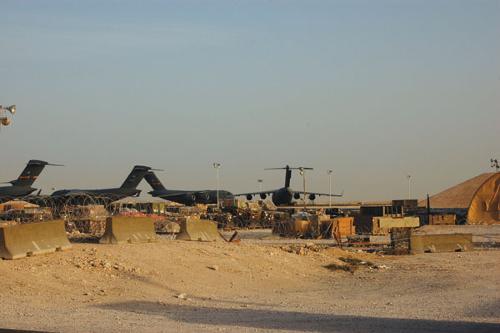
Feature by Warwick HeywoodLyndell Brown and Charles Green travelled in early 2007 for five weeks to the Middle East, Afghanistan and the Persian Gulf as the Australian War Memorial's official war artists. The artists will make a series of oil paintings for the War Memorial from some of the many photos they took as well as developing a series of photos outside the official commission. The photos show an abstracted ruined world, shadows, machinery, stockpiles of weapons behind barbed wire, aircraft, campsites and deserts. The Ziggurat of Ur is evident in two photographs of Iraq and eloquently symbolises the rise and fall of cultures and armies across the land. —
Power and art in East Timor
Feature by Jennifer PhippsRecent art made by East Timorese artists is contrasted with work by Australian war artists Wendy Sharpe and Rick Amor. Artworks made by artists from the Arte Moris Free Art School in Dili are full of passion and deep knowledge of the incongruities of war and the poverty of their lives while the artworks made by Sharpe and Amor seem remote and generalised. —
Rabih MrouƩ and Lina Saneh interview
Feature by Mireille AstoreRabih Mrou and Lina Saneh are Lebanese performance artists. In their work called Who's Afraid of Representation?, currently touring Europe, they describe the work of over fifteen well-known performance artists from Chris Burden and Marina Abramovic to Stelarc and Rudolf Scwharzkogler whose violence occurs within the safe and sanctioned space of the art world. They contrast this symbolic violence with descriptions of violent murders in Beirut. The work draws attention to the way violent deaths in Beirut are as ephemeral as the newspapers they are reported in while the violence practiced by the performance artists becomes history and the artists gain authority. —
The error of our ways: Madeleine Kelly
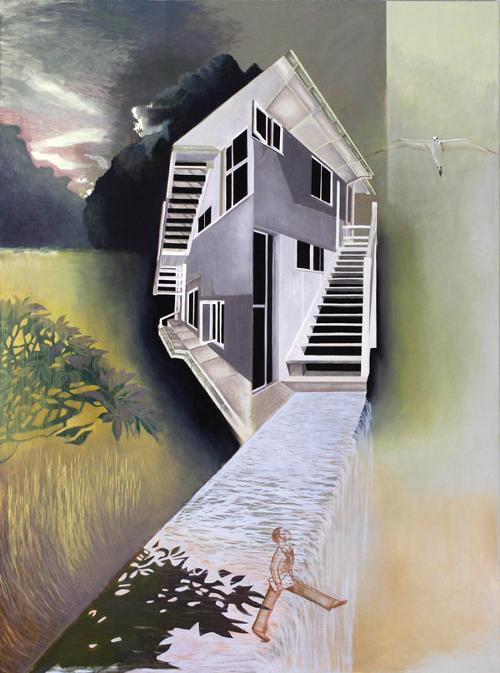
Feature by Timothy MorrellBrisbane-based artist Madeleine Kelly's oil paintings approach big issues through precise depictions of incongruous narratives which draw on both personal and mythological sources. Her comments on global issues like oil and pollution, human folly and its consequences, are framed like dream scenarios that touch us all. Kelly came to Australia from Germany when she was two and the celebrated 19th century German children's story Struwwelpeter written and vividly illustrated by Heinrich Hoffmann echoes in her imaginative paintings of cautionary tales and surreal spaces. —
The revolution will not be televised: the changing landscape of film and video production in the Arab world
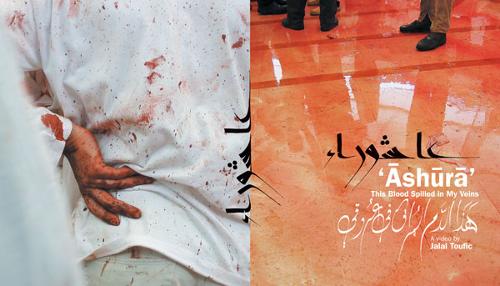
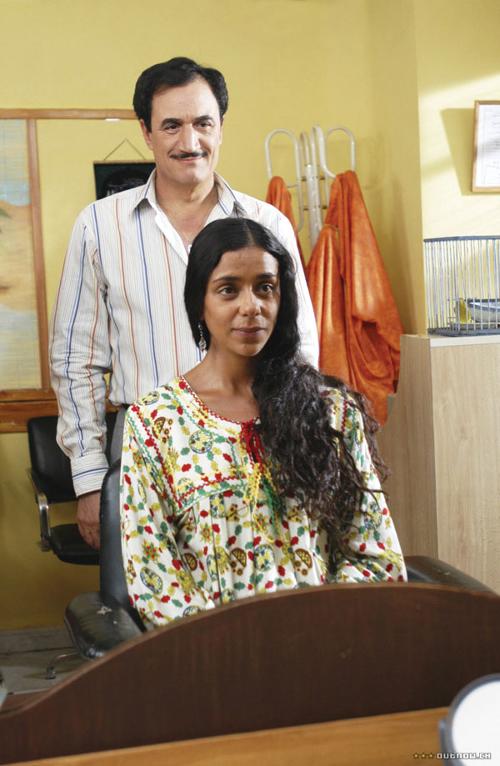
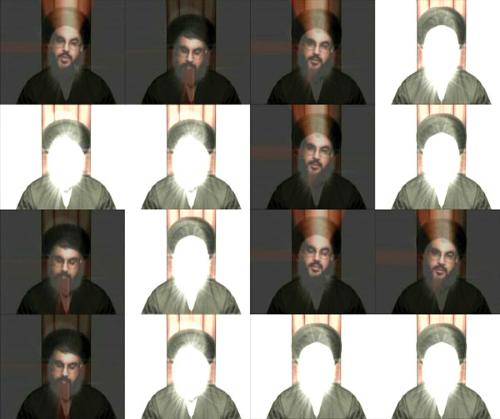
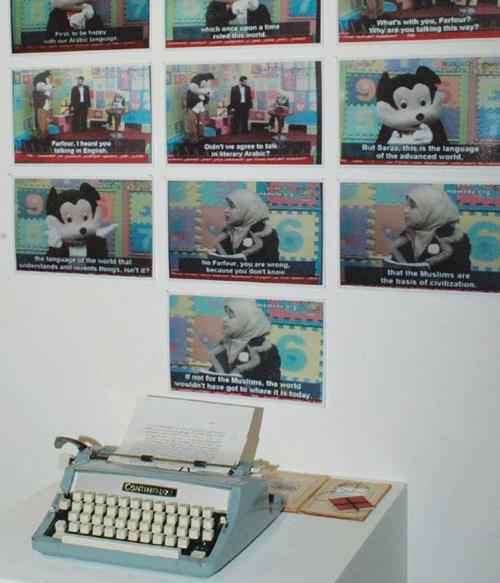
Feature by Rasha SaltiThe situation of Arab cinema today, while it varies from Morocco to Abu Dhabi, is at an interesting turning point due to digital technology and political and economic events. In spite of censorship there are increasingly more film festivals and a burgeoning audience of cinephiles. The 2007 Cinema East Film Festival in New York celebrated independent film production: "At a moment when mainstream news seems helplessly captive to global conflicts, the war on terror and the clash of fundamentalisms, independent cinema has come to be regarded as a substitute for representing people, places and their stories. Filmmakers from the region are the most enchanting human rights activists, the most playful analysts, the most imaginative historians but first and foremost, the most generous and emboldening artists." —
The whistleblower of Discovery Bay
Feature by Juliet PeersCarmel Wallace makes artworks with flotsam and jetsam. They comment on the immense amount of human debris she finds on the shoreline as well as on the scarred ecologies of the sea and the land. She also instigated the Great Southern West Walk project (a NETS Victoria exhibition touring throughout 2008) that brought a diverse range of artists to the chain of beaches, national parks and state forests located to the west of Portland near the Victoria-South Australian border. The project was driven by her need to develop her own knowledge and affinity for the land, to explore how art might contribute to environmental solutions and to explore walking as an all-encompassing method of experiencing the environment. —
The winding way
Feature by Jacqui StockCairns-based artist Tijn Meulendijks considers the plant world as his medium. His exhibition, 'Natura est ars', held at Umbrella Studio in Townsville in 2007, was concentrated around a single plant community gathered while walking in a coastal Melaleuca swamp after fire had affected the environment. —
Watching as the enchanted land meets its end: Qiu Anxiong
Feature by Yuko HasegawaWith traditional Chinese brush painting skills Qiu Anxiong's three screen video animation New Book of Mountains and Seas, Part 1 shows the history of the world from its genesis as a vast sea to cities on the edge of destruction. It shows cycles of animal, bird and human life, oil drums and pipes, trees, mountains, the last ten yeas in China and the Great Wall of China. A modern version of the Shanhai Jing (The Classic of Mountains and Sea) the two thousand year old Chinese fanciful geography, Qiu Anxiong's animations brilliantly use scale to combine drawing with political comments. —
World tree: sounds of a bigger picture. Alison Clouston and Boyd 
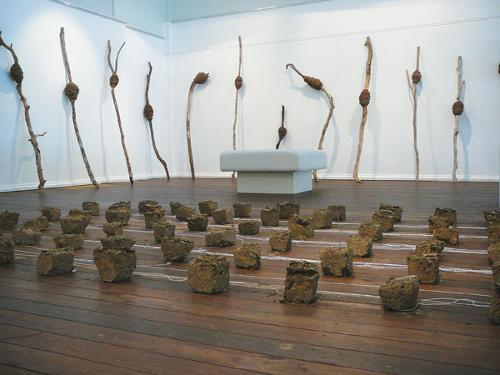
Feature by Clare LewisAlison Clouston and Boyd use sound and sculpture in layered and immersive installations that draw attention to delicate and complex systems in nature and what humans have made of them. 2007 is the first year they have made an artwork with a formal carbon audit and offset. Their recent art-making has caused them to become vegetarian. They believe that "Today we humans need to relinquish this deeply embedded sense that we will be saved by some force beyond us, we alone have to sort out the mess we have made of this planet Earth, our only home." —
Biennale of Sydney 2008: Carolyn Christov-Bakargiev 
Preview by Tracey ClementTracey Clement interviews Carolyn Christov-Bakargiev, curator of the 2008 Biennale of Sydney, and finds out what she thinks about the Stendhal Syndrome, Biennale Syndrome and the politics of language. —
Handling the Adelaide Biennial 
Preview by Stephanie BrittonStephanie Britton interviewed Felicity Fenner, curator of the 2008 Adelaide Biennial of Australian Art, to find out what Handle with Care really means in the twenty-first century. —
Other articles & reviews
in this issue
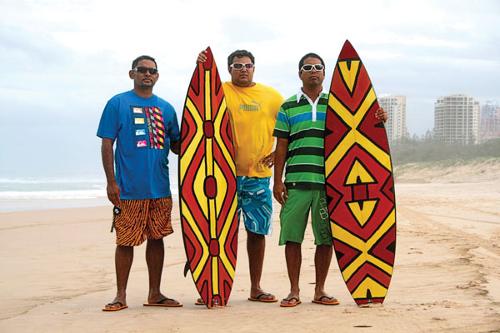
- Artrave

Artrave by Edblog - Economy

Review by Thea Constantino - Fierce or Friendly: Humans in the Animal World

Review by Judith Abell - from time to time one talks to the moon: Aldo Iacobelli

Review by Stephen Loo - Making it Modern The Watercolours of Kenneth McQueen

Review by Pat Hoffie - Migratory Projects: The Drive Out Cinema

Review by Anna Bagshaw - Of

Review by Diana Klaosen - ON' n 'ON

Review by Naomi Gall - Our Lucky Country - (Still Different)

Review by Jo Higgins - Replay: Christian Marclay

Review by Dylan Rainforth - Robert MacPherson, Vernon Ah Kee and Jeremy Hynes

Review by Timothy Morrell - The Road to Here

Review by Hawthorne Lucy - Wonderful World

Review by John Neylon - [the space in between] Book project

Review by Simon Gregg