Adelaide and Beyond
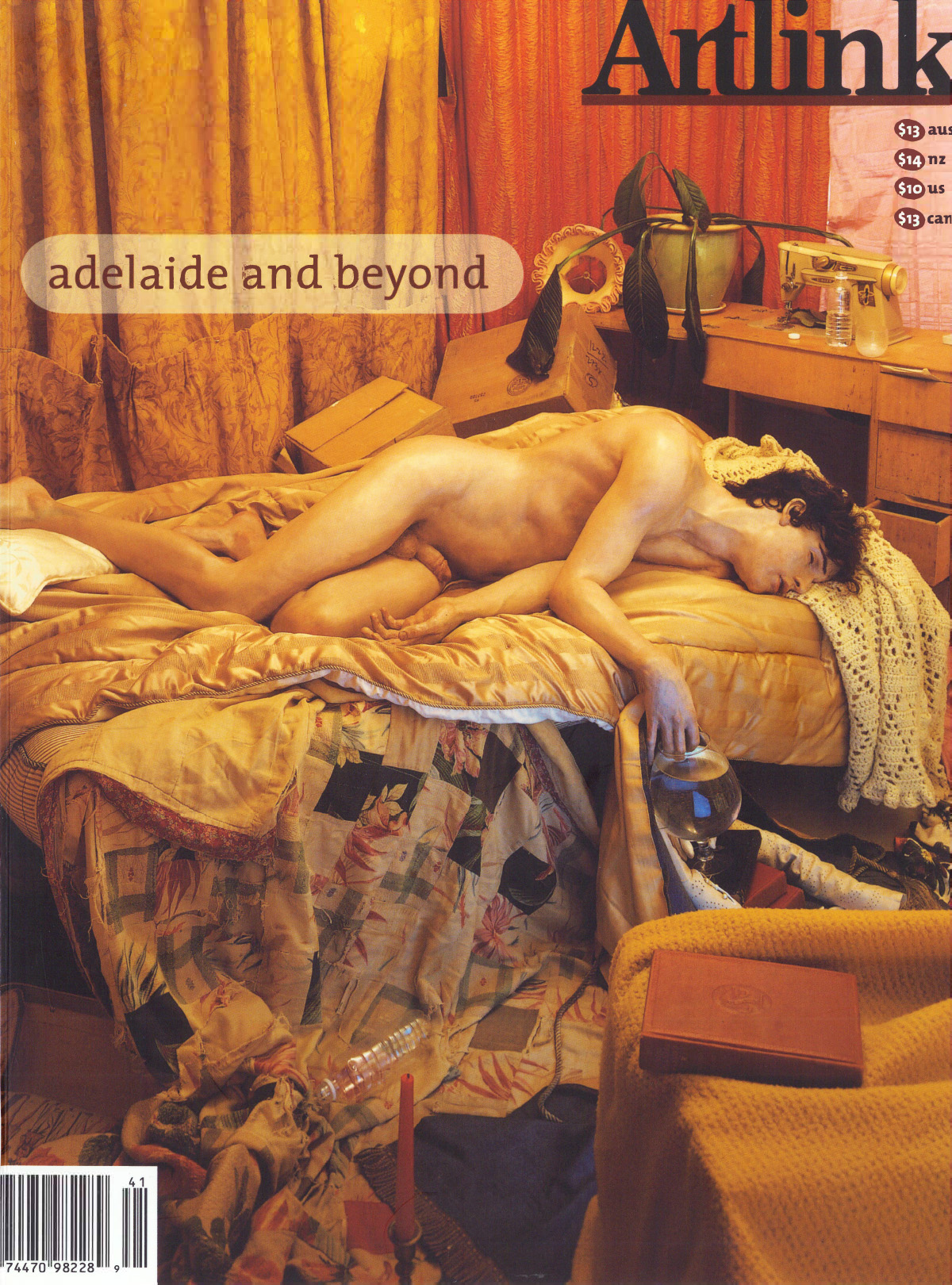
Thinkers, artists, regional arts, art in schools, human rights, biotechnology, environmental art, youg artists in Adelaide. Cover by Kristian Burford. Guest editor Stephanie Radok.

Topic list: cities, craft, education, electronic culture, environment & ecology, indigenous culture, youth culture.
Subscribe or Order this issue » (from $14 inc. postage)
Articles in Vol 24 no 1, 2004
Ara Irititja: Protecting the Past, Accessing the Future - Indigenous Memories in a Digital Age
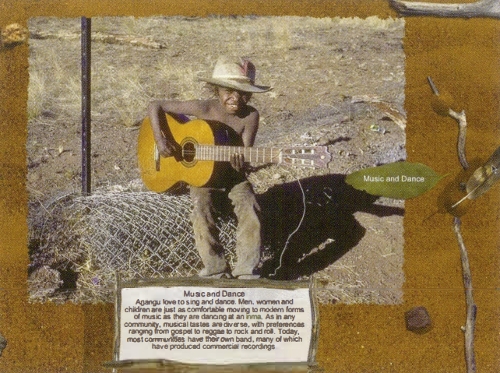
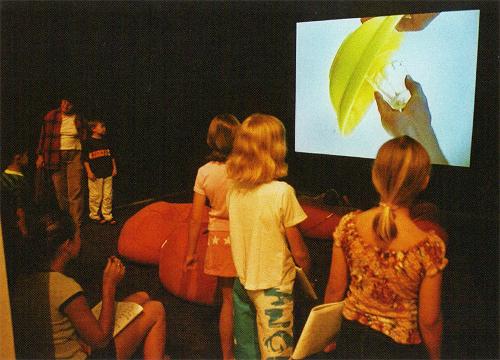
Feature by Chris Nobbs'White fella' technology was once considered a threat to Anangu culture and identity, but when iMacs, data-projectors and printers turned up in Anangu communities, they attracted a great deal of interest and excitement. The above mentioned title was an exhibition that opened at the South Australian Museum in October 2003 and comprised of three remarkable multimedia interactive databases which stand to offer unique opportunities to investigate pitjantjatjara and Yankunytjatjara people's history and culture. —
Beyond Adelaide
Feature by Donald BrookBrook looks at the role of geographic location throughout the ages of art theory and practice. "The metaphor of adverse location prompted some baroque theorising about the metropolis as contrast-partner to the provinces...with the onset of neo-conservatism and the supervenience of economically rational accounts of virtue and of value the idea that art is peculiarly sensitive to location because it is more cultural than clothing and footwear came under challenge...". Addressed in a context that concerns the locality of Adelaide, and beyond. —
Can Culture Save the River and Wetlands?
Feature by Ian HamiltonThis question 'can culture save the river and wetlands' was put to a debating panel at the annual conference of Country Arts SA in October 2003. The river in question was the Murray. This article takes up some of the important issues surrounding environmental degredation and focuses on the SunRise 21 Artists in Industry Project which saw the collaboration of artists and organizations working together to establish a mutual relationship between arts and the environment. —
Community Arts and Artists in the Community
Feature by Margaret EdgecombeThe Parks Arts & Functions Complex is situated in the Parks Community Centre in the Western suburbs of Adelaide, a region made up of many disadvantaged and minority groups. Weekly and fortnightly groups meet to explore different mediums and creative processes, and working without the assistance of a tutor means they rely on each other to develope their skills. The social benefits of these groups are often as important as the creative concerns. The centre invites guest artists to run various workshops to help sustain this interaction amongst members of the community. —
In the Far North-West
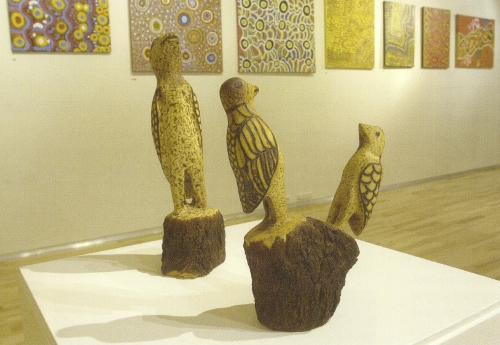
Feature by Colin KochColin Koch is the coordinator of Ku Arts, the artists' representative and development body, a role which requires him to make the journey up into the northern regions of South Australia, land belonging to the Anangu people, once every six weeks. Koch discusses the significance of Ku Arts: some of the hurdles they have had to overcome and the subsequent milestones this regional indigenous arts centre has acheived. —
Isolated Interventions 
Feature by Malcolm MackinnonThis article explores the artistic and economic viability of living and working in South Australia, a state with less than 400,000 people, most of whom reside in the south-eastern corner. "There's enough professional isolation here to remind us that we're living in a world where art is not a self-evident virtue". As a result of living in the geographic margins, artists require considerable ingenuity, flexibility and lateral thinking in order to sustain a viable practice. —
Sacred Food: Elizabeth Nyumi
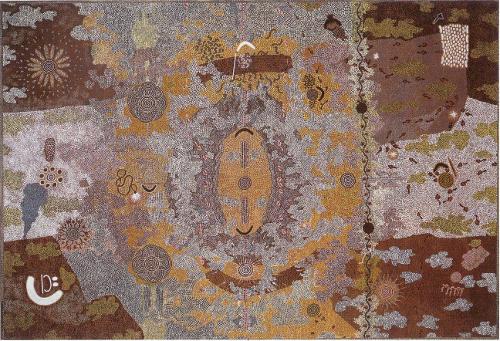
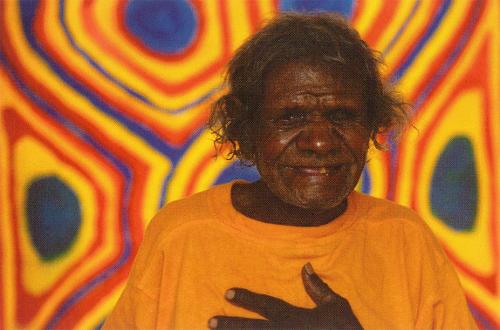
Feature by Philippa O+BrienLike many of the people at Balgo, Elizabeth Nyumi's early life was a nomadic existence with her family group on the Canning Stock Route. Whe her mother died she walked with her father into the old Catholic mission at Balgo. She began painting for Warlayirti Artists in 1988. Recently a very successful painter, she was invited to show at the 2004 Biennale of Sydney. O'Brien examines Nyumi's life and work. —
Signs of the Times: Stephen Page, Sacred Symposium, Adelaide Biennale
Feature by Stephanie RadokStephen Page is the first Artistic Director of the 'Adelaide Festival of Arts' to be indigenous and his program for 2004 includes indigenous works but perhaps not many more than most 'Adelaide Festivals', which have always had a significant indigenous component. Yet there is a sense that the commissions that Page has initiated represent a maturity in approach and development that signifies a watershed for Indigenous culture in Australia. Page expects it to be optimistic, philosophical, constructive, to reflect on the fusion of the old and new without bastardization. —
Stories: Past, Present and Future
Feature by Janet MaughanFranchesca Cubillo, the Artistic and Cultural Director of the National Aboriginal Cultural Institute, has a broad cultural background with Spanish Catholic and Filipino cultural infuences fusing seamlessly with her Aboriginal heritage. Aside from her administrative and managing roles at the institute she is also a painter and photographer. Maughan looks at Cubillo's life and work as it is shaped through an appreciation of the importance of family and community. —
The Dave Inside
Feature by Robert CookAbout the work and fame of Las Vegas based art writer Dave Hickey. Like all icons Dave comes with a portable, pocketable, mythology. A pungent blend of his own statements, press hype, rumour and dubious speculation. —
The Real Thing: Recent Art of Derek Kreckler
Feature by Ian McLean"The twenty-first century, it seems, will not be the age of manifestos. Like advertising campaigns and the design of cars and other consumer items, contemporary art has started to look the same....there is no agenda, no politics, no historical claims". As McLean states, for Derek Kreckler, the point of being an artist today is not how well you resist this condition, but how well you can bend it to your own ends. Kreckler's work is here positioned in a postminimalist rather than a postmodernist framework. —
The Second Experiment: Floating Land 2003
Feature by Kevin WilsonFloating Land 2003 was an event held as part of Noosa Regional Gallery's second major biennial site-specific art project that ended in high drama at 3am on the top of a mountain and one that unexpectedly created a new lobby group. The emphasis for this project was on experimentation both in terms of the art and the notion of what consitutes an event/festival that takes place over a period of time. —
Transfiguring ACMI
Feature by Lisa GyeThe Australian Centre for the Moving Image (ACMI) is now just a little over a year old. Housed in a purpose-built venue at Federation Square in Melbourne , ACMI is home to two multi-format cinemas, a variety of exhibition, education and production zones and the Screen Gallery, the largest of its kind in the world and, arguably, the jewel in ACMI's crown. Gye looks at the recent success of the new Screen Gallery and the future direction of ACMI. —
Virtual Adelaide
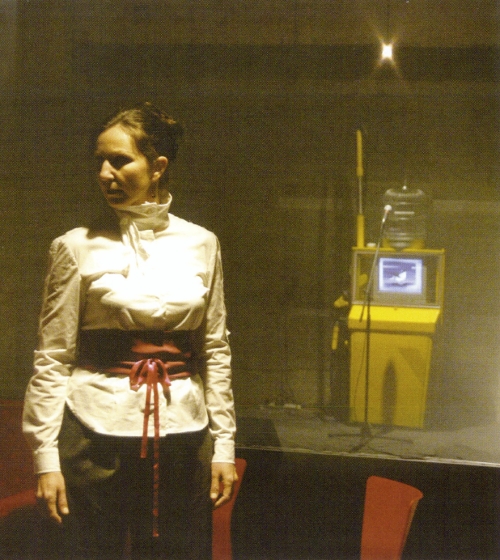
Feature by Heather CroallOne of the leading interactive groups to come out of Britain is the Blast Theory who are making interactive gaming projects, installations and mixed reality projects in various major cities of the world. They were based in Adelaide from January to March 2004 under the South Australian Premier's Thinkers in Residence Program in partnership with various other major Australian art corporations. Through the use of real and virtual city cityscapes there is an overlapping of concepts of time and space, with a focus on ideas of absence and presence amongst players online and those on the streets. —
Wet Culture - Playing With Codes
Feature by Stephanie RadokMelentie Pandilovski, the Director of the Experimental Art Foundation in Adelaide, sees the current manifestation of the word 'experimental' in Experimental Art Foundation as relating to biotechnology, consciousness and the places taken up by artist in scientific places where 'experiments' are the usual tasks at hand. In a move away from dry hard-wired technologies the last five years has seen a rise of wetwork and a new subculture within science as artists find new roles in scientific laboratories and ask fresh moral, ethical and aesthetic questions. —
Young South Australian Art
Feature by James StricklandThis article is about hip young artists working outside the field of contemporary art. "Even if the changes of the last forty years have meant that liking things for being cool and fashionable has generally lost its polemical significance, my sense is that this still may hold some currency with regard to the specific condition of contemporary art in South Australia". Strickland examines the work of South Australian artist Magosia Miow. —
1300 
Review by Philippa KellyThe 2003 Graduating Students Exhibition
ANU School of Art Gallery
5 - 14 December 2003 —
Clifford Possum Tjapaltjarri 
Review by John KeanArt Gallery of South Australia
31 October 2003 - 26 January 2004
Curated by Vivien Johnson —
Clinton Nain: Living Under the Bridge 
Review by Joanna MendelssohnSherman Galleries, Sydney
6 - 28 November 2003 —
Counterbalance 
Review by Sally ButlerGraduating Fine Arts Student Exhibition
Queensland College of Art
Southbank Campus Studios
Brisbane
19 - 22 November 2003 —
Homostrata 
Review by Noel PurdonArtspace, Adelaide Festival Centre
Feast Festival
6 November - December 2003 —
Kurtal 
Review by Maurice O'RiordanNyilpirr Spider Snell
Raft, 3 - 20 December 2003
Fitzroy Fusion, Mangkaja artists
Raft II, Darwin
6 - 20 December 2003 —
Lost and Found 
Review by Pat HoffieQueensland Art Gallery, Brisbane
18 November - 1 February 2004 —
Primavera 2003 
Review by Tracey ClementExhibition of Young Australian Artists
Museum of Contemporary Art
17 September - 30 November 2003 —
Scape 
Review by Briony DownesCAST Gallery, Hobart
8 - 30 November 2003
Curated by Celia Lendis —
The Queensgate Car Park 
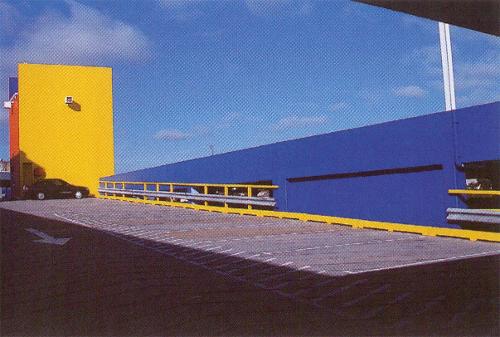
Review by Margaret MooreThe Australian Centre for Concrete Art
Henderson Street, Fremantle
Launched on December 2003 —
This was the Future, the McClelland Sculpture award and Sculpture at RMIT during the Jomantas Years 1961-1987 
Review by Juliette PeersRMIT Gallery, Storey Hall, Melbourne
21 July - 13 September 2003
McClelland Art Gallery, Langwarrin
4 November 2003 - 8 March 2004
Heide Museum of Modern Art, Bulleen
4 October - 7 December 2003 —
To Begin With: Five Tasmanian Artists 
Review by Mary KnightsBett Gallery, North Hobart
28 November - 24 December 2003
Curated by Richard Wasteil —
Visual Arts Program 
Review by Natalie KingMelbourne International Arts Festival
October 2003 —