Place
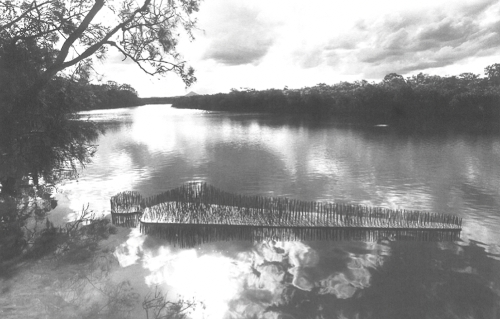
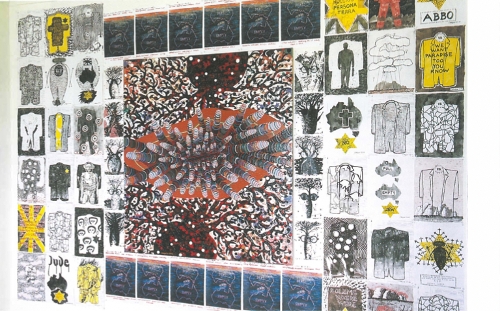
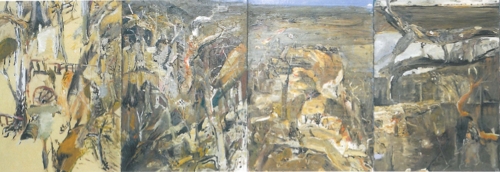
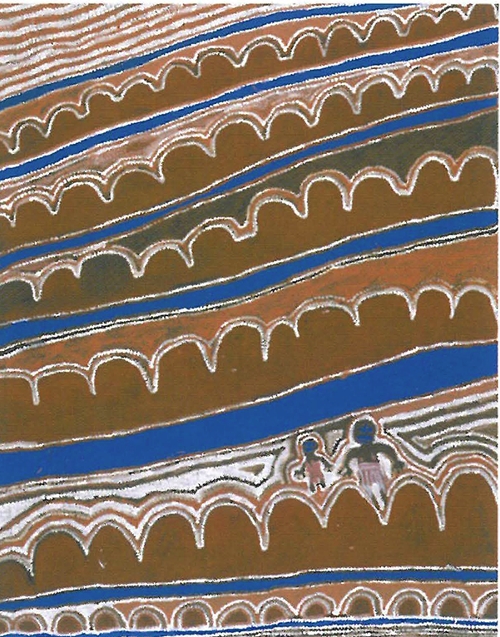
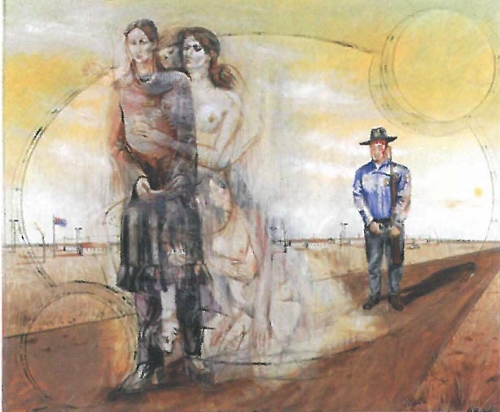
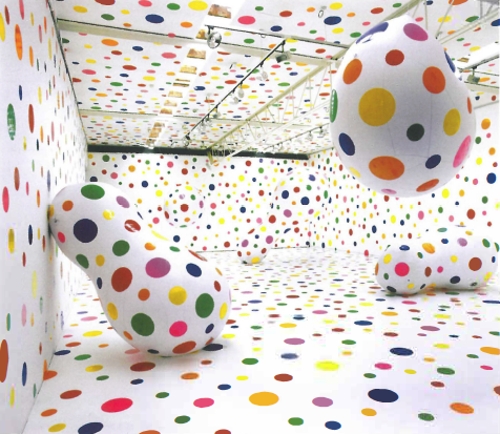
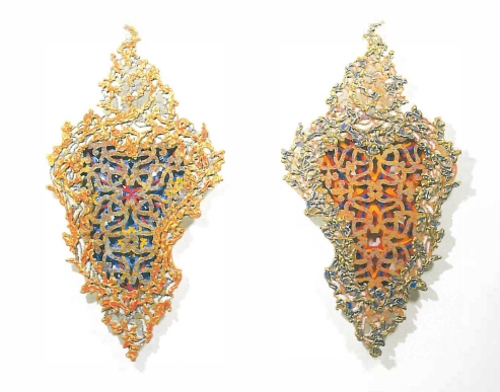
Guest editor Stephanie Radok. In the age of the internet where you live may not be where your community is, but most people still draw their spiritual sustenance from the place they call home. Becoming conscious of this and working with it is a preoccupation of many creators whether they live in cities, remote towns, or in the country. A rich vein of work is explored, in rural Victoria, the Noosa River in Queensland, remote Kellerberin in WA, Adelaide, Bundanon, Canberra, rural and remote South Australia, or Darwin. An assertion of the attachment to Australian places by white settlers, traditionally regarded as longing for Europe or other homelands and lacking an emotional claim to Australia. Urban ecology is contrasted with the controlling nature of most cities. Also 11 pages of images from artists who are deeply involved with their special places and their histories.
Subscribe or Order this issue » (from $14 inc. postage)
Articles in Vol 22 no 2, 2002
Place Works 
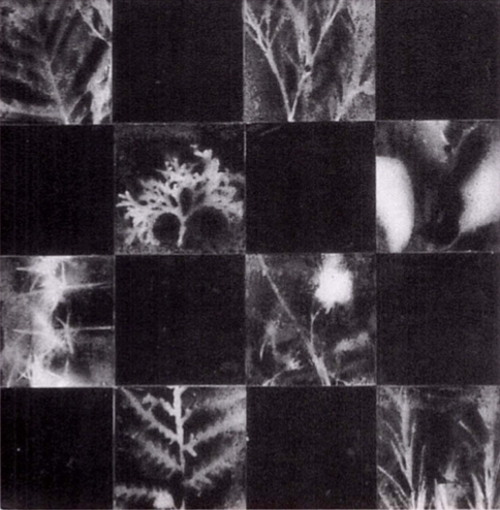
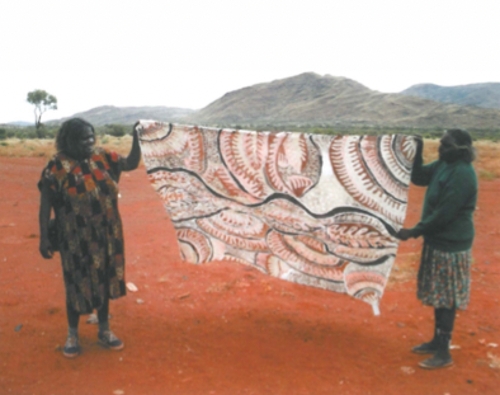
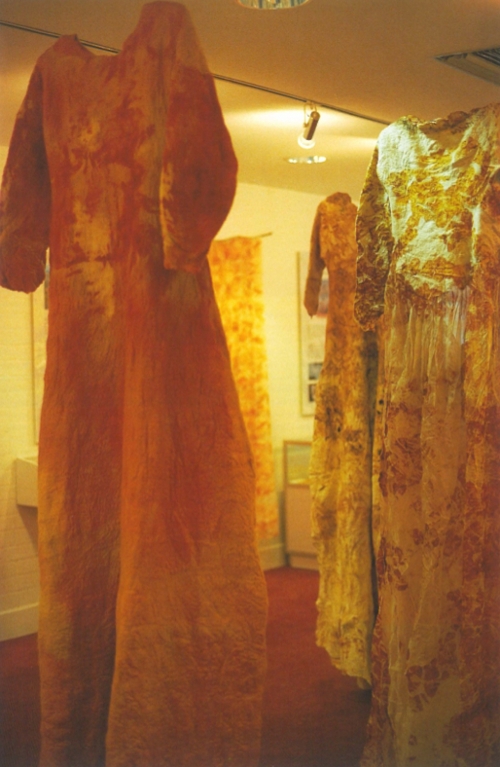
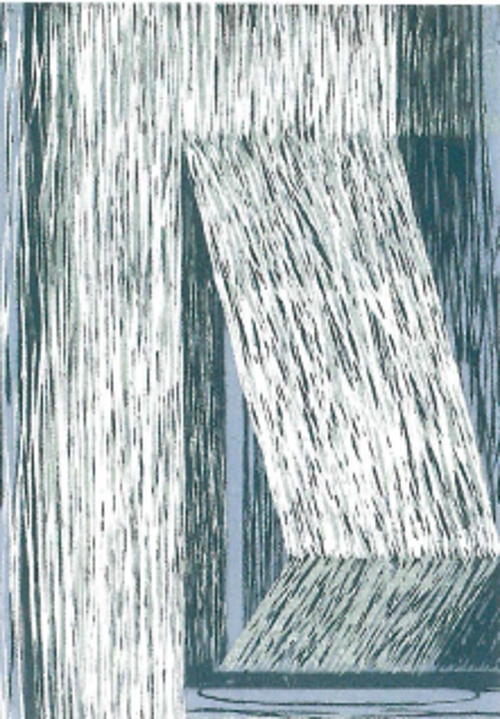
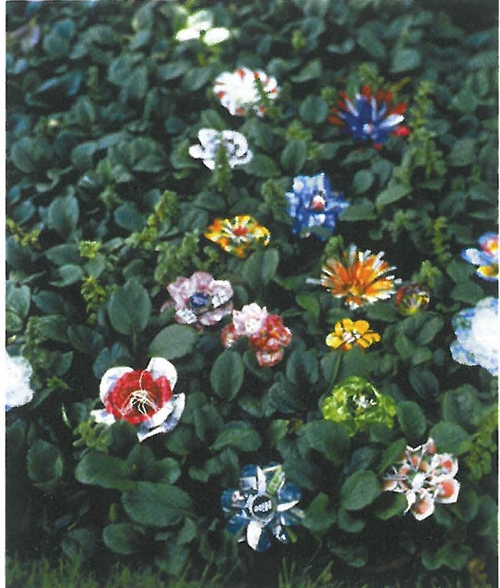
Artist profile by India FlintIndia Flint's textile practice seeks to articulate the cyclical connection between human existence and the patterns of nature. She researches traditional dye practices with old approaches being re-examined to generate more ecologically sustainable methods of production and uses indigenous plant forms and declared noxious weed. As the cloth absorbs colour from materials extracted from the landscape, so it becomes steeped in the landscape itself. —
Place Works 
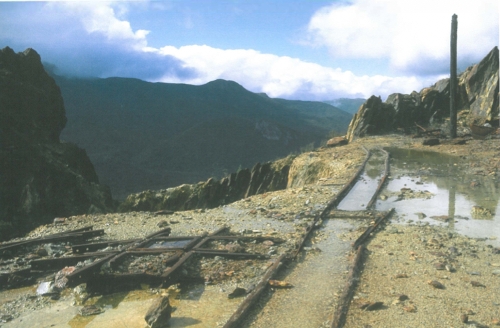
Artist profile by Martin WalchOver the last five years Martin Walch has been working on the Mt Lyell Project as an artist in residence with Copper Mines of Tasmania. The project is ongoing, and now consists of a number of sound recordings, animations in 2D and 3D, stereoscopic pairs in travelling cases, as well as large re-photographic works based on J.W.Beatties' Mt Lyell photographs from 1893-6. —
Place Works 
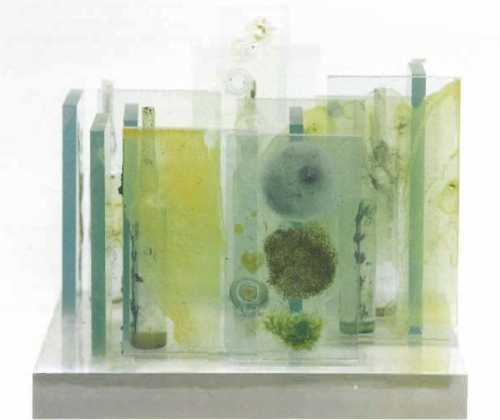
Artist profile by Tim Maslen and Jennifer MehraTim Maslen and Jennifer Mehra are Australians who live and work in the UK and have appropriately developed their body of work based on the experiences of disjunction one feels when removed from their familiar physical environment. Their artificial landscapes act as metaphors for the difficulty humans have in overcoming epistemological delusion and acknowledging the fact that life in the world is a unitary experience. We can see Maslen and Mehra's work as a kind of ritual to help us reconcile ourselves with our origins. —
Place Works 
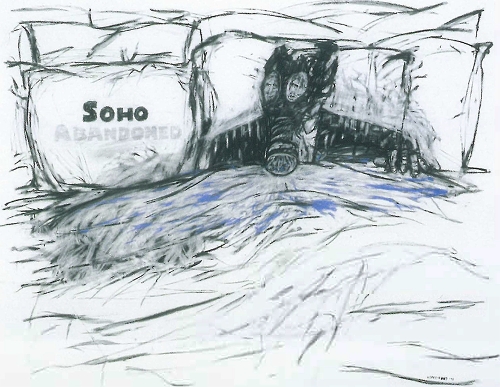
Artist profile by Bette MisfudThe body of work shown as The Living Room (RMIT Gallery 2001) continues Bette Misfud's studies of the emotive and emblematic power of landscape imagery. The Living Room represents, in part, the cultural segregation and physical isolation Misfud experiences in rural life as a second-generation migrant. The land is continually transformed by the marking and scarring of our habitation. Thus both land and identity are in a continual state of flux. —
Place Works 
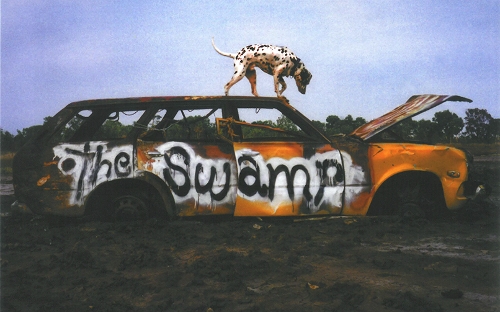
Artist profile by Bronwyn WrightBronwyn Wright's work has closer links to the stealth associated with graffiti artists and the flamboyant play of the theatre than to large scale earthworks. It is based on intimacy with the site, daily visits, observations of seasonal variations and an anonymous interaction of dialogue with a young sub-culture. The ruined cars which adorn the site of 'The Swamp' where Wright works are symbolic mediators between earth and technological man. The car bodies wear away, crumple and disintegrate as the land itself is torn and worn and as our own bodies tire and retire. —
River Systems 
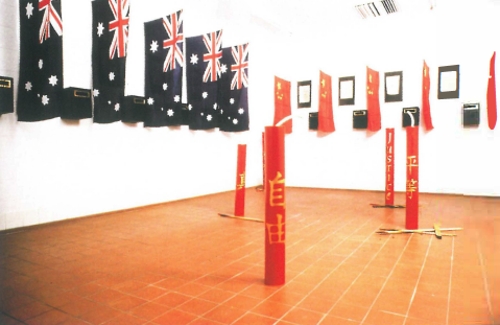
Artist profile by Ian TullyThe work in River Systems responds to the region Ian Tully lives in, the south western Riverina of New South Wales and the surrounding country. The intention of his work is to question the whole notion of sustainability. Tully is continually torn between the design and aesthetics of industry, and the fragility, beauty and sensitivity of our diminishing natural systems. —
Traces of a Shared Memory 
Artist profile by Julie BlyfieldJulie Blyfield's recent work explores her family history and her own sense of place and identity through the objects that have been handed down to her from her grandparents. Her grandmothers embroidery was a specific reference point for this work, as she metaphorically 'unpicked' her designs and reinvented them through her own medium. —
A Contested Place: Film and Land
Feature by Adele HannThe importance of place depends on what it means to us, what we make of it and our understanding of how it shapes us. In 2001 in the Australian film industry there was an avalanche of films, both documentaries and features, addressing issues surrounding place in the context of the relationship between black and white Australians. Six features which Hann values for their portrayal of this relationship are One Night the Moon, Rabbit Proof Fence, The Tracker, Beneath Clouds, Kabbarli-A Film About Daisy Bates and Australian Rules. —
Border Zones: An Eye on the World from Sydney
Feature by Chris ChapmanAccording to Chapman, the contemporary understanding of a globalised world is the result of the understanding that we all share a finite physical realm: this planet. The world is no longer understood purely in terms of geographic boundaries, but cultural ones. This article looks at some of the utopian values imparted upon some of the major cities in the western world and discusses concepts of globalism and localism as they contribute to a new perception of the world around us. —
Canberra/Brasilia: A Tale of Two Cities
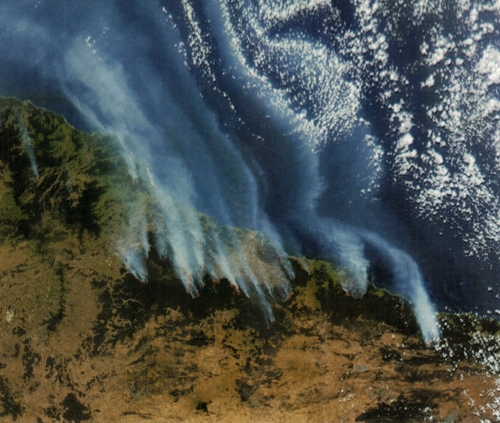
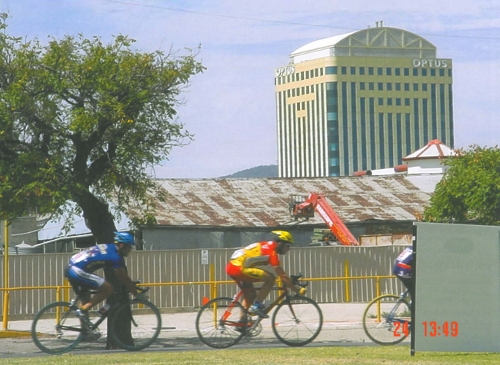
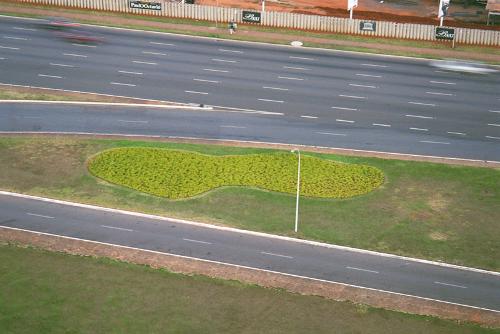
Feature by Jane BarneyCanberra and Brasilia are two places which were originally isolated pieces of land in the countryside and which, through the imagination of town planners, have come to exist as two capital cities representing the variety of these two nations. Barney discusses the processes which took place in order for these two cities to be developed and the similarities in place between them. This article also looks at the photographic works of Marta Penner from Brasilia and Shane Breynard from Canberra who sought to reach beyond the facades to reveal other sides of the two cities.
—
Days in Boyd Country
Feature by Simeon KronenbergWhen Arthur Boyd gifted his large Bundanon property to the nation in 1993, he imagined the creation of a place that would become a 'living arts centre' - a site where artists of all persuasions would come to find refreshment and renewed inspiration in the landscape. The Bundanon Artists Centre is housed in former farm buildings and has hosted writers, visual artists, musicians, choreographers and film-makers. Among the most celebrated are J.M. Coetzee, South African novelist, Peter Mumme, environmental composer and Dorothy Porter, Australian poet. Kronenberg also discusses the work of artist John R. Walker who was invited to participate as a senior-artist-in-residence in 2000. —
Float or Sink: A New Direction for Art in Regional Australia 
Feature by Kevin WilsonWhen it comes to the interpretation of place, whether it be through the language of art, economy or social relations, we are always doing so through a culturally constructed lens and at a culturally constructed moment in time. The way we represent the land affects how we use the land and our land use in terms affects the way we represent it. Wilson looks at art that is made outside the context of the art gallery or computer screen and the ongoing categorisation and separation of institutionalised art from public art. The Artists Working in Nature movement and The Floating Land project are here used in reference. —
International Artists Space Kellerberrin Australia: WA Wheatbelt Artzone
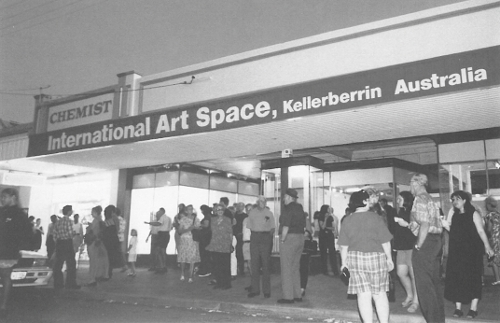
Feature by Marco MarconTwo hours drive from Perth is the small regional town of Kellerberrin. With a population of nine hundred people and appearing just like many other municipalities in the region, the incongruity of this town lies in the presence of the grandly named International Art Space Kellerberrin Australia (IASKA), a gallery and residency centre for international contemporary artists. IASKA was established in 1998, developing from a collaboration between two wheatbelt farmers, Tony York and Donna Dransfield, and two art professionals from Perth, artist Rodney Glick and Marco Marcon. The intention behind this double displacement is to offer both artist and communities a kind of shock treatment that will force them out of their respective comfort zones and encourage the development of new ways of approaching both art practice and notions of local identity. Visiting artists have included Salvatore Falci and Cathy Barber. —
Living the Lie (of the land)
Feature by Juliette PeersDue to the concentric nature of its revelations the exhibition The Lie of the Land deserved particular consideration in terms of the resonances that placement, grounding and the physical experience of the Australian landscape and environment can have on the issue of current art practice. Curator Carmen Grostal felt a personal and philosophical urgency behind the idea for the exhibition, with the title of the show responding to Paul Carter's text of the same name and was used as a way to enter into dialogue with the ideas raised in it. —
Making Place in an Urban Sense
Feature by Paul DowntonOur sense of who and where we are is continually mediated by images of the wilderness and the outback, but the real home of our species is the city. Downton is an architect determined to work through processes of ecology and community and is excited by the challenges of the city. He here examines the connections between humans and nature within the domain of a civic built environment. —
Material Difference
Feature by Lisa ChandlerChandler looks at the practice of Paul Johnson and Elizabeth Frith Poole, two artists who both live in the same regional area, but convey contrasting views concerning the significance of place. For Frith Poole, time spent investigating her immediate environment has led to a more profound understanding of it, while Johnson utilises materials that are claimed as belonging to specific sites or cultures to confront assumptions concerning landscape and identity. —
Places Not Forgotten: In Rural South Australia 
Feature by Malcolm McKinnonThe Flinders Ranges in South Australia where Malcolm McKinnon lives is a place of diminishing population, sparse landscapes and resilient social memory. It's a place that reveals itself only over time, as the stories, names and explanations for particular places and people become gradually apparent. It's a place where most of the people of the land carry memories and maps of special places around in their heads. McKinnon's aim in writing this article is to use these places and the claims attached to them by many non-indigenous people to show that they are just as legitimate as those of indigenous people. —
Postcards from Victoria: Fertility from the Air
Feature by Paul HoltonTo celebrate the Centenary of Federation, Regional Arts Victoria undertook a series of art projects across Victoria. '...such fertile ground...' unfolded in two stages during the years 1999-2000, involved twelve different locations, fourteen different artists and produced some stunning images which reflected unique aspects of the places which inspired them. Participation was open to anyone going through the local affiliate Arts Council and a local artist would be appointed the task of creating an image. Artists included Maxine Salvatore, Mark Selkrip, Jenny Munday, Ken Raff and Anton Vardy. —
Spirit and Place Revisited
Feature by Ross Mellick and Nick WaterlowSpirit + Place, Art in Australia 1861 to 1996, an exhibition curated by Nick Waterlow and Ross Mellick at the Museum of Contemporary Art in 1996 in Sydney, is widely referred to as a landmark exhibition. The exhibition placed Indigenous Australian Art together with non-Indigenous Australian Art, as well as making honorary Australian artists of Joseph Beuys, Marina Abramovic, Christo and others. The exhibition encompassed ideas that were linked to issues involving the environment, ethnicity and human pain and pleasure, with relevance both locally and beyond these shores. —
Terror Australis: Fear and Loathing in Open Spaces
Feature by Andy MarshallWhen European explorers first discovered Australia, it was generally referred to as 'Terra Australia Incognita' (literally translated as Unknown Southern Land). Marshall looks at the physical terrain of this equally beautiful and dramatic region of the world via a selection of prolific Australian films which give shocking portrayals of our lifestyle here in the 'lucky country'. 'Terror' based films such as Dead Calm, Razorback, The Cars that ate Paris and Kiss or Kill. —
Tjukurpa Wangapai - Story-Telling Place
Feature by Margaret WorthIn 1998 Margaret Worth was invited by a small group of Pitjantjatjara women to visit the Tjilbruke Gateway installation at Warriparinga on the banks of the Sturt River in Adelaide. Months later Worth visited the women to talk about making a place like the Tjilbruke Gateway. This article looks at Worth's role in helping to develop a built site which would signify as much as its natural environment did. In the process she learnt what was important to know about the land and developed her own understanding of place. —
Neil Roberts: A Gentle and Special Man 
Obituary by Grace Cochrane20 November 1954 – 21 March 2002. —
Australian Paper Art Awards 2001 
Review by Ken OrchardArtspace, Adelaide Festival Centre, Adelaide
December 2001 - February 9, 2002
—
ConVerge: Where Art Meets Science 
Review by Belinda Hoare2002 Adelaide Biennial of Australian Art
Art Gallery of South Australia
1 March – 28 April 2002
—
Glasshouse: Janet Laurence 
Review by Kiersten FishburnSherman Galleries Hargrave
22 March – 13 April 2002
—
Life and Death 
Review by Gregory LeongCleveland House Stables Gallery
Cleveland, Tasmania
31 March – 28 April 2002
—
Notes from 2045: Meredith Rowe 
Review by Juliette PeersWestspace
Melbourne
14 - 31 March 2002
—
Pattern as Subject 
Review by Philip WatkinsContemporary Art Services Tasmania
Hobart
7 - 24 March 2002
—
Perth International Arts Festival 2002 
Review by Dorothy EricksonVarious venues
February 2002
—
Spirit Country: Contemporary Australian Aboriginal Art from the Gantner Myer Collection 
Review by Timothy Morrell19 April – 16 June 2002
Brisbane City Gallery
—
The First Decade: Mark Howlett Foundation 
Review by Margaret Way1 December 2001 – 17 March 2002
Art Gallery of Western Australia
—
Woomera: Juan Davila 
Review by Robert NelsonKalli Rolfe Contemporary Art at
Fortyfivedownstairs Gallery
Melbourne
March 26 – 10 April 2002
—
Other articles & reviews
in this issue
- Vis.Arts.Online

Vis.arts.online by Megan Jones - Artrave

Artrave by Edblog