.jpg)
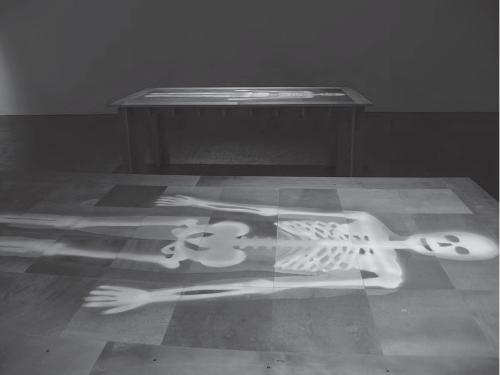
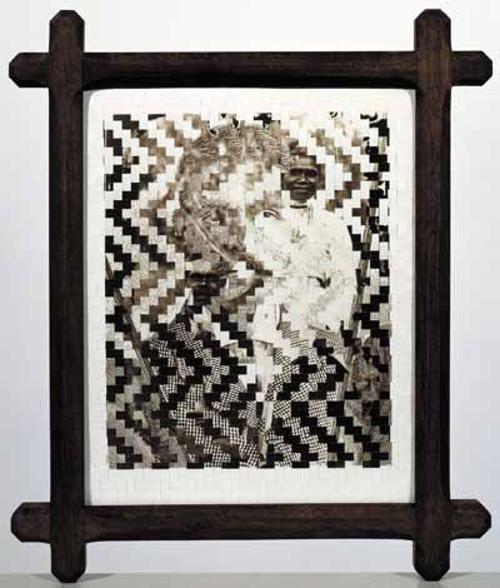
In guest-editing this issue of Artlink, I have not been interested in unearthing the work of 'Australia's hottest young underground artists’. In time, they will unearth themselves, and they don’t need my help. What I do want to talk about, and what some of the writers in this issue of Artlink tackle, are more literal under-ground phenomena: guerrilla gardening, mining and indigenous land claims, the digging of holes as a form of art, and ruminations on rubbish-filled ponds beneath city expressways. In other words, I’m interested in the underground as a relationship with (and under) the ground itself.
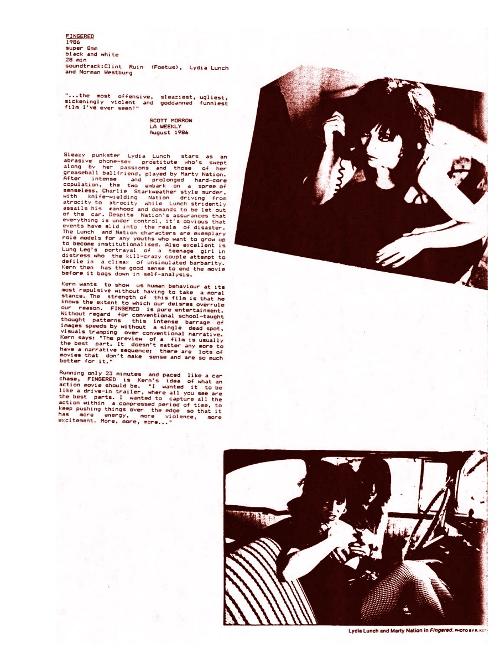
A further theme within this edition is printing and publishing. A trio of essays (by Jessie Lymn, Caren Florance and Vanessa Berry) explores the writing, printing, and archiving of underground publications. A strong D.I.Y. ethic infuses these contributions, and this is complemented by the inclusion of Shane McGrath’s interview with the creators of the recently published almanac of Australian ratbaggery, 'How to Make Trouble and Influence People'.
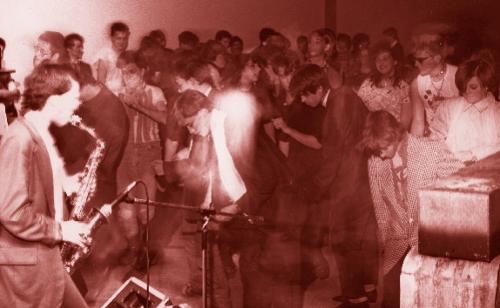
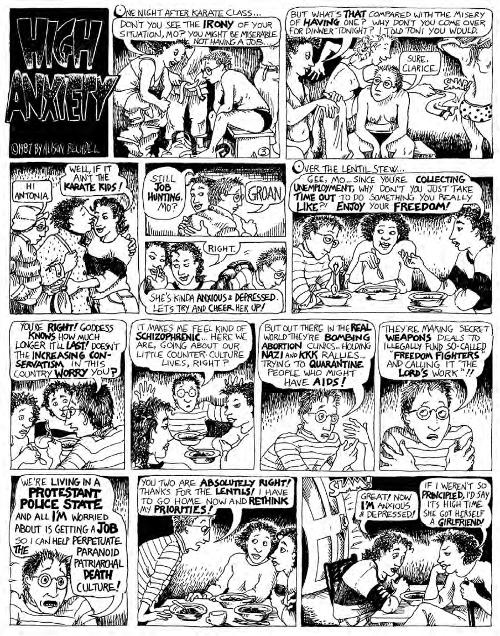
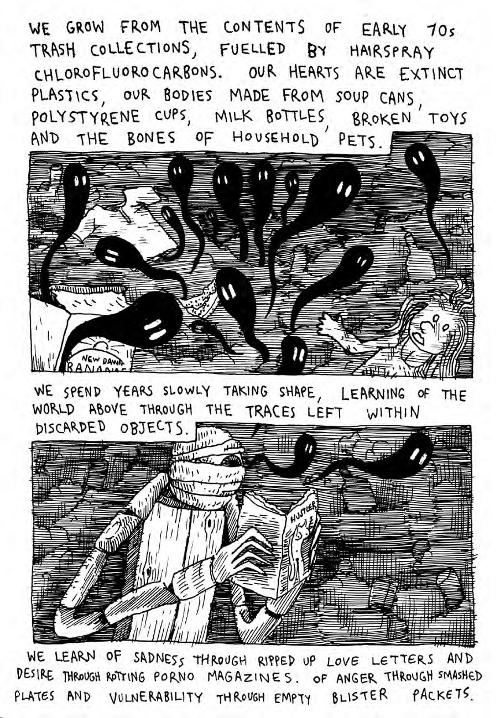
In addition, I have been keen to embed some ‘primary sources’: artists and writers heavily involved with underground cultures, making art within (and critically reflecting on) their own communities. For this reason some outstanding extracts from recent local and international underground comics are also reprinted here.
A note on ‘underground-vs-mainstream’:
‘Oppositionality’, as a political strategy, has been in crisis for some time. For activists and artists in 2010, choosing to resist the recuperation of the underground by mainstream culture means refusing to participate: dropping out. By now, such a revolutionary position, while romantic, heroic and ‘pure’, does seem rather futile. Some of the essays gathered here endeavour to find definitions and theoretical bases for ‘the underground’ as a cultural phenomenon. What such definitional attempts reveal is its inherently slippery nature. As Chris Fleming writes, the underground is ‘something we can track but can’t trap, whose identity, paradoxically, is evanescence’.
In culture, marginal practices are continually being unearthed and made visible to broader communities, which accommodate, and thus transform, them into acceptable ‘mainstream’ forms (correspondingly, the mainstream culture expands and transforms itself in the process). Throughout the twentieth century, this cycle of unearthing became so commonplace that it is now almost impossible to uphold ‘mainstream-vs-underground’ as a credible dichotomy. Rather, the two seem locked in an expansive, co-dependent dance.
I like to think of Underground and Mainstream as two savvy trading partners, each selling its own unique brand of prestige. Mainstream craves street-cred, gritty reality - authenticity – which only Underground can provide; Underground, in turn, desires institutional acceptance, increased resources, and historical visibility, and these are promised by Mainstream. For better or worse, it is in the moment of exchange between the two where fortunes are made.