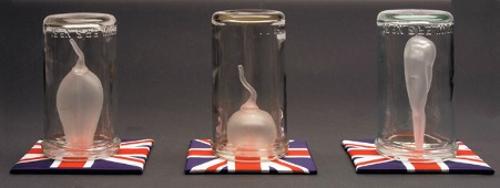
As an issue AIDS/HIV has come in and out of the forefront of contemporary art over the last three decades. Since its emergence into the public eye in the 1980s the art world has treated the disease with a robust front. Through various media, community and chronicled projects artists have sought to educate the public about the personal cost of AIDS/HIV and how it pertains to the community at large. Advertising of course went somewhere else, perpetuating ghastly and largely impersonal motifs. (Who can forget the Grim Reaper collecting his harvest in a bowling alley?)
Kim Stanley Medlen's 'Haart' is a look at AIDS/HIV in the community today with a contemporary aesthetic that deals with the crossover between notions of beauty and morality - or aesthetics and ethics. The title works on a double meaning, 'Haart' being the acronym for 'highly active antiretroviral treatment’, the drug combination most commonly prescribed for HIV, while Medlen’s 'Haart' is primarily concerned with the internal/external relationship of the body. This is a show about body image and as such revolves around the way presenting a beautiful external image can be seen to equal being a good person. Also 'Haart' interestingly both presents and internalises the identity politics of AIDS/HIV and how it manifests within the gay community and the gay individual, rather than how the broader community perceives it. I think this speaks volumes about where AIDS/HIV is currently on the radar, particularly in its disassociation from the popular media and its perception as something that is now medically under control even, it must be said, as it is ravaging many parts of the world.
But I think it’s the relationship between beauty and morality that is at the core of Medlen’s first solo show and to good effect. In 'Haart' Medlen rearranges our expected association of political art and AIDS/HIV by presenting a beautiful and lush show full of gloss, bling and sumptuous red and white wall pieces laden with gold. Slick automotive paint covers balsa wood while 22 carat gold covers copper, this is about putting the best façade on and here Medlen references body building and surgery as it is used by HIV positive gay men to allay stigmatisation.
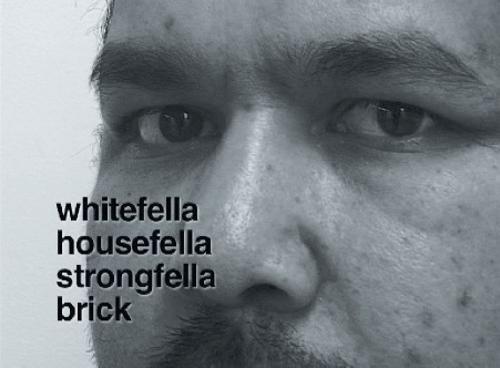
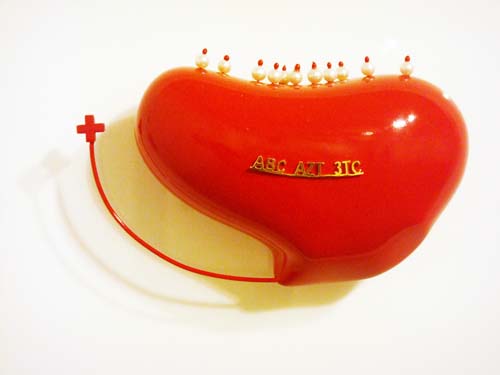
Words and symbols are also to be found across the works, some derogatory slang, others listing the drugs, like D4T and 3TC, associated with the illness. In 'Pumped' a red body organ channels to a smaller one which has pearls dropping out of it. The larger organ has ‘deviant’ written across the top of it in gold-plated copper – the word alludes to its derogatory use as an insult but also subtly to the cells within the body as they change upon contracting the disease. Thus Medlen’s work begins to read away from its obvious external connotations toward more intimate, personal and even internalised issues associated with the preconceptions of AIDS/HIV. In 'Promise' freshwater pearls line the top of the blood red body organ while a tube runs off the piece toward a red cross - the letters ABC AZT 3TC adorn the organ. Again Medlen inscribes a myriad of readings through symbolic to textual, from the biological to the spiritual.
Medlen’s 'Haart' is a thoughtful, subtle and multi-layered show full of seductive, finely finished works that constantly manipulates the viewer - changing us from being empathetic to accused onlooker in the twinkling of an eye and in the process asking questions of our moral fibre and willingness to judge on external attributes. Medlen has brought his fine jewellery skills to a larger, sculptural, wall-based format and ably shown us the strength of well-made art. But, although a clean and formal affair, it is far from sterile. Rage underpins quite beautiful individual pieces while the association of the text and object components of the works makes for biting analogy.