Changing Climates in Arts Publishing
vol 29 no 4, 2009
In a world where newspapers and journals are being replaced by online versions, and traditional copyright is being challenged, many new scenarios present themselves. Artists and publishers are being asked to make choices and address questions that are environmental, technical, aesthetic, legal and financial all at the same time. * carbon emissions from print/online content * should all content be free * effect of re-mix and Creative Commons on creators' rights * search engine uses of arts content * catalogues and zine publishing * art biography as online data bases emerge. Powerful climate change imagery, new work by emerging and established Australian artists, flows through the pages. Plus bonus review section: 17 recent books & catalogues. Based on the Changing Climates in Arts Publishing forums organised by Artlink in Adelaide and Sydney in 2009 More on the forums including programs and vodcast. Discussions of a lively team of experts, writers, artists, copyright lawyers, arts publishers, activists: Zina Kaye, Elliott Bledsoe, Linda Jaivin, Daniel Thomas, Tess Allas, Joanna Mendelssohn, Sean Cubitt, Tamara Winikoff, Andrew Frost, Donald Brook, Lisa Havilah, Djon Mundine, Zoe Rodriguez, Bill Morrow.
- Artists and Authors
- Order this issue (from $12 inc. postage)
Subscribe to Artlink - from $55. Subscriptions available for readers anywhere in the world.
BeginningMiddleEnd
Jenny McFarlane, reviewBeginningMiddleEnd
ANU School of Art Gallery, Canberra
Curator: Lucien Leon
18 - 24 September 2009
An exciting showcase of research-led digital media practice BeginningMiddleEnd was a loosely curated exhibition of work by some of Australia's leading academics in the field and some of their students and recent graduates. It was supported by a series of performance, screen, and sound events.
The curatorial premise was catholic, embracing installations familiar to galleries and museums as well as the work of poets, self-styled gaming poets, researchers like Torben Sko who is exploring human-computer interaction and Ryszard Dabek who lectures in Film and Digital Art at Sydney College of the Arts. Jonathon McCabe is a Systems Engineer working with the ANU Supercomputer Facility on the statistical properties of images with what he describes as a serious ink habit as he uses mathematical modelling to produce new types of images. The entire exhibition was truly inter-disciplinary; many hierarchies of information and art were collapsed. Curator Lucien Leon’s own work as an animator sits on the borderline between art and information manipulation in political cartooning.
Several large themes emerged and an important meeting point was the idea of technological research as a platform for new interactions and experiences. The focus was on new relationships especially the potential for new personal relationships with the viewer as facilitated by new technologies. Jason Nelson exhibited an "interactive digital poem" which he describes as “game levels built on screen-shots from influential community based websites and portals”. This is overwritten with idiosyncratic layers of drawing, text and multi-media to create a meta-narrative/game. Poetic in an entirely different way are Dan Torre’s Stilted life: Animated Photographs. The poetics of these images is contemplative rather than vigorously interactive. Torre digitally animates objects peripheral to the nominal subject of his black and white photographs of early childhood. Cars slide into the picture frame, wind and light subtly animate trees and water energising these images in subtle but startling ways. For Torre movement is essential to memory and the stillness of the image is strangely enhanced by his animations.
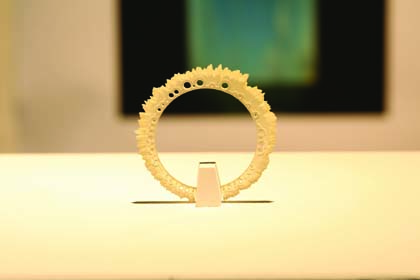
An interesting intervention was the conceptualisation of the raw material for a work of art as data, and conceiving the challenge of the creation of a work of art in terms of data communication and interaction. Mitchell Whitelaw’s Weather Ring makes data material. The object - a nylon print - represents 365 days of local weather data three-dimensionally - reflecting on the subjective and objective experience of information systems. It is an interesting conjunction to Christopher Fulham’s Runners 2009 where the data set of joggers is narrowed to the point where they are tightly framed in time, space and action. What is left is the inherent random nature of individual movement and the subject’s relation to the observer - prompting the observation that the more precise the original data set the more variables are represented. Anna Madeleine’s work Why read the book when you can watch the movie? exploded the idea of a limited data set to invoke the multiple engaging relationships between reality and the imaginary life invoked by text. Images provoked by the text rise up from the pages, penetrate and infuse the physical form of the book dragging a Kentridge-like trail of erasures. This is exciting work and participates in the equally exciting field of how and where we now experience art.
For further images of BeginningMiddleEnd see www.bmefestival.com.

Subscribe to the Artlink newsletter now
Articles in this issue
-
ETW: Exhibitions 2 Watch: December 09 - February 2010

-
Artrave: Artrave

-
Editorial: Editorial

- Feature: Artistic intention, branding and value
- Feature: Artists want catalogues
- Feature: Collaborative Practice
- Feature: Communicating and the law
- Feature: Copyright materials in university teaching
- Feature: Copyright: Copyleft
- Feature: Creative commons: fair to share?
- Feature: Don't look it might bite: censoring the visual arts
-
Feature: Environmental costs of going digital

- Feature: Finding the right balance: print + online
- Feature: Freedom of expression and the mode of detachment
- Feature: From here to everywhere: the evolution of blogging
- Feature: Lean, mean and living dangerously
- Feature: Libraries, creators and Google
- Feature: Lives of the 'settled' artists
- Feature: Measuring the footprint: dead trees vs live text
- Feature: Mix and mash, take it, change it
- Feature: Netting the big and the little fish: monographs and biographies
- Feature: The Ramingining Megaphone
- Feature: Writing in the age of graphomania
- Feature: Zine publishing and the long tail
-
Preview: Acts of transformation: 2010 Adelaide Festival, Adelaide Biennial of Australian Art

-
Review: *some text missing*

-
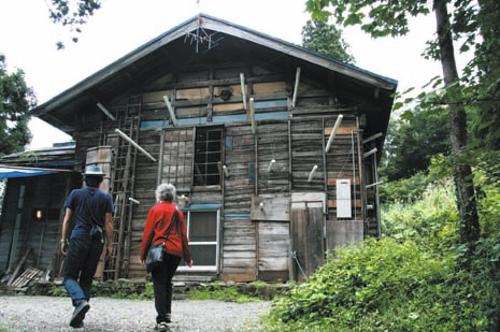
Review: 4th Fukuoka Asian Art Triennale, Japan

-
Review: BeginningMiddleEnd

-
Review: Fiona Davies: Intangible Collection

-
Review: Floating Life: Contemporary Aboriginal Fibre Art

-
Review: Kathy Temin

-
Review: Kazuyo Sejima + Ryue Nishizawa / SANAA : an architectural intervention

-
Review: Milestones: Ken Orchard 1980-2009

-
Review: Nyukana Baker : Retrospective

-
Review: Shelter: On Kindness

-
Review: Shih Chieh Huang : Cubozoa - L-09

-
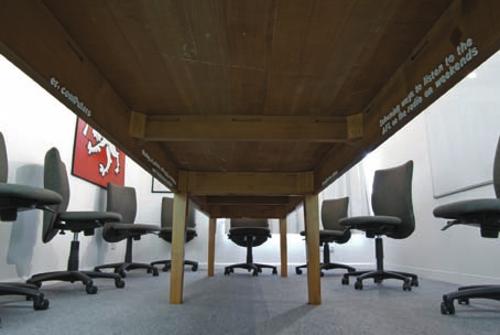
Review: Simon Gilby: The Syndicate

-
Review: Tim Burns: From the Garden

-
Review: Western Australian Indigenous Art Awards

-
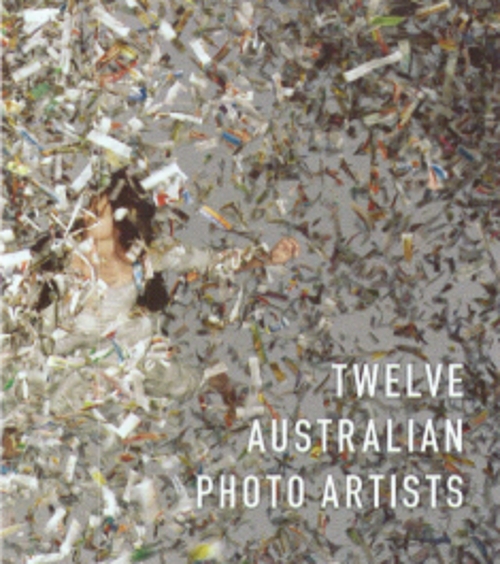
Review book : Twelve Australian Photo Artists by Blair French and Daniel Palmer

-
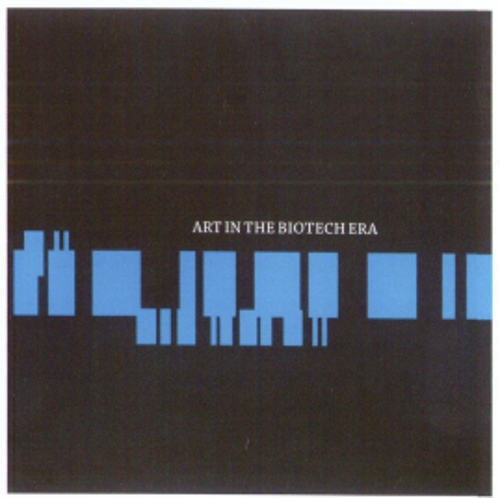
Review: book: Art in the biotech era Edited by Melentie Pandilovski

-
Review: book: Centre of the Periphery: Three European art historians in Melbourne by Sheridan Palmer

- Review: book: Colour Country: Art from Roper River by Cath Bowdler and My Father, my brother: stories of Campbelltown's Aboriginal Men by Dvora Liberman
- Review: book: Gallery A Sydney 1964-1983 Edited by John Murphy
- Review: book: Hedonism, populism and colonial pictures; The Art of Australia: Volume 1: From Exploration to Federation by John McDonald
- Review: book: Modern Times: the untold story of Modernism in Australia Edited by Ann Stephen, Philip Goad and Andrew McNamara
- Review: book: Photography Between Poetry and Politics: The Critical Position of the Photographic Medium in Contemporary Art Edited by Hilde Van Gelder and Helen Westgeest
-
Review: book: Possession

- Review: book: The Golden Journey: Japanese Art from Australian Collections by James Bennett and Amy Reigle Newland
-
Review: book: Wild Design - ecofriendly innovations inspired by nature by Alan Marshall and Back to the City - Strategies for Informal Urban Interventions Edited by Steffen Lehmann