Changing Climates in Arts Publishing
vol 29 no 4, 2009
In a world where newspapers and journals are being replaced by online versions, and traditional copyright is being challenged, many new scenarios present themselves. Artists and publishers are being asked to make choices and address questions that are environmental, technical, aesthetic, legal and financial all at the same time. * carbon emissions from print/online content * should all content be free * effect of re-mix and Creative Commons on creators' rights * search engine uses of arts content * catalogues and zine publishing * art biography as online data bases emerge. Powerful climate change imagery, new work by emerging and established Australian artists, flows through the pages. Plus bonus review section: 17 recent books & catalogues. Based on the Changing Climates in Arts Publishing forums organised by Artlink in Adelaide and Sydney in 2009 More on the forums including programs and vodcast. Discussions of a lively team of experts, writers, artists, copyright lawyers, arts publishers, activists: Zina Kaye, Elliott Bledsoe, Linda Jaivin, Daniel Thomas, Tess Allas, Joanna Mendelssohn, Sean Cubitt, Tamara Winikoff, Andrew Frost, Donald Brook, Lisa Havilah, Djon Mundine, Zoe Rodriguez, Bill Morrow.
- Artists and Authors
- Order this issue (from $12 inc. postage)
Subscribe to Artlink - from $55. Subscriptions available for readers anywhere in the world.
Kazuyo Sejima + Ryue Nishizawa / SANAA : an architectural intervention
Ricky Lau, reviewKazuyo Sejima + Ryue Nishizawa / SANAA : an architectural intervention
Sherman Contemporary Art Foundation (SCAF), Sydney
3 July - 26 September 2009
An architectural intervention by Kazuyo Sejima + Ryue Nishizawa / SANAA was an installation commissioned by Sherman Contemporary Art Foundation to invite visitors to experience and explore the spatiality of sculpture through the language of architecture. Collectively known as SANAA, Sejima and Nishizawa's architecture epitomises an ethereal beauty and tranquillity through spatial organisation, topological equivalence and atmospheric orchestration.
SANAA’s architectural projects include the Christian Dior Building in Omotesando, the Glass Pavilion at Toledo’s Museum of Art, the New Museum in New York and the ephemeral Serpentine Pavilion in London. These projects are characterised by formal austerity, geometric purity and structural delicacy. But most importantly, the architecture of SANAA is open-ended, offering a freedom for the observer-participants who experience it to create illimitable relationships.
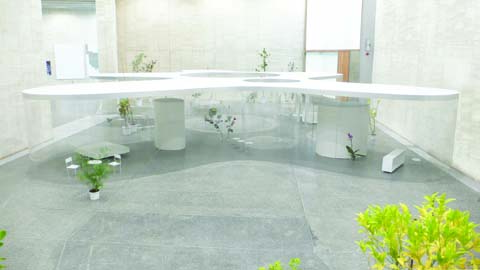
An architectural intervention in Sydney was composed of three independent amoebas; each amoeba was a continuous outline on a schematic plan that was extruded three-dimensionally with the insertion of apertures. Visitors were channelled through an undulating and diaphanous labyrinth, creating a beguiling and mesmerising experience. The sinuous sculpture was an amalgamation of 1 cm thick by 3m high transparent acrylic screens, the junctions were immaculately fastened by stainless steel joints and woven into seamless and amorphous alcoves. From the schematic plan, each clove is conceived of as an alternation between the convexity and the concavity which arises along the undulating outline and the perimeter walls of the gallery, thus giving birth to a series of alcoves.
SANAA’s installation magnifies the ambiguity between architecture and sculpture by introducing numerous apertures to the work. The openings disrupt the continuity of the single line allowing physical explorations and, together with the varying areas of the alcoves, manifest a diverse spatial organisation and programmatic possibilities.
SANAA’s installation is liberated from hierarchy, envisaging a state of randomness and indetermination. This is achieved by obtaining a balanced relationship between opposite but equivalent components. The transparency and translucency of the acrylic was obscured by the reflections of the curving screens. Also, the folding and layering imply a sense of depth and volume, juxtaposed with the thinness and slenderness of the material. The installation obtained structural integrity via the intricate rivet joints and was stabilised by the differential calculus of the waving screens. Free of any bracing, reinforcement and connection to the ground, the sculpture as a whole is perceived as weightless and thus transpires the spirit of Zen. The ritualistic and meditative atmosphere of the installation is further enhanced by the uniform distribution of artificial light and homogeneity of the 'white cube’.
SAANA’s An architectural intervention draws on an interesting relationship to their Flower House (2006) in Switzerland. In Flower House - with its amoeboid shape that again alternates convexities and concavities, the five arms that stretch out of the interior space are meshed with the surrounding outdoor space, forming two courtyards. The installation within the Sherman Gallery was an inversion of the Flower House, in such a way that the plan was not defined expansively from the centre outwards but from the demarcation of the gallery inwards. The inversion reflects the abolition of the hierarchy between interior and exterior and paradoxically, the equivalence of the two spaces. Such interchangeability is established on the identity of the form and counterform, closure and aperture, limits and connections, continuities and discontinuities generated out of the waving line.
An architectural intervention by SANAA achieves consummation when the architects randomly disperse clusters of Marumaru chairs (Rabbit chairs) inside and outside the alcoves, creating visual and physical punctuations as well as yielding a series of beautiful and playful interventions.
Subscribe to the Artlink newsletter now
Articles in this issue
-
ETW: Exhibitions 2 Watch: December 09 - February 2010

-
Artrave: Artrave

-
Editorial: Editorial

- Feature: Artistic intention, branding and value
- Feature: Artists want catalogues
- Feature: Collaborative Practice
- Feature: Communicating and the law
- Feature: Copyright materials in university teaching
- Feature: Copyright: Copyleft
- Feature: Creative commons: fair to share?
- Feature: Don't look it might bite: censoring the visual arts
-
Feature: Environmental costs of going digital

- Feature: Finding the right balance: print + online
- Feature: Freedom of expression and the mode of detachment
- Feature: From here to everywhere: the evolution of blogging
- Feature: Lean, mean and living dangerously
- Feature: Libraries, creators and Google
- Feature: Lives of the 'settled' artists
- Feature: Measuring the footprint: dead trees vs live text
- Feature: Mix and mash, take it, change it
- Feature: Netting the big and the little fish: monographs and biographies
- Feature: The Ramingining Megaphone
- Feature: Writing in the age of graphomania
- Feature: Zine publishing and the long tail
-
Preview: Acts of transformation: 2010 Adelaide Festival, Adelaide Biennial of Australian Art

-
Review: *some text missing*

-
Review: 4th Fukuoka Asian Art Triennale, Japan

-
Review: BeginningMiddleEnd

-
Review: Fiona Davies: Intangible Collection

-
Review: Floating Life: Contemporary Aboriginal Fibre Art

-
Review: Kathy Temin

-
Review: Kazuyo Sejima + Ryue Nishizawa / SANAA : an architectural intervention

-
Review: Milestones: Ken Orchard 1980-2009

-
Review: Nyukana Baker : Retrospective

-
Review: Shelter: On Kindness

-
Review: Shih Chieh Huang : Cubozoa - L-09

-
Review: Simon Gilby: The Syndicate

-
Review: Tim Burns: From the Garden

-
Review: Western Australian Indigenous Art Awards

-
Review book : Twelve Australian Photo Artists by Blair French and Daniel Palmer

-
Review: book: Art in the biotech era Edited by Melentie Pandilovski

-
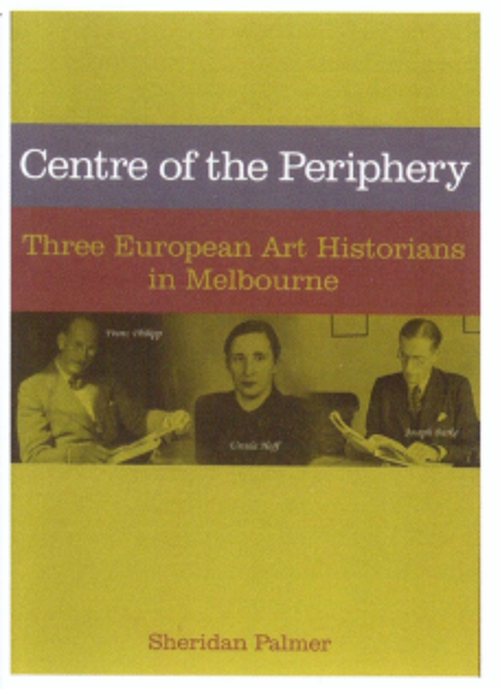
Review: book: Centre of the Periphery: Three European art historians in Melbourne by Sheridan Palmer

- Review: book: Colour Country: Art from Roper River by Cath Bowdler and My Father, my brother: stories of Campbelltown's Aboriginal Men by Dvora Liberman
- Review: book: Gallery A Sydney 1964-1983 Edited by John Murphy
- Review: book: Hedonism, populism and colonial pictures; The Art of Australia: Volume 1: From Exploration to Federation by John McDonald
- Review: book: Modern Times: the untold story of Modernism in Australia Edited by Ann Stephen, Philip Goad and Andrew McNamara
- Review: book: Photography Between Poetry and Politics: The Critical Position of the Photographic Medium in Contemporary Art Edited by Hilde Van Gelder and Helen Westgeest
-
Review: book: Possession

- Review: book: The Golden Journey: Japanese Art from Australian Collections by James Bennett and Amy Reigle Newland
-
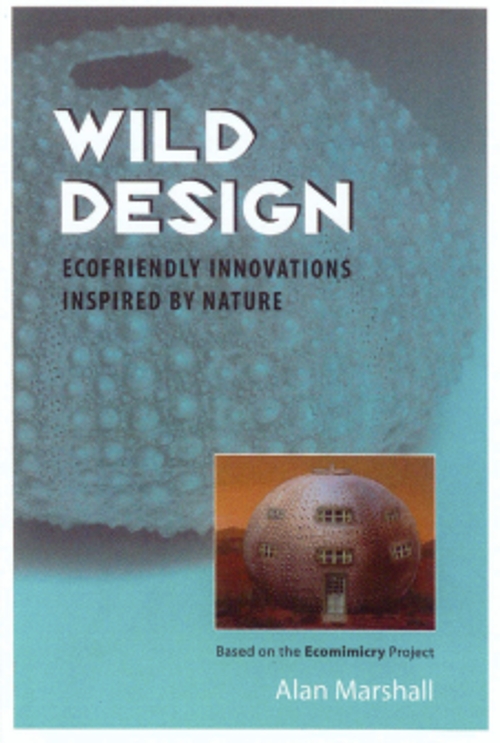
Review: book: Wild Design - ecofriendly innovations inspired by nature by Alan Marshall and Back to the City - Strategies for Informal Urban Interventions Edited by Steffen Lehmann