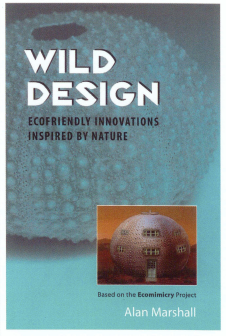
I looked forward to reviewing Wild Design, it has a promising title, and is 'Based on the Ecomimicry Project', suggesting substantial grounding in ecological understanding. According to the author it is about being ‘careful to imagine solutions that serve the environment and the community rather than the global marketplace or the armies of the world’. But I started by taking it too seriously, then I realised that I was taking myself too seriously...
The project does seek grounding in place – the artists, designers and conservationists involved were ‘encouraged to conceive of ecofriendly products, landscapes, and artworks based upon the wildlife and natural features’ of their region, either the species-diversity-hotspot of WA’s South Coast or the Carpathian Mountains where untouched tracts remain as ‘bastions of wilderness in modern Europe’.
Intended as a manifesto ‘for designing things in an alternative away’ and as a prospectus ‘for future collaboration’, the book is a slim volume ambitious in its scope. Many of the projects have their tongue firmly in their cheek, and it’s hard not to enjoy the attacks on nuclear power, golf, nanobots and politics, but there is a superficial quality to the projects that I sometimes found hard to accept – on the one hand there seems to be serious intent but on the other hand the necessary science of effective biomimicry is sometimes so badly done as to almost render the proposals pointless, rather than inspiring. Then again, that might be me being too serious because there is arguably good science in the proposal to make a Carpathian Wild Park that exposes human visitors to the thrill of a real wildlife situation whilst resurrecting the human role in nature ‘as a potential source of prey for carnivores like bears and wolves’.
My sympathies are strongly with the artists and the whole ethos of this project, but the world of industry and development is moving incredibly fast and can challenge the imagination as strongly as many of the projects in this book – and that’s probably part of the point of this quirky volume which carries within its flippancy some serious, and sometimes quite stimulating and insightful ideas.
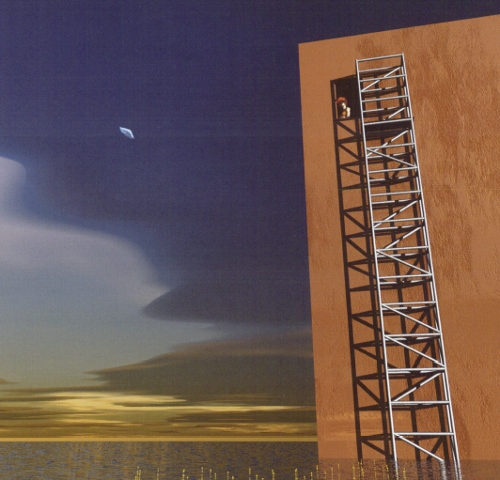
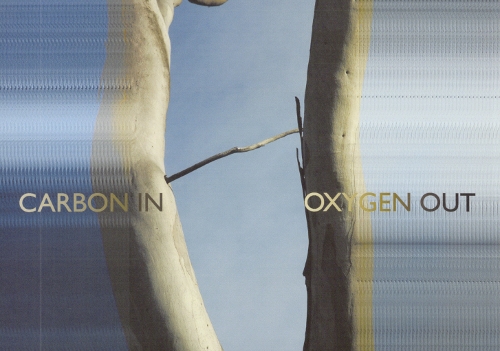
The extreme unevenness of this book is part of its frustration and charm. It contains a lot of quite sharp political criticism, but it’s not a political book. It’s profusely illustrated, but it’s not really about images, or even aesthetics. It is ostensibly about ecomimicry, but maybe, in the end, it’s essentially a critique of the very idea and most of all is about conveying the message spelt out on page 117 that ‘we are doomed only to parody Nature when we attempt to mimic it’.
The theme of Back to the City is inter-disciplinarity and catalytic temporary installations as resources for urban renewal. Fifteen refereed essays and twenty-eight illustrated descriptions of site specific interventions in Newcastle, Brisbane and Berlin (all curated by Lehmann) seek to assert public space over consumer space.
Lehmann advocates green urbanism. His inter-disciplinary stance focusses on eroding the ‘artificial and counter-productive’ borders between design disciplines but reflects academic limitations and doesn’t draw in ecologists or geographers. Lehmann cites the Situationists, formed in 1957 to attack consumerism and the ‘spectacular society’ (pivotal in the May 1968 Paris uprising – their graffiti still resonates: Sous les pavés, la plage!) but providing resources for urban renewal doesn’t challenge the nature of advanced capitalist urbanism. If ‘public space is the ultimate space of social encounter’ it is hard to see how ‘art’ can subvert the billboard reality that frames those encounters. Public space is defined more from context than content; it has to be part of the city fabric to exist. As such it won’t much matter what artifacts occupy it.
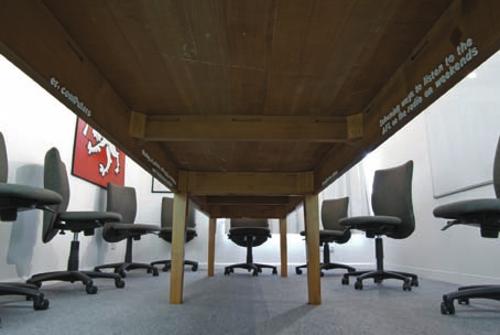
Some of the interventions are obvious prototypes for urban landscaping but the built environment is risk-averse – every rule and delivery system conspires to eliminate surprise, thus many installations had ‘permissions’ and never threatened the prevailing order of the city. Spectacular capitalism challenges artists because it assimilates, borrows and steals from the avant garde to keep reinvigorating itself (see the surreal world of advertising). Without changing social relations and power relationships, art is powerless. Politically, many of these mind guerillas occupy safe spaces and fire blanks. Lehmann’s commentary tacitly acknowledges this and I like his curatorial direction, seeking fragments of cultural shift to reach the ‘creative city’.
Rancière’s concept of ‘post-politics’ is critically discussed. Ostwald’s essay explores the politics of ‘interventionist’ public art, begging the question whether installations are aesthetic affectations in a media-deluged environment, or meaningful attempts to shift society at a deeper cultural level. Other essays delve into the purpose and effectiveness of art in public spaces. Linking laneway art in Melbourne to the Situationist Debord’s ‘playful-constructive behaviour... which completely distinguishes it from the classical notions of… the stroll’, Messham-Muir observes that ‘Driven by social networks and not boards, free of constitutions, AGMs, annual reports, audited financial statements, accountability, commitments, guidelines and codes… creative subcultures forsake the certainty and stability in favour of creative multiplicity of chaos.’
There is insightful writing in some of the essays that I found more stimulating than the copiously illustrated artworks. Perhaps words capture better than images being ‘drawn by the shadow that lingers after the events are over.’ (Cohen)
And I’m left with the thought that the Situationists never asked for permission.