After the Missionaries: art in a bilateral world
vol 29 no 2
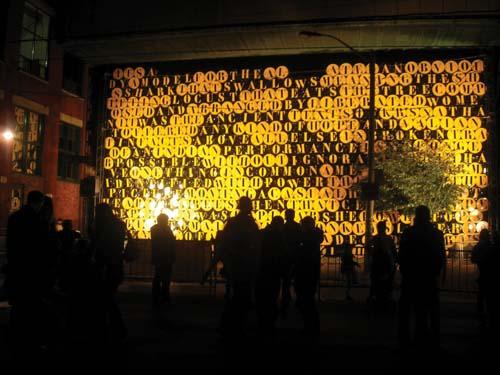
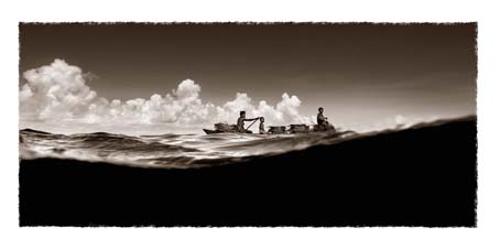
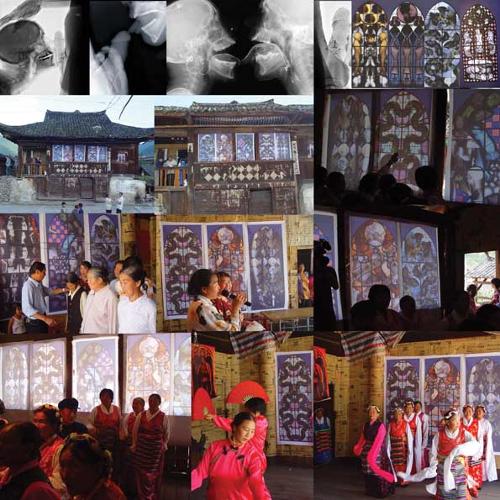
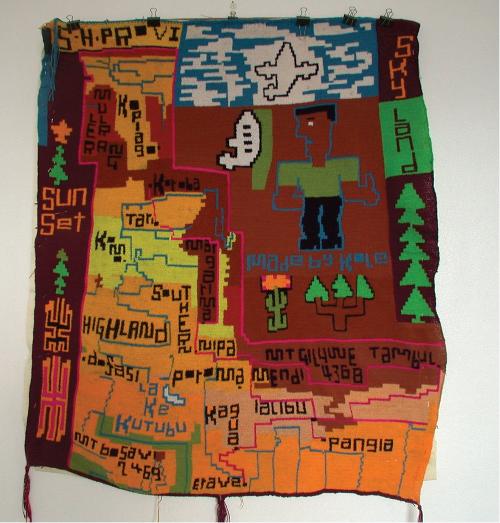
After the Missionaries, guest edited by Kevin Murray, explores how new art today reflects the critically important process of the Kyoto Protocol. As a conversation between North and South, the Protocol acknowledges that the rich countries have responsibility for the current excess of carbon in the atmosphere, and any solution will depend on consensus with poor countries aspiring to catch up. In stories that go beyond the established post-colonial paradigm, this issue presents new forms of negotiation between rich and poor, Anglo and Asian. Artists and writers including Paul Carter, Gregory Pryor, David Griggs, Janet de Boos, Ruark Lewis, Sharmila Samant, Jonathan Kimberley, Jim Everett and Ruth Hadlow discuss the extraordinary new work they have done collaboratively with others in China, East Timor, Taiwan, the Philippines, Brazil and India as well as Australian investigations of missionary mindsets and histories. Also explored are bilum crafts of Papua New Guinea, the museum settings of Cook Islands carvings, work by Pakistani-born Joyce Saloum and Khadim Ali and photographs in and of North Korea by Armin Linke and Lyndal Jones. Also a profile of Mark Siebert's new work plus national exhibition reviews.
- Artists and Authors
- Order this issue (from $12 inc. postage)
Subscribe to Artlink - from $52. Subscriptions available for readers anywhere in the world.
Advertisement:
In the 1980s, at the grey dawn of economic rationalism, the term 'Arts Industry' started to be used by economists to argue the value of the arts, as a way of indicating to a cost-cutting Australian government that culture could make money. The romantic ideal of the artist as a unique free spirit unfettered and unregulated was replaced by the less poetic idea of the artworker doing an honest day’s work for an honest day’s pay the same as everyone else. Like other industries, the arts acquired collective bargaining and advocacy bodies. The National Association for the Visual Arts (NAVA), which has now reached its 25th anniversary, could be seen as one of them. The organisation’s most conspicuous activities are advocacy and lobbying for the professional interests of the Australian visual arts, craft and design sector.
Toward the end of the century came another shift, from artworkers being employees to being entrepreneurs. Artists, we were told, were running small businesses, like doctors and architects, and providing a commodity: their skill. The economic reality of the average artist’s income, however, aligned them more closely with factory workers than doctors or architects.
By the beginning of the 21st century in Australia, proposed changes in labour laws seemed to embody the principle of workers putting their skills on an open market, although the nation-wide protests against the Work Choices reforms suggested that many Australians didn’t relish the prospect of being reduced to a commodity. The argument in support of these changes proposed that a free market economy would benefit workers and corporations alike.
The free market economy has now gone off the rails, and come back to bite us all. Artists, who generally lack a comfortable layer of insulation to fall back on, will feel this particularly sharply. Financial deregulation has been blamed for causing the mess, and capitalist countries are now reversing the trend, most significantly through government acquisition of banks.
To maintain a parallel view of art and economics, the care now being given to financial regulation raises the question of regulating the arts, and whether or not an organisation like NAVA has any business doing such a thing.
The arts are not, in fact, an industry (that analogy was drawn for shrewd strategic reasons) and NAVA has never embraced a trade union model. It has instead lobbied for a professional working environment in which art can better function as a self-sustaining occupation. NAVA’s long campaign for resale rights for artists is a good illustration of this. The activities of the arts sector are extremely diverse and pervasive. They are also fundamental to the wellbeing of society.
This can be explained in various ways. The arts are, among other things, the canary in the coalmine - a highly sensitive gauge of how healthy or how dangerous the surrounding atmosphere is. Artists provide us with forms of celebration, and forms of warning. They don’t just provide a measurable contribution to the national economy. Campaigning to uphold the integrity of Australia’s visual arts culture is not simply a matter of trying to guarantee a fair go for artists, but an expression of a broader commitment to the quality of life in Australia.
NAVA essentially has a double function. It defends artists’ rights, but also defines and promotes professional standards. A commitment to upholding the rights of artists, especially in regard to working conditions and remuneration, links NAVA to the trade union model that casts artists as employees, but the organisation’s vigorous campaigning for codes of practice has more in common with the professional associations that regulate the activities of lawyers or bankers. As well as upholding professional ethics, NAVA promotes excellence through lobbying for an arts-rich education for school children and raising awareness of the quality of art as an indicator of the health of a society.
In 2006, the Australian government proposed the introduction of laws that would have made it possible for artists and writers to be jailed for creating works considered to be seditious. This was strenuously opposed by the Australian Law Reform Commission, which submitted a report calling for the reform of sedition laws in Australia, which was supported by multiple organisations in the arts sector, including NAVA. At the end of last year the reforms also received the support of a new Australian government.
In the meantime, however, Australia experienced a brief but emotional controversy over underage nudity in art, creating a situation where artist’s rights were incongruously portrayed in opposition to the rights of children. The Australia Council was subsequently required to develop a set of protocols for the depiction of children in works, exhibitions and publications that are supported by the government. NAVA participated in the formulation of these guidelines, with recommendations for making them less restrictive to artists’ working methods. The organisation is now engaged in producing an Art Censorship Guide, for use by all parties in cases of controversy over works of art, but primarily to assist artists to deal with the legal complexities.
Institutionally defined cultural and moral standards may appear to stifle innovation and artistic freedom, so progressive thinkers such as artists often object to them on principle. NAVA has no interest or role in creating a code of moral propriety. The organisation does, however, need to operate in the real world, and equip artists to engage in the often demeaning and always unequal negotiation process of defending their rights against official suppression. By attempting to remain above the rather pedestrian level of debate regarding community standards, organisations like NAVA runs the risk of being excluded from the government processes that determine what degree of freedom artists enjoy.
When times get tough the strictures on independent thinking get tougher. The past century provided some appalling illustrations of this in several parts of the world considered to be highly enlightened, and the current global financial crisis is occurring in conjunction with a disturbing drift in the same direction. Australia is very subtly reflecting this global trend. In a more benign economic and moral climate, campaigning for rights and standards may seem to be a paternalistic anachronism, but in uncertain times, NAVA, like the artists it represents, has an increasingly important role to play.
NAVA website
Other articles by Timothy Morrell
Articles in this issue
- Artrave: Artrave
-
Editorial: Editorial

-
ETW: Exhibitions 2 watch: June - August 09

- Feature: An Unlandscape of words and painting: from Meenamatta to paradise
- Feature: Bilum breakout: fashion, artworld, national pride
- Feature: China welcomes Australian ceramics
-
Feature: Collapsing the Bilateral: creating consciousness

- Feature: Contemporary Art in the Hermit Kingdom
- Feature: Hired hands: the Filipino collaborations of David Griggs
- Feature: Island improvisations: Nathan Gray
- Feature: Jelek in East Timor
- Feature: New climate for an old world: Paul Carter's Nearamnew
-
Feature: Old Gods new lives: Exhibiting traditional Cook Islander art

- Feature: Resuscitation through paper
-
Feature: Ten Days on the Island festiva

- Feature: Threads, traces and legacies of the mission
- Feature: Transforming East and West dialogues
- Feature: What would you do?
-
Polemic: NAVA Now

- Profile: Mark Siebert: new work
-
Review: 21 Ada St - the DVD

-
Review: Anne Ferran

-
Review: Artroom5

-
Review: Big Bad World

-
Review: Caitlin Yardley

-
Review: Gosia Wlodarczak

-
Review: Karen Genoff

-
Review: Nam Bang!

-
Review: Paul Zika

-
Review: Temperature

-
Review: The China Project

-
Review: The Enchanted Forest

-
Review: The Secret Life of Plants

-
Review: Yellow Vest Syndrome