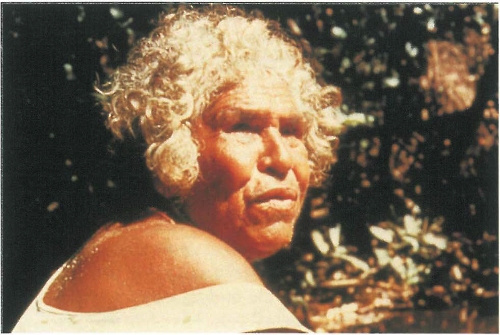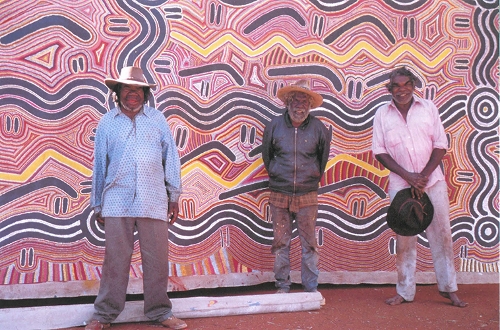
Y.Y. Gibson Tjungurrayi, who was born c.1928 at Iltuturunga, west of Lake MacDonald, was a quietly spoken gentle giant when in his prime during the 1970s. On one occasion, when gathering firewood, he wrenched large dead mulga trees out of the ground and tossed them onto the back of the Toyota as though they were matchsticks.
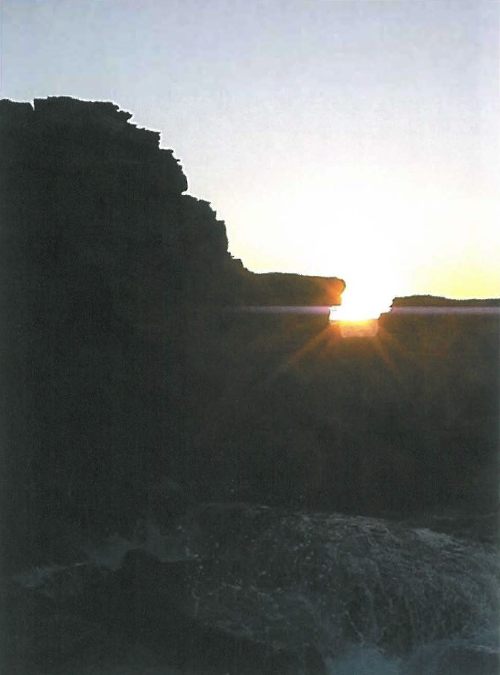
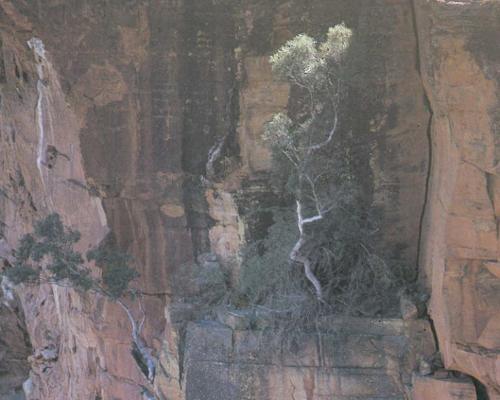
The artist was a strongly traditional man who often preferred to talk in sign language unless travelling in country over which he had specific ownership rights. This country extended from the general western Lake MacDonald area, including the sacred men's site Yawulyurru (for which he was the senior man of responsibility in his mature age), north to Mantarti. The latter is a complex of low rocky hills between Warlungurru (Kintore) and Kiwirrkura, and takes its name from the white-barked eucalypts which grow in the area. It was his mother's country, and the greater significance lies in large claypans which lie immediately to the south and are long lasting after good rains.
As with numbers of Pintupi people he became aware of the 1956-1966 era migrations east by many of the Pintupi so he himself decided to see what there was which appealed. He and his young family walked north to his mother's country along a well-defined walking route that led from native wells to rock-holes, then followed another major travelling route east to Papunya. As with many of the Pintupi people he had not previously been this far east, nor had he first-hand contact with the wider Australian society, so he invariably camped on the western side of the community - closest to his own country.
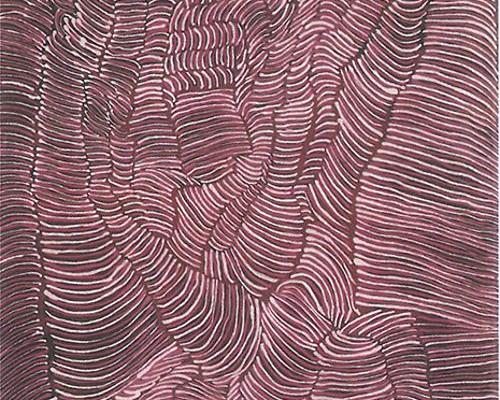
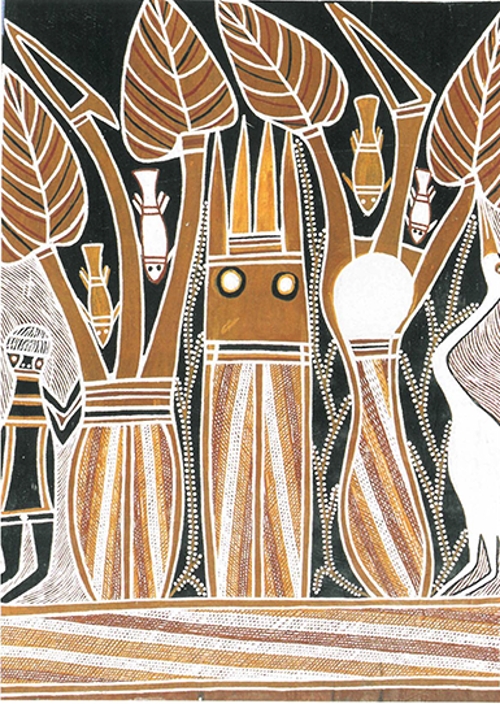
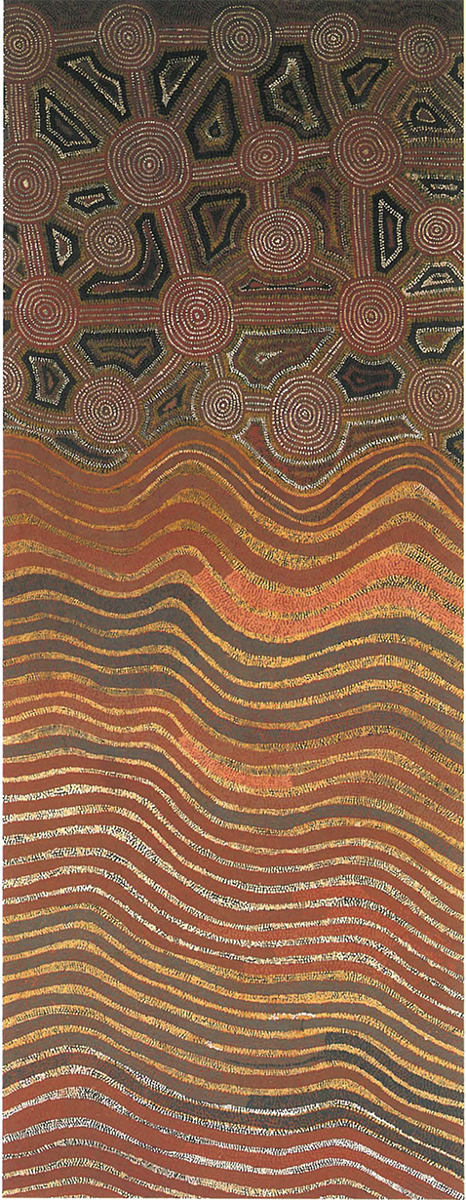
In 1971, encouraged by Geoff Bardon, he became one of the early Papunya Tula artists. He usually preferred a dark background with white for the key elements of the composition, although occasionally he used yellow or other primary colours. Tingarri stories, to do with the ceremonial stories of ancestral men, were a major focus. Much as he painted variations of his dreamings, he remained more conservative than most in his compositions. Indeed, some of the most striking of his white over black paintings of the late 1990s were almost identical with 1971-1972 period works, including elements that he had not painted for the better part of 25 years.
During the 1980s he spent considerable time at his small, well-appointed home which had been established at his mother's site, Mantarti. There and at Warlungurru he encouraged members of his very large family to learn how to paint their birth-place country, as well as the totemic country for which they would have responsibilities after his death. By 1990, though, with Mantarti having problems with water and communications, and with his health failing, he returned to live at Warlungurru. Here he became increasingly frail, often using a branch as a walking stick prop, and lost the appearance of a robust giant.
His works were acquired by the more discerning Australian State galleries and private collectors, as well as a major New York gallery and international connoisseurs of Pintupi art.
He died in the Alice Springs hospital in December 1998, with his last words to the author of this brief tribute being about shared travels in his home country.